REVIEW · LUNCH EXPERIENCES
Complete Budapest – Full Day Private Tour with Lunch (8hr)
Book on Viator →Operated by Fungarian · Bookable on Viator
Budapest hits different when you have a local guide. This full-day private tour mixes big icons with real neighborhoods, and you’ll get lunch and snacks built into the schedule instead of guessing where to eat. One thing to plan for: it’s a lot of walking across several districts, so good shoes matter.
I like that the day is structured but still feels personal: pickup from your hotel, time for coffee breaks, and a route that uses on-foot plus public transport to keep things moving without the chaos of a large group. Expect a moderate fitness level, and you’ll see why a tour like this works especially well for a first trip to Budapest.
In This Review
- Key highlights you’ll actually feel in your day
- A private day that keeps Budapest from feeling like a blur
- Market Hall first: eat early, shop smart, and get your bearings
- Chain Bridge views without the pressure to overstay
- Castle Hill: Matthias, Fishermen’s Bastion, and the Danube postcard reality
- Parliament exterior walk: what makes it unique, not just what it looks like
- Postal Savings Bank: Seccession splendor you’ll remember
- St. Stephen’s Basilica: the relic detail you’ll hear about
- Andrássy Avenue to Heroes’ Square: a grand walk with history underfoot
- City Park: a break that still feels meaningful
- District VII Jewish Quarter: walking the old ghetto story with real context
- The ruin bar finish: where the day turns from history to atmosphere
- Price and value: what you’re paying for, and who benefits most
- Guides: the difference between seeing and understanding
- Should you book this private Budapest tour?
- FAQ
- How long is the Complete Budapest full-day private tour?
- Is hotel pickup and drop-off included?
- Does the tour include lunch and snacks?
- What areas of Budapest do you visit?
- Do you use public transportation during the tour?
- Is this tour private?
- Are admission tickets required for the stops?
- Is the tour suitable for travelers with moderate physical fitness?
- Is free cancellation available?
Key highlights you’ll actually feel in your day
- Private pacing with just your group, so you can ask questions without feeling rushed
- Central Market Hall for both food (Hungarian specialties) and practical souvenir shopping
- Castle Hill viewpoints that make the Danube look like the main character
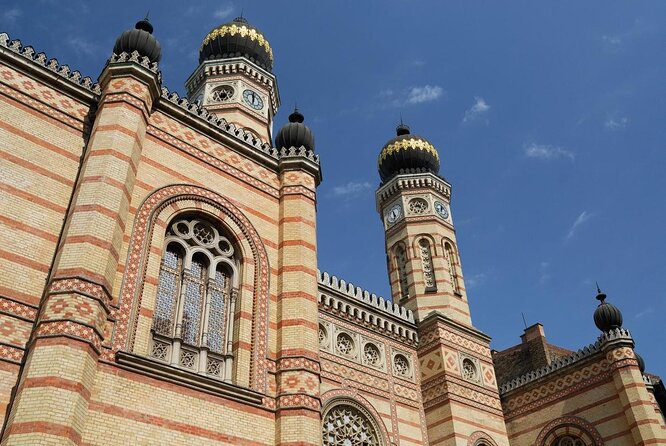
- Historic Jewish Quarter storytelling in District VII, not just photo stops
- Secession architecture at Postal Savings Bank, a pretty detour that’s also a history lesson
- Ruin bar finale in District VII, so your day ends in a place locals go, not a checklist
A private day that keeps Budapest from feeling like a blur
This is the kind of tour that works because it’s designed for a full day, not a quick highlight sprint. You’ll meet your guide at your Budapest hotel (or at an alternate meeting point if you prefer), then head out on foot and via public transportation. The tour is private, meaning it’s only you and your group, which instantly changes how the day feels.
You also get real comfort from the included food. Lunch, snacks, and beverages are part of the plan, and you’ll have stops for pastries and coffee breaks along the way. That matters in Budapest, where a “quick bite” can turn into a 45-minute hunt if you’re not sure where to go.
The value question comes down to how much you want a guide to steer you. For a city like Budapest, this route hits major sights efficiently, but you still get context—why things look the way they do, and what happened behind the scenes.
You can also read our reviews of more private tours in Budapest



Market Hall first: eat early, shop smart, and get your bearings
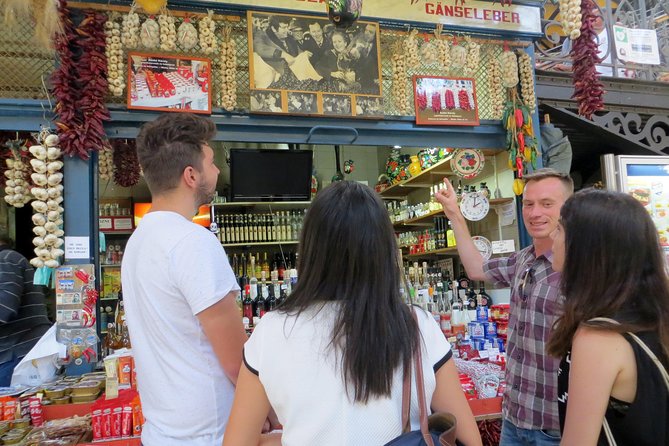
The day starts at Central Market Hall (Nagyvásárcsarnok), a classic for a reason. It’s the largest and oldest indoor market in Budapest, and it’s spread across two floors packed with food and Hungarian specialties you may not find anywhere else. On the upper floor, you’ll also see craft items that can make better souvenir sense than the loud tourist shops.
Plan to use this stop in two ways. First, treat it like your “fuel stop” with pastries and snackable Hungarian flavors before you start the sightseeing marathon. Second, treat it like a research stop—this is where you learn what you’ll see again later in street stalls and specialty stores.
If you’re the type who hates spending time deciding what to buy, this is where a guide helps. You’ll be able to focus on what’s actually worth carrying home, instead of wandering.
Chain Bridge views without the pressure to overstay
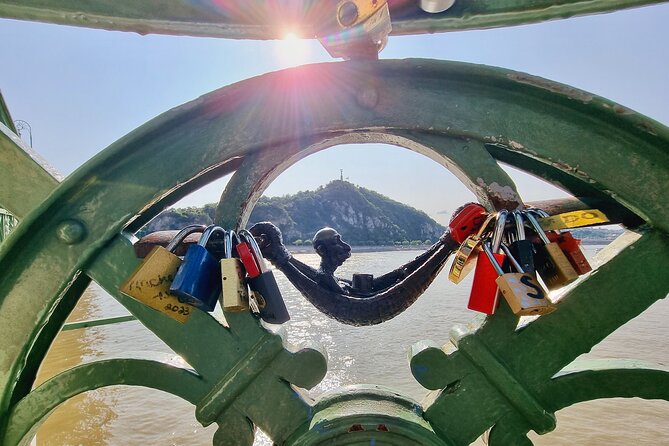
From the market, you’ll make a quick hop to Széchenyi Lánchíd, the Chain Bridge. It spans the Danube between Buda and Pest, and it’s one of those sights that looks slightly different depending on where you stand and what time of day you hit it.
This stop is short, and that’s a good thing. It gives you a clear “you’re in Budapest” moment without stealing time from the heavier hitters like the castle district and the Jewish Quarter.
Castle Hill: Matthias, Fishermen’s Bastion, and the Danube postcard reality
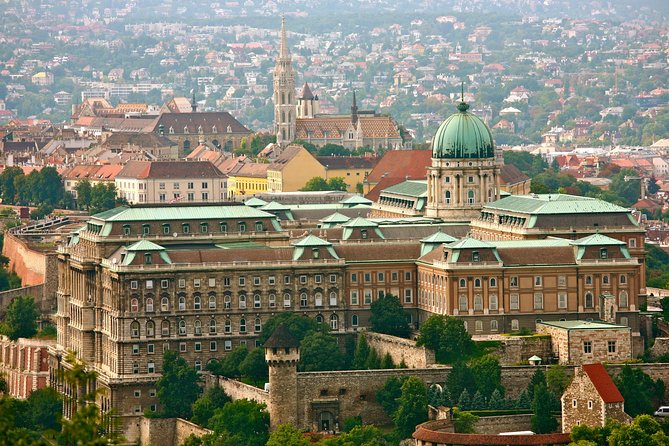
Then the tour shifts into what Budapest does best: viewpoints and architecture that feel built for dramatic angles. On Castle Hill, you’ll walk around the castle district, taking in landmarks including Matthias Coronation Church and Fishermen’s Bastion.
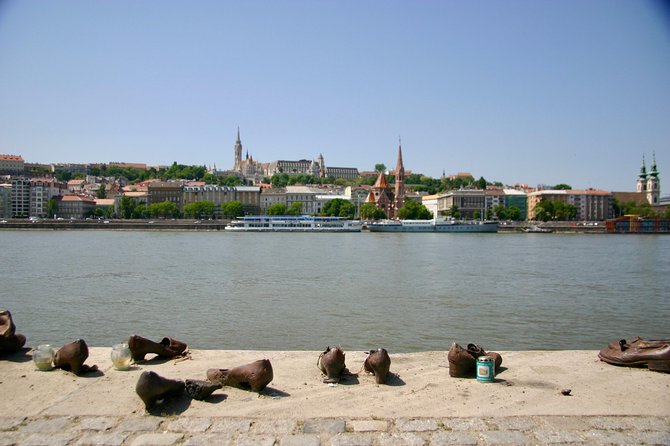
The Fishermen’s Bastion piece is the payoff. You get unrivalled views across the Danube toward Pest, and the whole angle makes the city’s layout click fast. If you’re trying to understand where Budapest’s story is told—both geographically and historically—this is one of your clearest moments of the day.
You’ll also hear about the setting itself: Castle Hill is a limestone plateau that rises above the Danube, and the area connects to a network of caves formed by thermal springs. That “place-based” context makes the buildings feel like part of a living landscape rather than isolated monuments.
One practical note: this district involves walking on uneven surfaces in places, plus steps and slopes depending on your exact route. If you have moderate mobility limits, wear footwear that can handle real stone.
Parliament exterior walk: what makes it unique, not just what it looks like
Next up is the Hungarian Parliament Building. This stop is built around seeing it from outside and walking around to take in statues and discuss what makes the building unique.
Even if you skip the inside (nothing here says you’ll go in), the exterior-focused approach still works well. You get to appreciate the scale and the symbolism without spending time on entry lines or timing headaches. It’s also a good contrast against Castle Hill—same theme, different tone: power and national identity instead of royal-era architecture.
You can also read our reviews of more tours and experiences in Budapest






Postal Savings Bank: Seccession splendor you’ll remember
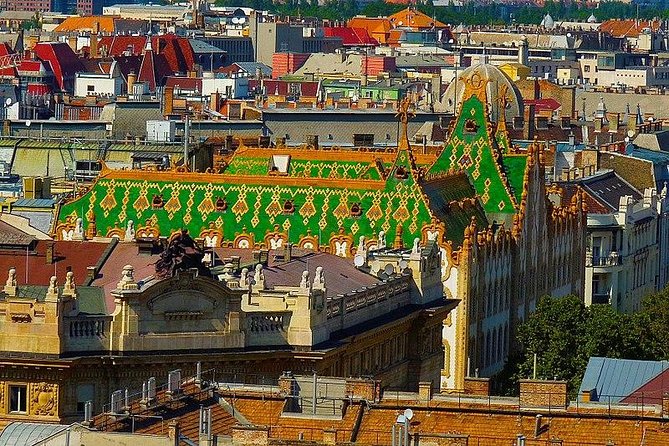
This is one of the most satisfying “architecture brain candy” stops of the day: the Postal Savings Bank on Hold utca. It’s a standout Secession artwork in Budapest, designed by Ödön Lechner in 1901. Expect colorful tiles and folk motifs that look like someone turned Hungarian design traditions into building decorations.
Why it’s worth your time: because it breaks the pattern. Up to this point, you’ve been collecting big-picture monuments. Here you slow down just enough to notice surfaces, patterns, and the way art can define a whole street.
If you enjoy details, you’ll have fun here. If you don’t, the building still does the work for you.
St. Stephen’s Basilica: the relic detail you’ll hear about
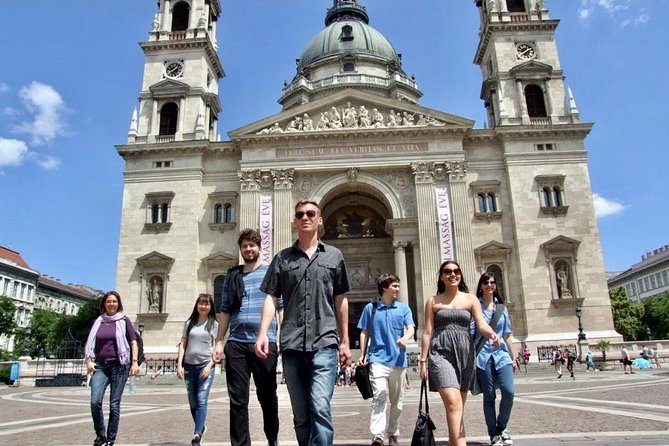
You’ll also stop at St. Stephen’s Basilica (Szent Istvan Bazilika). The basilica is named for Stephen, the first King of Hungary, and the tour focuses on notable elements like the reliquary that houses his supposed right hand.
This stop tends to be quick, so think of it as a “checkpoint moment” rather than a long interior visit. What makes it memorable is the guide’s story framing—why the basilica matters in the national narrative, not only as a pretty church.
Andrássy Avenue to Heroes’ Square: a grand walk with history underfoot
Then you’ll move along Andrássy Avenue, a boulevard dating back to 1872 and recognized as a World Heritage Site in 2002. This stretch is lined with Neo-renaissance mansions and townhouses, and you’ll walk and point out buildings that played historical roles or have links to famous occupants.
And yes, it’s also one of the main shopping streets, with cafés, restaurants, theatres, embassies, and luxury boutiques. But your guide should help you look past the storefronts so you notice façades and the stories attached to them.
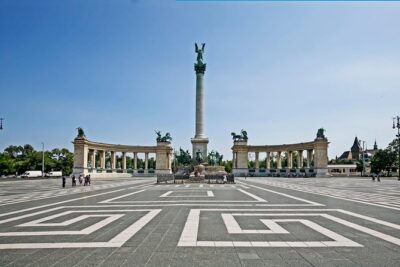
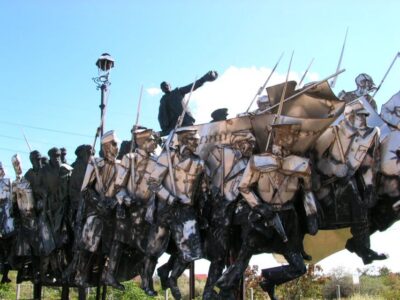
After that, you’ll reach Heroes’ Square. This is where the grand national symbolism hits full volume. You’ll look at the iconic statue complex featuring the Seven chieftains of the Magyars, plus other important Hungarian national leaders. You’ll also see the Memorial Stone of Heroes, a detail worth understanding because it’s often mistakenly called the Tomb of the Unknown Soldier.
That small correction matters. It’s the kind of guide-led clarity that makes you feel like you’re reading the city correctly as you go.
City Park: a break that still feels meaningful
Next is City Park (Városliget), an area shaped by planning going back to the mid-1700s, even though the public park came later in the early decades of the 1800s. You’ll look at places like the skating rink/boating lake area and Vajdahunyad Castle.
This stop works as both a visual reset and a local-usage pause. It’s a place Hungarians recognize as part of daily life and leisure, so it doesn’t feel like you’re only watching tourism.
If you’re tired, this is where you can catch your breath without feeling like the tour is stalling.
District VII Jewish Quarter: walking the old ghetto story with real context
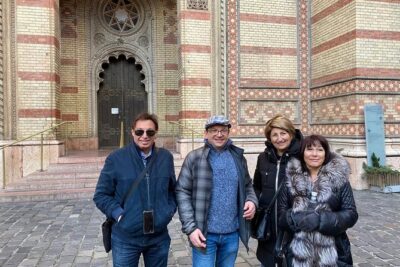
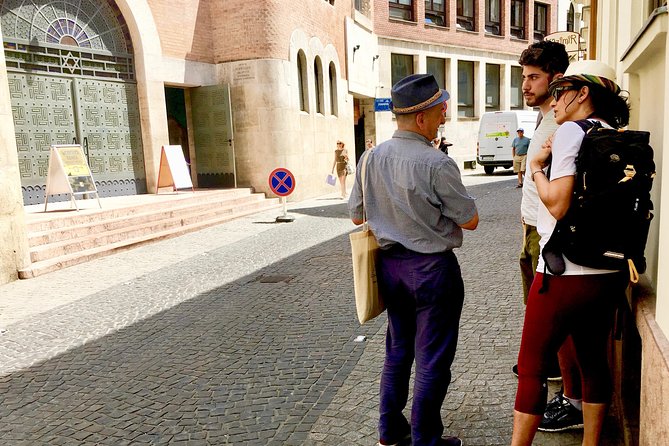
The heart of the day shifts into District VII, Budapest’s historical Jewish Quarter, now known for its trendier edge. You’ll walk the streets of the old ghetto area, learning about the fate of Hungarian Jewry during the war years.
This part of the tour isn’t limited to “here are some buildings.” You’ll hear about synagogues, the old ghetto wall, and important people who helped escape efforts. The tour also includes discussion of present-day situation in Hungary today.
What I like about this approach is that it keeps the story tied to place. You’re not just learning dates in a vacuum. You’re walking the actual streets where the community’s life and suffering took place, and then connecting that to what you can still see now.
It’s also a good reminder that District VII isn’t only a modern nightlife scene. The same streets can hold layers: history, survival, culture, and today’s Budapest creativity.
The ruin bar finish: where the day turns from history to atmosphere
To cap the tour, you’ll stop at a distinctive ruin bar. These places have become part of Budapest’s identity, especially in District VII, where old buildings and a creative spirit have created something unique.
This finale is smart because it doesn’t try to force an extra “big attraction.” Instead, it gives you time to shift gears: absorb the neighborhood vibe after a heavy dose of history, and end with something social.
You’ll understand the neighborhood better because you’ve already walked it earlier in the day with context in your head.
Price and value: what you’re paying for, and who benefits most
At $257.15 per person for an 8-hour private tour with lunch, snacks, beverages, and hotel pickup/drop-off, the price may look steep at first glance. But private guiding in a major European city adds up fast, especially when the plan includes meals and multiple districts in one day.
Here’s where the value really shows:
- You’re not just seeing sights. You’re getting guided explanation for major landmarks like Parliament, the Secession Postal Savings Bank, and the Jewish Quarter.
- Lunch, snacks, and beverages mean less time searching and less budget stress mid-day.
- Private pacing lets your group set the tone, especially if you care about details like architecture surfaces or specific historical context.
This tour fits best if:
- You’re in Budapest for a first trip and want a full-day framework of the city.
- You like walking and can handle a moderate pace.
- You want your guide to connect places with stories, especially for District VII.
It may not be the best fit if you want a super relaxed day with lots of downtime. This route is active. You’ll be on the move for most of the day.
Guides: the difference between seeing and understanding
The tour experience can hinge on who leads it, and the feedback around the guides here has a clear pattern. Guides such as Miklós and Daniel are described as local, attentive, and able to explain what you’re looking at without turning it into a lecture.
Miklós, in particular, is mentioned as funny and kind, sharing Hungarian culture with lots of context and even quirky Hungarian phrases from the language’s deeper roots. Daniel is mentioned as meeting promptly at the hotel with very good English and a lot of energy.
That kind of guiding matters because it changes how you remember the day. You’re more likely to say, I get Budapest now, instead of I saw buildings.
Should you book this private Budapest tour?
I’d book this tour if you want one day that covers the big visuals and the important context, without leaving you stuck on where to eat or what to prioritize. The combination of Central Market Hall, Castle Hill viewpoints, Parliament exterior context, Jewish Quarter walking, and a District VII ruin bar finish is a strong arc.
Skip it only if you strongly prefer short stops, minimal walking, or you already feel confident planning these neighborhoods on your own. Otherwise, this is a smart way to get bearings fast and see Budapest as more than a set of postcards.
FAQ
How long is the Complete Budapest full-day private tour?
It runs about 8 hours.
Is hotel pickup and drop-off included?
Yes. Hotel/port pickup and drop-off are included.
Does the tour include lunch and snacks?
Yes. Lunch, snacks, and beverages are included.
What areas of Budapest do you visit?
You’ll visit major sights across the city and also spend time in District VII, including the Jewish Quarter and a ruin bar stop.
Do you use public transportation during the tour?
Yes. The plan includes travel on foot and via public transportation.
Is this tour private?
Yes. It’s a private tour/activity, and only your group participates.
Are admission tickets required for the stops?
The itinerary shows admission ticket as free for the listed stops, including the market hall and major landmarks.
Is the tour suitable for travelers with moderate physical fitness?
The tour is designed for travelers with a moderate physical fitness level.
Is free cancellation available?
Yes. You can cancel up to 24 hours in advance for a full refund.