REVIEW · TUK-TUKS
Budapest Private Tuk Tuk Half-Day Tour
Book on Viator →Operated by Budapest TukTuk · Bookable on Viator
Budapest reads fast from a tuk-tuk. This private 4-hour ride hits tuk-tuk-worthy viewpoints across Buda and Pest with an English-speaking guide and personalized pacing. I like that you get a tight overview of major landmarks without getting worn out, and I also like the stop-by-stop local context that turns photos into real memories. One consideration: entry tickets for some big sights aren’t included, and the ride can feel a bit jostly if you’re sensitive to vibration.
A big plus is the human factor. Guides like Zoltar, Norbert, Greg, Martin, Robi, Peter, Paul, Ben, Gabriella, Bart, David, and others pop up in the feedback with the same themes: clear explanations, good humor, and photo help. If you do this on your first full day, you can use it like a map in motion—then plan what to revisit later.
Logistics are straightforward. You’ll get pickup in the wider downtown area, and you can choose among departure times. The schedule is “4 hours approx.” and the time can shift by up to 1.5 hours, and the whole thing runs best in favorable weather—so pack for wind, rain, or cold if you’re going in shoulder season.
In This Review
- Key Things That Make This Tour Worth Your Time
- Why a Tuk-Tuk Works for First-Time Budapest
- Pickup, Timing, and Choosing the Best Start Time
- Andrássy Avenue and the State Opera: A Grand Avenue You Can Actually Orient From
- St. Stephen’s Basilica and Heroes’ Square: Religion and National Identity Side by Side
- Széchenyi Medicinal Bath: Thermal Culture Without Needing Tickets
- Jewish Quarter Highlights: Dohány Street Synagogue, Károlyi Garden, and the Market Feel
- Bridges and Waterfront Memorials: Liberty Bridge and the Shoes on the Danube
- Gellért Hill and Citadella Views: Baths, Freedom Statue, and a Strange Philosophers Meeting
- Castle Hill Without the Big-Ticket Rush: Fisherman’s Bastion and Matthias Church
- Parliament Building and the Danube Side: The Classic Shot With a Reality Check
- What You’re Really Paying For: Price and Value for a Private 4-Hour Ride
- My Practical Tips Before You Go
- Should You Book This Budapest Tuk-Tuk Tour?
- FAQ
- How long is the Budapest Private Tuk Tuk Half-Day Tour?
- Is pickup included?
- What language is the tour guide?
- Is this a private tour?
- Are entry tickets included for major attractions?
- Will the tour definitely run at the advertised time?
- How far in advance do I need to book?
Key Things That Make This Tour Worth Your Time
- Private pacing across both sides of the Danube so you’re not trapped in a one-size-fits-all group schedule.
- English-speaking guide who connects landmarks like St. Stephen’s Basilica and Parliament to the stories behind them.
- More stops than a walking loop, including viewpoints on Gellért Hill and Buda Castle.
- Photo-friendly rhythm that keeps you moving without feeling like a sprint.
- Optional Danube cruise add-on if you want the lights-and-bridges view.
Why a Tuk-Tuk Works for First-Time Budapest
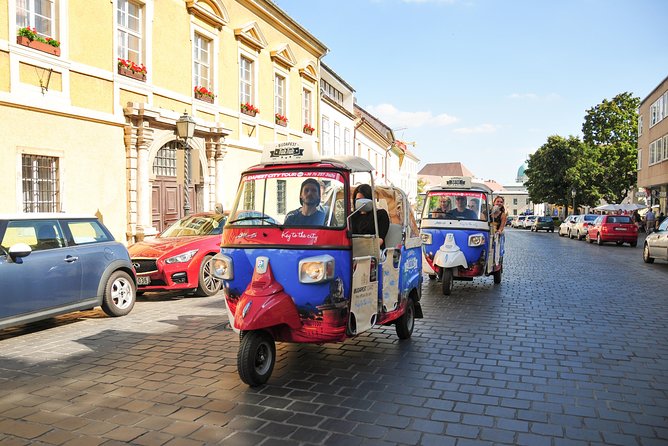
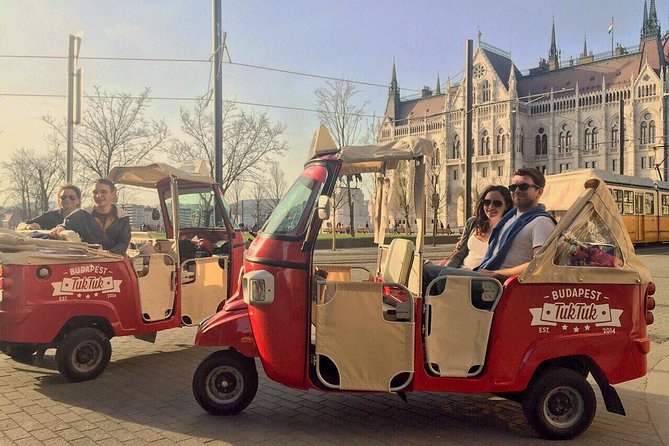
Budapest is two cities connected by the Danube. The trick is seeing the big stuff on both sides without turning your trip into a leg workout. A motorized tuk-tuk helps because it can cover more ground than walking, while still getting you close to the sights when streets and traffic would bog down a bus.
The private setup matters more than you’d think. With only your group, your guide can slow down at the places you care about—whether that’s religious buildings, memorials, markets, or scenic overlooks. In the reviews, several people praised guides for adjusting pace, including for seniors moving with canes.
The other big advantage is “orientation.” You don’t just collect names—you understand where they sit in the city. After a half day like this, it’s much easier to choose what to revisit the next day, and what you can skip.
You can also read our reviews of more private tours in Budapest



Pickup, Timing, and Choosing the Best Start Time
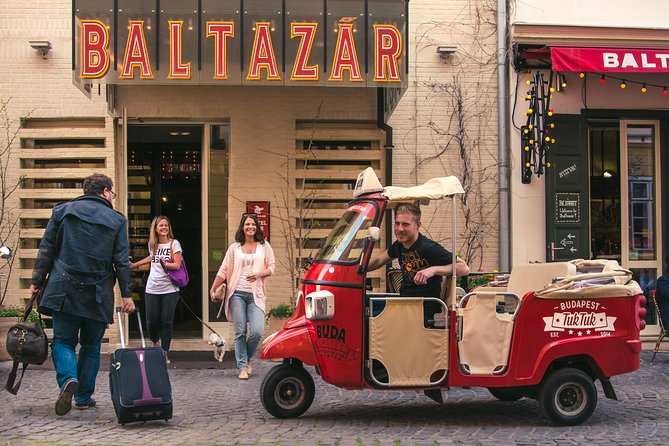
This is built for convenience. Pickup and drop-off are included in the wider downtown area, which means you’re not spending your first hours hunting a meeting point.
You’ll choose a departure time, and the tour runs about 4 hours. Keep in mind the advertised timing can change by as much as 1.5 hours, and weather can affect operations. If you hate uncertainty, build some buffer into your plans the same day—especially if you’re pairing it with dinner reservations or a scheduled museum visit.
Also, think about the ride comfort. One reviewer noted it could be jarring and that audio may be harder depending on how you sit and wind conditions. If you’re sensitive to roughness, dress in a way that helps you stay comfortable, and don’t be shy about asking your guide how to best hear the commentary as you go.
Andrássy Avenue and the State Opera: A Grand Avenue You Can Actually Orient From
You start with some of Budapest’s “looks like a postcard” architecture. Andrássy Avenue is a boulevard dating to 1872, linking Erzsébet Square to Városliget. It’s known for Neo-renaissance mansions and townhouses, and it gained World Heritage recognition in 2002—so you’re seeing not just pretty façades, but a street with real cultural weight.
Right along this axis, you’ll also pass the Hungarian State Opera House, designed by 19th-century architect Miklós Ybl. It’s a neo-renaissance opera house and was originally called the Hungarian Royal Opera House. Even if you don’t go inside, it’s the kind of building that tells you something about the city’s self-image: Budapest wanted a European “capital look,” and it delivered.
Why this stop feels useful: you quickly learn where the grand downtown spine is. Later, when you’re walking or using public transport, you’ll recognize the area instantly.
St. Stephen’s Basilica and Heroes’ Square: Religion and National Identity Side by Side
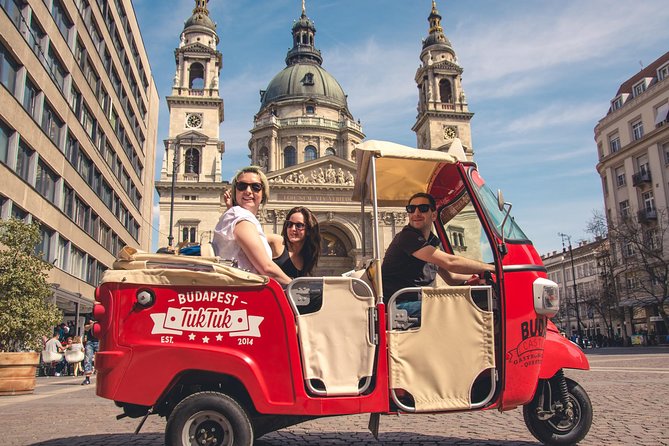
St. Stephen’s Basilica is a Roman Catholic church named for Stephen, the first King of Hungary. You also get a powerful detail: the reliquary houses his supposed right hand. That kind of specific story helps you understand why this building matters beyond its exterior.
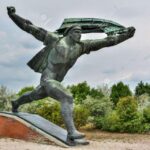
Next is Heroes’ Square, one of Budapest’s most famous public squares. The highlight here is the statue complex with the Seven chieftains of the Magyars, plus the Memorial Stone of Heroes (often mistakenly referred to as the Tomb of the Unknown Soldier). This is one of those places where history is literal—stone figures and symbols instead of museum text.
The practical benefit: these two stops anchor you. Once you’ve seen the basilica and Heroes’ Square, Budapest’s “north-to-south meanings” start to make sense. You can then connect what you see on the river to what you learn about the nation.
Széchenyi Medicinal Bath: Thermal Culture Without Needing Tickets
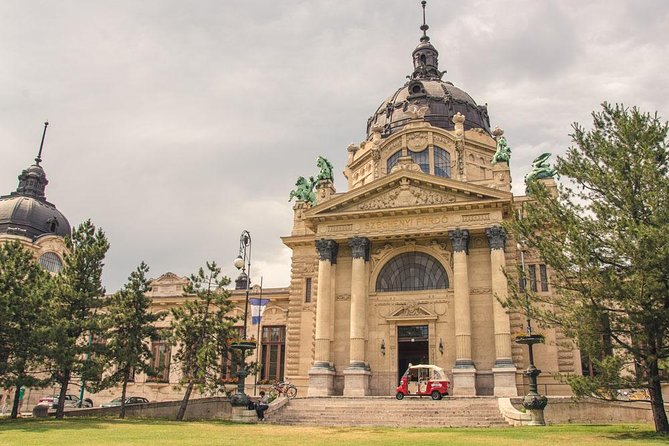
A stop at Széchenyi Medicinal Bath gives you a sense of Budapest’s ongoing love affair with thermal waters. The bath is described as the largest medicinal bath in Europe, supplied by two thermal springs with temperatures of 74°C and 77°C.
This matters even if you’re not going inside. Budapest isn’t only about monuments—it’s also about how people live with the city’s natural heat. Seeing Széchenyi in person helps you grasp why thermal bathing is a core part of the local routine.
If you do want to go in on your own later, plan that separately. Here, you’re not relying on entry tickets to get value from the area.
You can also read our reviews of more tours and experiences in Budapest




Jewish Quarter Highlights: Dohány Street Synagogue, Károlyi Garden, and the Market Feel
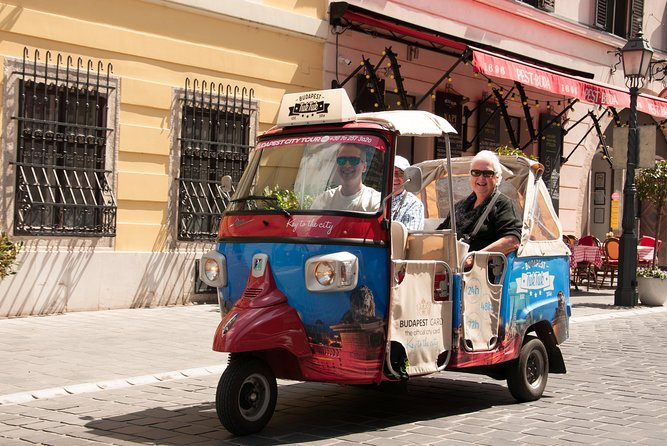
The route spends time in the Jewish Quarter area of District VII, which has been home to Orthodox Jewish religious centers since the 19th century. If you want one takeaway from Budapest’s history, it’s that layers here don’t sit quietly—they show up in architecture, street life, and memorials.
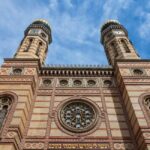
The standout stop is the Great Synagogue on Dohány Street, also called the Dohány Street Synagogue. It’s described as the largest synagogue in Europe, seating about 3,000 people, and it’s a center of Neolog Judaism. Even from the outside, it’s hard to miss the building’s scale and presence.
A quieter rhythm follows with Károlyi Garden, a public park in District V. This is noted as the oldest garden remaining in its kind of downtown palace garden function, and it’s one of the best documented examples of palace gardens in Hungary. It’s a good contrast point—history and solemnity on one side, calm greenery on the other.
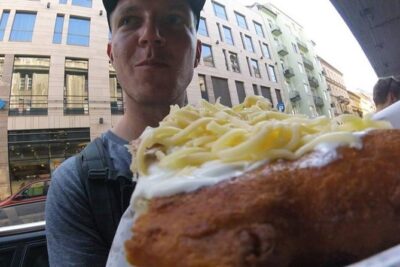
Then you get into the food-and-everyday-life zone with Central Market Hall (Nagyvásárcsarnok). It’s described as the largest and oldest indoor market in Budapest. If you’re the kind of traveler who likes tasting the city through what locals buy and cook, this is where your day starts feeding you ideas. (And yes—if you want langos or other Hungarian street snacks, this area is where you’d naturally go afterward.)
Bridges and Waterfront Memorials: Liberty Bridge and the Shoes on the Danube
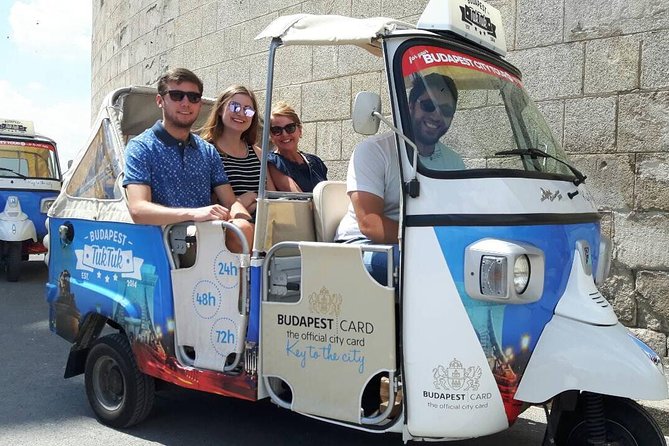
Bridges in Budapest aren’t just crossings. They’re viewpoints and time markers. Liberty Bridge connects Buda and Pest across the Danube and is the third southernmost public road bridge in the city. It was originally called the Franz Joseph Bridge, which is the kind of detail that makes a simple photo stop feel like part of a bigger story.
Next, you’ll visit the Shoes on the Danube Bank memorial. It was conceived by film director Can Togay and created with sculptor Gyula Pauer. The memorial honors Jewish victims killed by Arrow Cross militiamen during World War II. This stop is emotional in a quiet, specific way because it’s not a statue of a hero—it’s an echo of daily life taken away.
If you only do one memorial stop in Budapest, make it this one. It’s short, but it stays with you.
Gellért Hill and Citadella Views: Baths, Freedom Statue, and a Strange Philosophers Meeting
One of the best parts of this tour is how it uses elevation. You head toward Gellért Hill for major viewpoint stops and monument photos.
Gellért Thermal Baths and Swimming Pool sit on the Gellért hotel complex. It’s one of Budapest’s best-known bathing addresses, and it fits the city’s theme of blending leisure with thermal tradition.
Then comes Citadella. This is the fortress on top of Gellért Hill, used as a strategic military point in Budapest’s history. Nearby is the Freedom Statue (Szabadság-szobor), commemorating people who sacrificed their lives for Hungarian independence, freedom, and prosperity.
After the big monuments, you get a surprising stop at the Garden of Philosophy. This area is described as having fewer tourists and offering wonderful views. One of the notable features is a group of philosophers on a pedestal, including Jesus Christ and Buddha meeting—presented as a way to understand one another better.
Why you’ll probably like this section: it breaks the pattern. Instead of only grand stone and national symbols, you get a small moment of reflection and viewpoint time.
Castle Hill Without the Big-Ticket Rush: Fisherman’s Bastion and Matthias Church
Castle Hill is a limestone plateau rising about 170 meters above the Danube. It contains some of Budapest’s most important medieval monuments and is recognized as a UNESCO World Heritage Site. Beneath the area, there’s also a network of caves formed by thermal springs, described as about 28 kilometers long.
This is where your half day starts to feel like a full story. You’ll see Fisherman’s Bastion (Halászbástya), a terrace in neo-Gothic and neo-Romanesque style around Matthias Church. It was designed and built between 1895 and 1902 on plans by Frigyes Schulek. Even if you’ve seen it in photos, it’s one of those places where the angles make more sense when you’re standing there.
Matthias Church sits in front of it. It’s Roman Catholic, and tradition says it was originally built in Romanesque style in 1015, though no archaeological remains exist. That mix of legend and architecture is very Budapest: layers, rebuilds, and storytelling.
One more stop in this area is the Castle Garden, described as a unique “jewellery box” where art and nature complement each other, designed as a venue for events and leisure. If you’re traveling with someone who likes a quick change of pace, this is a nice buffer between big monuments.
A practical note: Fisherman’s Bastion and Matthias Church stops are listed as not including admission tickets here, so don’t plan on a long interior visit during this tour. Think of it as a powerful exterior-and-view experience.
Parliament Building and the Danube Side: The Classic Shot With a Reality Check
The Hungarian Parliament Building (Országház) is the seat of Hungary’s National Assembly and a major tourist landmark. It translates to House of the Country / House of the Nation, and it’s a defining visual on the Pest side of the river.
This tour stop is designed as an outside viewing experience—internal visits aren’t included here. If you want to go inside, you’ll need to do that separately on another day.
The upside is time. You get the iconic exterior shot and then move on instead of getting stuck in queues.
What You’re Really Paying For: Price and Value for a Private 4-Hour Ride
At $178.98 per person for a half-day private tour, this isn’t a bargain-bus deal. You’re paying for three things: private guiding, a fast route, and pickup/drop-off convenience.
For value, look at what’s included: an English-speaking guide, free pickup and drop-off in the wider downtown area, and complete flexibility in how the tour flows for your group. A private format also means your guide can answer your questions in real time instead of working through a group.
The ride format also saves energy. Many people like that a tuk-tuk lets you see more without walking the full day. And yes, you can often get closer to sights than larger vehicles.
What can reduce value for some people: entry tickets and food aren’t included. If you want inside visits at multiple major attractions, budget extra time and money to do those separately.
My Practical Tips Before You Go
Dress for the weather. The tour is subject to favorable conditions, and you’ll be outdoors a lot. One winter review highlighted wool blankets as a help, so you can’t assume comfort if you don’t pack layers.
If you’re photo-focused, tell your guide early. Several guides were praised for taking great photos, so it helps to ask for photo stops rather than only stopping where the road allows.
If you have mobility needs, mention it before you go. One review specifically mentioned accommodating seniors with walking slowly with canes. Private guiding makes it easier to adjust.
If you have a sensitive back, consider that the ride may feel jostly. That’s not everyone’s experience, but it’s worth knowing before you commit.
Should You Book This Budapest Tuk-Tuk Tour?
I think you should book it if you want a confident first-day overview and you like the idea of seeing both sides of the Danube with minimal stress. The mix of landmarks—St. Stephen’s Basilica, Andrássy Avenue and the Opera, Heroes’ Square, the Great Synagogue area, bridges, Shoes on the Danube Bank, and the Castle Hill viewpoints—adds up to a tour that helps you understand Budapest quickly.
I’d skip or plan differently if you’re expecting lots of paid interior visits included in the price, or if you’re very sensitive to vibration and noise. This is more about orientation and exterior stops than doing a museum sprint.
If you book, do it early in your trip so you can use the route like a map for what to return to next. And if you care about a specific theme—architecture, memorials, markets, or viewpoints—tell your guide from the start so they can shape the stops to your priorities.
FAQ
How long is the Budapest Private Tuk Tuk Half-Day Tour?
It runs for about 4 hours.
Is pickup included?
Yes. Free pickup and free drop-off are included in the wider downtown area.
What language is the tour guide?
The tour is offered with an English-speaking guide.
Is this a private tour?
Yes. It’s private, and only your group participates.
Are entry tickets included for major attractions?
No. Entry tickets and food and drinks are not included.
Will the tour definitely run at the advertised time?
The advertised time may change, with a maximum change of 1.5 hours.
How far in advance do I need to book?
You must book at least 6 hours in advance to ensure confirmation.