REVIEW · JEWISH QUARTER & SYNAGOGUE TOURS
A Journey through Jewish Budapest – Private Walking Tour
Book on Viator →Operated by Insight Cities · Bookable on Viator
Budapest’s Jewish story walks right past you. This 3-hour private route ties together landmark synagogues, former ghetto streets, and WWII memory, guided by a historian who keeps the timeline clear and human.
I especially like the private historian guide format, because you can ask questions on the spot and get answers that fit what you care about. I also love the mix of major sites like the Dohány Street Synagogue complex and the stark final stop at the Shoes on the Danube Bank.
One heads-up: synagogue tickets aren’t included, and you’ll need shoulders-and-knees coverage at Dohány and Kazinczy—so pack a light layer if you’re traveling in warm weather.
In This Review
- Key highlights worth your attention
- Why this private Jewish Budapest walk fits in about 3 hours
- Getting there: pickup, meeting points, and smart timing
- Dohány Street Synagogue: the big Moorish Revival complex and what to look for
- Moving to the ghetto wall: Kazinczy Street and the neighborhood that changed
- Rumbach Street Synagogue: Status Quo Ante in plain language
- Castle Hill ruins and the medieval angle you can actually walk through
- Shoes on the Danube Bank: a memorial that forces you to slow down
- Private guide quality: what to look for and why it matters
- Price and value: when $396.52 makes sense
- Who should book this tour, and who might prefer something else
- Should you book this Jewish Budapest tour?
- FAQ
- How long is the A Journey through Jewish Budapest private walking tour?
- Is this tour private?
- Does the price include pickup and a historian guide?
- Are synagogue tickets included?
- What is the meeting point if I don’t want pickup?
- What should I wear?
Key highlights worth your attention
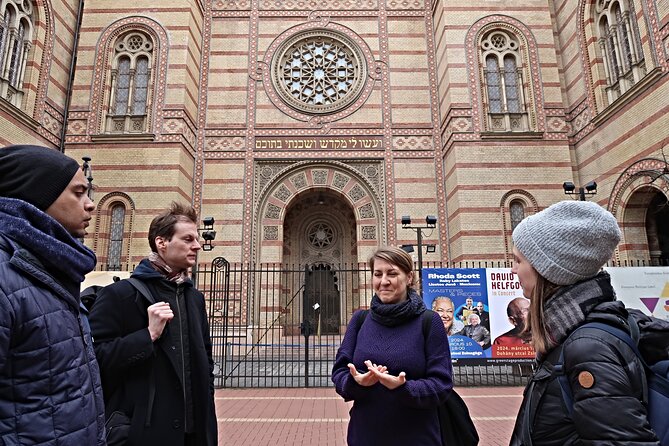
- Private group (up to 10) means the pacing is flexible and questions are welcome
- Dohány Street Synagogue complex includes the Temple of Heroes, Jewish Museum, and Memorial Park (ticket not included)
- Ghetto Wall Memorial + mikveh + Kazinczy Street synagogue makes the neighborhood feel real, not just historical
- Rumbach Street Synagogue interior is included when open, plus context on the Status Quo Ante stream
- Shoes on the Danube Bank is free and hits hard at the water’s edge
- Pickup available from your accommodation, or meet at Cafe Synago Kavehaz if you prefer to start central
Why this private Jewish Budapest walk fits in about 3 hours
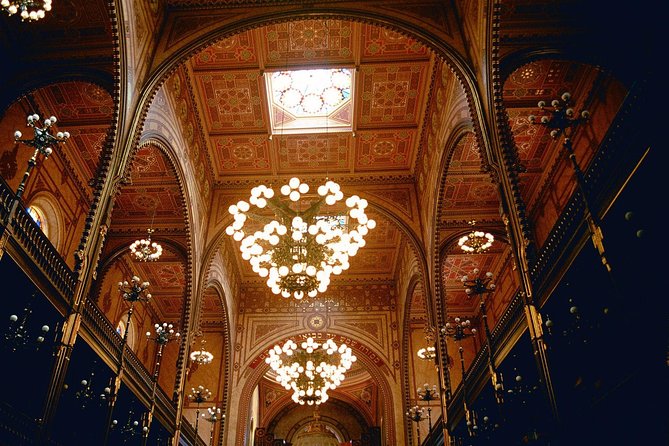
This tour is built for people who want the big landmarks without spending a whole day hopping buses across town. In roughly three hours, you move through the Jewish heart of Budapest—synagogue to synagogue, then into the former ghetto area, and finally to one of the most unforgettable WWII memorials in the city.
The private historian guide changes the feel. Instead of reading plaques and guessing, you get a guided through-line: what each site meant, how the Jewish communities shaped Budapest, and how tragedy and survival sit side by side in the streets you’re walking.
It’s also honest about tone. The route includes gorgeous architecture and everyday neighborhood details, then lands at Shoes on the Danube Bank where the story turns grim. That contrast is part of why the experience works.
You can also read our reviews of more walking tours in Budapest



Getting there: pickup, meeting points, and smart timing
You have two ways to start. The tour offers pickup from your local hotel or flat, and your guide typically uses metro, tram, or a short walk when sites are close. If you don’t want pickup—or if you don’t send an address—there’s a default meeting point you can use.
Default meeting point: Cafe Synago Kavehaz (formerly Cafe Zenit), Dohany utca 1/A, and you’ll want to arrive about 10 minutes early if you’re meeting there.
Departure is typically 10am year-round. Afternoon times are available in certain seasons, so if you’re chasing lighter crowds or a later start, pick that option when you book.
Practical tip: wear comfortable shoes. The walking is described as moderate, but this is still a street-level city walk with stops that require short waits and careful movement through crowded areas.
Dohány Street Synagogue: the big Moorish Revival complex and what to look for
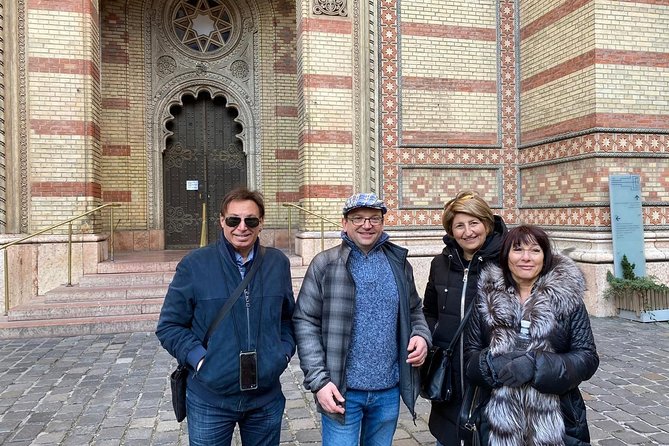
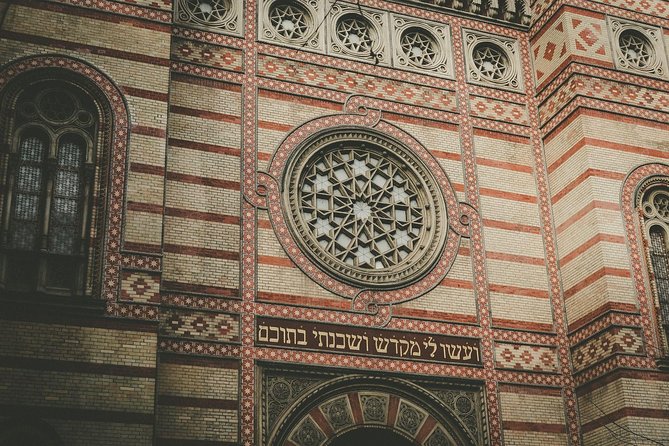
Your tour begins at Dohány u. 1, where the Dohány Street Synagogue complex dominates the view. This is the kind of building that makes you slow down even if you usually power-walk through attractions. It’s described as enormous and in the Moorish Revival style, and it’s also the second-largest in the world.
Inside, you’ll get help that goes beyond pointing out decorations. The experience includes time to see the Temple of Heroes, the Jewish Museum, and a Memorial Park within the complex. Since admission tickets aren’t included, you should plan for that added cost when you arrive.
Dress code matters here. Visitors to both the Dohány and Kazinczy synagogues are requested to have shoulders and knees covered, so if you’re wearing shorts or a sleeveless top, bring something light to cover up.
If you like learning in a clear, story-first way, this first stop is where the guide usually sets the tone. You start with place and architecture, then connect it to community life and historical upheavals.
Moving to the ghetto wall: Kazinczy Street and the neighborhood that changed
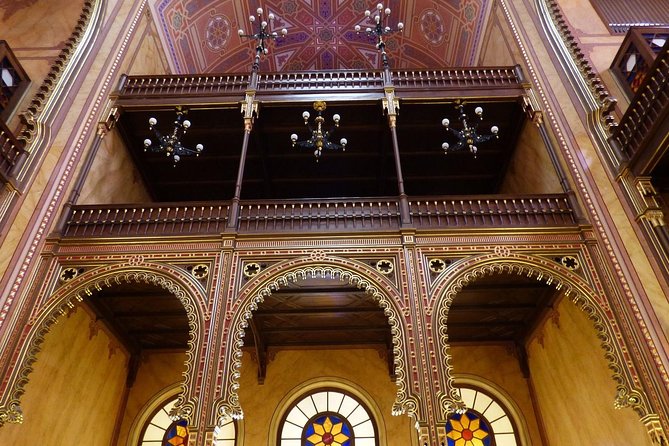
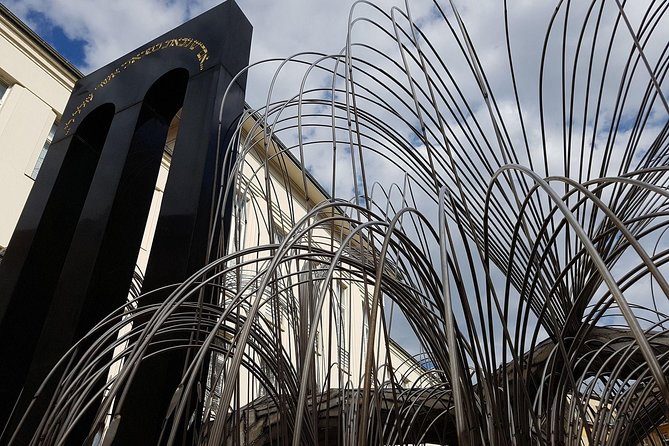
After the big synagogue complex, the route turns more local and more emotionally sharp. You’ll walk to the neighboring Ghetto Wall Memorial, erected in 2014. It’s a modern marker placed right where people can understand the old boundary feeling in a way textbooks can’t.
From there, you pass a luxurious mikve, or Jewish ritual bath. That detail is important because it signals something everyday and practical—community life includes ritual practices, not just public monuments.
Then you reach the exteriors of the Art Nouveau orthodox synagogue on Kazinczy Street. The tour also visits the interior when it’s open to the public, which is a great bonus if you happen to visit during opening hours.
Time-wise, this part is designed to be enough to understand the neighborhood without dragging. You get the wall memorial, the mikve, the synagogue exterior, and possibly the interior, then you move on.
Rumbach Street Synagogue: Status Quo Ante in plain language
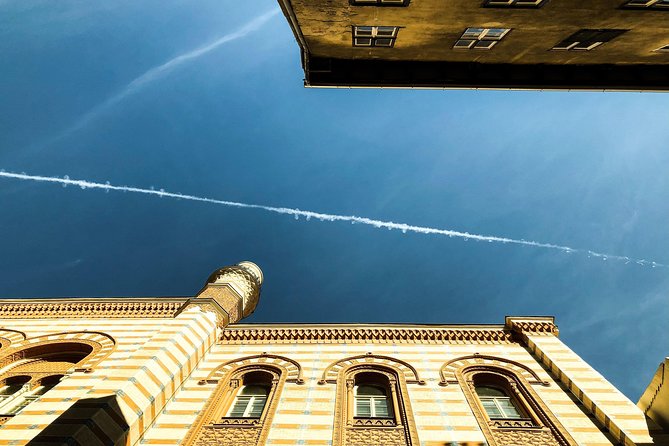
Rumbach Street Synagogue brings a different thread to the story. The tour focuses on the history of the Status Quo Ante stream of Judaism, which can sound like an academic label until someone translates it into what it meant for people and practice in their daily world.
You’ll start with the impressive facade, then continue to the interior when open. Tickets aren’t included here either, so budget for entrance fees if you want to go beyond what’s possible from the street view.
This is also a good moment to pay attention to how Jewish communities in Budapest weren’t monolithic. Different streams meant different priorities and governance around religious practice, and the architecture helps you see that diversity at street level.
If your group likes context—how religious identity and local politics shaped what you’re seeing—this stop usually lands well.
You can also read our reviews of more private tours in Budapest






Castle Hill ruins and the medieval angle you can actually walk through
Between the synagogues in District VII/VIII and the ghetto area, the route includes the streets tied to the former Jewish working-class neighborhoods in those districts. That’s a key value of doing this on foot with a historian: you don’t only see big buildings, you see the kind of streets where ordinary life happened.
You also explore the area linked with the Pest Ghetto and some ruins of synagogues dating to medieval times on Castle Hill. That medieval layer matters because it shows the story didn’t begin with the modern city skyline. You’re seeing how long the Jewish presence has shaped parts of Budapest, even when what remains is only partial.
This portion can feel like a time-jump. The guide’s job is to keep it coherent, so it doesn’t become a collection of interesting points.
Shoes on the Danube Bank: a memorial that forces you to slow down
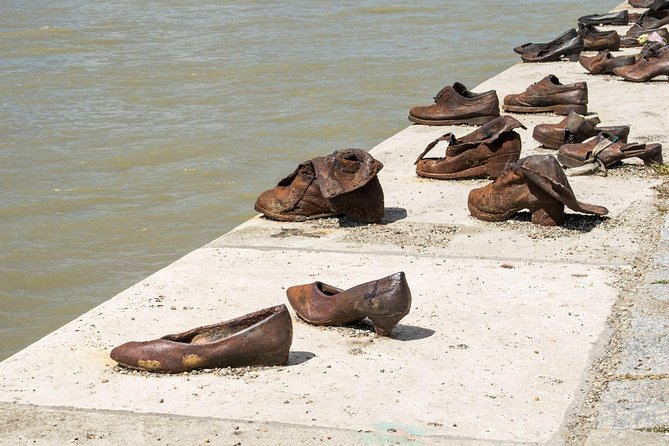
The tour ends at the Shoes on the Danube Bank. It’s free and it doesn’t need any ticket line—just your attention.
The memorial honors Jews who were massacred here during WWII. People were ordered to take off their shoes, then they were shot at the edge of the water so their bodies fell into the river and were carried away. The memorial represents shoes left behind on the bank, and the effect is immediate.
This isn’t a background stop. Even if you’re not the type to get emotional, you’ll feel your pace change here. It’s one of those places where your brain wants to understand the wording and your body wants to keep reading the scene.
You’ll likely finish with a “what now?” feeling, and that’s normal. The tour ends in the ghetto area, and you can continue exploring on your own after.
Private guide quality: what to look for and why it matters
The highest praised aspect across guide experiences is clarity. The historian guides are described as passionate about Jewish culture and history, and they’re good at explaining what you’re seeing without turning it into a lecture you’d rather escape.
There’s also a practical strength mentioned in the group experiences: keeping kids engaged. One guide named Andrew handled a group with teen and pre-teen boys and managed to make the walk both interesting and entertaining while still respectful of the subject matter. Another guide, OSHI, is described as a graduate in Jewish Studies with a huge amount of knowledge. Kati and Kata are also singled out for making the Jewish quarter easy to understand, especially for groups where this history clearly meant something.
You can’t control who you’ll get, but you can control how you interact. Ask the guide to explain a building’s meaning in everyday terms, not just dates. If you have specific family questions, this private format is the time to bring them up.
Price and value: when $396.52 makes sense
The price is $396.52 per group (up to 10) for about three hours. That can feel steep if you’re thinking solo, but private tours often work like this: the cost is less about per-person sightseeing and more about paying for a guide’s time and expertise.
Where the value shows up:
- You’re getting historian-guided context at multiple key sites, not just a quick walk-through
- It’s private, so you’re not stuck with a slow or fast group pace
- Pickup is included, which saves time and reduces hassle in a busy city
Where to watch your budget:
- Dohány, Kazinczy, and Rumbach synagogue tickets are not included, and those entrances can add up
- Shoes on the Danube Bank is free, which helps balance the extra ticket costs
If you’re traveling with family or a small friend group, this pricing model can be a good deal. If you’re traveling solo and you’re mainly interested in one synagogue, you might compare costs with other options. But if you want the whole arc—from architecture and neighborhood life to WWII memory—this private approach usually holds its value.
Who should book this tour, and who might prefer something else
This tour is a strong fit if you want:
- a private guide and flexible pacing
- a focused walk through major Jewish landmarks in Budapest
- a route that connects architecture, community life, and WWII-era memorials
It’s also a good fit for groups with mixed ages, since guides are described as able to keep younger visitors engaged without turning the experience into a joke.
You might skip or adjust if:
- you’re not comfortable with moderate walking
- you prefer to move at your own pace through synagogues and museum spaces without guidance
- you don’t want to deal with a dress code requirement for religious sites
Should you book this Jewish Budapest tour?
I’d book it if your ideal Budapest day includes more than photo stops—if you want the story attached to each place, and you like having a guide to translate architecture and history into something you can picture.
It’s especially worth it for the sequence: Dohány Street Synagogue’s grandeur, the ghetto wall and Kazinczy area details, Rumbach’s specific stream of tradition, the medieval ruins idea, and the emotional final note at Shoes on the Danube Bank.
If you’re the type who can handle a meaningful WWII memorial and still enjoy the architecture and neighborhood context that come before it, this is a tour that can make the city feel personal fast.
FAQ
How long is the A Journey through Jewish Budapest private walking tour?
The tour is about 3 hours.
Is this tour private?
Yes. It’s a private tour/activity, so only your group participates.
Does the price include pickup and a historian guide?
Yes. Hotel pickup and a historian guide are included.
Are synagogue tickets included?
No. Tickets for the Dohány Street Synagogue, Kazinczy Street Synagogue, and Rumbach Street Synagogue are not included. Tickets aren’t required for Shoes on the Danube Bank.
What is the meeting point if I don’t want pickup?
If you don’t want pickup or don’t respond with your address, meet 10 minutes before the start time at Cafe Synago Kavehaz (formerly Cafe Zenit), Dohany utca 1/A.
What should I wear?
You’re requested to have your shoulders and knees covered when visiting the Dohány and Kazinczy synagogues. Comfortable shoes are also important due to moderate walking.