Budapest tells its Jewish story in streets and stone. This private half-day tour links the Great Synagogue area, a museum stop, and the Shoes on the Danube memorial with the kind of context that’s hard to piece together alone. One catch: entry tickets for most indoor sites are not included, so you’ll want to budget and plan ahead.
I especially like the way the route is built. You go from major landmarks to smaller places of daily Jewish life, and the guide fills in the gaps between buildings and names. It makes the whole district feel less like a list of sights and more like one connected story you can actually walk through.
Logistics are friendly, too. Pickup is offered, and the tour uses a mix of walking plus public transport, so you’re not stuck just trudging around. The guide (György Rashad Salamon) also brings a steady pace that can handle the emotional stops without turning the day into a single long solemn minute.
In This Review
- Key highlights you should notice
- Why this Jewish Quarter route works better than a checklist
- Stop 1: Dohány Street Synagogue (Nagy Zsinagóga) and its memorial world
- Stop 2: Hungarian Jewish Museum and Archives (a short visit with real payoff)
- Stop 3: District VII Jewish Quarter walk, where history meets nightlife and shops
- Stop 4 and 5: Kazinczy Street Synagogue and Rumbach Street Synagogue
- Kazinczy Street Synagogue (about 20 minutes)
- Rumbach Street Synagogue (about 15 minutes, under reconstruction)
- Stop 6: Shoes on the Danube Bank and why the story hits
- Price and value: what $272.20 per group really buys
- Timing and comfort: 2:30 pm, walking, and public transport
- Who should book this Budapest Jewish Heritage Tour
- Should you book it?
- FAQ
- How long is the Budapest Jewish Heritage Tour?
- What is the meeting/start time?
- Is hotel pickup included?
- Is the tour private?
- Are admission tickets included for synagogues and museums?
- What language is the tour offered in?
- What’s included in the price?
- Is free cancellation available?
Key highlights you should notice
- Dohány Street Synagogue first: World-class scale plus memorials on the same grounds
- Hungarian Jewish Museum shortcut: A fast, focused visit to standout artifacts and archives
- District VII walking that explains the street life: Ruin bars, boutiques, and galleries in context
- Kazinczy Street Synagogue: A closer look at a small orthodox community and daily customs
- Shoes on the Danube Bank: A memorial stop with a story you won’t get from signs alone
- Small-group private format: Up to 10 people, so questions actually get answered
Why this Jewish Quarter route works better than a checklist
Budapest’s Jewish Quarter can feel overwhelming if you arrive with only a map. Streets are busy, buildings look similar from far away, and it’s easy to miss what each site is really doing in the larger story. This tour solves that problem with a tight route and a guide who ties details together as you move.
The biggest win is sequence. You start with the Great Synagogue area, then move into museum context, then keep walking outward into District VII’s street culture. After that, you shift back into more intimate synagogue spaces and end with a memorial that hits hard. That order matters because it mirrors how history layers over everyday life.
You’ll also be moving at a comfortable pace for a half-day: walking plus public transport, with moderate physical fitness needed. The tour lasts about 4 hours, starting at 2:30 pm, which is a good time window for seeing indoor sites while still catching daylight for the river stop.
You can also read our reviews of more historical tours in Budapest



Stop 1: Dohány Street Synagogue (Nagy Zsinagóga) and its memorial world
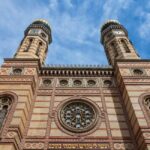
The tour kicks off at the Great / Central Synagogue (Nagy Zsinagóga), also known as the Dohány Street Synagogue. It’s described as the world’s second largest synagogue, and you feel that scale right away. This is not just a big church-like landmark; it’s a complex that also holds memorial-focused spaces.
What makes this first stop so valuable is what’s on-site. You’ll spend about 1 hour here, exploring exhibitions and memorials, including the Holocaust Memorial, the Cemetery of Heroes, and the Tree of Life. The grounds also tie into the Wallenberg Memorial Park (another name to remember because it often comes up when people try to understand Budapest’s World War II history).
Practical note: the itinerary says admission is not included for this stop. That means you should expect to pay for entry separately. If you tend to plan on the fly, just know you’ll want a payment method ready.
The guide element is the difference-maker. A building like this can turn into sightseeing photo time if you have no context. With a good guide, you start recognizing symbols and names, and you understand why each memorial piece sits where it does.
Stop 2: Hungarian Jewish Museum and Archives (a short visit with real payoff)
Next comes the Hungarian Jewish Museum and Archives, with about 30 minutes planned. This is a focused stop, not a slow museum marathon, which is exactly what works for a 4-hour total tour.
The museum’s special pull is its collection of Jewish artifacts and the stories behind them. One standout example mentioned in the tour description is the world’s oldest Torah finial. Even if that detail is just one item on a larger display, it signals the kind of specificity you’ll be hearing about.
Admission is also not included here, so it’s another spot where you’ll pay on your own. But compared with visiting independently, you’re saving time: you’re not guessing what to see first, and you’re not stuck reading every label without a guide to connect the dots.
Stop 3: District VII Jewish Quarter walk, where history meets nightlife and shops
Then you move into District VII, often called part of the Jewish Quarter. This is where Budapest’s layers start to feel like a lived-in place instead of a museum district. The walking portion runs about 1 hour, and it’s designed to hit highlights while still pointing out the smaller details that make the area feel real.
You’ll cover the famous World Heritage site angle while also discussing the long history of the Hungarian Jewish community. The tour route includes sights connected to modern-day culture too: ruin bars, eclectic boutiques, and avant-garde galleries, plus places to eat.
There’s a quiet practical benefit here. If you’ve only got a half-day, this is the section where you get oriented for the rest of your stay. After the tour, you’re more likely to know which streets you want to return to later and which ones you can skip.
If you’re worried the walk might be all shops and no substance, don’t be. The point is that you understand what you’re seeing, not just the storefronts. A good guide helps you read the street culture as part of the same long timeline.
Stop 4 and 5: Kazinczy Street Synagogue and Rumbach Street Synagogue
From the bigger public places, the tour shifts to smaller, more personal synagogue spaces.






Kazinczy Street Synagogue (about 20 minutes)
At Kazinczy Street Synagogue, the tour is about 20 minutes. This stop focuses on a small orthodox community and the everyday habits and customs that go along with worship and community life. That matters because it counters a common travel mistake: people see grand synagogues and assume that’s the whole story. Here, you get a different scale and a different feel.
Admission is not included, so plan for another entry cost if the synagogue requires one during your visit.
Rumbach Street Synagogue (about 15 minutes, under reconstruction)
The final synagogue stop is Rumbach Street Synagogue, about 15 minutes. The tour description notes it is currently under reconstruction. That doesn’t mean you should expect nothing, but it does mean parts of the experience may be limited compared with a fully open site.
Given that, I’d treat this stop as a chance to learn the story behind the synagogue and the wider Jewish Triangle layout, even if the building access is restricted during renovations.
Stop 6: Shoes on the Danube Bank and why the story hits
You end with the Shoes on the Danube Bank memorial. It’s a short stop at about 15 minutes, but it’s not a quick one emotionally.
The memorial is built on a specific narrative: people were killed and forced into the Danube area, and the shoes became a way to represent that. The tour description emphasizes learning the story behind the landmark, and the guide’s delivery is clearly part of why this stop lands. One detailed account highlights how the guide depicted the men, women, and children who were shot and thrown into the river, using the idea of empty shoes as the visual anchor.
The guided context turns a striking sculpture into something you understand. Without it, it’s easy to treat it like a photo spot. With it, you grasp why the shoes are the point.
If you have the chance during the transport leg (the tour uses public transport), you may also see the river area and the Parliament building views from the route. That helps break up the day and gives you a clearer mental picture of where the memorial sits in the city layout.
Price and value: what $272.20 per group really buys
The listed price is $272.20 per group (up to 10 people) for about 4 hours. That can feel small or large depending on how you travel.
Here’s the value logic:
- You’re paying for a private guide for a set time, not just a ticket to a couple of sites.
- The tour includes hotel pickup (offered), plus transportation tickets and a mix of walking and public transport. That reduces your own logistics work.
- The route covers multiple landmarks that are hard to connect without guidance, including major synagogue memorial spaces and a river memorial.
What you need to factor in:
- Entry fees are not included for the main synagogue, the museum, Kazinczy Street Synagogue, and Rumbach Street Synagogue. The itinerary also notes a few free stops (like District VII walking and the Danube memorial stop time), but you should still budget for indoor admission.
So the price works best when you’ll actually use the guide’s expertise across several stops. If you’re the type who only wants one or two big landmarks and doesn’t care about deeper context, you might not get your money’s worth. If you want a guided narrative through the district, this is a sensible deal for a private group.
Timing and comfort: 2:30 pm, walking, and public transport
The start time is 2:30 pm, which is a practical choice. It gives you time in the morning to explore on your own, and it places the memorial at a point where you’re already warmed up to the emotional weight of the day.
The tour uses walking plus public transport, and it asks for moderate physical fitness. That usually means comfortable shoes matter, and you’ll want to pace yourself. It’s not described as a strenuous trek, but you will be on your feet and moving between sites.
Because it’s offered in English and you get a mobile ticket, it’s usually easier to show up and go. The tour also states it’s near public transportation, which helps if your plans change.
Who should book this Budapest Jewish Heritage Tour
This is a strong match if you want:
- A private half-day format rather than a crowded group bus experience
- Clear context across multiple sites in the Jewish Quarter and the Danube riverbank
- A guide approach that mixes “what you see” with “why it matters,” including the more difficult parts of history
It’s also ideal if you’re traveling with family or friends in a small group of up to 10. The format stays flexible enough to support different interests as the day unfolds, and the guide is there for questions.
If you get uneasy with emotional topics, you should know the tour is designed to cover serious subject matter. The Shoes memorial stop is handled with a story that makes it feel personal, not distant.
Should you book it?
I’d book this Budapest Jewish Heritage Tour if you want more than sightseeing. The route is built to connect big institutions with smaller community spaces and then land at a river memorial with real weight. The guide quality seems to be the whole point, especially from the way György Rashad Salamon is described as professional and highly involved in how the story is told.
Two reasons you might pause:
- You’ll pay extra for several entrances because admission isn’t included for key indoor stops.
- The Rumbach Street Synagogue is under reconstruction, which can limit what you can see there.
If you’re okay budgeting for entry fees and you prefer a guided narrative over reading signs, this tour is a solid choice for a meaningful afternoon in Budapest.
FAQ
How long is the Budapest Jewish Heritage Tour?
The tour lasts about 4 hours.
What is the meeting/start time?
The start time is 2:30 pm.
Is hotel pickup included?
Pickup is offered, and the tour description lists hotel pickup as included.
Is the tour private?
Yes. It’s a private tour/activity, with only your group participating.
Are admission tickets included for synagogues and museums?
No. Admission for several stops is not included and is listed as at your own cost, while some parts of the route are free.
What language is the tour offered in?
The tour is offered in English.
What’s included in the price?
It includes a local guide / professional guide, hotel pickup, and transportation tickets.
Is free cancellation available?
Yes. You can cancel up to 24 hours in advance for a full refund.