Too many sights, too little time. This private Budapest day tour solves the big problem fast—getting you between far-flung landmarks without burning hours on buses. I like the private setup (just your group in the car) and the included traditional Hungarian lunch that keeps the day from turning into nonstop sightseeing.
The route packs in impressive stops across both Pest and Buda, with options to customize the order. One heads-up: several major attractions have admission not included, so you’ll want to be ready for extra ticket time and budget for places like Széchenyi Baths and the Parliament area.
You start with classic monuments and city views, then move into the thermal-bath park zone and end in the Castle District for big panoramas over the Danube. It’s a smart way to cover Budapest’s greatest-hits in about 7 hours, especially if you want guided context without a complicated transit plan.
In This Review
- Key highlights at a glance
- Why a private car “greatest hits” day is worth it in Budapest
- How the day is paced (and why the stop lengths matter)
- Heroes’ Square, Andrássy Avenue, and the Opera House: starting with power and style
- St. Stephen’s Basilica and Liberty Square: symbols you can actually interpret
- Hungarian Parliament, Chain Bridge, and the Danube view factor
- Széchenyi Baths and Vajdahunyad Castle: a break that feels like a real Budapest day
- Gellért Hill: Citadella and the Liberty Statue viewpoint combo
- Matthias Church area and Buda Castle: the skyline finale you’ll remember
- Central Market Hall: a practical local stop that doesn’t eat your day
- Lunch and the guide factor: the part you’ll feel, not just see
- Price and value: what $280.59 buys you (and what to budget extra)
- Who should book this private greatest-hits day?
- Should you book Budapest Greatest Hits (private full day with lunch)?
- FAQ
- How long is the Budapest Greatest Hits private tour?
- Is this tour private?
- Is pickup offered?
- Is lunch included?
- Do I need to pay admission for every stop?
- Is the car air-conditioned?
- What are some of the main stops on the route?
- Does the tour use mobile tickets?
- Can I get a full refund if I cancel?
Key highlights at a glance
- Private, car-based routing saves you from timed bus connections and long walks between districts
- Air-conditioned comfort on a full-day schedule, with pickup offered
- Guide-led cultural context, with Emise highlighted for friendly, clear explanations
- Széchenyi Baths stop (largest medicinal bath in Europe) with thermal water at 74–77°C, though admission isn’t included
- Buda Castle viewpoints at Matthias Church area and Fisherman’s Bastion for skyline photos
- Central Market Hall detour for an easy, free-to-enter taste of daily local life
Why a private car “greatest hits” day is worth it in Budapest
Budapest is gorgeous, but it’s also practical-unfriendly for a tight schedule. The sights you actually want—Heroes’ Square, Opera, Parliament, Chain Bridge, the Castle District—don’t sit next to each other like they do in some compact cities. Public transit can work, but it’s not always efficient when you’re trying to hit a dozen photo-worthy stops in one day.
This tour is built to fix that. You get a driver who moves you between landmarks, so you can spend more time looking around and less time figuring out routes, transfer points, and delays. And because it’s private, you’re not being pushed along by a big group schedule.
I also like that it doesn’t treat Budapest as a single “museum day.” The day has variety: grand national monuments, a thermal spa break, Danube landmarks, and the Castle District viewpoints. You end up with a fuller sense of the city’s layers.
You can also read our reviews of more private tours in Budapest



How the day is paced (and why the stop lengths matter)
This is an approximately 7-hour private tour, structured around a run of timed stops. You’ll see a mix of 10, 15, and 20-minute windows, plus a longer pair of stops at the Gellért Hill area (Citadella and the Liberty Statue) and a 25-minute Citadella window.
That pacing has a trade-off. You’ll get broad coverage and smart orientation, but you won’t be doing deep museum-style visits at every stop. Think of it as a guided “greatest hits” route: enough time to see, absorb, and take photos, then move on before the schedule compresses the rest of the day.
If you’re the type who likes to linger in one place for an hour (or who needs long lines and slow wandering), you might feel a bit rushed. If you’re more “show me the highlights and give me context,” the timing fits really well.
Practical tip: wear comfortable shoes and keep a light layer handy. Budapest weather can shift fast, and you’ll be outside for multiple quick walks even when you’re not technically “on foot” for long stretches.
Heroes’ Square, Andrássy Avenue, and the Opera House: starting with power and style
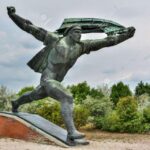
The day often kicks off at Heroes’ Square (Hősök tere), one of Budapest’s biggest landmark squares. It’s famous for the statue complex showing the Seven chieftains of the Magyars and other key Hungarian leaders, plus the Memorial Stone of Heroes—commonly mistaken for the Tomb of the Unknown Soldier. That small note matters because it helps you read the symbolism correctly while you’re looking.
Next up, you get a quick look at Andrássy Avenue (Andrássy út), a grand boulevard dating back to 1872. The street is lined with Neo-renaissance mansions and townhouses, and it’s a World Heritage Site (recognized in 2002). Even if you only have a few minutes, the scale of the facades gives you a sense of how formal and historic the city looks from ground level.
The Hungarian State Opera House sits right on Andrássy Avenue, and it’s worth a stop even if you’re not planning to watch a performance. It’s a neo-renaissance opera house designed by Miklós Ybl. From outside, you’ll understand why this avenue feels so ceremonial.
Admission note: Heroes’ Square and Andrássy Avenue are free on this route. The Opera House stop is listed as not including admission, so use your time for exterior views and quick orientation rather than expecting a full interior visit.
St. Stephen’s Basilica and Liberty Square: symbols you can actually interpret
From the central grandeur, you move toward the religious landmark of St. Stephen’s Basilica (Szent István-bazilika). It’s named after Stephen, the first King of Hungary, and the reliquary housing his right hand is a key detail that gives the building a “this is personal to the country” feeling. Even with a short visit window, that context helps you look beyond the architecture.
Then you head to Liberty Square (Szabadság tér), a public square in Lipótváros. It mixes business and residential life rather than feeling like an empty monument district. On one side you’ll find the US Embassy in Hungary, and you also get to see the historicist style presence of major financial institutions nearby.
St. Stephen’s Basilica stop is listed as admission not included. Liberty Square is free. That means you can usually spend your time comfortably without having to manage ticket logistics at every step.
Hungarian Parliament, Chain Bridge, and the Danube view factor
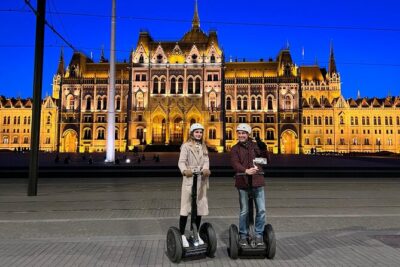
One of the biggest “wow” moments in Budapest is usually the Hungarian Parliament Building (Országház). It’s the seat of Hungary’s National Assembly and a top tourist draw. On this tour, you’ll get time to see it as part of a wider Danube-and-district storyline rather than as a single isolated stop.
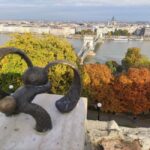
After that, you cross into Danube-land at Széchenyi Chain Bridge (Széchenyi lánchíd). Chain bridges in any city are impressive, but in Budapest they also connect the story of Buda and Pest into one visual line. Even if you don’t spend long there, it’s the kind of stop that helps you understand how the city “hangs together.”
Admission note: the Parliament stop is not included; Chain Bridge is free on this route. That’s another reason the car route works—timing the “must-see exteriors” portion without getting stuck waiting around for ticketed attractions every time.
You can also read our reviews of more tours and experiences in Budapest




Széchenyi Baths and Vajdahunyad Castle: a break that feels like a real Budapest day
No Budapest greatest hits day feels complete without thermal-bath energy. The tour includes a stop at Széchenyi Medicinal Bath, described as the largest medicinal bath in Europe. Here’s a useful detail to keep in mind while you’re there: water is supplied by two thermal springs around 74°C (165°F) and 77°C (171°F).
In other words, this isn’t just “pretty architecture and a photo.” The thermal-water numbers explain why the atmosphere feels restorative even if you’re only there briefly.
Admission is not included for Széchenyi Baths. The stop is listed at about 10 minutes, so I’d treat it as a focused break and an orientation stop—time to see the bath setting and decide if you want to return for a longer soak on a separate day.
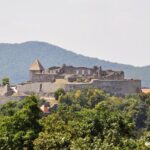
Right nearby is Vajdahunyad Castle (Vajdahunyad vára) in City Park. This one has a fun origin story: it was built in 1896 as part of the Millennial Exhibition, marking 1,000 years since the Hungarian Conquest of the Carpathian Basin (starting in 895). It’s one of those buildings that looks like it’s always been there, but it’s tied to a specific historical celebration.
Admission note: Vajdahunyad Castle is not included on this route, and the stop is short (about 15 minutes). Use that time for the exterior and the “park + castle” contrast.
Gellért Hill: Citadella and the Liberty Statue viewpoint combo
Next comes Citadella on Gellért Hill—a fortification that sits in a historically strategic position in Budapest’s military story. This stop gets more time than many others (about 25 minutes), which is exactly what you want here. Citadella is the kind of place where a short window feels incomplete; you need a little time to look out over the city and let the terrain make sense.
Close by is the Liberty Statue (Freedom Statue), also on Gellért Hill. It commemorates those who sacrificed their lives for Hungary’s independence, freedom, and prosperity. When you combine the statue with the Citadella viewpoint, you get two angles of the same theme: the physical control of high ground, and the national meaning behind the sacrifices.
Admission note: both Citadella and the Liberty Statue are listed as free. With the time you get, this is a great part of the day for photos without feeling like you’re rushing through a ticket line.
Matthias Church area and Buda Castle: the skyline finale you’ll remember
Now you shift fully into Buda Castle territory, where the views tend to do most of the selling.
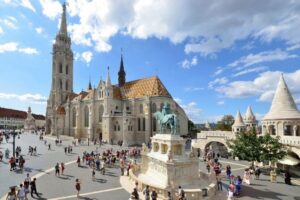
First, you’ll be at Matthias Church (Mátyás-templom), also called the Church of the Assumption of the Buda Castle. It sits in Holy Trinity Square, in front of the Fisherman’s Bastion area. Even in a short visit (about 10 minutes), it’s helpful to know you’re looking at a church with a strong identity tied to major moments in Hungarian tradition—what many people associate with the Castle District’s ceremonial “heart.”
Then comes the big photo stop: Buda Castle (Budavári Palota). The site’s story is long—first completed in 1265, with the massive Baroque palace built between 1749 and 1769. That blend of periods is why the Castle District feels like a living archive rather than one uniform style.
Finally, you get Fisherman’s Bastion (Halászbástya), one of Budapest’s most famous lookouts. The terraces are described as Neo-Romanesque, and the standout feature is the panorama—an excellent place for skyline photos that show how the city sits along the Danube.
Admission note: Matthias Church and Buda Castle are listed as not included. Fisherman’s Bastion is free. With short time windows (10–15 minutes), treat these as “see and frame the view” stops, not as replacement for a longer Castle District wandering day.
Central Market Hall: a practical local stop that doesn’t eat your day
To finish up, you’ll stop at the Central Market Hall (Nagyvásárcsarnok). It’s described as the largest and oldest indoor market in Budapest, and the building idea ties back to the first mayor, Károly Kamermayer. It even notes he retired in 1896 and participated in the opening ceremony on February 15, 1897.
This is a valuable last stop because it’s flexible. You don’t need a ticket time plan—you can simply browse and pick up snacks or small things to bring home if you want. The stop is around 15 minutes, which is enough to feel the market’s energy without turning your day into a shopping spree.
Admission is free on this route, so it’s low-stress compared with many other attractions that require paid entry.
Lunch and the guide factor: the part you’ll feel, not just see
The tour includes a traditional Hungarian lunch along the way. Even when sightseeing is the headline, lunch matters. It gives you a real break in the middle of an information-heavy day and stops the schedule from feeling like a nonstop parade of landmarks.
The guide experience is also a major strength. One highlight is the guide Emise, specifically praised for a friendly personality and for sharing cultural information in a way that makes the city click. Another useful note: guides may speak Spanish, which is a big advantage when you want to ask questions and get details in a language you can think in.
If you love learning little “why does it look like that?” facts while you’re standing in front of the building, this kind of guided context is the difference between a checklist and an actual understanding of Budapest.
Price and value: what $280.59 buys you (and what to budget extra)
At $280.59 per person, this isn’t a budget tour. It’s a convenience-and-coverage purchase: private car transport, a full-day structure, and lunch included. You’re paying for fewer logistics headaches and a route that keeps you moving efficiently between districts.
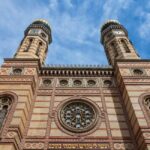
That value gets stronger when you consider what’s included versus what isn’t. Free stops on this route include Heroes’ Square, Andrassy Avenue, Liberty Square, Chain Bridge, Citadella, Liberty Statue, Fisherman’s Bastion, and Central Market Hall. Not-included admission stops include Széchenyi Baths, the Hungarian State Opera House, St. Stephen’s Basilica, the Hungarian Parliament Building, Great / Central Synagogue, Matthias Church, and Buda Castle.
So you’ll want to plan for extra costs if you intend to enter those paid attractions. If you’re happy with exterior time at the not-included spots, your out-of-pocket might stay manageable. If you want interiors for most of them, budget accordingly.
Also, group discounts are mentioned. If you’re traveling as more than one person, private touring can be easier to justify than trying to cobble together multiple timed public-transit days and paid entrances on your own.
Who should book this private greatest-hits day?
I’d point you to this tour if:
- you’re short on time and want to cover both Pest and Buda without transit stress
- you like having a plan but still want time for photos and quick walks
- you value cultural explanations while you’re looking at the monuments
- you’d rather sit in an air-conditioned car than coordinate multiple bus rides
I’d skip (or pair with another day) if:
- you want long museum hours, deep-cathedral interior time, or slow neighborhood wandering
- you hate short stop windows and want to stay put for 60–90 minutes in one place
It’s a great “first big day” in Budapest, but it also works as a “we need to see more before we leave” rescue plan.
Should you book Budapest Greatest Hits (private full day with lunch)?
If your priority is efficiency plus context, I think this is a solid buy. The private car removes the biggest pain point of a tight Budapest schedule, and the inclusion of lunch keeps you from feeling like a hungry photo-stopper all day.
My only caution is your expectations about ticketed sights. Some of Budapest’s star interiors aren’t included, so decide ahead of time which ones you truly want to enter versus which ones you’ll enjoy from the outside.
If you want an organized, comfortable way to get the “greatest hits” in one day, book it. If you’re the type who plans to linger and go deep at a couple of specific sites, you’ll probably enjoy choosing a slower, focused plan instead.
FAQ
How long is the Budapest Greatest Hits private tour?
The duration is listed as about 7 hours.
Is this tour private?
Yes. It’s a private tour/activity, and only your group participates.
Is pickup offered?
Pickup is offered.
Is lunch included?
Yes. There’s a traditional Hungarian lunch included along the way.
Do I need to pay admission for every stop?
No. Some stops are listed as free, while several major attractions show admission tickets as not included (for example Széchenyi Baths, the Opera House, St. Stephen’s Basilica, the Parliament Building, and others).
Is the car air-conditioned?
Yes. You’ll ride in an air-conditioned car between sites.
What are some of the main stops on the route?
Common stops include Heroes’ Square, Széchenyi Baths and City Park (Vajdahunyad Castle), Andrássy Avenue, the Hungarian State Opera House area, St. Stephen’s Basilica, Liberty Square, the Hungarian Parliament Building, Széchenyi Chain Bridge, Citadella on Gellért Hill, Matthias Church area, Buda Castle, Fisherman’s Bastion, and Central Market Hall.
Does the tour use mobile tickets?
Yes. Mobile ticket is included.
Can I get a full refund if I cancel?
Free cancellation is available, and you can cancel up to 24 hours in advance for a full refund.