REVIEW · HISTORICAL TOURS
Private Jewish Heritage Tour of Budapest with Local Expert
Book on Viator →Operated by Friendly Local Guides · Bookable on Viator
Budapest tells its Jewish story on foot. This private tour threads together Dohány Street, the Jewish Quarter, and WWII-era sites with a local expert guiding you through what you’re looking at and why it mattered. It also stops for a real food break, not just photos—so you finish with both context and a little taste of Hungarian Jewish life.
I especially like the Flódni stop at Fröchlich Patisserie, because it grounds the day in something you can actually savor, not just read about later. I also appreciate the respectful pause at the Carl Lutz Memorial, where the tour shifts from landmark spotting to remembrance and meaning. When you want facts plus a sense of moral clarity, that combination works.
One thing to consider: it’s a moderate walking experience packed into about 2.5 hours, with mostly short stops. If you’re sensitive to tight timing—or if a guide is forced to cancel at the last minute—you’ll want a flexible plan for the rest of your day.
In This Review
- Key points worth knowing before you go
- Entering the Jewish Quarter the right way: Herzl Square to the Great Synagogue area
- How the private format changes everything (and what to do with it)
- WWII-era Budapest: walking the 1944 ghetto landmarks with context
- Dohány Street Synagogue area: why it’s a main stop
- The synagogue triangle: Great, Rumbach, and Kazinczy in one focused walk
- Carl Lutz Memorial: turning a name into a human story
- Erzsébetváros and “a city within a city” feeling
- Dob Street and Kazinczy: food break meets street-level Jewish life
- Castle Garden: the ritual bath photo with a purpose
- Timing, logistics, and what to wear for a smooth 2.5 hours
- Price and value: what $220 per person buys you
- A quick reality check: cancellations and guide reliability
- Who this tour suits best (and who might want something different)
- Should you book this Budapest Jewish Heritage Tour?
- FAQ
- How long is the Private Jewish Heritage Tour of Budapest?
- Is this tour private?
- Do they offer pickup?
- Are entrance tickets included for synagogues and other sites?
- What food is included during the tour?
- Is the tour suitable for people with mobility limits?
- How do cancellations work?
Key points worth knowing before you go
- Private pacing: you can ask questions without a crowd controlling the tempo
- Synagogue focus: you’ll cover the synagogue triangle areas in one efficient run
- WWII Ghetto context: the walk includes major 1944 ghetto landmarks
- Meaningful memorial stop: Carl Lutz gets specific attention
- Food included: Flódni is built into the schedule
- Local tips included: you get guidance for beer ruins and nightlife after
Entering the Jewish Quarter the right way: Herzl Square to the Great Synagogue area
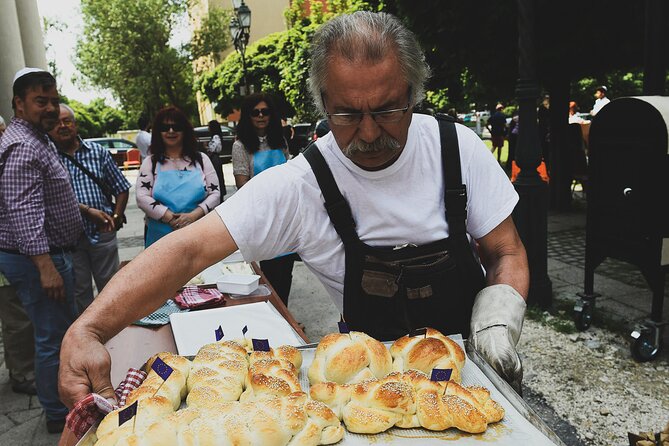
This tour starts in the Jewish Quarter, where Budapest’s Jewish community has shaped the city for generations. You begin around Herzl Square and the Great Synagogue area, which helps you orient fast. Instead of “random synagogue photos,” you get a guided sense of geography: where the community lived, where it prayed, and where the city’s later trauma landed.
From there, you move into the streets of the Jewish Quarter—an area that still feels active and lived-in, even though it’s also full of memorials and historical markers. The value here is the guide’s ability to connect the present-day streets to what happened in the past, especially when the tour turns toward the WWII ghetto story.
You’ll also notice how the tour handles timing. Early stops are designed to set the frame, then you build toward heavier themes. If you’ve visited Budapest before, this feels like a second layer you may have missed. If it’s your first time, it gives you a “map in your head” instead of a pile of disconnected sights.
You can also read our reviews of more private tours in Budapest



How the private format changes everything (and what to do with it)
Because it’s private, you’re not forced into a one-size-fits-all pace. This is one of those tours where the guide’s conversation matters almost as much as the buildings. You can ask follow-ups—like what a particular synagogue’s architectural style signals, or what you should watch for as you walk past memorials.
You may also get a guide who’s especially clear and on-time. In past experiences with this tour, Miklos has been praised for being punctual, explaining calmly, and taking time rather than rushing you through. That’s exactly what you want on a subject like Jewish Budapest, where small details often carry big meaning.
Practical note: the tour lasts about 2 hours 30 minutes, so it’s not a slow museum day. But private pacing makes that feel less like a sprint and more like a focused walk where you can ask one more question when it matters.
WWII-era Budapest: walking the 1944 ghetto landmarks with context
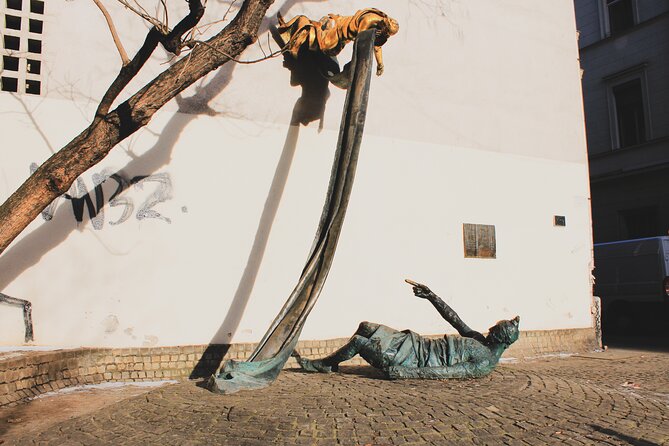
One of the strongest parts of this tour is the way it handles the WWII story without leaving you floating in abstract facts. You’ll walk past major landmarks of the city’s World War II Ghetto of 1944. The guide’s job is to help you connect locations to what those places meant—who lived there, what changed, and how the city’s Jewish community was affected.
This matters because ghetto history can be emotionally heavy, and visuals can be misleading if you don’t know what you’re seeing. A guided walk helps you avoid the trap of turning suffering into sightseeing. You’re there to learn and remember, and the memorial elements in the route reinforce that tone.
If you’re sensitive to difficult topics, plan your day accordingly. I’d pair this with a quieter evening afterward, so your brain has time to process. And if you’re traveling with teens, this format can work well because the guide can tailor explanations in real time.
Dohány Street Synagogue area: why it’s a main stop
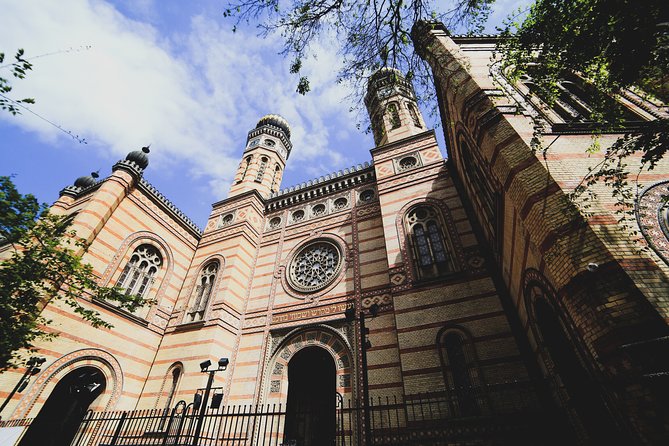
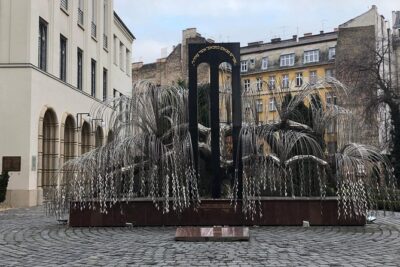
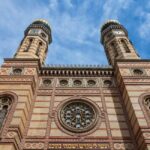
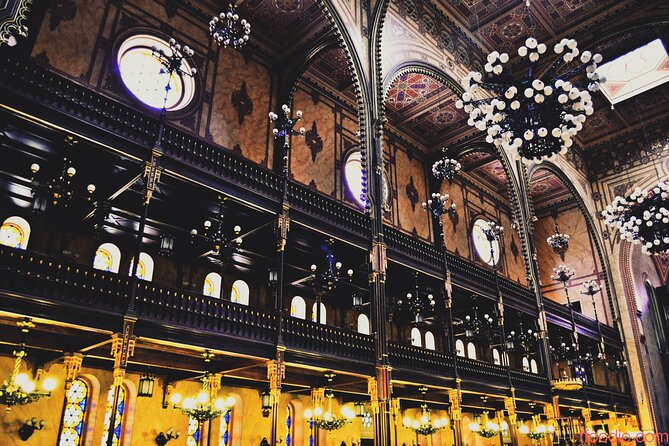
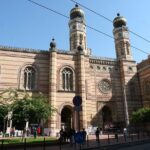
The tour’s main event is the vicinity of Dohány Street Synagogue, described as the largest synagogue in Europe and the second largest in the world. Even if you only see the outer areas and surroundings up close, the scale alone makes the stop click. This is one of those places where Budapest feels different once you understand its role in Jewish communal life.
What you’ll appreciate most is not just the size—it’s the guide’s ability to point out what the synagogue symbolizes in the city’s story. You’re not there for a quick photo op; you’re there to understand why this site is a focal point for modern memory and communal identity.
Also, because the tour is walking-based, you’re able to keep your momentum. That matters when you’re juggling multiple landmarks without wasting time on transit.
The synagogue triangle: Great, Rumbach, and Kazinczy in one focused walk
After Dohány Street, the tour continues through the synagogue triangle. You’ll visit the Rumbach Street Synagogue area—known for its graceful interior decoration and light-filled look. Short stop time here can sound limiting on paper, but the guide helps you know what to notice when the details are easy to miss.
Next comes Kazinczy Street Synagogue, where you’ll be in the vicinity of one of the largest functioning Orthodox synagogues in Europe, with Art Nouveau style noted. The point of including Kazinczy is that it gives you a contrast: different synagogue styles, different communities, and a better sense of how varied Jewish life became in Budapest.
You’ll also pick up street-level tips along the way, including local guidance for beer ruins and nightlife, plus comments on street art and other secrets around these neighborhoods. That’s useful because it turns the tour from “history only” into “history plus how to enjoy Budapest after.”
You can also read our reviews of more historical tours in Budapest


Carl Lutz Memorial: turning a name into a human story
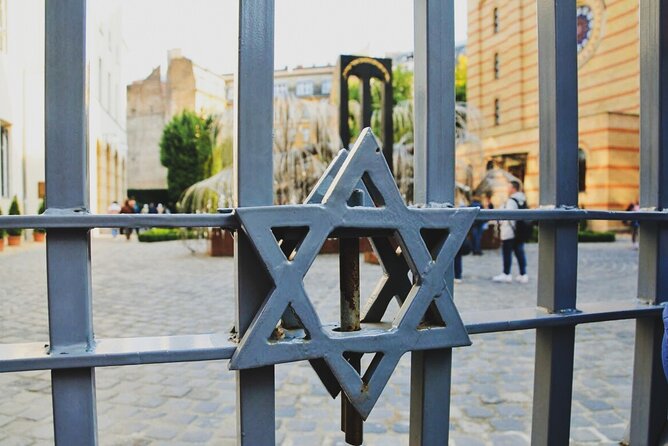
The tour includes a stop at the Carl Lutz Memorial, honoring Carl Lutz, described as one of the Righteous Among the Nations of the World—often called the Hungarian Schindler. This is a major emotional shift from the synagogue and ghetto landmarks, and it’s one reason the tour feels balanced.
The memorial works best when the guide explains it as more than a plaque. You get a chance to connect the WWII narrative to individual courage, which prevents the story from being only about loss. It also gives you a clearer takeaway: that history includes both harm and rescue, and those rescue stories deserve space too.
If you like tours that slow down for meaning, this is one you should enjoy.
Erzsébetváros and “a city within a city” feeling
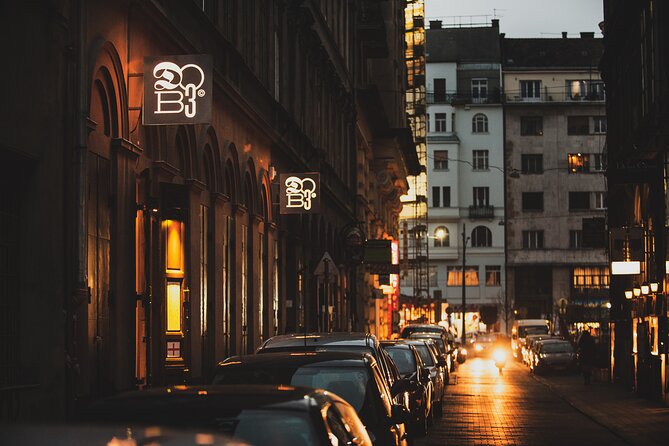
The route moves into Erzsébetváros, the area tied to Budapest’s historic Jewish quarter and the former ghetto in the heart of old Budapest. The tour frames the district as a “city within a city,” and you’ll likely feel that on the walk: it’s not just a cluster of synagogues, but a web of monuments, religious spaces, and communal life.
This is also where the guide’s storytelling becomes the glue. Instead of listing names, you get local stories about what the streets meant—plus how the neighborhood functions today. You’ll come away with a better sense of why Jewish life in this district wasn’t one single thing, but a network of institutions.
Even in a short stop window, this kind of context helps you spot patterns. Afterward, it’s easier to understand what you see when you wander on your own.
Dob Street and Kazinczy: food break meets street-level Jewish life
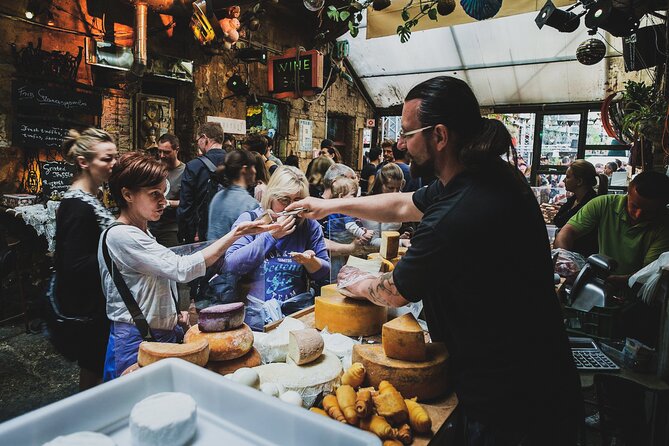
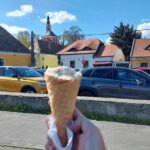
Then you get to the fun part—at least as far as schedule breaks go. The tour includes a stop at Fröhlich Confectioner’s for Jewish treats, with Flódni highlighted as the iconic choice. You might also see options mentioned for other seasonal or holiday-style Jewish pastries like chanukkai donut and Purim Haman’s ears.
This matters because Hungarian Jewish food is part of identity, not just dessert. Flódni is a perfect example: it’s specific, local, and tied to Jewish life in Hungary. If your brain is tired from heavy history, this break gives it something tangible to hold.
After that, the walk returns to the Kazinczy central area. The tour notes that it used to be a Jewish market area, surrounded by shops and law firms, and now it can feel more like a wine cellar vibe, including kosher wine of high quality. Whether or not you stop in for a drink, it’s a useful mental picture for understanding how neighborhoods evolve without disappearing.
Castle Garden: the ritual bath photo with a purpose
One stop you might not expect on a synagogue-focused tour is Castle Garden, connected with the oldest traditional Jewish baths used for ritual purposes. Getting a chance to take a picture here can feel like a quick moment—but it’s also a chance to understand Jewish practice beyond worship spaces.
That’s the beauty of including it. It widens your view of what Jewish heritage includes: community, routine, and religious life in everyday architecture, not only grand buildings.
Timing, logistics, and what to wear for a smooth 2.5 hours
This is designed as a walking tour with short segments, so your comfort matters. The tour is listed for travelers with moderate physical fitness, and it’s in an area with plenty of street-level walking.
Here’s what I’d plan for:
- Wear comfortable walking shoes you trust for uneven sidewalks.
- Bring a light layer. Budapest weather changes fast, and short stops mean you’re exposed between shaded places.
- Use the mobile ticket and keep your phone charged, since it’s part of the experience method.
- If you want to avoid last-minute friction, choose a start time that lets you slow down after the tour.
Pickup is offered, and the tour is near public transportation. If you’re staying outside the core areas, pickup can save energy for the walk itself.
Price and value: what $220 per person buys you
At $220 per person, this tour isn’t a budget impulse buy. So the real question is whether you’re getting something worth paying for.
What you are paying for:
- A private walking tour (so your questions don’t get cut off by a group pace)
- A local expert focused on Jewish heritage sites
- Included coffee and/or tea
- Included learning materials: a notebook and souvenir pen, plus visual handouts
- Included food tasting: Flódni (and possibly other treats mentioned at the confectioner stop)
- Admission ticket notes for stops are marked as free in the tour schedule, but the overall experience also states entrance tickets are not included, so you should expect mostly guided access and short visits around synagogue areas rather than a full paid-entry circuit
For couples and history-focused visitors, it can be a strong value because you’re buying clarity. When the guide is solid, you stop feeling like you’re just walking from one landmark to another.
If you’re traveling solo, you’ll feel the price more. If you’re traveling with someone who loves asking questions, the private format usually justifies the cost fast.
A quick reality check: cancellations and guide reliability
Private tours depend on people. The experience has seen situations where a guide could not perform and the booking was canceled with a refund. That’s rare, but it’s real enough that I’d keep an eye on your communication day-of.
If your schedule is tight, consider booking a time with some cushion. And if you’re relying on this tour as your main Jewish heritage plan, I’d have one flexible alternative activity nearby.
Who this tour suits best (and who might want something different)
This tour fits best if you:
- Want guided context for synagogues, memorials, and WWII ghetto landmarks
- Like walking tours but don’t want a marathon
- Care about both architecture and the human stories behind it
- Want a food stop that ties into Jewish life in Hungary
It might feel less ideal if you:
- Prefer long time at indoor museum spaces (this is short stops, mostly walking)
- Have trouble with moderate walking over several city blocks
Should you book this Budapest Jewish Heritage Tour?
I’d book it if you want one focused package that covers the Jewish Quarter, key synagogue areas, WWII ghetto landmarks, and a memorial, all with a guide who can explain what you’re seeing. The Flódni stop at Fröhlich Patisserie is a smart bonus, and the included notebook/handouts are the kind of small add-ons that help you remember what you learned.
I’d think twice if your day is overloaded or if you need lengthy indoor access. Also, because the tour is private and human-dependent, give yourself a little schedule breathing room.
If your goal is a guided, respectful, and practical overview of Budapest’s Jewish heritage, this one does the job.
FAQ
How long is the Private Jewish Heritage Tour of Budapest?
It runs about 2 hours 30 minutes.
Is this tour private?
Yes. It’s a private walking tour, and only your group participates.
Do they offer pickup?
Pickup is offered.
Are entrance tickets included for synagogues and other sites?
The tour includes all fees and taxes, but entrance tickets are listed as not included. Some stops are noted as free, so you should expect a mix of guided visiting and viewing around the sites rather than a guarantee that every interior attraction has paid entry covered.
What food is included during the tour?
Flódni is included at Fröhlich Patisserie, and the tour also mentions other Jewish delicacies like chanukkai donut and Purim Haman’s ears at the confectioner stop. Coffee and/or tea are also included.
Is the tour suitable for people with mobility limits?
It’s designed for travelers with moderate physical fitness and includes walking.
How do cancellations work?
Free cancellation is available up to 24 hours in advance for a full refund.
If you’d like, tell me your travel dates and how many people are going, and I’ll help you decide whether the $220 per person price feels right for your group and schedule.