REVIEW · JEWISH QUARTER & SYNAGOGUE TOURS
Budapest Dohany, Heroes’, Rumbach synagogues & Jewish Ghetto Tour
Book on Viator →Operated by Hidden Treasure Tours · Bookable on Viator
Budapest’s Jewish Quarter hits hard and smart. This 2-hour walking tour connects synagogues, street life, and Holocaust remembrance into one easy route. I love how it pairs big architecture moments with real names and specific places, and how guides like Milan and David (and others such as Micky/Micki) answer tough questions without turning the mood into a lecture. One thing to plan for: you’ll be moving on foot between stops, and the schedule is packed—so if you want lots of free time to shop or linger, this isn’t that kind of outing.
The price is also easier to swallow than it looks at first glance, because key admissions are included (not just a look from the sidewalk). Still, the dress code can feel strict at first—covered shoulders and knee-length clothing are required inside, with covers sold on the spot.
If you’re the type who likes history that comes with context and compassion, you’re in the right place. And if you’re hoping for a quick, light stroll with no emotional weight, consider that this route includes multiple Holocaust memorial stops.
In This Review
- Key things you’ll notice on this tour
- Start at Dohány Street: the Great/Central Synagogue experience
- Raoul Wallenberg Memorial Park: Holocaust remembrance with specific names
- Rumbach Street Synagogue: Otto Wagner’s Moorish masterpiece
- Kiraly Street and Gozsdu Udvar: the Jewish Quarter as a living neighborhood
- Carl Lutz Memorial and the human scale of rescue
- Spinoza Szinhaz: philosophy made into a local landmark
- Kosher flodni moment: snack culture without losing the thread
- Dob Street and Kazinczy Street: Orthodox life and Secession architecture
- The pacing and guide style: why this tour feels different
- What I’d pack (and how to avoid small headaches)
- Who this tour is best for
- Should you book this Budapest Jewish Quarter tour?
- FAQ
- What’s the duration of the tour?
- How much does it cost, and what language is offered?
- Which stops include admission tickets?
- Where do I meet, and where does the tour end?
- Is there a dress code?
- What should I do if synagogues close temporarily?
- What if the weather is bad?
Key things you’ll notice on this tour
- Dohány/Central Synagogue interior time with explanations of Hungarian Neologue Jewish life and Franz Liszt’s organ
- Raoul Wallenberg Holocaust Memorial Park plus the Emmanuel Tree of Life Memorial and the ghetto cemetery
- Rumbach Synagogue as an Otto Wagner–designed Moorish masterpiece, reopened after renovations
- Street-level Jewish Quarter reality on Kiraly Street and Gozsdu Udvar—trade life, culture, and food
- Carl Lutz Memorial and Spinoza Szinhaz to connect people, ideas, and survival
- End at Rumbach Synagogue, so your route naturally flows through the neighborhood
Start at Dohány Street: the Great/Central Synagogue experience
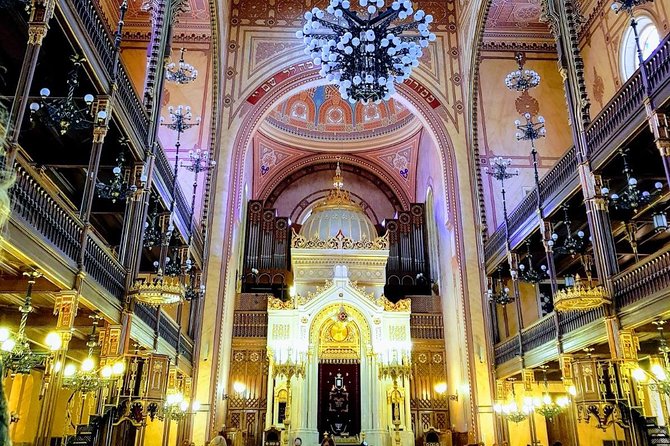
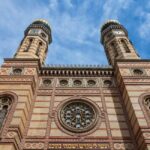
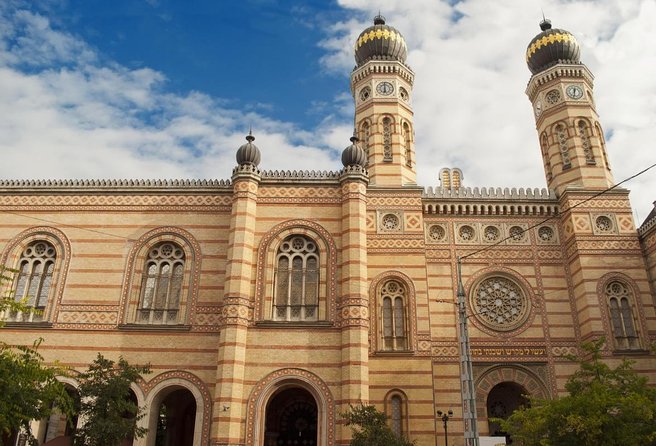
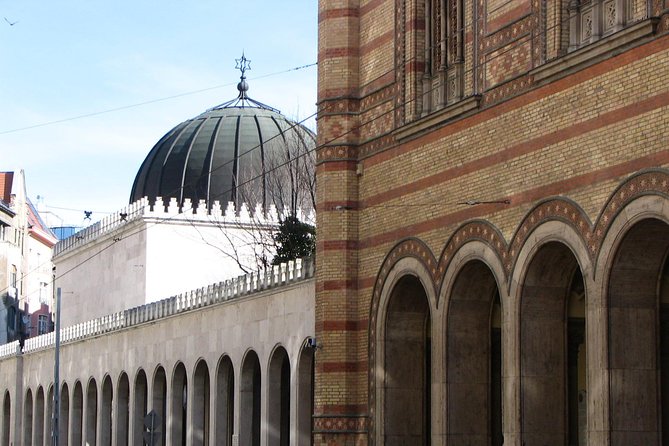
Your tour begins at Dohány u. 2–4, at the entrance to the Great Synagogue (Nagy Zsinagóga / Dohány Street Synagogue). This is the kind of place that makes you slow down on purpose. It’s the largest Jewish temple of Europe, and inside the guide’s narration helps you read what you’re seeing: not just decoration, but what Neologue Jewish community life looked like in Hungary and how that shaped architecture and identity.
A big highlight here is the way the guide connects music to the building. You’ll hear about the organ associated with Franz Liszt, and it’s a smart lead-in because it turns the space into something more than a photo stop. The time inside is about 30 minutes, and admission is included.
Practical note: the dress code is real. Plan on shoulders covered and clothing that reaches at least the knee. If you don’t have that sorted, cover options are available for purchase on-site. For men, head covers are available upon entry.
If you’re thinking of skipping the Great Synagogue and starting with the streets, don’t. This is where the tour sets its tone—historical, human, and very place-based.
You can also read our reviews of more tours and experiences in Budapest.



Raoul Wallenberg Memorial Park: Holocaust remembrance with specific names
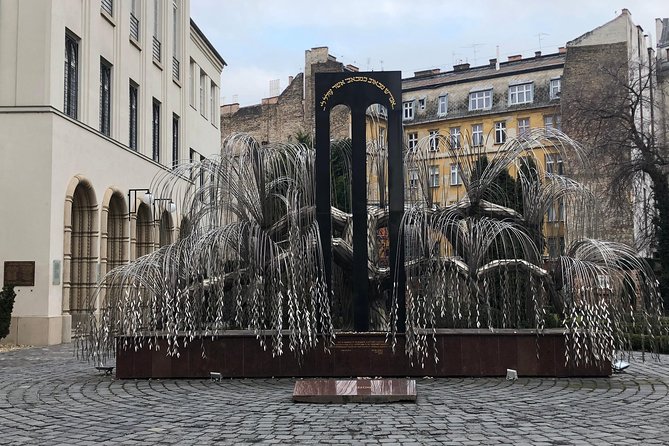
Next you head to the Raoul Wallenberg Holocaust Memorial Park area. This part matters, and the tour keeps it grounded in what happened in Hungary, not generic talking points. You learn about the Hungarian Holocaust and the Righteous Gentiles who saved tens of thousands of Hungarian Jews, risking their own lives. That framing is important: it places survival beside persecution, and it gives you names to hold onto as the story becomes heavier.
You’ll also visit the Emmanuel Tree of Life Memorial, a quiet stop that encourages a different pace—less “look at the facts” and more “sit with the meaning.” After that comes the Holocaust Cemetery on the site tied to the Budapest ghetto, where more than 2,000 victims are resting.
This segment runs about 20 minutes, with admission included. Emotionally, it’s one of the hardest parts of the tour, but it’s also one of the most worthwhile. The guide’s job isn’t to rush past the topic—it’s to give you enough context to understand why each memorial detail exists.
Rumbach Street Synagogue: Otto Wagner’s Moorish masterpiece
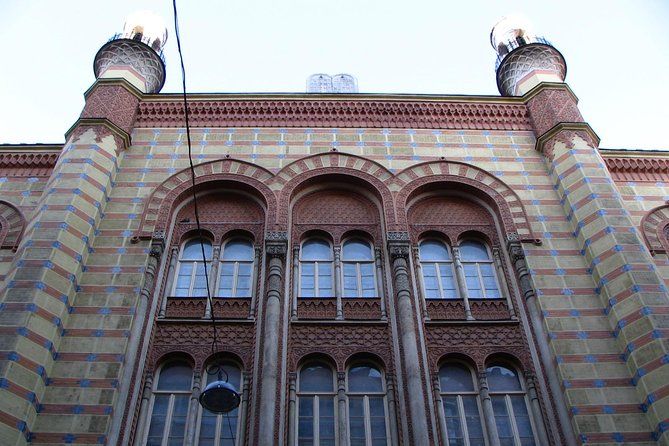
If you want one stop that feels like a discovery, it’s the Rumbach Street Synagogue. The building is attributed to the Viennese architect Otto Wagner (from 1872), and the style is Moorish in a way that instantly grabs your attention once you’re close enough to see the shape and details clearly.
You’ll also get the practical reason this stop is so satisfying: the synagogue has recently reopened after years of renovation. That means you’re not just looking at an old exterior and hoping for the best—you’re seeing the interior in a renewed state, with time set aside for it. Expect about 45 minutes, and admission is included.
The guide uses this place to teach you something subtle but useful: how architecture reflects community goals and cultural signals. You’re not just learning “what happened,” you’re learning how people built spaces to express identity—then how those spaces survived changing political eras.
Kiraly Street and Gozsdu Udvar: the Jewish Quarter as a living neighborhood
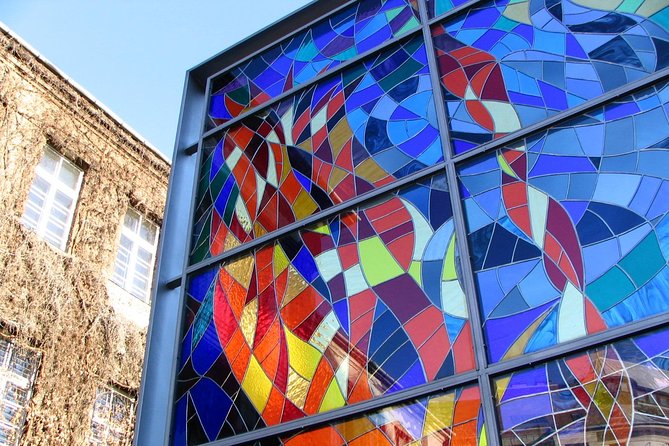
After the synagogues and memorial stops, the tour shifts gears. This is where you get your bearings for the neighborhood: not as a museum zone, but as a place that once ran on commerce, community, and daily routines.
On Kiraly Street, you learn that it was a “high street” in Pest in the 18th and early 19th centuries. It became a center of Jewish life because trade and commerce brought people together. Today, the street is busy again with commercial and cultural activity. It’s a smart bridge from history to the present.
Then you’ll spend time around Gozsdu Udvar, often the most colorful pocket of the area. The guide points out how this spot was connected to kosher food stores in the past, including kosher salami stores, and also apartments. Now it’s geared toward entertainment, culture, and everyday hangouts—local Jewish artists, artisan and antique products, and places to eat and drink.
Two travel tips here:
- Don’t expect a full shopping spree. The tour keeps moving.
- If you’re hungry, grab snacks when you get the brief “food/cake” moments. The schedule doesn’t slow down just because you found something tempting.
Carl Lutz Memorial and the human scale of rescue
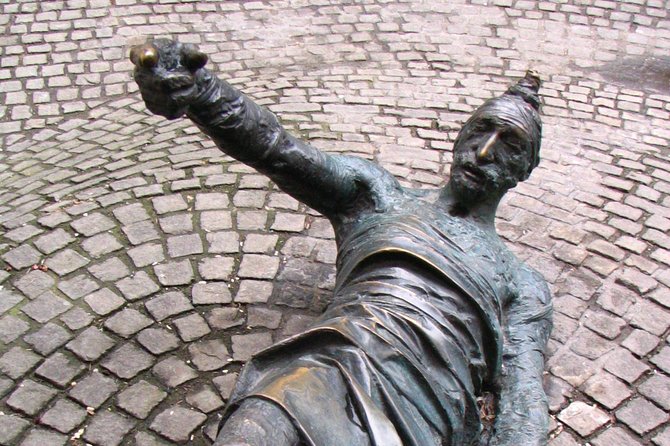
At the Carl Lutz Memorial, the tour brings you back to the idea of rescue with a specific person in focus. You’ll learn about Lutz as one of the Righteous Gentiles who helped save thousands of Hungarian Jews during the Holocaust.
This stop is short—about 5 minutes—but it’s carefully placed. After seeing the memorial cemetery and the big synagogue interiors, you’re reminded that history isn’t only systems and dates. It’s decisions made by people.



Spinoza Szinhaz: philosophy made into a local landmark
A quick walk brings you to Spinoza Szinhaz. You’ll see the restaurant/gallery/cultural stage and theater named after the Jewish Dutch philosopher Baruch Spinoza, described as of Portuguese Sephardi origin and an early figure tied to Enlightenment thinking in the 17th century.
It’s a small stop, around 5 minutes, but it adds a useful “why it all mattered” layer. You’re not only tracking survival under pressure—you’re also learning how Jewish intellectual life and European ideas left a mark on local culture.
Kosher flodni moment: snack culture without losing the thread
You’ll also get a moment tied to one of Budapest’s known kosher food icons: kosher flodni, a Hungarian Jewish cake. The tour doesn’t turn this into a long meal break, and that’s a good thing—because it keeps you on pace while still giving you a taste of lived food culture.
If you want to buy anything edible, be realistic: this isn’t a food-tour where you have time to browse. The stop is designed to show you what the area is famous for, then keep you moving.
Dob Street and Kazinczy Street: Orthodox life and Secession architecture
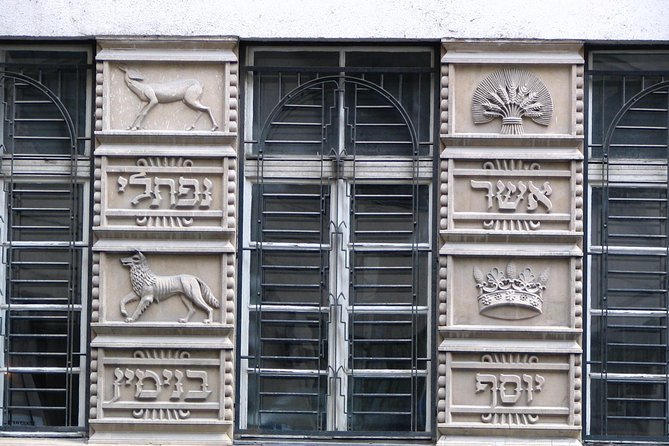
Next comes Dob Street, which runs parallel to Kiraly Street. Historically, it was central to the Jewish district of Pest and linked to the ghetto area. Today, it signals a revival of Jewish life and Hungarian Jewish Orthodoxy.
Then you move toward the Kazinczy Street Synagogue area, tied to the Hungarian Orthodox Jewish Center. Here, you’ll see how the community functions in real-world terms: a synagogue and mikveh, plus kosher restaurants and cafes, schools, a butchery, and kosher food stores. In other words, this isn’t just a building you visit—it’s a living institution that supports daily practice.
The architectural notes are part of the fun too. You’ll get pointers toward Art Nouveau in Budapest, often called the Secession style. Even if you’re not an architecture nerd, the guide’s comments help you spot the design logic instead of just admiring it.
Time-wise, plan on about 15 minutes here. The admission is listed as not included, so don’t count on a full interior visit as part of this stop.
The pacing and guide style: why this tour feels different
This experience runs about 2 hours 20 minutes and is kept to a small group size—maximum 35 travelers. That matters because synagogue entrances and memorial spaces can get crowded, and it’s easier for a guide to manage flow with a smaller group.
The best feedback from guides in the program is consistent: they mix structured history with personal storytelling, and they keep the pace fair. On the memorial and ghetto-related segments, you’ll notice the tone stays respectful. Guides such as Milan and David were mentioned for having an easy way of explaining differences between communities and the logic behind architectural styles—so you don’t leave with only dates, you leave with a map of how Jewish life in Budapest changed over time.
There’s also a practical rhythm to the route, with enough short breaks to keep people comfortable in winter or when the air feels sharp.
What I’d pack (and how to avoid small headaches)
Because of the dress code, you’ll want to think through clothes before you leave your hotel. If your wardrobe is mostly short sleeves or pants above the knee, you’ll probably need covers sold on-site. So:
- Bring a light layer that covers shoulders
- Wear trousers or skirt/outerwear that reaches the knee
- If it’s cold, dress warm—covered shoulders still counts
- Wear comfortable shoes; the stops are close, but it’s still a walking tour
Also, synagogues can close temporarily without warning. If that happens and it affects one site, the tour offers alternative visiting time. If all synagogues close unannounced, alternative hours/dates or full refunds may be offered.
Who this tour is best for
This is ideal if you:
- Want an organized route through synagogues plus ghetto-related memorials
- Care about architecture and how it connects to community identity
- Like guides who explain differences between Hungarian Jewish streams and eras in clear language
- Prefer a walking format that shows streets as part of the story
It may be less ideal if you:
- Want a long, relaxed sightseeing day with lots of wandering freedom
- Don’t want Holocaust remembrance included in your itinerary
- Are hoping for a wide spread of extra sites outside the planned route
Should you book this Budapest Jewish Quarter tour?
Yes, if you want one efficient way to understand Budapest’s Jewish Quarter with the right mix of beauty and gravity. The Great Synagogue and Rumbach Synagogue deliver serious architecture payback, and the memorial stops keep the experience anchored in real events and real people like Raoul Wallenberg and Carl Lutz. The fact that key admissions are included makes the price feel more like value than a “just a guide” cost.
If you’re sensitive to heavy topics, be honest with yourself. This route includes Holocaust cemetery and Holocaust memorial material, and the guide handles it thoughtfully—but it’s still emotionally weighty. If that’s okay for you, it’s a standout choice for shaping your whole Budapest visit with context.
FAQ
What’s the duration of the tour?
It runs about 2 hours 20 minutes.
How much does it cost, and what language is offered?
The price is $63.52 per person, and the tour is offered in English.
Which stops include admission tickets?
Admission tickets are included for the Great/Central Synagogue, the Holocaust memorial park segment, and the Rumbach Street Synagogue. The Kazinczy Street Synagogue stop notes that admission is not included.
Where do I meet, and where does the tour end?
You meet at Budapest, Dohány u. 2–4, 1075 Hungary, and the program ends at Rumbach Street Synagogue, Budapest, Rumbach Sebestyén u. 13, 1074 Hungary.
Is there a dress code?
Yes. You’ll need shoulders covered and clothing that reaches the knee or is covered before entering. Covers are available for purchase on the spot, and head cover for men is available upon entry.
What should I do if synagogues close temporarily?
If one synagogue closes unannounced and affects the program, the tour offers an alternative visiting time. If all synagogues close unannounced, alternative hours/dates or full refunds may be offered.
What if the weather is bad?
This experience requires good weather. If it’s canceled due to poor weather, you’ll be offered a different date or a full refund.