REVIEW · WALKING TOURS
Original Budapest Walking Tour
Book on Viator →Operated by Original Budapest Tours · Bookable on Viator
Budapest hits different when you follow a route. This $2.88 Original Budapest Walking Tour strings together the city’s biggest landmarks with a local guide and real stories you can use right away.
I love the way you get a fast, organized overview in about 3 hours 30 minutes, hitting icons like the Hungarian Parliament Building and Széchenyi Chain Bridge without needing special planning. I also like the guide-led storytelling style, including fun group moments like trivia and even small surprises when the questions land.
One consideration: the walk time can feel like it leans more toward Pest on some days, so if you’re hoping for extra time deep in the Castle District, you may need a bit of follow-up on your own later.
In This Review
- Key highlights
- Price and what you’re truly paying for
- Your 11:00 start and the route shape on foot
- Parliament Building to Chain Bridge: power, design, and river drama
- Buda Castle area: where kings, churches, and views meet
- St. Stephen’s Basilica and Liberty Square: religious center meets embassy streets
- Andrássy Avenue: the grand boulevard you should picture in your head
- Danube memory at Shoes on the Danube Bank
- Ferris Wheel of Budapest: a quick change of pace with a city-scale view
- Margaret Island and Gellért Hill: parks, breezes, and a skyline moment
- Széchenyi Square: the last big reference point
- What the guides do well (and why you should care)
- Pacing and planning tips before you go
- Should you book this Budapest walking tour?
- FAQ
- What is the price of the Original Budapest Walking Tour?
- How long is the tour?
- What time does it start, and where do I meet?
- Is the tour offered in English?
- Is there a mobile ticket?
- What’s included, and what should I bring?
- Are the attractions included with admission tickets?
- What happens if the tour is canceled due to weather or low minimum travelers?
- Can I cancel for a full refund?
Key highlights

- Small-group energy when you get a lighter turnout, with guides keeping everyone in the mix
- Free-view stops at major sights, so your money goes to the guide’s stories, not ticket lines
- Danube memory stop at Shoes on the Danube Bank, built around a specific wartime remembrance
- Classic Budapest viewpoints from the Castle District area and the Gellért Hill skyline
- Practical end result: you leave with a mental map for moving around on your own
Price and what you’re truly paying for
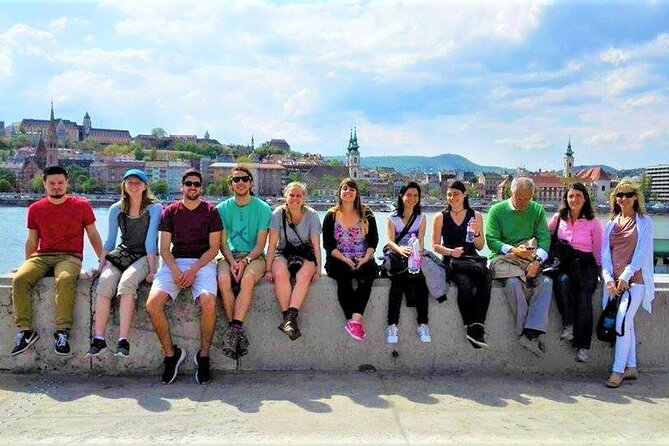
At $2.88 per person, this tour is priced like a snack. That’s exactly why it can feel such good value: you’re not buying access or big-ticket attractions. You’re paying for a local guide’s route and explanations, plus the structure that keeps you from wandering in circles.
The itinerary is built around places you’d likely want to see anyway: Parliament, the Chain Bridge, Buda Castle area churches, Danube memorials, and the grand boulevards and squares that define Budapest. And because the stops are listed as admission ticket free, you’re mainly covering walking time and guided context rather than entry fees.
You can also read our reviews of more walking tours in Budapest



Your 11:00 start and the route shape on foot
The tour starts at 11:00am at St. Stephen’s Basilica (Szent István tér 1, 1051). The ending point can vary, so don’t plan a tight next reservation immediately after your walk finishes. Think of this as a morning-to-early-afternoon orientation that sets you up for the rest of your day.
Duration is listed at about 3 hours 30 minutes. In practice, that means you’re moving at a steady walking pace with short stops—long enough for a photo, a few stories, and quick orientation, not long enough for slow museum time. If you like to linger, build in some buffer for your own exploring after.
Group size is capped at 100 travelers, which sounds big on paper. The reviews you shared include examples of smaller group experiences, so you might get a more intimate feel than you’d expect from the max.
Parliament Building to Chain Bridge: power, design, and river drama
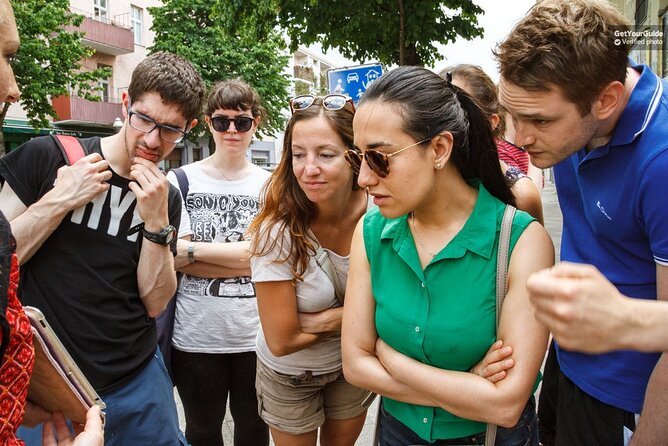
You begin by getting your bearings at the Hungarian Parliament Building area. Even if you never step inside, it’s worth seeing as an exterior “anchor.” The building is a major symbol of Hungary’s national story, and your guide’s job here is to help you see it as more than postcard architecture.
Next comes the Széchenyi Chain Bridge, the iconic crossing linking Buda and Pest. Walking across it is one of the fastest ways to feel the city’s split personality—broad urban streets on one side, historic hills on the other. You’ll get a guided explanation of what the bridge represents and why it became a hinge point for Budapest’s growth.
What I like about this early pairing is the contrast:
- Parliament gives you a political visual.
- The Chain Bridge gives you the “how the city connects” feeling.
Buda Castle area: where kings, churches, and views meet
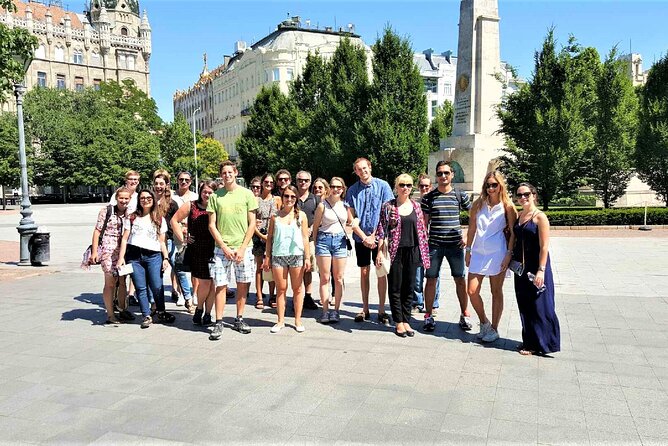
From the river-crossing zone, the tour moves toward the Buda Castle district. Buda Castle began as a royal complex long ago, and today’s big Baroque presence tells you that this place kept getting remade to match different eras. Your guide’s storytelling matters here, because the buildings are impressive—but the background is what makes them stick in your head.
Then you’re at Matthias Church (the Church of the Assumption in Holy Trinity Square). This stop helps you understand why people connect this church with Budapest’s ceremonial moments and why it sits right where the Castle District logic makes sense. You’re not just looking at a pretty façade; you’re learning how the area works as a historical center.
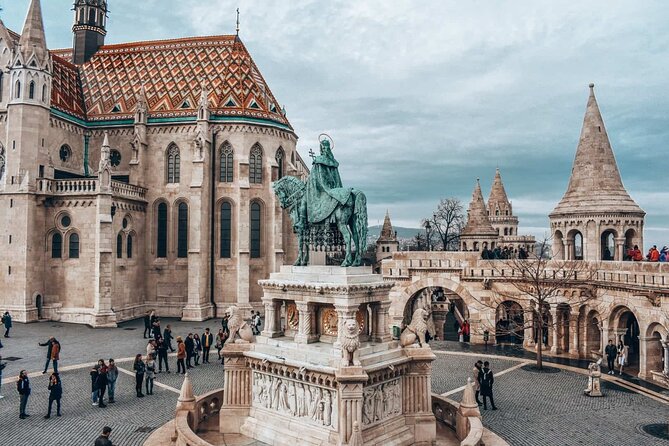
From there, the walk takes you to Fisherman’s Bastion. The main payoff is the panorama. You get terraces built for viewpoint-making, and the surrounding Castle District streets give you that “I’m actually in the historic core” sensation.
A practical note: this is the part of the day where shoes matter. The streets around the Castle District can be uneven or steep depending on the exact path your guide chooses. If you want max comfort, wear supportive walking shoes and expect a bit of hill effort.
St. Stephen’s Basilica and Liberty Square: religious center meets embassy streets
You’ll spend time around St. Stephen’s Basilica (Szent István Bazilika). The naming story is part of the appeal: it’s dedicated to Stephen, the first king of Hungary, and the tour frames the significance of the reliquary linked to him. Even if you don’t go inside, the building’s presence is hard to ignore and helps you connect Budapest’s spiritual identity to its national narrative.
Next is Liberty Square (Szabadság tér). This isn’t just a gap in the route; it’s a quick lesson in Budapest’s more modern civic layer. You’ll pass a mix of business and residential blocks with major institutions nearby, including the US Embassy and notable Hungarian financial architecture. If you like cities that show many layers at once, Liberty Square is a good pause before the route shifts toward bigger boulevard-style streets.






Andrássy Avenue: the grand boulevard you should picture in your head
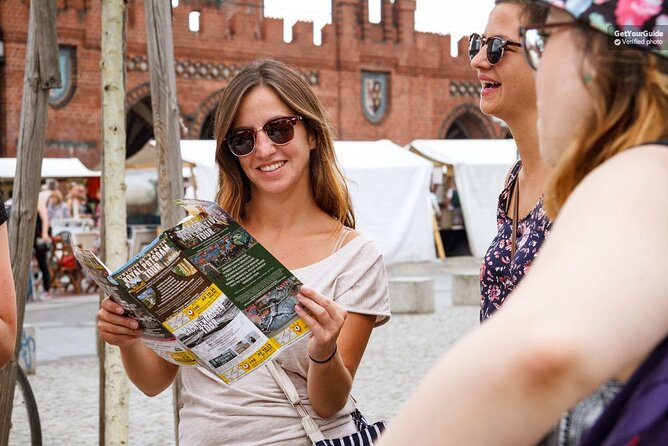
Andrássy Avenue (dating back to 1872) is one of those Budapest scenes that makes you stop even if you’re not trying to. The tour focuses on the avenue as a World Heritage-linked corridor with Neo-renaissance façades and grand building rhythms.
This stop is useful because it gives you a mental “spine” for future wandering. After the tour, you can look at the city map and immediately recognize where the major boulevard sits. You’re not just learning where you are—you’re learning how to return.
If you want an easy win: take a slow walk along the avenue after your tour and look up at the upper floors. That’s where the vibe lives.
Danube memory at Shoes on the Danube Bank
Then the route moves into an emotional register: Shoes on the Danube Bank. This memorial is designed as a remembrance of people who lost their lives during Arrow Cross rule, represented through 60 pairs of cast iron shoes anchored to the riverbank.
I appreciate that this stop is specific. Instead of vague “war history,” you get a named event period, a clear purpose, and a physical way to remember. It can hit hard, especially if you’re walking fast through everything else. Take a minute. Let it land.
Ferris Wheel of Budapest: a quick change of pace with a city-scale view
You’ll also stop near the Ferris Wheel of Budapest, nicknamed the Eye of Budapest. The tour frames it as a panoramic way to see the city, including views tied to Buda Castle and Pest’s temple towers, from a higher perspective.
Because your tour includes it as a listed stop with free admission, treat it as a viewpoint moment rather than a full attraction day. Even standing near it and understanding what you would see from above gives you a better sense of how Budapest looks as a whole.
Margaret Island and Gellért Hill: parks, breezes, and a skyline moment
Budapest can feel intense at street level, so Margaret Island is a smart reset. You’ll get oriented to this green pocket in the middle of the Danube, with pedestrian paths, a mix of sights, and a “city vacation” feel. In summertime, it also picks up with open-air food and music energy, so the island becomes a natural choice for a slower afternoon later.
Then you finish toward Gellért Hill, which overlooks the Danube from a height of about 235 meters. The guide’s job here is to help you understand what you’re seeing from the skyline angle, including the hill’s connection to Saint Gerard’s story.
This is a nice pairing: Margaret Island helps you breathe, and Gellért Hill helps you see the city again—but bigger.
Széchenyi Square: the last big reference point
The tour wraps with time near Széchenyi Square, where you’ll find a statue of Széchenyi that has been in place since 1880. Even if you don’t know much about the person before the tour, the stop helps you anchor your route so you can navigate afterward.
Széchenyi Square is useful as a landmark because it’s easier to find once you’ve walked the city’s logic. Think of it as your “okay, I get it now” finish.
What the guides do well (and why you should care)
One of the strongest themes in your reviews is guide quality—especially storytelling that feels local rather than just facts on signs. Names that come up include Istvan, Robert, and Janet, each described as engaging, clear, and good at keeping pace.
I also like that the guides often:
- keep the group moving without feeling rushed,
- answer questions in a way that helps you plan the next step of your day,
- and add small interaction bits like trivia.
One review mentions a guide (Robert) using historical questions and even offering a small DOTS cake for correct answers. That’s the kind of extra energy that turns a normal walking tour into something you remember.
Pacing and planning tips before you go
This is a walking tour, so the practical stuff matters:
- Wear comfortable shoes. Castle District streets can be tough in the wrong footwear.
- Bring a light layer. The tour requires good weather, and plans can adjust if conditions aren’t ideal.
- Bring your own water if you think you’ll want it. Bottled water isn’t included.
Also, don’t over-schedule right after the tour. Even with a smooth pace, 3.5 hours on your feet is still 3.5 hours. Use the rest of the day to take photos, grab a meal, and return to the most interesting stop for a longer look.
Should you book this Budapest walking tour?
I think this is an easy yes if you want two things: a low-cost way to get oriented fast and a guide-driven route that makes the city easier to explore on your own afterward. If it’s your first day in Budapest, this kind of landmark loop is exactly what helps you stop guessing.
I’d think twice if you’re the type who needs deep time in one neighborhood (especially the Castle District). The route is structured for an overview, and some days may focus more on Pest. If you’re dreaming of a slow, detailed Castle District visit, plan to come back later.
If you want a smart starting point for Budapest—Parliament to Chain Bridge to the Danube memorials—this is one of the better-value ways to get the story behind the sights.
FAQ
What is the price of the Original Budapest Walking Tour?
The tour costs $2.88 per person.
How long is the tour?
It runs for approximately 3 hours 30 minutes.
What time does it start, and where do I meet?
The tour starts at 11:00am. You meet at St. Stephen’s Basilica (Budapest, Szent István tér 1, 1051 Hungary).
Is the tour offered in English?
Yes, it is offered in English.
Is there a mobile ticket?
Yes, the tour includes a mobile ticket.
What’s included, and what should I bring?
A local tour guide is included. Bottled water is not included.
Are the attractions included with admission tickets?
The stops are listed with admission ticket free for the experience.
What happens if the tour is canceled due to weather or low minimum travelers?
If canceled due to poor weather, you’ll be offered a different date or a full refund. If canceled because the minimum number of travelers isn’t met, you’ll also be offered a different option or a full refund.
Can I cancel for a full refund?
Yes. You can cancel up to 24 hours in advance for a full refund.