REVIEW · EVENING EXPERIENCES
Welcome to Budapest Evening Walk
Book on Viator →Operated by Triptobudapest.hu - Free Budapest Walking Tours · Bookable on Viator
Budapest at dusk is easier with a guide. This 90-minute evening walk strings together big landmark views and street-level context, starting near the Ferris Wheel of Budapest and rolling into the city center for a smooth finish.
I love how quickly you get oriented: the licensed local guide meets you about 20 meters from Budapest Eye, then keeps the pace calm and easy to follow. I also like the mix of classic-and-local stops, from Váci utca and the Gerbeaud Café area to the Danube promenade and souvenir-minded market talk.
One thing to consider: it’s still an outdoor walk in the evening, so on hot or bright days you may spend stretches without much shade. Also, guide styles can vary, so if you want strictly light sightseeing commentary, be ready that some guides may wander into heavier topics.
In This Review
- Key Things I’d Focus On
- Why This 6:30 PM Evening Walk Fits Your First Night
- Meeting Near the Ferris Wheel and Getting Oriented Fast
- District V / Inner City: Váci utca, Gerbeaud Café, and Street-Level Budapest
- Korzo and the Danube Embankment: The Buda and Gellért View Moment
- Fővám Square: Markets, Bargaining Tips, and What to Take Home
- Liberty Bridge (Szabadság hid): Turul Birds, Gellért Thermal Bath, and the Bottle Opener Statue
- Pace, Timing, and What to Expect While Walking
- Price and Value: Why $3.59 Can Still Be Worth It
- Should You Book Budapest Evening Walk?
- FAQ
- What is the duration of the Budapest Evening Walk?
- Where does the tour start?
- What time does the tour begin?
- Is the tour offered in English?
- Are admission tickets included for the stops?
- How many travelers are in a group?
- Is a mobile ticket used?
- Are service animals allowed?
- What is not included in the price?
Key Things I’d Focus On

- Starts by Budapest Eye (the Ferris Wheel of Budapest), so you get your bearings fast
- Gentle, easy pace that works for people who don’t do long walks
- District V highlights including Váci utca and the area around Gerbeaud Café
- Danube embankment panorama time with Buda Castle Hill and Gellért Hill views
- Fővám Square market segment with tips on bargaining and taking souvenirs home
- Liberty Bridge photo stops featuring Turul birds and the Liberty Statue bottle opener
Why This 6:30 PM Evening Walk Fits Your First Night
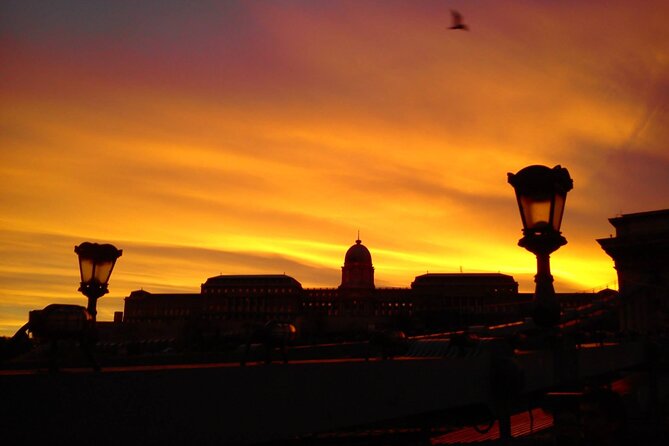
If you’re in Budapest and want to make sense of the city without committing to a half-day tour, this evening format does the job. The start time is 6:30 pm, and the schedule is designed to keep things moving so you’re not stuck until late. You should finish early enough to head out afterward for dinner or a little independent exploring.
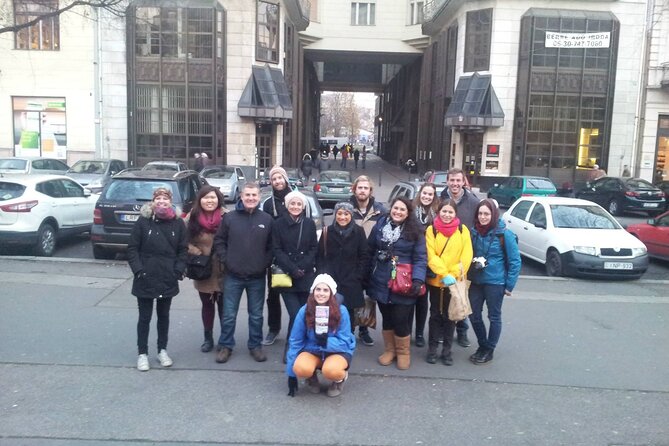
The pace is also built for real humans. This is described as an easy, gentle walk, so you’re not forced into the kind of marathon sightseeing that turns a first night into a struggle. With a maximum group size of 20 travelers, it’s more likely to feel like a guided walk with room for questions rather than a stampede.
And because it’s timed to run for about 1 hour 30 minutes, it’s a great “connect-the-dots” experience. You see key visual anchors (bridges, promenades, central streets), then you get enough background to understand what you’re looking at when you go back on your own.
You can also read our reviews of more walking tours in Budapest



Meeting Near the Ferris Wheel and Getting Oriented Fast
You start at the Ferris Wheel of Budapest (Budapest Eye), located at Erzsébet tér, near 1051 Hungary. Practically speaking, it’s a helpful meeting point because it’s a big landmark—you won’t be playing guessing games with small street corners.
Your licensed local guide meets you about 20 meters from Budapest Eye. That short distance matters. You get started quickly, and you don’t waste your first 10 minutes trying to figure out where the group is gathering.
This is also where the tour’s style clicks. The guide is there to explain what you’ll see and hear during the walk. That means the stops aren’t just random photo breaks. You get a quick mental framework so the streets and buildings make more sense as you pass them.
You’ll also notice admissions aren’t the issue here. The tour structure keeps sight-seeing accessible, and the stops listed are marked with admission ticket free.
District V / Inner City: Váci utca, Gerbeaud Café, and Street-Level Budapest
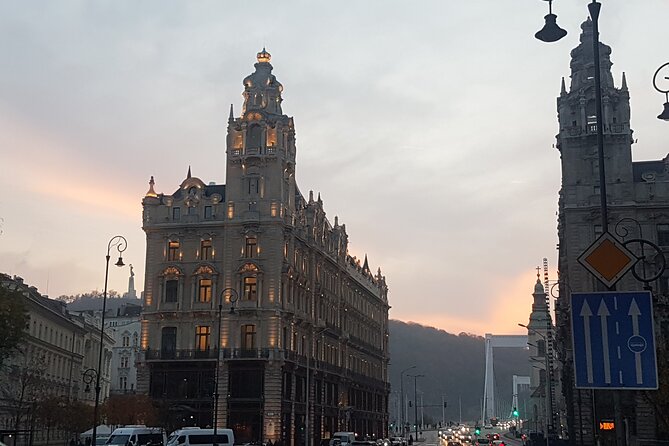
The tour spends about 40 minutes in the downtown core, and this section is where you get the city’s “everyday” texture.
One of the highlights is Váci utca, described as a shopping street with deep roots—old and still important. This matters because Váci utca isn’t just a pretty pedestrian stretch. It’s a practical spine of central Budapest, the kind of place you can return to later for a meal, a shop, or simply to orient yourself to the layout of the inner city.
The route also takes you through the area around Gerbeaud Café, noted as a pastry shop with 150 years behind it. Even if you don’t stop for a bite, knowing the place has that kind of time depth changes how you look at a café. It stops being just a storefront and becomes part of the city’s longer rhythm.
You’ll also see several Art Nouveau and Modern buildings, which gives you a quick visual contrast. And the tour doesn’t shy away from pop-culture landmarks either—it mentions the first McDonald’s in town, which is the kind of detail that makes the area feel more real than a textbook.
The best part of this downtown block is that it’s not only “look at this.” It’s “this used to be this, and now it’s also this.” You get a handful of references—historic residential buildings, style changes, recognizable modern touches—so you can place what you see into a bigger picture the moment you walk away.
A small drawback with any dense inner-city walk: you’ll be moving through lots of streets and stops with limited room to pause. If you’re the type who likes long sit-down breaks, you’ll need to plan those for after the tour.
Korzo and the Danube Embankment: The Buda and Gellért View Moment
Next comes the Danube Embankment (Dunakorzo) stretch, with around 20 minutes of walking along the promenade. This is the section that turns the tour from “city streets” into “city views.”
You’ll encounter urban art statues along the way, plus the Municipal Concert Hall. These are good waypoints because they’re fixed landmarks, so your guide can anchor the story in something physical rather than abstract talk.
The payoff is the sightline: you’ll see a panorama looking toward Buda Castle Hill and Gellert Hill. This is where you’ll understand why Budapest has a reputation for drama at night. Even in a short tour window, you’re positioned to catch the city’s layered geography—hills on one side, river energy on the other.
The guide also covers Hungarian history and heroes here, and it’s described as brief. That matters. A short walk works best when the explanations match the time you have. You get highlights that give you direction for further reading later, rather than a lecture that runs out of time before you can absorb it.
If you’re worried about timing for photos, keep this in mind: the entire tour is only 1 hour 30 minutes, so you won’t have unlimited linger time at each panorama. Still, for many people, the view segment is exactly long enough to get photos without losing the flow.
Fővám Square: Markets, Bargaining Tips, and What to Take Home
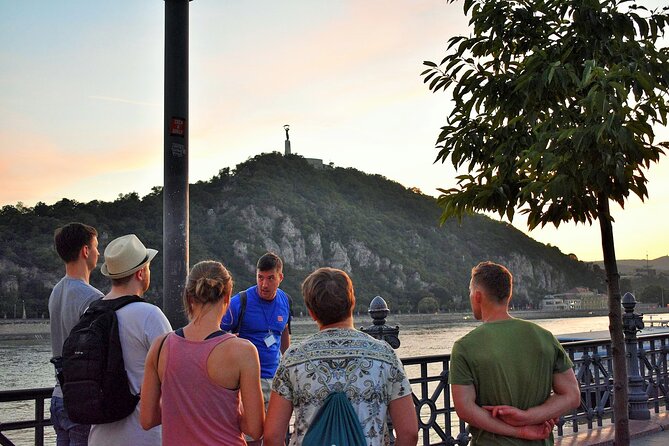
At Fovam Square, the tour shifts to something practical: markets and what it’s like to shop like a local. This segment lasts about 10 minutes, so it’s not a full market walkthrough. It’s more like a quick strategy session.
You’ll see the Grand Central Market, and you’ll hear about the city’s major flea, festive, and farmers’ markets. The focus here is on what to expect from the shopping scene and how to handle it confidently.
One of the most useful parts is the advice on bargaining. Even if you don’t enjoy bargaining in general, having a few pointers can make you feel less awkward in the moment. The tour also gives ideas for what to take home as souvenirs from Hungary—again, quick and direction-focused, not a list of things you must buy.
This stop can be a big value booster because it changes how you spend the rest of your trip. After the tour, you’ll know which areas are worth returning to and what kinds of items are the natural fit for a Budapest visit.
A consideration: if you hate markets and shopping, this segment might feel brief and slightly “sales-y.” That doesn’t mean it’s bad—it just means it’s designed to help you shop better after the tour, not to satisfy people who want pure sightseeing.
You can also read our reviews of more evening experiences in Budapest





Liberty Bridge (Szabadság hid): Turul Birds, Gellért Thermal Bath, and the Bottle Opener Statue
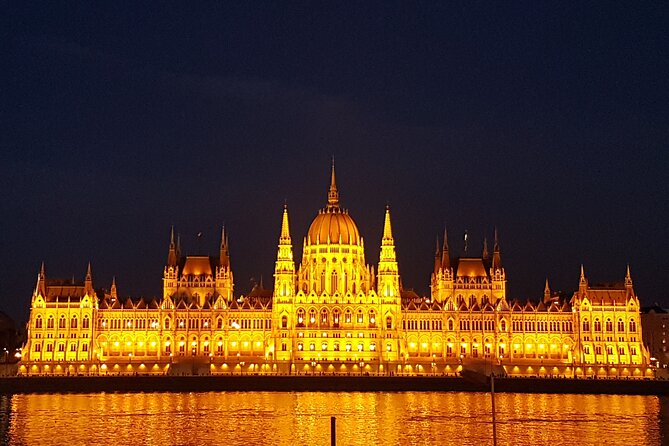
The final landmark stretch is the Liberty Bridge (Szabadság hid) segment, also about 10 minutes. Liberty Bridge is packed with recognizable features, and the tour uses that to land a memorable ending.
You’ll stop at the bridge topped by Turul birds. You’ll also see references to the Romantic Gellert Thermal Bath, along with the Cave Church and Monastery. Even without extended time at each exact site, the tour gives you enough context to know what you’re looking at when you spot it later.
One stop detail I really like is the playful specificity: the guide shows you the Liberty Statue, described as the biggest bottle opener in town. That kind of detail is exactly why a short evening walk works. You end with a mental hook that makes the bridge memorable long after you’ve gone back to your hotel.
The tour also mentions some recent urban art hidden on the bridge, which gives you permission to look closely instead of only snapping a wide-angle photo. If you enjoy finding small details, this part will feel fun rather than rushed.
The tour ends at Fővám tér. That choice is smart because it drops you near a central transit-friendly area, so you can keep your evening moving without needing an extra “getting back” plan.
Pace, Timing, and What to Expect While Walking
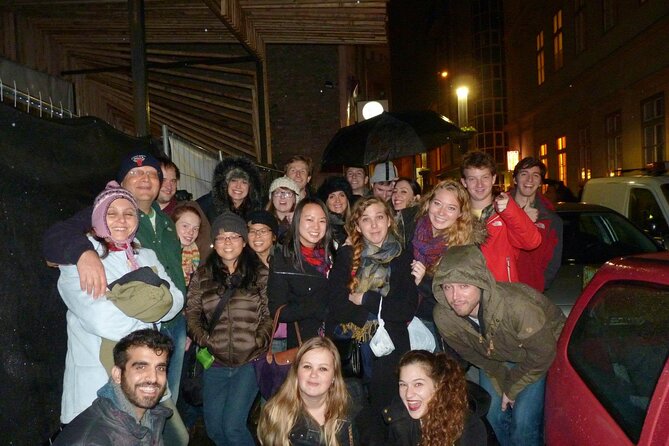
Let’s be honest: evening walking tours succeed or fail on comfort. This one is pitched as easy and gentle, and that’s a big deal for two groups of people.
First, it suits anyone not used to long walks. You still get real city structure and multiple stops, but the route isn’t described as punishing. Second, it helps people who want to learn without turning the whole trip into an endurance event.
The tour also lists a maximum of 20 travelers, which usually means you’re less likely to be stuck behind a wall of shoulders. Smaller groups make it easier to hear the guide, and that matters when the itinerary includes short, high-impact stops.
Timing is part of the design. The tour is meant to finish early enough that you can go out afterward. That’s practical because Budapest evenings are best when you keep moving—dinner, a drink, or another viewpoint often makes the first day feel complete.
One reality check from feedback: if you’re sensitive to heat, pay attention to how long you might stay outdoors before shade appears. The tour is timed and paced, but the weather isn’t. Bring water, and plan to adjust your listening if the sun is intense.
Price and Value: Why $3.59 Can Still Be Worth It
The price is listed at $3.59 per person, and that’s where value thinking matters most. When a tour costs just a few dollars, you need to know what you’re actually paying for.
Here’s the clear structure: the tour booking fee is included, while admission tickets at the stops are marked free. In other words, your cost isn’t going into buying entry passes. You’re paying for a guided walk, the local context, and the route planning that connects several meaningful sights in a short time.
Is it a full day of deep study? No. It’s 1 hour 30 minutes, and the commentary is described as brief in places. But for a first night walk—especially one that covers orientation points like District V streets, the Danube promenade, and a bridge with major landmark features—it can be a strong deal.
Also, it’s popular. It’s booked on average 85 days in advance, which hints that people like this format. A busy calendar often means the tour is dependable as a “get your bearings fast” experience.
The one caution is that with very low-cost tours, you’re relying on the guide’s ability to match the group’s expectations. Most people rate it highly, but guide style can affect enjoyment, especially if you strongly prefer light, purely sightseeing commentary.
Should You Book Budapest Evening Walk?
Book it if you want an easy, first-night orientation with real city highlights packed into 90 minutes. It’s also a good match if you like the idea of ending near Fővám tér so you can keep your evening going right away. The mix of District V sights, Danube embankment views toward Buda Castle Hill and Gellért Hill, and the Liberty Bridge landmarks (Turul birds, the Gellért-related mentions, and the Liberty Statue bottle opener) gives you a lot of mental map for not much walking time.
Skip it if you want a long, slow, museum-style experience. This is a short walk with quick stops. And if you’re very particular about guide tone—strictly cheerful, strictly sightseeing—be aware that guide styles can vary.
If you do book it, set yourself up for success: wear comfortable shoes, bring water, and use it like what it is—an evening primer. Then, when you head out afterward, you’ll know where you are and what you’re looking at.
FAQ
What is the duration of the Budapest Evening Walk?
It lasts approximately 1 hour 30 minutes.
Where does the tour start?
The tour starts at the Ferris Wheel of Budapest at Erzsébet tér, 1051 Hungary.
What time does the tour begin?
The start time is 6:30 pm.
Is the tour offered in English?
Yes, it is offered in English.
Are admission tickets included for the stops?
Admissions are listed as ticket free at the stops.
How many travelers are in a group?
The tour has a maximum of 20 travelers.
Is a mobile ticket used?
Yes, it’s listed as a mobile ticket.
Are service animals allowed?
Yes, service animals are allowed.
What is not included in the price?
Tips to the tour guide are not included.