REVIEW · BUDA CASTLE & FISHERMAN'S BASTION
E-Bike Guided Tour in Castle Hill Budapest
Book on Viator →Operated by Bestbike Tours kft. · Bookable on Viator
One ride, six Budapest eras. This guided e-bike tour strings together some of Budapest’s most important sights—from the Danube promenade to the Castle District viewpoints—in about 3 hours, with an English-speaking guide who gives you context as you ride.
Two things I really like about this experience: you get built-in photo stops that don’t feel rushed, and the guide’s storytelling turns famous landmarks into something you can actually place on a mental map. I also like that the pace stays social but not crowded, with a maximum of 10 riders and regular “pause-and-look” moments.
One thing to consider: the only genuinely hilly stretch is the Castle District climb, and it’s short (about 12 minutes), but you still need to be ready for a bit of uphill effort. Also, the tour runs in all weather, so you’ll want proper layers and rain protection.
In This Review
- Key highlights to know before you go
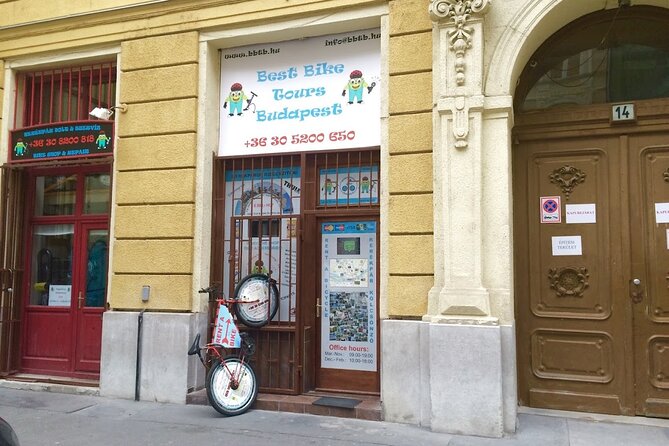
- Getting rolling from Semmelweis u. 14
- Duna Corso: where the ride starts with big Danube views
- Erzsébet Bridge panoramas and the WWII rebuilding story
- Castle District climb: Buda Castle and Matthias Church up close
- Margaret Island: a green reset with fountains and ruins
- Parliament and the Danube: neo-Gothic from the riverfront
- Liberty Square’s monuments: 20th-century politics in stone
- St. Stephen’s Basilica: the dome and the mummified hand
- Optional ride: Andrássy Avenue’s Opera and House of Terror
- Optional finale: Heroes’ Square and City Park time
- How hard is this ride, really? Hills, e-bike balance, and weather
- Group size and guide style: why small matters on a bike tour
- Price and value: is $60.08 worth it?
- Who should book this tour, and who might skip it
- Should you book the Castle Hill Budapest E-Bike Guided Tour?
- FAQ
- FAQ
- How long is the E-Bike Guided Tour in Castle Hill Budapest?
- What is included in the price?
- Is the tour offered in English?
- What age is required to join?
- Does the tour run in bad weather?
- Where does the tour start and end?
Key highlights to know before you go
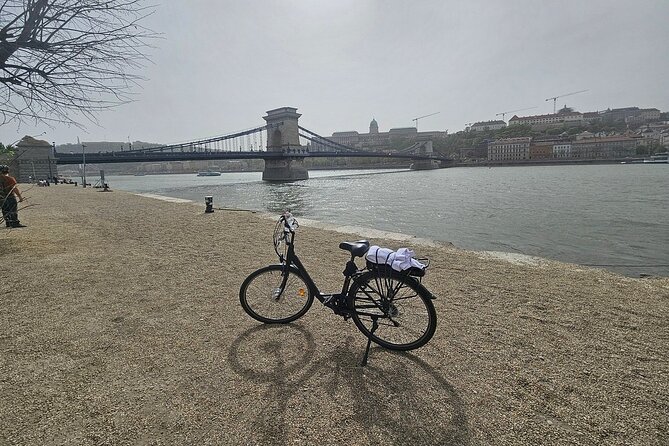
- Danube Corso start with iconic views toward Gellért Hill, the Liberty Statue, and Buda Castle
- Erzsébet Bridge panorama plus a clear, quick history of the bridge’s WWII destruction and rebuild
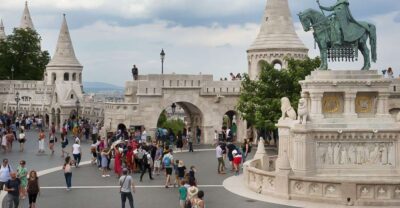
- Castle District viewpoints with Buda Castle and Matthias Church in sight
- Margaret Island break for gardens, plus the Music Fountain and Dominican Convent ruins as photo anchors
- Parliament to basilica route that hits big architectural hits without long transfers
- Optional Andrássy Avenue and Heroes’ Square if your time window allows
Getting rolling from Semmelweis u. 14
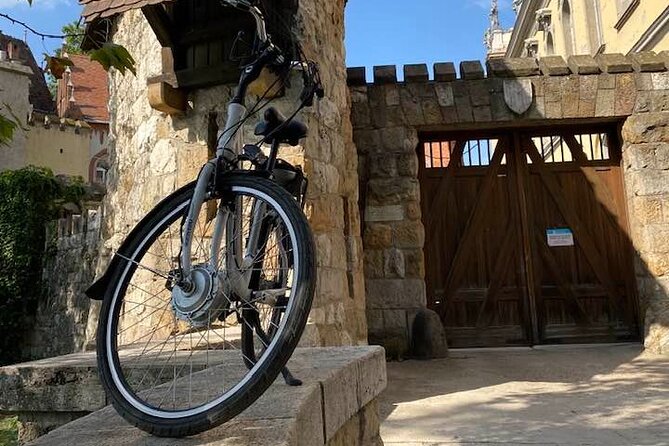
The meeting point is Budapest, Semmelweis u. 14, 1052 Hungary, and the tour ends back where it starts. You’re not dealing with a complicated “first, second, third meeting.” Just show up, get your bike, and follow the guide.
The tour includes bicycle use, a helmet, bottled water, and a live guide, and you’ll get a mobile ticket. The group stays small, up to 10 people, which matters on a bike tour through busy streets and crowded viewpoints.
The guide works in English, and you’ll be with the same group for the full loop. That consistency helps because the guide can build a storyline—Danube geography first, then bridges and borders, then the big monuments.
You can also read our reviews of more cycling tours in Budapest



Duna Corso: where the ride starts with big Danube views
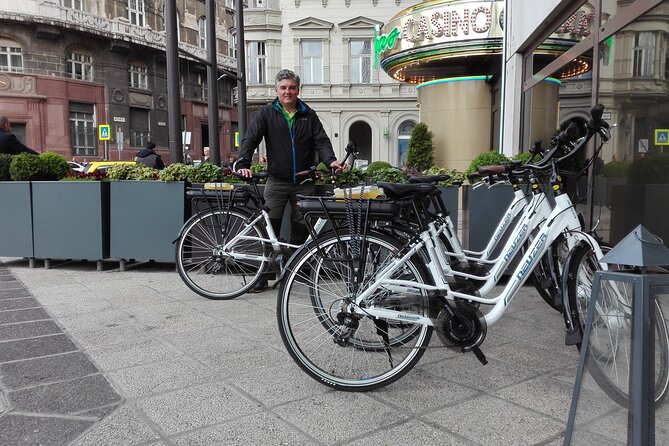
Your tour begins along the Duna Corso, one of Budapest’s most recognizable riverside promenades. You’ll pedal with the Danube on one side and views toward the Buda side on the other, with Gellért Hill and the Liberty Statue showing up as major reference points.
This section is a smart opener because it’s visual first. You get landmarks quickly, and the guide fills in what they mean: how the promenade fits into the city’s development and how it played a role during major moments in Hungarian history.
This is also where you’ll want to lean into simple things: stop for photos when the guide pauses, and use the moment to orient yourself. Seeing the Danube this early in your trip makes the rest of Budapest feel less like random postcards and more like one connected city.
Erzsébet Bridge panoramas and the WWII rebuilding story
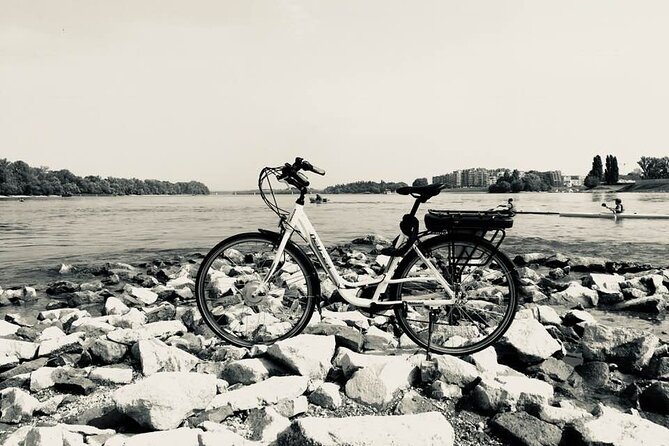
After the Danube promenade, you head to Erzsébet Bridge. This stop is short—about 20 minutes total for that segment’s timing on the plan—but it’s one of the best “look both ways” moments in the whole loop.
From the bridge, you get panoramic views of both Buda and Pest. The guide explains the bridge’s background, including that it was destroyed during World War II and later reconstructed, and why the bridge matters as a link between the two sides of the city.
Practical tip: treat the bridge like a photo studio with good timing. If you can, pause at the moment the guide tells you the “look here” direction, then take a couple of quick shots from the same spot rather than walking around too much.
Admission is free here, so you can focus purely on views and photos.
Castle District climb: Buda Castle and Matthias Church up close
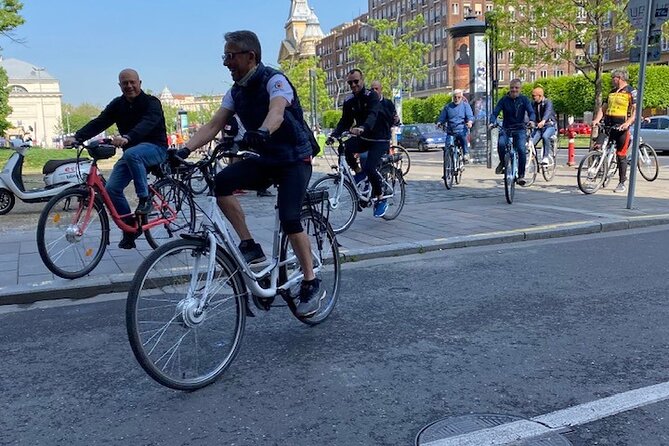
Once you cross into the Castle District area, you get the most famous payoff: the Buda Castle area and the viewpoint spread over Pest. The ride up is the one hilly part of the tour, and the plan calls it out as about a 12-minute climb.
That hilly stretch is why I’d say this tour is best if you can handle short uphill effort, even on an e-bike. The upside is that the climb is brief, and the reward is immediate: Buda Castle and Matthias Church are right in your visual frame.
The guide shares stories about the district’s medieval roots, royal residents, and its strategic importance over time. It’s not just “look at the buildings.” You’re learning how this hill area shaped the city’s power and layout.
You’ll have time to catch your breath and take photos of the panorama—Pest, the Danube, and the Chain Bridge are commonly part of what you can see from this area. If you’re camera-focused, this is one of the stops where you’ll be happiest you brought your best lens or at least a charged phone.
Margaret Island: a green reset with fountains and ruins

After the Castle District, you cycle toward Margaret Island, a calmer break in the middle of the city. The plan describes it as Budapest’s green lung, which fits the moment: the pace eases and the surroundings turn more park-like.
This stop is about 20 minutes, and that time works well. You can enjoy greenery and gardens, then choose how you spend your break: a relaxed stroll, some photos, or a quick look at historic features.
The guide points out key spots like the Music Fountain and the medieval Dominican Convent ruins. Even if you don’t linger long enough to explore everything in detail, these landmarks give you anchors to remember what you saw later.
If your legs feel a bit tired after the Castle District, this is where your body gets to recover without falling behind the group. It’s also a nice “human scale” moment compared with the big monumental architecture.
You can also read our reviews of more guided tours in Budapest






Parliament and the Danube: neo-Gothic from the riverfront
Next comes the Hungarian Parliament Building, one of the most dramatic sights in Budapest. The stop is short—about 15 minutes on the plan—but it’s timed well for photos because the building reflects in the Danube views nearby.
The guide explains its construction and its role in Hungary’s political life, plus a specific detail that’s easy to remember: the crown jewels are housed inside. You’re not touring the inside during this e-bike stop, but knowing that fact changes how you look at the building from the outside.
Practical advice: treat the Parliament stop like a quick “compose and shoot” moment. Watch where your group pauses, take photos from that same area, and don’t lose time by trying to find new angles right as the guide signals it’s time to roll again.
Admission is free during the stop, so there are no extra entry hurdles here.
Liberty Square’s monuments: 20th-century politics in stone
Liberty Square is the tour’s “harder conversation” stop, still only about 15 minutes. It’s connected to Hungary’s complicated modern story, especially around periods of Soviet and Nazi occupation.
The guide talks through the monuments you see there, including the controversial Soviet War Memorial and the presence of the American Embassy. This is the stop where you’ll likely get questions, because the guide’s job is to explain how competing historical narratives can exist in the same public space.
If you’re the type who likes to understand why a place feels the way it feels, spend your 15 minutes asking questions. The guide’s explanations can make this square make sense rather than just looking like more statues.
Again, admission is free here, so it stays focused on interpretation and visuals.
St. Stephen’s Basilica: the dome and the mummified hand
Then you head toward St. Stephen’s Basilica (Szent Istvan Bazilika). This is about a 15-minute stop, and it’s one of Budapest’s most important religious landmarks.
What makes it unforgettable is visible right away: the grand dome and the idea of a holy relic tied to St. Stephen. The guide points out the mummified hand of St. Stephen as a centerpiece detail connected to the basilica.
The guide also shares how the basilica survived World War II and why it remains significant in Hungarian culture. Even on a brief photo stop, that kind of context helps you look at the architecture as more than decoration.
You’ll have time to admire the façade details, and you can also peek inside if open access is possible during your timing. Go slow here, because basilicas reward the kind of looking you usually skip while cycling.
Optional ride: Andrássy Avenue’s Opera and House of Terror
If the timing works, you may continue along UNESCO-listed Andrássy Avenue, sometimes described as Budapest’s Champs-Élysées. This stretch is lined with neo-renaissance mansions, luxury shops, and major cultural landmarks.
The guide points out the Hungarian State Opera House and the House of Terror, a museum dedicated to the victims of fascism and communism. Because this stop is optional, I’d treat it as a “bonus context lane” if you want more twentieth-century understanding plus big architecture.
Even without going into any museum, seeing the locations in one continuous ride helps you connect the themes. If you’re hoping to fit more major sites into a short trip, this optional segment is a big win.
Optional finale: Heroes’ Square and City Park time
If you still have time, the tour can end with Heroes’ Square. This is a monumental space dedicated to Hungary’s national leaders and the country’s 1,000-year timeline, with the Millennium Monument in the center.
You’ll get explanations for the symbolism behind the statues and the monument’s meaning. Flanking sites include the Museum of Fine Arts and the Palace of Art, so the square reads like a designed “national story wall” in stone.
If Heroes’ Square is included, you’ll also be close to City Park. The plan notes that you can find Vajdahunyad Castle and the boating lake area, with an overall more relaxed atmosphere compared with the more intense political stops.
How hard is this ride, really? Hills, e-bike balance, and weather
The tour is designed for most people, with a key note: participation is only allowed over age 12. The guide also recommends using e-bikes for the elderly, which tells me this is meant to be manageable without turning into a fitness test.
The hilly part is limited to the Castle District, listed as about 12 minutes. That helps a lot, but it doesn’t remove the need for basic balance and comfort on a bike.
Here’s a practical insight from a rider: the front-hub e-bike handling can feel different, especially if the handlebar position is angled. If you’re sensitive to that front weight balance, take a minute at the start to get used to how your bike feels before the group moves uphill.
Also, the tour runs in all weather conditions. That’s not a problem if you dress right. Bring layers, and if rain is possible, use a jacket that won’t soak through quickly.
Group size and guide style: why small matters on a bike tour
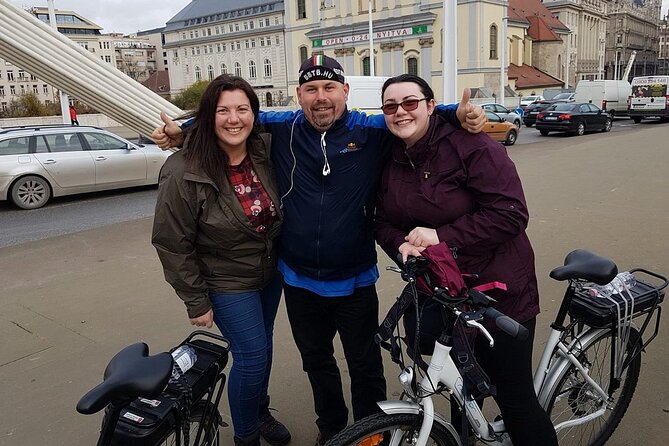
With a maximum of 10 travelers, you get a more “guided walk” vibe, just on bikes. You’re not stuck waiting far behind a big line, and the guide can answer questions without the tour turning into a fast conveyor belt.
One of the guides mentioned in the feedback is Carson, and that lines up with what you want from this kind of loop: friendly delivery plus stories you can remember. The best guides do two things well—make the sights easier to place and help you find the right spots for photos without micromanaging.
I like tours like this early in a trip because they give you a mental map. After a loop like this, you can return later on foot and feel less lost.
Price and value: is $60.08 worth it?
At $60.08 per person for about 3 hours, you’re paying for three things at once: the e-bike (included), a live guide in English, and a route that hits multiple top-tier viewpoints without you navigating transit and street logistics.
You also get bottled water and a helmet, which removes common little costs and hassles that add up on your own. The plan lists the stops with admission ticket free, so you’re not paying museum-entry fees during this specific experience.
Is it “cheap”? No. But it’s good value if you want a structured overview quickly, especially if you’re short on time. It’s also a smart buy if you’d otherwise spend hours planning routes and still miss the context.
Who should book this tour, and who might skip it
You should book this if you:
- Want a guided, photo-friendly overview of major Budapest sights in about 3 hours
- Like history told in plain language while you ride
- Prefer to see both sides of the city via bridges and Danube views
- Want a small-group e-bike experience with English support
You might skip it if:
- You dislike riding in traffic-adjacent areas or get stressed on bikes
- You need a fully flat route, since the Castle District includes a short uphill section
- You strongly prefer indoor sightseeing only, since most stops are viewpoint focused and brief
Should you book the Castle Hill Budapest E-Bike Guided Tour?
If you want a fast start in Budapest, this is a strong option. The route connects iconic Danube views, the Castle District panorama, and big landmark stops like Parliament and St. Stephen’s Basilica, with just enough bonus time for Andrássy Avenue and Heroes’ Square when available.
My main reason to recommend it is the combo: easy logistics, a small group, and a guide who makes the landmarks easier to understand. If you dress for the weather and take the short hill as a manageable challenge, you’ll likely feel like you saw more than you expected for the time.
FAQ
FAQ
How long is the E-Bike Guided Tour in Castle Hill Budapest?
The tour is about 3 hours.
What is included in the price?
The experience includes bicycle use, bottled water, a helmet, and a live guide.
Is the tour offered in English?
Yes, the tour is offered in English.
What age is required to join?
Participation is only allowed over age 12.
Does the tour run in bad weather?
Yes, the tour goes in all weather conditions, so you should dress properly.
Where does the tour start and end?
It starts at Budapest, Semmelweis u. 14, 1052 Hungary, and it ends back at the same meeting point.