REVIEW · BIKE TOURS
Budapest: Guided Downtown Electric Bike Tour
Book on GetYourGuide →Operated by Bike Tour Kft · Bookable on GetYourGuide
Budapest on an e-bike beats sightseeing gridlock. You’ll cover serious ground on comfortable bikes with electric support, yet you still pedal, so it feels like real travel instead of a bus tour. The route is built around the city’s big-picture story: Andrássy Avenue, the Danube, and the climb up to Castle Hill.
Two things I really like: first, the way the guide strings together landmarks with local context so the city makes sense fast. Second, the e-bike’s assist turns the steep sections into an easy glide, so you can spend your energy on views at Matthias Church and Fisherman’s Bastion.
One consideration: this is a photo-stop style tour. You’ll see a ton of famous places, but you won’t go inside the landmarks.
In This Review
- Quick take: what makes this tour work
- Where the tour starts: Bike & Relax in the Jewish Quarter
- The bikes: electric help, real pedaling, and the “open chain” thing
- Andrássy Avenue to Heroes’ Square: big buildings, clear stories
- City Park and Vajdahunyad Castle area: a theatrical stop with thermal-bath context
- Downtown Pest: St. Stephen’s Basilica and the Liberty Square layer
- Parliament, Chain Bridge, and the Danube: where the views do the talking
- Castle Hill without the struggle: electric assist to Matthias and Fisherman’s Bastion
- Baths along the ride: Rudas and Gellért areas as “see it from the street” moments
- Back to Pest via Liberty Bridge: a simple way to re-center your trip
- Central Market Hall and the National Museum area: culture stops without the crowds
- Finishing at Dohány Street Synagogue: closing with a major cultural landmark
- Price and value: is $63 for 3.5 hours a fair deal?
- Pacing, group size, and what it feels like on the road
- Who should book this, and who should skip it
- Should you book this Budapest guided downtown electric bike tour?
- FAQ
- How long is the Budapest guided downtown electric bike tour?
- Where does the tour start?
- Do you need to know how to ride a bike?
- Do I get to enter the landmarks?
- What languages are the live guides?
- Is a helmet required?
- What should I bring and wear?
Quick take: what makes this tour work
- Andrássy Avenue as the opening act: big-city architecture and famous addresses right away
- Small group size (up to 10): easier pace control and more questions for your guide
- Electric support for Castle Hill: you’ll still pedal, but the climb is manageable
- Danube viewpoints built in: including the area near the Monument of the Shoes
- Photo stops at major landmarks only: efficient sightseeing without ticket lines
Where the tour starts: Bike & Relax in the Jewish Quarter
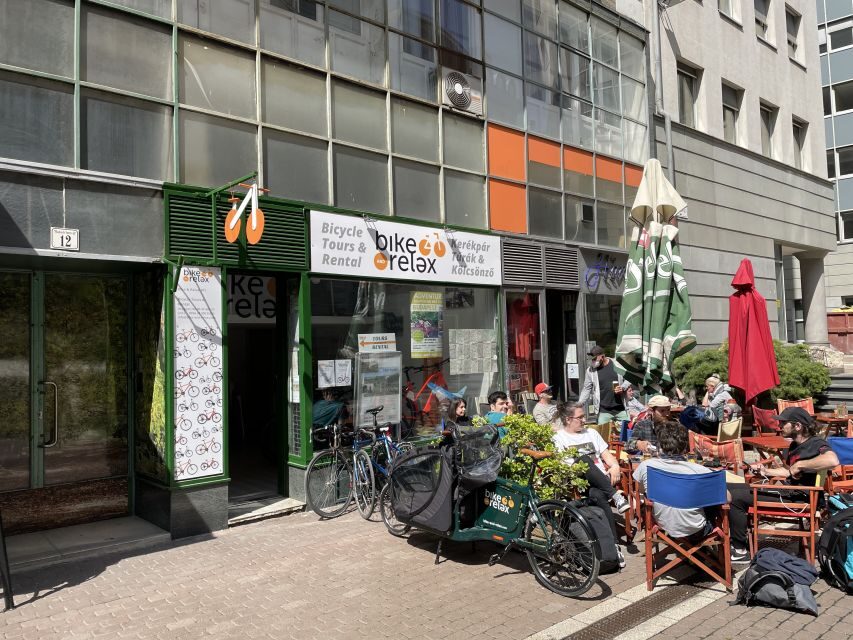
The meeting point is Bike & Relax, right in the center of the Jewish district—near the connection between Madach Ter Square and Gozsdu udvar court. Look for Cafe Hivatal beside the shop; Deák Ferenc tér is the most convenient transit hub nearby.
Plan on light, practical clothes and shoes you can walk in too. You don’t need fancy gear, but you do need to be comfortable, because you’ll do short stops and photos along the way.
One more small note that matters: luggage and large bags aren’t allowed. If you’re traveling with extra stuff, this tour is best paired with smart packing.
You can also read our reviews of more cycling tours in Budapest



The bikes: electric help, real pedaling, and the “open chain” thing
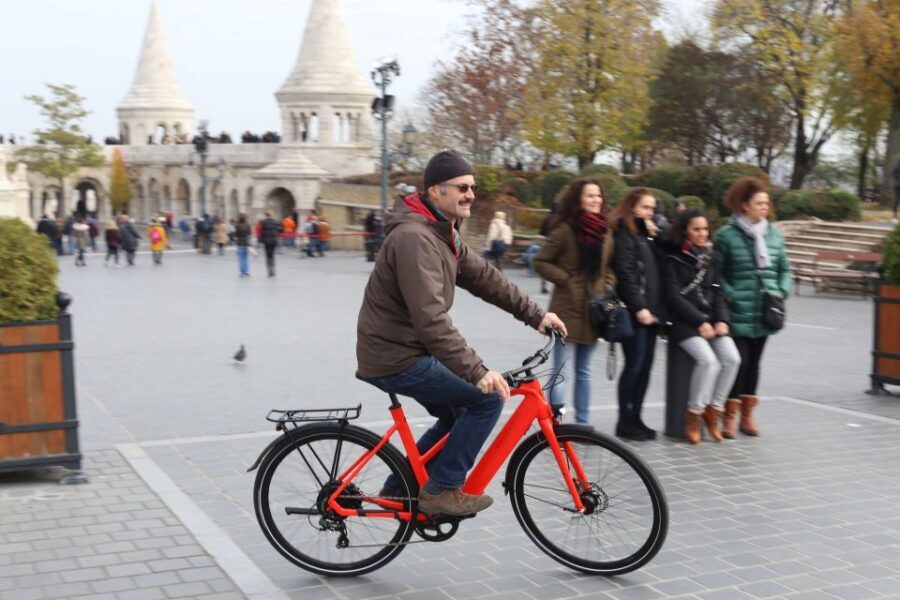
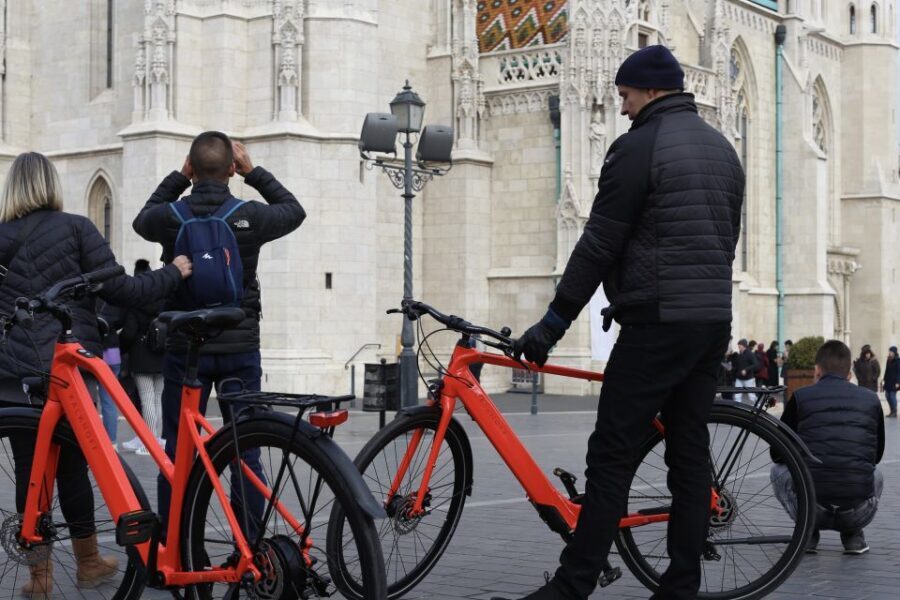
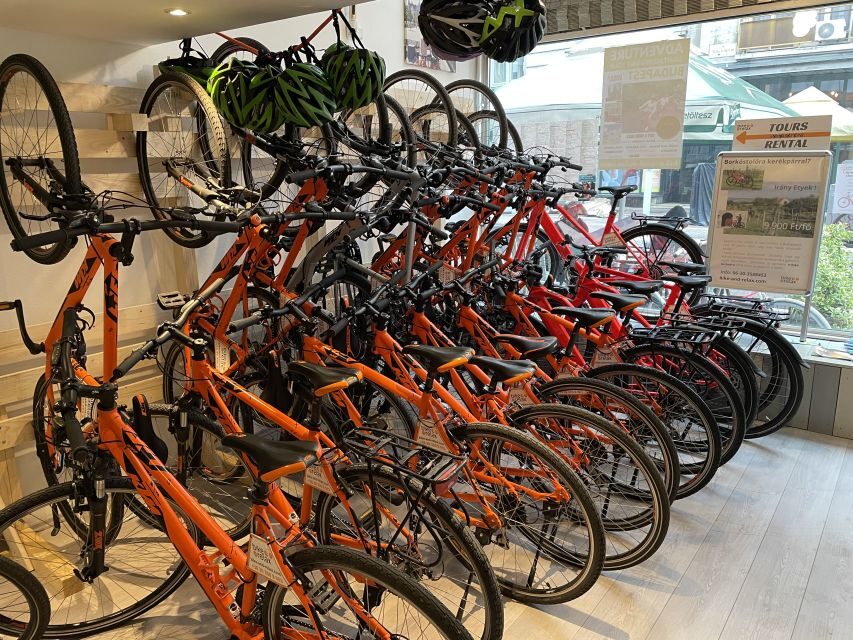
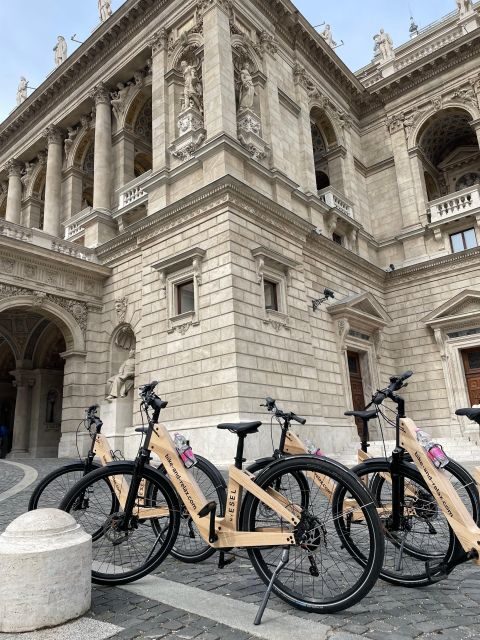
You’ll ride either wooden-framed my-esel e-bikes or Kalkhoff Berleen e-bikes. The key detail is that an e-bike here means electric assistance, not a motor-only ride—you still pedal, and the bike amplifies your effort.
Helmets are optional (but available), which is nice if you want that extra comfort. One practical quirk: the bikes have open chains that may touch your clothes, so avoid flowy hems and very loose pants that could catch.
If you’re wondering about comfort, expect the seats to feel fine for most people, but a few riders have flagged that seat feel can be hit or miss. It’s not a dealbreaker; it’s just something to keep in mind if you’re picky.
Andrássy Avenue to Heroes’ Square: big buildings, clear stories
The tour starts on Andrássy Avenue, the classic boulevard approach that helps you orient yourself immediately. You’ll cruise past major highlights like the Hungarian State Opera House, then continue through stops connected to the city’s more complicated 20th-century history, including the area around the House of Terror.
Your guide’s job is to turn landmarks into a timeline you can actually remember. Names that come up often include Ollie and Thomas, with comments about clear explanations and a sense of humor that keeps the ride from turning into a lecture.
This section also matters because it sets the pace and the rhythm for the rest of the day. You’ll get bike handling confidence on streets and lanes that are built for cycling, which makes the later sights feel easier.
At Heroes’ Square, you’ll pause for photos and the story hits a different tone—grand, ceremonial, and very Budapest. It’s also a visual cue for where city parks and other districts begin.
City Park and Vajdahunyad Castle area: a theatrical stop with thermal-bath context
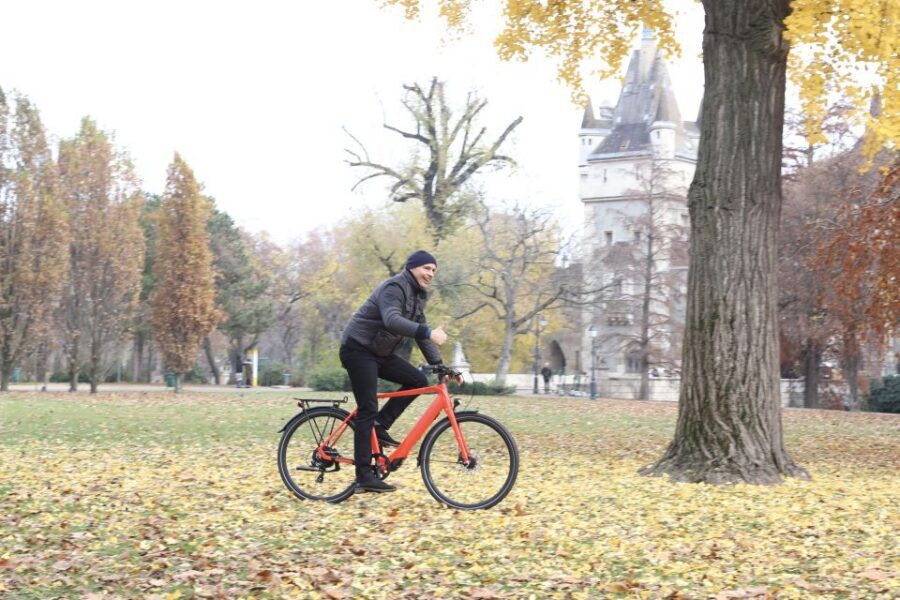
From Heroes’ Square, you roll into City Park (Városliget), where you get a mix of scenery and sightseeing logistics. A standout here is Vajdahunyad Castle—you’ll see a famous “castle” structure in the park area that looks like it belongs to another era.
You’ll also pass Széchenyi Thermal Bath, the city’s best-known bath complex. Even though you won’t enter, the stop gives you the right mental picture of why people treat thermal bathing like a Budapest pastime, not just a tourist photo.
This is a good moment in the tour because the route feels less about monuments and more about Budapest’s outdoor life. If you like parks and want a break from dense downtown streets, City Park delivers.
Downtown Pest: St. Stephen’s Basilica and the Liberty Square layer
After the park, you head toward the heart of Pest, where the city’s civic and religious icons pack tightly together. You’ll see St. Stephen’s Basilica, and it’s a major stop for obvious reasons: it’s the largest church in Budapest and impossible to miss once you’re in its orbit.
Then the ride moves into the financial district area around Liberty Square. This stop is handled thoughtfully, because it includes references to a bloody history and also a disputed Holocaust memorial in the area. It’s the kind of moment where a guide who can explain context helps you avoid the common tourist trap: seeing it as just a pretty statue.
From here, the route stays efficient and direct, so you’re not stuck hunting for locations on your own later.
You can also read our reviews of more guided tours in Budapest






Parliament, Chain Bridge, and the Danube: where the views do the talking
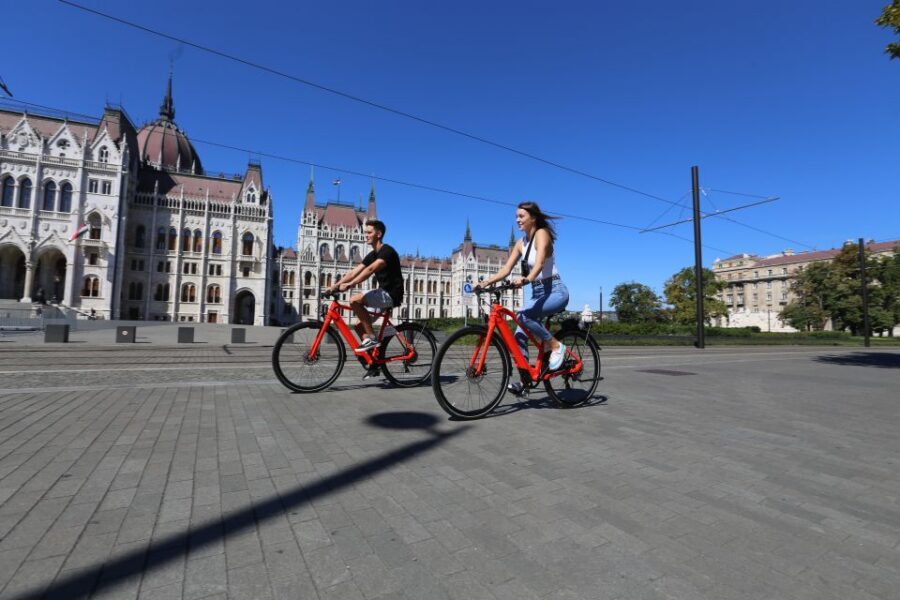
Next up is one of Budapest’s most iconic photo blocks: the Hungarian Parliament Building, then the transition to the Danube River viewpoints. You’ll cross the Chain Bridge, and an important practical detail is that it’s described as closed to private cars after recent renovations. That typically makes the crossing feel more relaxed and street-friendly.
You’ll also reach the area with the Monument of the Shoes along the riverbank. Direct access can’t always be guaranteed, so if it’s a must-see for you, treat it as a possible glimpse rather than a guaranteed step-off-and-stare moment.
The Danube side of this route is one of the reasons I’d pick an e-bike here. Walking would take forever, and a bus would cut out the feeling of gliding through streets that are meant for pedestrians and bikes. On an e-bike, the river views arrive naturally as you ride.
Castle Hill without the struggle: electric assist to Matthias and Fisherman’s Bastion
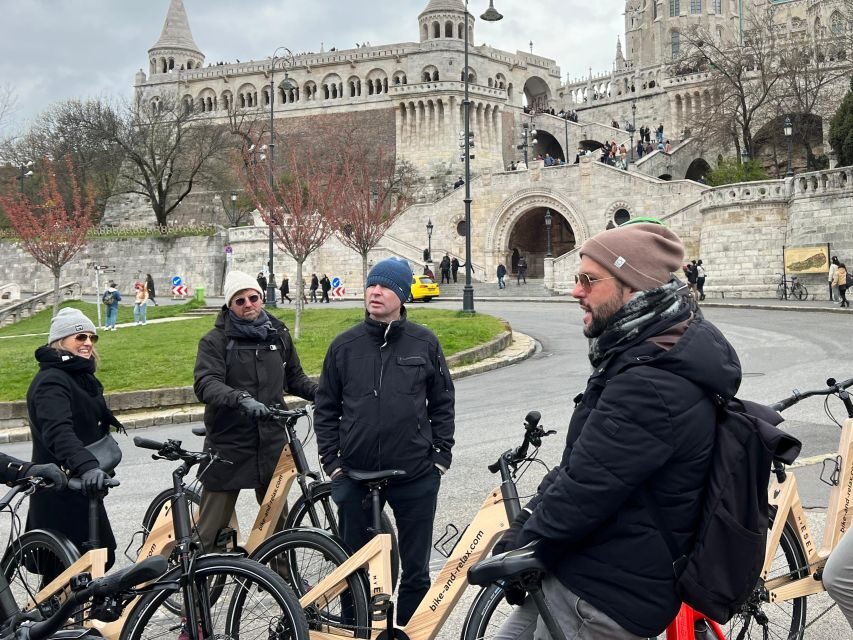
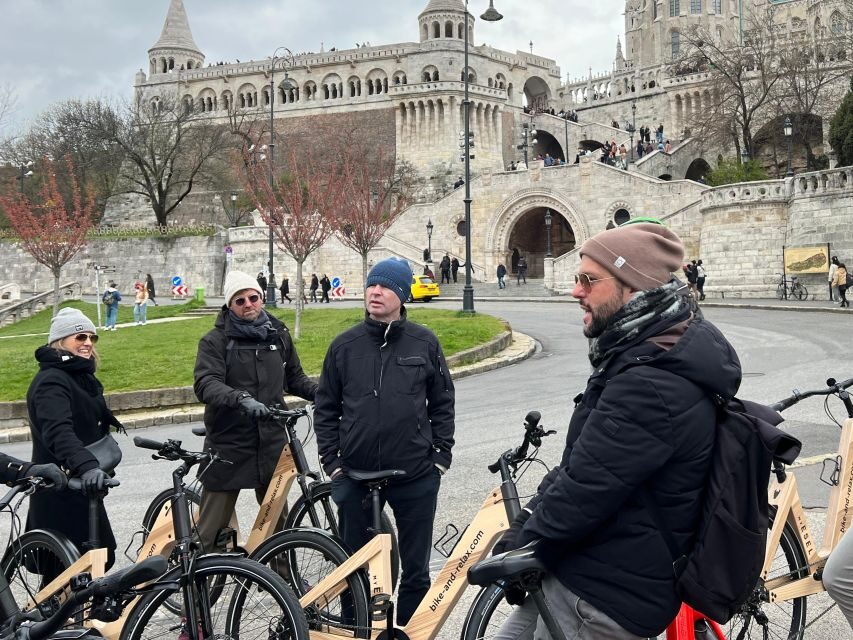
Then comes the climb: Buda side, heading up Castle Hill. This is where the e-bike earns its keep. Even if you’re not a cyclist, the electric support helps you keep moving without turning the day into a sweaty endurance event.
Once you’re up, you get the big visual payoffs. You’ll admire Matthias Church and Fisherman’s Bastion from the areas you can reach on the route. These are the kinds of stops you’ll want photos from, but also just a few slow minutes to look around because the city layout makes sense from up here.
This is also a good section for the guide’s storytelling. The same buildings that look like postcards start to feel like real places with real history once someone connects the dots.
When people mention the tour as a must-do, they usually point to this climb and the views that follow. That’s not accidental—the contrast between river level and castle viewpoints is exactly why the route is shaped this way.
Baths along the ride: Rudas and Gellért areas as “see it from the street” moments
After the castle area, you head back down toward the riverbank and pass Rudas Bath. You’re not going inside, but you are seeing where it sits in the city’s thermal-bathing geography.
Then the route continues to Gellért Hill, with the Gellért Thermal Bath area in your sightline. Again, it’s a photo-stop and orientation kind of visit. You leave with the location pinned in your head, which makes it easier to choose if you want to return later for a soak.
This portion is also where you get more skyline variety—steeper streets, river angles, and a sense of how Budapest stacks its neighborhoods against the hills.
Back to Pest via Liberty Bridge: a simple way to re-center your trip
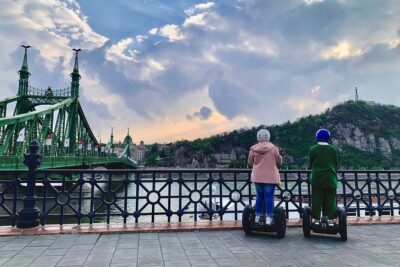
You cross back toward Pest via Liberty Bridge, described as the most popular bridge in Budapest. The ride across helps you reset after Buda’s views and puts you back in the grid where you can orient for the rest of your stay.
This section feels like a transition from sightseeing highs to practical “now I know where I am” moments. If you like planning your remaining days, you’ll find that helpful.
If rain shows up, you may get help here too. One rider noted that rain ponchos were provided when the weather changed, and that small touch can keep your tour from feeling miserable.
Central Market Hall and the National Museum area: culture stops without the crowds
As you head deeper into the city, you’ll pass Central Market Hall, a classic Budapest stop with a strong local-food vibe. Since you’re not entering here during this tour, the goal is orientation—seeing what the market area looks like so you can come back with a game plan.
Next is the Hungarian National Museum. It’s another important anchor, because it helps frame Budapest’s identity beyond the immediate tourist circuit. Even from outside, it’s a recognizable landmark that gives you a mental map for future wandering.
The final concentration of sights keeps things moving while still giving you time at photo stops to grab shots.
Finishing at Dohány Street Synagogue: closing with a major cultural landmark
Your last landmark stop is the Dohány Street Synagogue. It’s a powerful ending point because the earlier parts of the tour cover political, religious, and river history, and this stop rounds that out with a clear cultural landmark.
Then it’s back to the starting area to wrap up.
One subtle benefit: because the tour ends after most of the intense climbing and viewpoint time, you finish with less fatigue. You can use the rest of your day in a normal way rather than feeling like you still need to recover.
Price and value: is $63 for 3.5 hours a fair deal?
At $63 per person for about 3.5 hours, this tour sits in the “value if you want efficiency” zone. You’re paying for three things you’d otherwise piece together yourself:
- A local guide who connects the landmarks into one story (not just names on a sign)
- E-bike support that makes a steep hill section workable
- Route design that keeps you moving across Pest and Buda without wasting time
If you’re only in Budapest briefly, this is the kind of activity that can save you from doing the same sightseeing twice. One rider even advised doing it early in your stay to decide where to return later, and that makes sense.
On the flip side, you’re not buying entry tickets or long museum time. If your dream Budapest day is walking inside lots of buildings, this isn’t that tour. It’s best as a fast, guided overview with photo-stops and orientation.
Pacing, group size, and what it feels like on the road
This is a small group tour with a limit of 10 participants, which helps keep the ride smooth. It also means your guide can slow down when someone needs a question answered or a moment to regroup.
Guides with names like Karolo/Karol, Katy, Katalin, and Balint come up repeatedly in the feedback, with notes about humor, patience, and the ability to keep the pace comfortable for different fitness levels. That matters because Budapest streets can be a lot on foot, and you’ll want stops that don’t feel rushed.
You should still expect the day to be active. It’s not just sitting on a vehicle; you’re biking, turning, stopping, and getting in and out of photo positions.
Who should book this, and who should skip it
This tour is a great fit if you can ride a bike comfortably and want a structured path through the big Budapest highlights. People cite that even less-experienced riders felt confident once they got guidance on how to use the e-bike.
It’s also a smart choice if hills scare you. The assist function is specifically built for the kind of climb you’d otherwise skip or struggle through.
Skip this tour if any of the limitations apply. It’s not suitable for children under 13, pregnant women, people with mobility impairments, riders who can’t bike, or those outside the height range noted (under 155 cm, under 160 cm depending on the constraint, or tall riders above 110 kg). And if you dislike cycling at all, you’ll likely feel restless instead of relaxed.
Should you book this Budapest guided downtown electric bike tour?
If you want a fast, guided hit list—Andrássy Avenue, Danube viewpoints, Castle Hill, major downtown landmarks—this tour is an easy yes. The e-bike makes the steep parts workable, and the route is built to show you where everything sits so you can plan the rest of your trip.
Don’t book it if you’re mainly craving inside-the-building time or long museum visits. This is a photo-stop and orientation style tour, and that’s the trade.
If your goal is to get your bearings fast and feel like you truly covered Budapest in a single afternoon, this is a strong value choice.
FAQ
How long is the Budapest guided downtown electric bike tour?
It runs about 3.5 hours, though timing can vary based on day-of conditions.
Where does the tour start?
Meet at Bike & Relax in the center of the Jewish district, near Cafe Hivatal by the shop off Gozsdu udvar court.
Do you need to know how to ride a bike?
Yes. This tour requires you to be able to ride a bicycle, even though the e-bike provides electric support.
Do I get to enter the landmarks?
No. The stops are for viewing and photos, not entry into the attractions listed.
What languages are the live guides?
Live guides are available in German, French, and English.
Is a helmet required?
Helmets are available but not required.
What should I bring and wear?
Bring comfortable shoes and comfortable clothes. Avoid large luggage, and keep in mind the bikes have open chains that may touch your clothing.