REVIEW · CITY TOURS
8-hour private Budapest city tour by car / minivan
Book on Viator →Operated by Private Sightseeing Tours in Budapest and in Hungary · Bookable on Viator
Budapest in one smooth, guided sweep. I like the door-to-door private guiding that turns landmarks into real context fast, and I also like the low-walk format that keeps the day from turning into sore-feet revenge. One possible drawback: several major interiors cost extra (and you may need to pick where you want to spend that money).
This is built for first-timers and busy schedules: you hop between Pest and Buda by car/minivan, then step out for focused views and short visits. With an English-speaking guide and stops across the city’s most recognizable sights, you get the history-and-culture story in the places where it actually happened.
In This Review
- Key things to know before you go
- Why this private 8-hour format works in Budapest
- Price and value: what $505.73 per group means in practice
- World Heritage boulevard: Andrássy Avenue in 20 minutes
- Heroes’ Square: statues, memorial stones, and political memory
- Széchenyi Baths: the world’s biggest medicinal-bath feel, without pressure
- City Park details: Vajdahunyad Castle and the House of Music
- Vajdahunyad Castle (built for the 1000-year celebration)
- House of Music Hungary (opened in 2022)
- Pest highlights: Opera House, Basilica, and the grand squares
- Hungarian State Opera House
- St. Stephen’s Basilica
- Liberty Square
- Hungarian Parliament Building
- Danube icons: Chain Bridge, Shoes memorial, Margit Bridge, and Zero Kilometre
- Széchenyi Chain Bridge
- Shoes on the Danube Bank
- Margit Bridge
- Zero Kilometre Stone
- Matthias Church and Fisherman’s Bastion: Buda Castle District views that actually feel earned
- Matthias Church
- Fisherman’s Bastion
- Buda Castle and Gellért Hill: the big finale viewpoints
- Buda Castle complex
- Citadel on Gellért Hill
- What the private guide adds (and how it changes your day)
- How to plan your paid entrances and lunch time
- Who should book this tour, and who should skip it
- Should you book this Budapest private 8-hour city tour?
- FAQ
- What is the group size for this private Budapest tour?
- How long is the tour?
- Does the tour include hotel pickup?
- Is the tour in English?
- How do you travel during the day?
- Are entrance fees included?
- Is lunch included?
- What is included in the price?
- Can I cancel for a full refund?
- Are service animals allowed?
Key things to know before you go
- Private, door-to-door pickup from any hotel or accommodation in Budapest
- Car/minivan transport plus light walks, so you cover more without burning your whole day
- Top sights in a logical loop from Andrássy Avenue and Heroes’ Square to Buda Castle views
- Flexible stop-and-go: you can get down whenever and wherever you want
- Major interiors are optional add-ons, so you can control your total spend
Why this private 8-hour format works in Budapest
Budapest is one of those cities where the big sights are close together on a map, but not always on your feet. The river divides neighborhoods, and the Castle District sits above the river—so you can waste time and energy just moving between photo stops. This private tour fixes that with a car or minivan for most of the day, plus short, intentional walks.
What you’re really paying for is time and clarity. A private guide can point out what to look for as you arrive, then connect it to Hungarian history and culture while you’re standing right there—rather than trying to piece it together later from a guidebook. If you have limited days, this is a strong way to get oriented fast.
You can also read our reviews of more city tours in Budapest



Price and value: what $505.73 per group means in practice
The price is $505.73 per group (up to 3 people) for about 8 hours. If you travel as a small group, the per-person cost drops a lot compared with typical private touring rates.
Here’s what that price covers:
- Private guiding by a professional guide
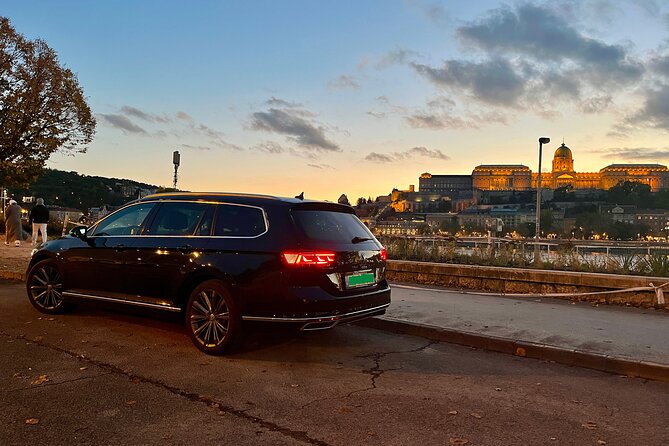
- Private transportation by sedan or minivan
- Parking fees and taxes
- Door-to-door service
What it doesn’t include:
- Entrance fees for optional interiors (several big names on the route)
- Lunch (there is time to take one, but you pay on-site)
So the smart way to judge value is to decide what kind of visitor you are. If you want to see the major highlights without spending your whole trip in lines and tickets, this can be cost-effective. If you plan to go deep into lots of paid interiors, you’ll need to budget extra entrance fees—and you might want a second day for museum-level exploring anyway.
World Heritage boulevard: Andrássy Avenue in 20 minutes
You start with Andrássy Avenue, a grand boulevard dating back to 1872. It runs between the city center and Heroes’ Square, and it’s lined with Neo-Renaissance mansions and townhouses with impressive façades—and in some cases, details you’ll only notice if you’re actually paying attention from the street.
This stop is also practical. Even if you’re not doing heavy shopping or museum browsing, the avenue gives you a visual spine for Budapest. You’ll understand where the grand civic buildings sit, where the “Pest grandeur” vibe comes from, and how this area links to the rest of your day.
Heroes’ Square: statues, memorial stones, and political memory
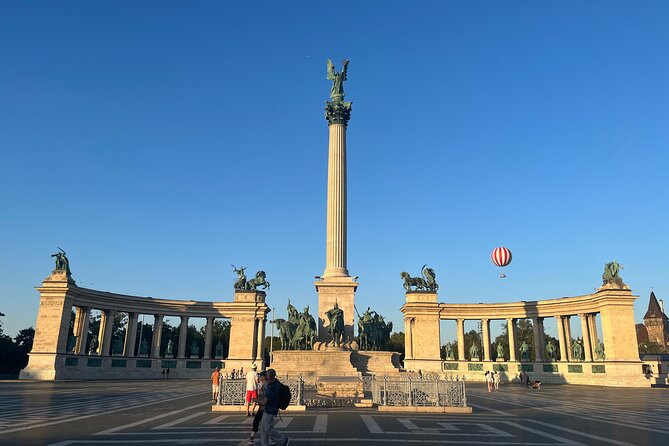
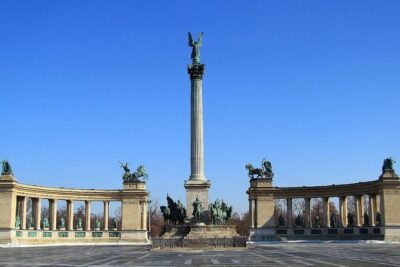
Next up is Heroes’ Square, one of Budapest’s signature scenes. The main draw is the statue complex featuring the Seven chieftains of the Hungarians and other national leaders, plus the Memorial Stone of Heroes.
Why this stop matters: Heroes’ Square isn’t just a photogenic plaza. It’s also connected to modern Hungarian political history, including the reburial of Imre Nagy in 1989. A guide can help you read the symbolism on the monuments so the place doesn’t become just another big sculpture moment.
You also get nearby cultural anchors in the background—there’s the Museum of Fine Arts and the Art Gallery in the area—so this stop feels like a hub, not a dead end. Time on this one is about 20 minutes, which is usually enough for photos, orientation, and a quick story.
Széchenyi Baths: the world’s biggest medicinal-bath feel, without pressure
Then it’s Széchenyi Baths and Pool. This is the biggest medicinal bath in Europe, with water supplied by two thermal springs at about 74°C (165°F) and 77°C (171°F).
Important note: the short stop here is around 10 minutes, and entry isn’t included. That means this is likely a look-around moment and a chance to understand the setting—not a full bathing session. If you want to actually soak, you’ll probably need a separate plan with more time and a paid entrance.
Still, it’s a smart inclusion. Budapest’s bath culture is part of daily life and identity here, not just a tourist gimmick. Seeing Széchenyi in context helps you decide if you want to come back for the full experience.
You can also read our reviews of more private tours in Budapest






City Park details: Vajdahunyad Castle and the House of Music
Your route then swings into City Park for two modern-but-historical contrasts.
Vajdahunyad Castle (built for the 1000-year celebration)
Vajdahunyad Castle was created in 1896 as part of the Millennial Exhibition celebrating 1000 years of Hungary since the Hungarian Conquest in 895. The design is based on copies of landmark buildings from across the Kingdom of Hungary.
So what you’re seeing is intentional storytelling through architecture. You can think of it as a “history in stone and silhouette” stop—perfect for a short visit.
House of Music Hungary (opened in 2022)
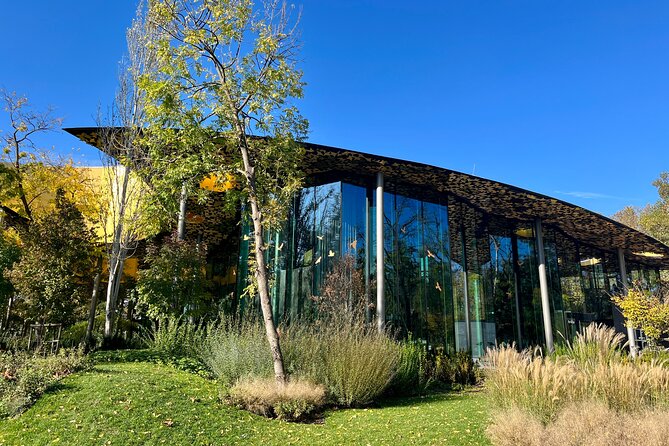
Right after, you’ll see House of Music Hungary, a music-learning complex with the country’s first comprehensive exhibition presenting the history of music. The building opened in January 2022, and the project was selected from 170 international designs.
This is a good stop for curious travelers who want something beyond the classic church-and-palace route. Even if you don’t go inside, the building reads as a statement: Budapest keeps building new cultural anchors, not only preserving old ones.
Pest highlights: Opera House, Basilica, and the grand squares
After City Park, you’ll shift deeper into central Pest with stops that capture Budapest’s major civic and religious identity.
Hungarian State Opera House
You pass the Hungarian State Opera House on Andrássy Avenue. It’s a neo-Renaissance opera house in the same grand setting as the boulevard—again reinforcing why Andrássy Avenue feels like Budapest’s “main stage.”
St. Stephen’s Basilica
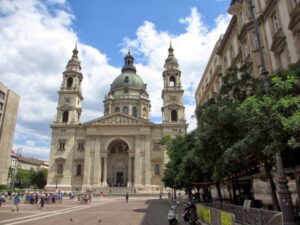
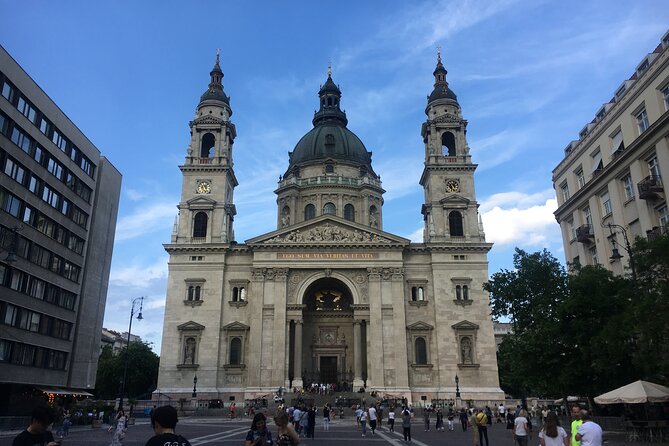
Next is St. Stephen’s Basilica. It’s named for Stephen, the first king of Hungary, whose right hand is housed in the reliquary. It’s described as the third largest church building in Hungary, and it serves as a co-cathedral of the Roman Catholic Archdiocese of Esztergom-Budapest.
The route allows about 30 minutes, but entrance isn’t included. If you care about interior art or religious architecture, this is one place where it can be worth paying the extra fee.
Liberty Square
At Liberty Square, you’re in the Lipótváros neighborhood. The square has a mix of business and residential life, and it borders the United States Embassy and the Hungarian National Bank building with historicist style and some Art Nouveau elements. This stop is less about one monument and more about feeling the city’s political and financial nerve center.
Hungarian Parliament Building
Finally, you’ll reach the Hungarian Parliament Building in Kossuth Square on the Pest side along the Danube. It’s described as the largest building in Hungary. Time here is about 20 minutes, with entrance optional.
Even when you don’t go inside, this area helps you understand why Budapest’s politics feel so visually intense—architecture turns into messaging.
Danube icons: Chain Bridge, Shoes memorial, Margit Bridge, and Zero Kilometre
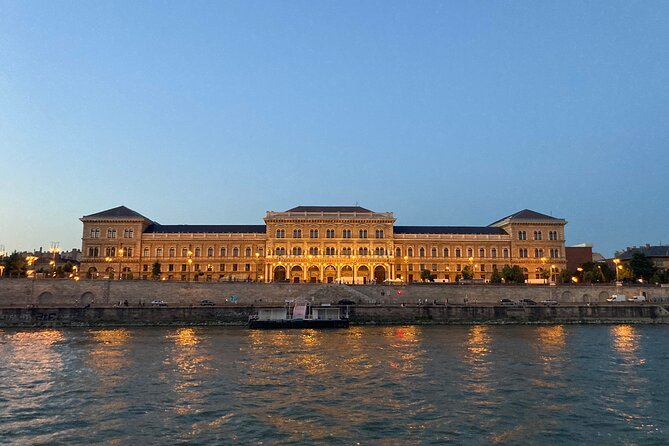
The tour then becomes very river-focused, and for good reason: Budapest’s Danube stretches and crossings act like natural bookmarks between Buda and Pest.
Széchenyi Chain Bridge
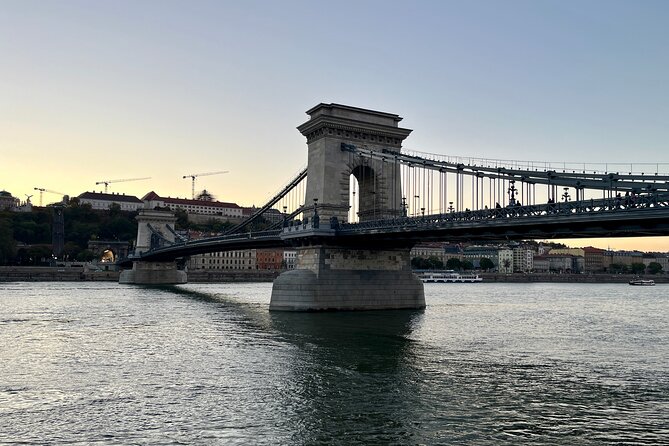
You’ll stop at Széchenyi Chain Bridge, the first permanent bridge across the Danube in Hungary. It was opened in 1849, designed by English engineer William Tierney Clark and built by Scottish engineer Adam Clark. The bridge is a “look at the whole city at once” moment—wide river, big skyline, and two halves of Budapest in view.
Shoes on the Danube Bank
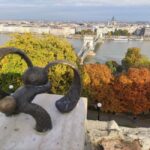
Next is Shoes on the Danube Bank, a memorial created by film director Can Togay with sculptor Gyula Pauer, honoring Jews killed by Arrow Cross militiamen during World War II. This stop is best taken slowly and respectfully. You’re not just reading history on a plaque; you’re looking at a stark, grounded reminder of what violence looks like when it’s recorded through ordinary objects.
Margit Bridge
You also pass the Margit Bridge, described as the second oldest bridge in Budapest (opened 1876). It connects Pest and Buda and links toward the recreation area on Margaret Island. Even if you’re not continuing to the island, this helps you understand how many ways locals move between the sides.
Zero Kilometre Stone
Then you’ll see the Zero Kilometre Stone, a limestone marker inscribed with “KM.” It marks the reference point from which all road distances to Budapest are measured. It’s small, but it’s a neat way to understand Budapest as a living hub—not only a postcard destination.
Matthias Church and Fisherman’s Bastion: Buda Castle District views that actually feel earned
Once you’re in the Buda Castle District, the tone changes. The architecture gets older, and the viewpoints become the main event.
Matthias Church
Matthias Church, officially the Church of the Assumption of the Buda Castle, is the better-known name. The current building is late Gothic from the second half of the 14th century, restored in the late 19th century. The route allows about 30 minutes, and entrance isn’t included.
If your ideal day includes stepping inside major churches, this is another stop where you’d likely budget for the extra fee.
Fisherman’s Bastion
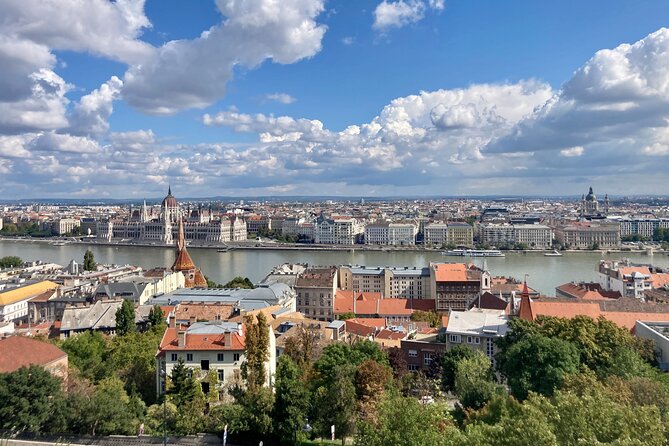
Then comes Fisherman’s Bastion, one of Budapest’s most famous panorama spots. It’s in the Buda Castle District and built between 1895 and 1902 on top of the base of Buda Castle walls. The Neo-Romanesque terraces are set up for views, and the main façade is about 140 meters long.
Time here is about 20 minutes, with entrance optional. The best use of that short window is simple: let the view sink in before you move on. This is one of those places where your photos won’t fully show how steep the city feels—or how the river frames the skyline.
Buda Castle and Gellért Hill: the big finale viewpoints
You finish the day with two heavyweights that close the loop on Budapest’s layered identity: royal power and military-era elevation.
Buda Castle complex
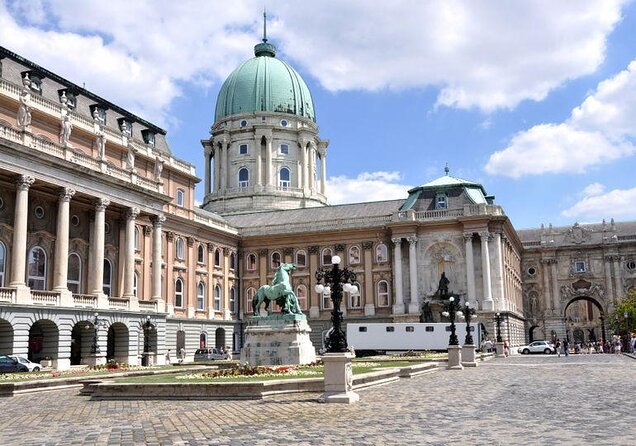
Buda Castle is the historical castle and palace complex of the Hungarian kings. While the original completion date is 1265, the Baroque palace you mostly see today was built 1749 to 1769. The whole area is part of the Budapest World Heritage Site, declared in 1987. Time here is about 45 minutes, and admission is free for the stop itself.
This is your chance to understand why the Castle District matters. From street level, Buda looks dramatic; from within the complex, you start to feel how long Budapest has been defending, rebuilding, and reinventing itself.
Citadel on Gellért Hill
To close, you go to Citadel Lookout at the top of Gellért Hill. The Citadella is a fortification built in 1851 by Julius Jacob von Haynau. Time is about 30 minutes, and the stop is free.
This is a strong way to end because it gives you a final overview. You’ll connect what you saw earlier—avenues, bridges, squares—to the actual geography that makes Budapest work.
What the private guide adds (and how it changes your day)
This tour is rated extremely high, with a perfect 100% recommendation rate in the feedback you’re given access to here. The common thread is the same: guides are warm, flexible, and detailed in how they explain the city.
Names you may see praised include Greg, Gergő, Gergely, Gregory, and Gabriel—and several comments point to guides who take care of timing, knowledge, and pacing. One of the best practical benefits is customization: if you want more walking at a certain stop or you prefer to keep moving, the format allows you to adjust.
Also, because you’re in a car, you can reduce the “death by a thousand stops” feeling. You still see a lot, but you’re not stuck on the sidewalk trying to figure out where to go next.
How to plan your paid entrances and lunch time
Since multiple interiors require extra entrance fees, your best move is deciding your “must pay” moments. The route notes that St. Stephen’s Basilica, Matthias Church, and the upper floor of Fisherman’s Bastion are examples of places that can cost extra. Parliament and the Opera area are also mentioned as not included for entry on the stop list.
The good news: the stops give you the option to choose. You can keep it light—see the exterior, enjoy the stories, take photos—and then pay only where your curiosity wins.
Lunch is optional. The timing allows a break so you can eat on-site if you want. Ask your guide what fits your preferences that day (something fast vs. something Hungarian vs. something scenic). It’s a small detail, but it often makes the whole day feel less rushed.
Who should book this tour, and who should skip it
This private car tour is a great fit if:
- You’re on a short Budapest trip and want major sights plus context
- You don’t want to spend your one good day stacking stairs and long walks
- You value history explanations in the actual places where the events happened
- You like the idea of custom pacing with a guide
You might want to skip it (or add extra days) if:
- You want to spend hours inside multiple museums and don’t just want quick interiors
- You have a very tight budget and don’t want to pay extra entrance fees
- You prefer unguided strolling with zero structure
Should you book this Budapest private 8-hour city tour?
If you want a first-hit Budapest experience that covers Pest, Buda, and the river with a guide who can connect monuments to meaning, I think this is an easy yes. The format is efficient without feeling like a checklist, and the focus on door-to-door service plus short walks makes it realistic for more travel styles.
Book it especially if you’re traveling as a small group (up to 3) and you want to reduce decision-making. You’ll trade a big chunk of money for a big chunk of time saved—and for a smoother, more understandable day.
FAQ
What is the group size for this private Budapest tour?
It’s a private tour for only your group, priced per group for up to 3 people.
How long is the tour?
The tour duration is about 8 hours.
Does the tour include hotel pickup?
Yes. Pickup is offered, and the tour can start from any hotel or other accommodation type in Budapest.
Is the tour in English?
The tour is offered in English.
How do you travel during the day?
You travel by private transportation (sedan or minivan) and do light walks at stops.
Are entrance fees included?
No. Entrance fees are not included. Some optional interior visits cost extra, such as St. Stephen’s Basilica, Matthias Church, and the upper floor of the Fisherman’s Bastion.
Is lunch included?
Lunch is not included. There is time and the option for an optional lunch break, but meals are paid on-site.
What is included in the price?
The price includes private guiding, door-to-door service, parking fees and taxes, and private transportation.
Can I cancel for a full refund?
Yes. Free cancellation is available up to 24 hours in advance for a full refund.
Are service animals allowed?
Service animals are allowed.