REVIEW · WALKING TOURS
Budapest: Walking Tour in German
Book on GetYourGuide →Operated by Tourist Angel · Bookable on GetYourGuide
Budapest can feel huge. This German walking tour makes it feel readable. In just 3 hours, you connect the city’s big landmarks to about 1,100 years of Hungarian history, with a guide who explains what you’re actually looking at as you go.
Two things I really like about this experience are the focus on visible “highlights” you can point at right away—St. Stephen’s Basilica and the Buda Castle area—and the way the route mixes famous monuments with quieter parts of the old core, like Leopoldstadt (Leopold Town). It’s an efficient first look, without turning into a boring checklist.
One thing to consider: the tour is mainly on foot, and you’ll also use public transport to cross the Danube from Pest to the Buda side. If you prefer zero transit legs or you’re traveling in very warm weather, wear shoes you trust—and note that shorts aren’t allowed on this tour.
In This Review
- Key points worth knowing before you go
- Getting Started by St. Stephen’s Basilica (and why the meeting spot helps)
- Pest-side walking: Chain Bridge, Leopoldstadt, and the city’s “front page”
- Crossing the Danube on public transport: short leg, big payoff
- Buda Castle and Matthias Church: fortified walls plus the best city angles
- Fisherman’s Bastion and the big panorama effect
- Parliament, Royal Palace area, and the President’s Palace: power buildings with context
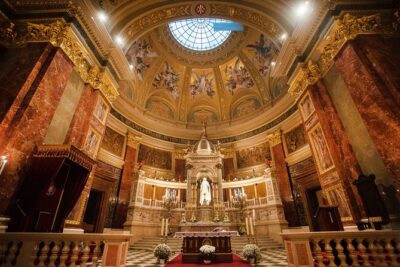
- St. Stephen’s Basilica: more than a starting landmark
- Price and value: what $41 buys in 3 hours with a German guide
- Who should book this Budapest walking tour in German
- Should you book? My take
- FAQ
- How long is the Budapest walking tour in German?
- Where is the meeting point?
- What language is the guide?
- What’s included in the price?
- Are public transport tickets included?
- Do you use public transport during the tour?
- Is there an outfit restriction?
- Is cancellation available?
Key points worth knowing before you go
- German-speaking guide: you’ll get explanations in German the whole time.
- Danube crossing on public transport: you cover both sides of the city with less backtracking.
- Buda Castle Quarter focus: fortified views plus Matthias Church and nearby panorama points.
- Big name sights, but explained: Parliament, the Royal Palace area, and the President’s Palace area show up on the route as context.
- Strong guide moments reported: names like Ewa, Ursula, and Monika have been credited with making the stories memorable.
- Great intro for a first visit: it’s built to help you understand how Budapest fits together.
Getting Started by St. Stephen’s Basilica (and why the meeting spot helps)
The tour meets right next to St. Stephen’s Basilica, outside California Coffee Company. That’s a smart start, because you’re already in one of the most recognizable visual anchors in Budapest. From the very beginning, you can look up at the basilica and then let the guide connect it to the larger story of the Hungarian state.
Also, this location is practical. You can easily orient yourself in central Pest before the walk gets going, and you’re close to transit corridors if you need them. Since the route includes both Pest and Buda sides, being near a major landmark at the start reduces the “where do we even begin?” feeling that can happen on first-day tours.
One small rule to keep in mind: shorts aren’t allowed. If you’re planning summer sightseeing, plan outfits accordingly. The easiest way to handle this is to wear breathable long pants or a light skirt and bring a layer if evenings cool off.
You can also read our reviews of more walking tours in Budapest



Pest-side walking: Chain Bridge, Leopoldstadt, and the city’s “front page”
The tour takes you through some of Budapest’s oldest and most important areas, including Leopoldstadt (Leopold Town) and the Chain Bridge area. What I like about this kind of Pest-side focus is that it gives you the “movement” of the city—how people flow between landmarks, how the river divides neighborhoods, and where major power symbols sit.
As you walk, you’re not just seeing buildings. You’re learning what they represent: how earlier eras organized society, how Hungary’s kingdom evolved, and how modern political changes fit into older structures. You get the sense that Budapest isn’t one time period—it’s layers stacked on top of each other.
The Chain Bridge is also a key moment because it forces your eyes to travel horizontally across the Danube. Even if you’ve seen photos before, seeing it from the street level helps you understand scale—how the river shapes routes and viewpoints.
Crossing the Danube on public transport: short leg, big payoff
You’ll mainly walk, but you’ll also use public transport to cross the Danube from Pest to the Buda side. The tour price includes the German-speaking guide, but the transit tickets are not included: you’ll need 4 tickets/person (1400 HU).
This transit leg is where the tour earns its “first-time efficiency” value. Instead of forcing everyone to hike the long river crossing on foot, it uses the city’s real transportation rhythm. That usually means you spend more of your limited tour time looking at sights on the Buda side, rather than just moving between them.
Practical tip: bring the right mindset. The transit part isn’t long in concept, but you’re still dealing with city movement—getting on, getting off, regrouping. If you’re the type who likes perfect quiet and no waiting, factor in the normal flow of public transport.
Buda Castle and Matthias Church: fortified walls plus the best city angles
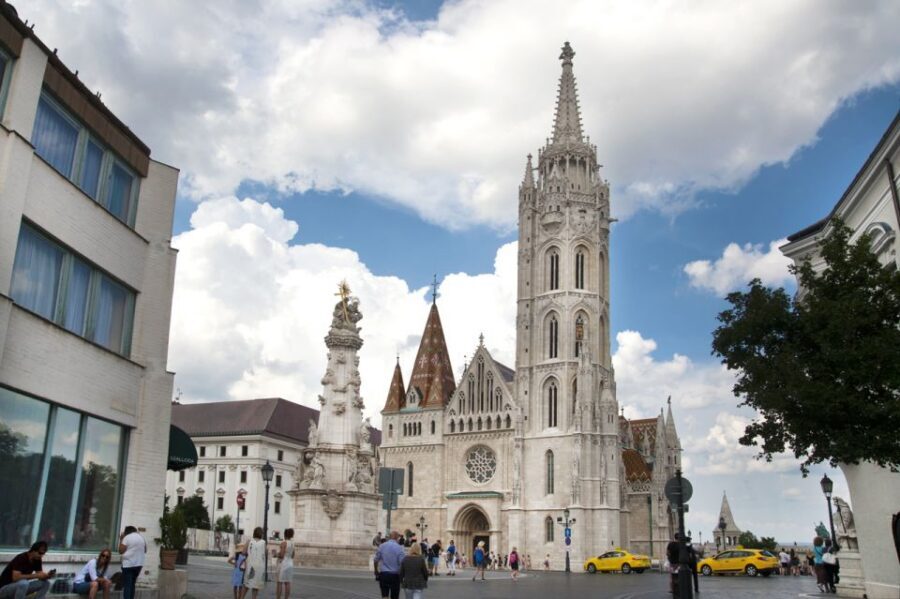
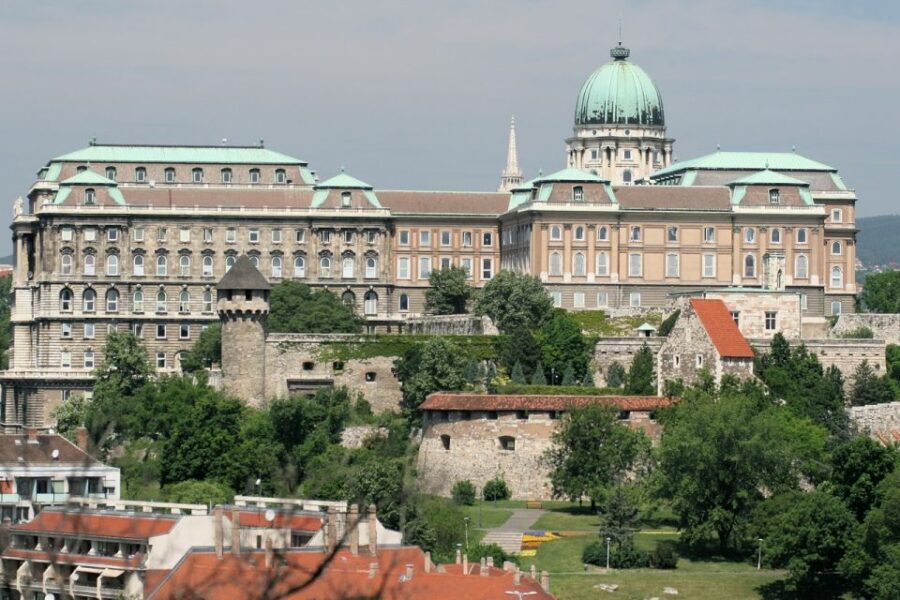
Once you’re on the Buda side, the tour shifts into the Castle Quarter mood fast. You’ll visit the fortified Buda Castle area and then take in Matthias Church. This is the section that tends to feel like Budapest’s “camera roll in real life,” because the architecture is dramatic and the views are direct.
Here’s what makes this part valuable: the guide ties the setting to story. Castle areas weren’t just built for beauty. They were built for defense, power, administration, and control. Walking through this district while someone explains the why behind the walls changes how you see it.
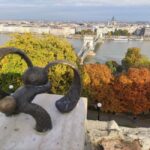
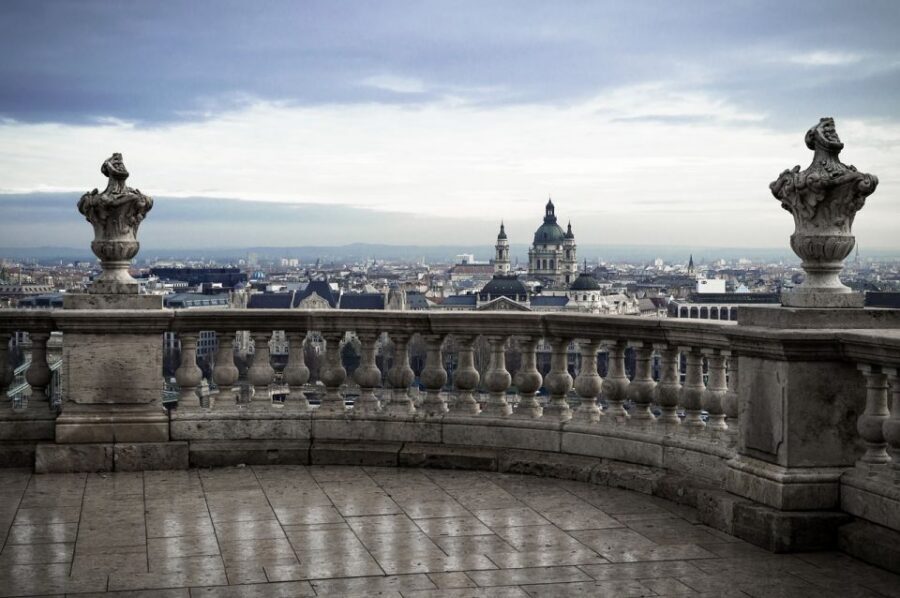
You’ll also get breathtaking city views from the area—those classic elevated perspectives that show how the Danube cuts the city and how Pest’s streets wrap around it. Even if you’re not obsessed with photography, these viewpoints help you mentally map Budapest. After this, you’ll understand where you are when you walk around later on your own.
Matthias Church is especially important because it stands for a specific kind of architectural ambition. As you look at it, it helps to have a guide who can explain what you’re seeing in plain terms—so you don’t just admire the facade, you understand why it looks the way it does.
Fisherman’s Bastion and the big panorama effect
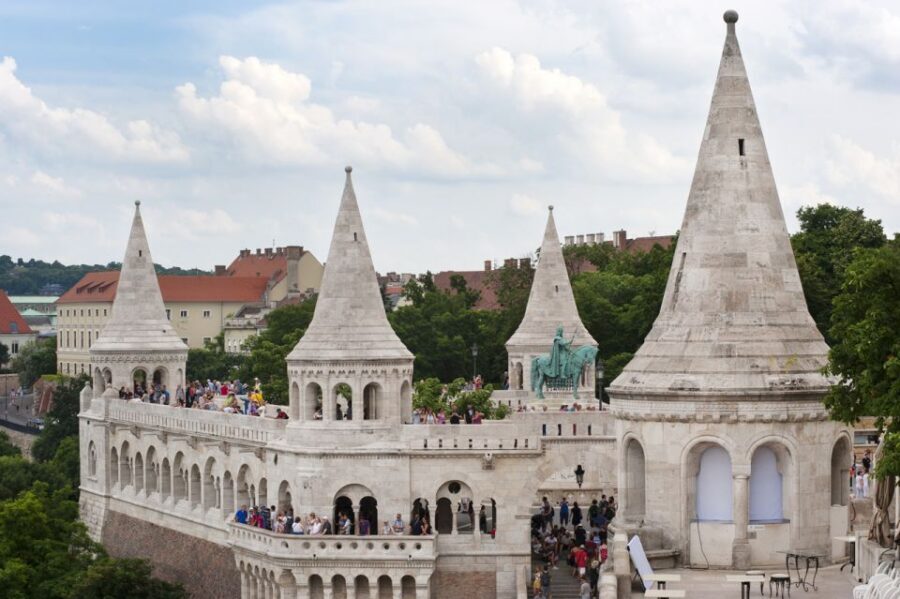
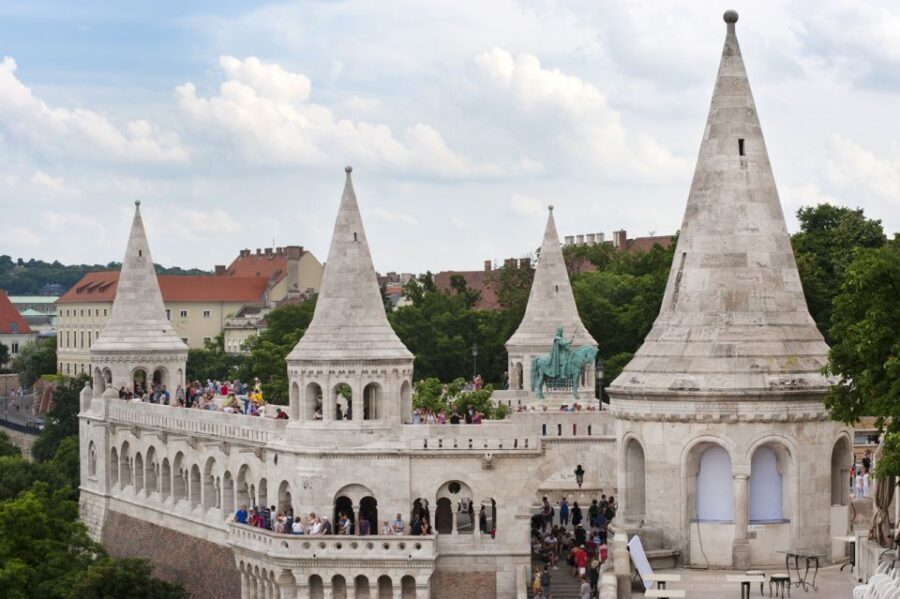
The route also includes Fisherman’s Bastion, which you’ll see as part of the Castle Quarter viewpoints. This stop matters less for the “church or palace” angle and more for the view. It’s a place where Budapest reveals itself as a shaped city around the river.
I like how tours that include a viewpoint stop often save you later frustration. Once you’ve stood at a panorama point and had the city described, you don’t wander blindly as much. You start recognizing directions—where the bridges are, where major civic buildings appear, and why the Buda side feels more elevated and formal.
The guide’s job here is to point your attention. You’re likely to notice that the details matter: angles, river bends, and how neighborhoods sit on the slopes. If you only visit from street level later, the view puzzle is harder.






Parliament, Royal Palace area, and the President’s Palace: power buildings with context
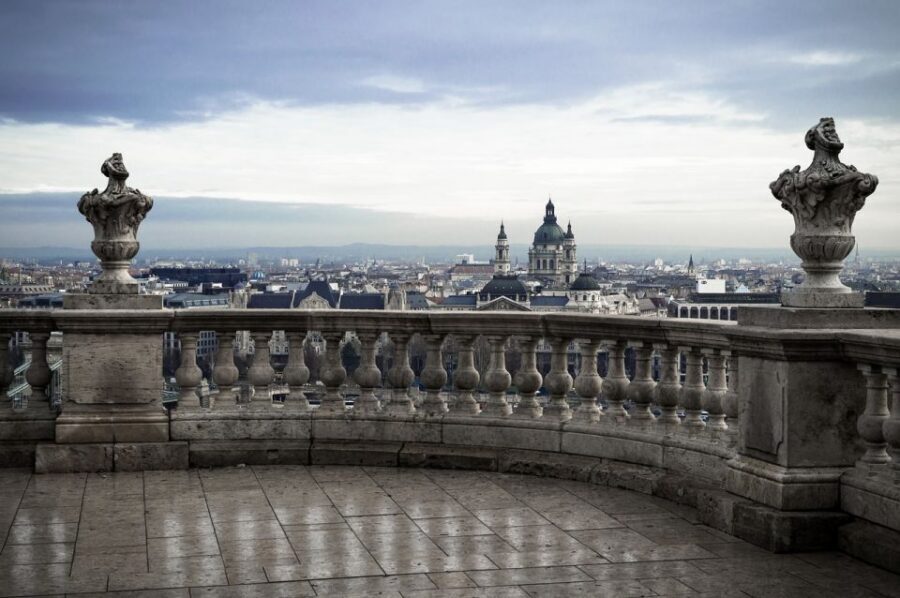
One part of this tour that I think is easy to underestimate is the inclusion of major civic and political sights: the Hungarian Parliament, the Royal Palace, and the President’s Palace. These are the kind of places people photograph fast, then move on from.
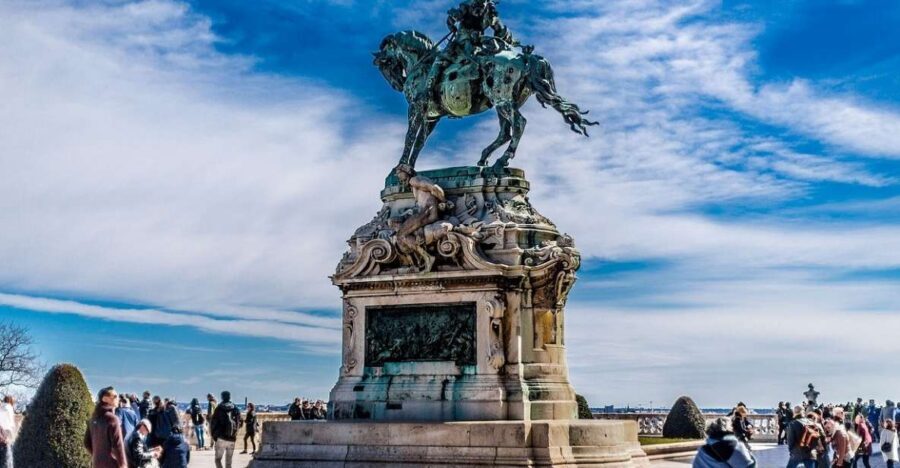
With this route, you slow down enough to understand what these buildings signal. The guide connects them to the long sweep of Hungarian governance—how the country moved from conquest through kingdom structures, and then into later democratic changes. You’re not learning history as trivia. You’re seeing how the state chooses to display itself in stone.
The practical value is big if you’re only in Budapest for a short time. You get multiple “power landmarks” in one walk, then you can go back later based on interest—maybe you’ll want to spend extra time around the Parliament area, or maybe you’ll focus on the castle side only.
Also, German-language commentary helps here because it’s a focused explanation rather than a head full of mixed facts from various languages. If you’re comfortable in German, you’ll get more out of the route.
St. Stephen’s Basilica: more than a starting landmark
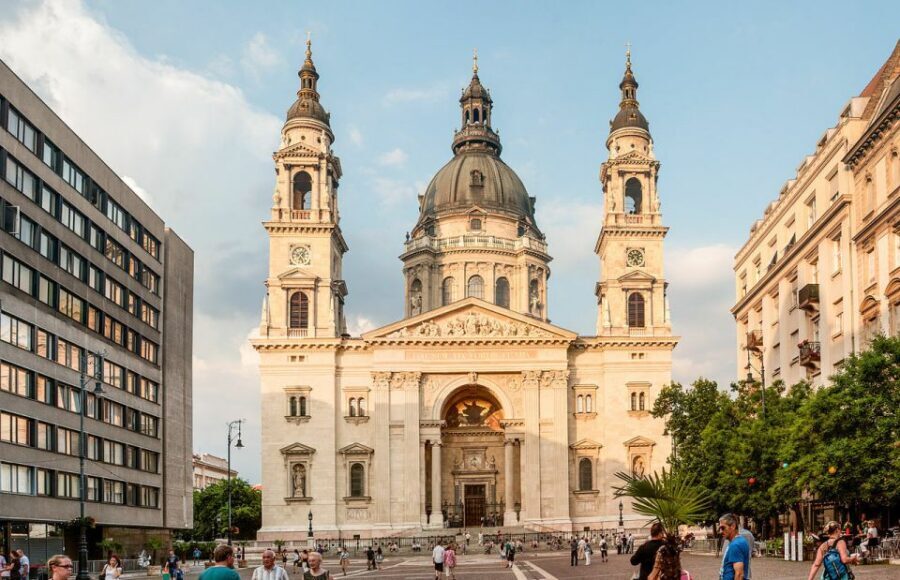
St. Stephen’s Basilica isn’t just where the tour begins. It’s listed as a highlight, which makes sense: it’s one of the best “visual bookends” for the whole route. Seeing it at the start sets a tone—this is a city that has always cared about public identity.
Even if you don’t enter every building (the tour data emphasizes admiration and sight viewing rather than a guaranteed interior visit), having the basilica in your frame still works. It anchors your orientation in Pest and gives the guide an easy starting point for explaining earlier eras, national symbols, and how different times left their mark.
I also like that this gives you an emotional anchor. The basilica feels like a statement. Then the rest of the tour becomes your explanation of the statement—why it sits here, what it meant across time, and how Hungary’s history shapes modern Budapest.
Price and value: what $41 buys in 3 hours with a German guide
At $41 per person for a 3-hour walking tour, you’re paying for two things: time-saving routing and a German-speaking guide who connects landmarks to history. You’re also getting more than one major district—Pest, Danube crossing, Buda Castle Quarter—without needing to plan each leg yourself.
What’s not included is the public transport portion: 4 tickets/person (1400 HU). So your total spend will be a bit higher than $41 once you account for that. Still, considering you’re covering a high-density set of iconic stops—St. Stephen’s Basilica, Chain Bridge, Parliament area sights, Buda Castle and Matthias Church, plus Fisherman’s Bastion—this can be good value if you want a “first orientation” tour.
In plain terms: if you like structure and storytelling, $41 feels fair. If you’d rather wander independently with a map app and spend your money on food and museum tickets, then a self-guided route might be cheaper. But you’d be doing more work to connect the dots.
Who should book this Budapest walking tour in German
This tour fits best if:
- You want a clear introduction to Budapest and its history in a short time.
- You prefer German narration over English-only tours.
- You like seeing major landmarks and then getting the “why” behind them, not just where they are.
You might skip it if:
- You can’t handle walking for about 3 hours plus a transit crossing.
- You’re strict about outfit rules and don’t want to adjust for the shorts restriction.
- You don’t want public transport involved at all.
One more note on the guide experience: the names Ewa and Ursula show up in accounts for strong storytelling, and Monika is mentioned for excellent German and practical restaurant advice. That’s a good sign that the guide role is a real strength of this tour, not just background noise.
Should you book? My take
If this is your first time in Budapest and you want to understand the city fast, I’d book it. The best reason is the combination: German-led history context plus a route that hits Pest’s icons and then delivers the Buda Castle panoramas. You’ll leave with a mental map and a sense of how Budapest’s big buildings connect to older eras.
If you already know Budapest well or you’re traveling with a strong “no transit, no rules” preference, you might choose a more self-paced option. For everyone else who wants a guided, landmark-heavy overview without feeling rushed, this one is an easy yes—just plan for proper clothing and budget the public transport tickets.
FAQ
How long is the Budapest walking tour in German?
The tour duration is 3 hours.
Where is the meeting point?
It meets next to St. Stephen’s Basilica, in front of the California Coffee Company coffee shop.
What language is the guide?
The live guide speaks German.
What’s included in the price?
The tour includes a German-speaking guide.
Are public transport tickets included?
No. Public transport tickets are not included. You’ll need 4 tickets per person (1400 HU).
Do you use public transport during the tour?
Yes. While the tour is mainly on foot, you also use public transport to cross the Danube from Pest to the Buda side.
Is there an outfit restriction?
Yes. Shorts are not allowed.
Is cancellation available?
Yes. You can cancel up to 24 hours in advance for a full refund.