REVIEW · BUDAPEST
Café Wandering: An Excursion through Budapest’s Belle Epoque
Book on GetYourGuide →Operated by insightcities.com · Bookable on GetYourGuide
Budapest changes personality the moment you step into a café. This 3-hour walk pairs Hungarian Belle Époque architecture with the lived-in café culture that shaped writers, artists, and intellectuals. You start at Vörösmarty tér and work your way through grand interiors, design details, and a fitting art finale at Kazinczy Street Synagogue.
I especially love how the guide ties each stop to its time and people, not just the pretty walls. I also like the balance of big-name splendor (think Gerbeaud and Astoria) with smaller design clues, like Asian-inspired motifs tucked into older décor. One watch-out: refreshments at the cafés are on you, and it’s easy to spend more than the tour price once cake and coffee become part of the experience.
In This Review
- Key highlights that make this tour worth your time
- A Belle Époque city tour, built around coffeehouse culture
- Starting at Café Gerbeaud on Vörösmarty tér: where the story begins
- The Danube tram connection to Central Café 1887
- Café Astoria: where classic European grandeur gets very real
- Museum Café and the Asian design motifs you’re meant to notice
- Urania Café on Rakoczi street: the café that’s linked to ideas
- Művész Coffee House and New York Palace Café: art + attitude
- Finishing at Kazinczy Street Synagogue: art nouveau meets devotion
- Price and value: is $123 a good deal for this kind of tour?
- Who should book Café Wandering?
- About the guide: what that small-group size really changes
- Should you book Café Wandering through insightcities.com?
- FAQ
- FAQ
- How long is Café Wandering?
- What is the meeting point?
- How much does the tour cost?
- Is the tour guided, and in what language?
- What’s included in the price?
- Are refreshments or café items included?
- How big is the group?
- Where does the tour go at the end?
- Can I cancel if plans change?
- Is pay-later available?
Key highlights that make this tour worth your time
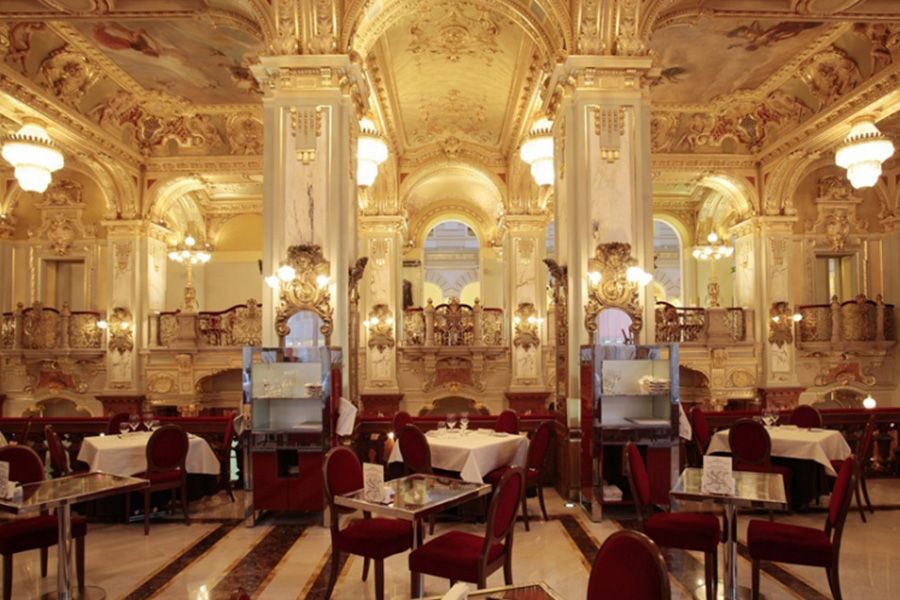
- Art historian-led walk with guides who are professors, doctoral students, historians, journalists, art critics, and published authors
- Gerbeaud Café as your stylish entry point to Imperial Budapest café life
- Tram ride along the Danube to connect stops without feeling like you’re speed-walking across town
- Café Astoria and its classic coffee-house grandeur
- Design details you can actually notice (including Asian-inspired elements)
- A strong finish at Kazinczy Street Synagogue with art nouveau Orthodox flair
A Belle Époque city tour, built around coffeehouse culture
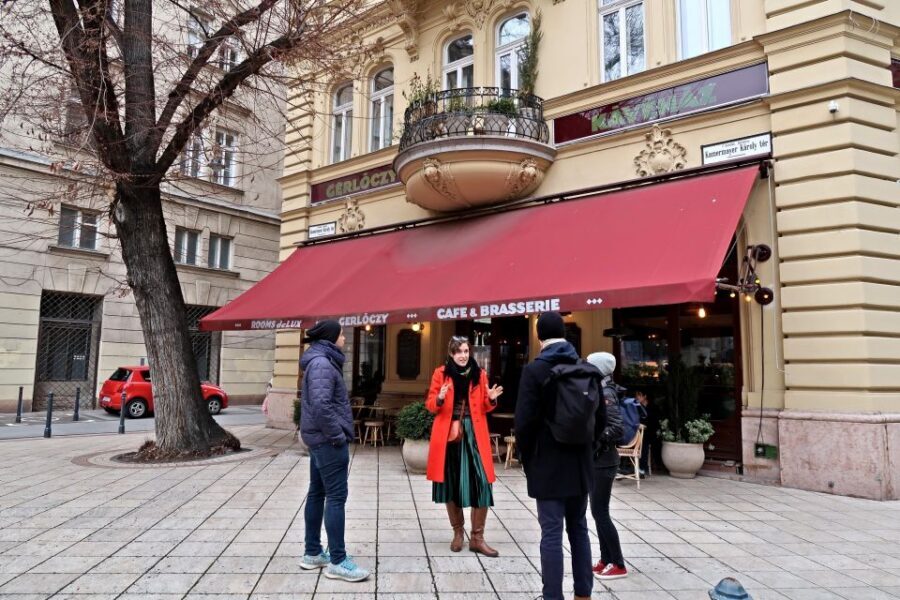
This isn’t a checklist tour of famous buildings. The idea is smarter: you watch how Budapest’s cafés functioned like social media before phones existed. People met, argued, wrote, sketched, and debated ideas inside these rooms. Then they walked out into a city that was remaking itself during the late 1800s and early 1900s.
You’ll spend three focused hours learning to read the architecture and interiors the way an art historian would. That’s the real upgrade. Afterward, you won’t just remember where things are—you’ll understand why certain designers favored certain looks, and how café culture matched the mood of the Habsburg era.
And yes, you’ll be staring at décor. A lot. But it’s the good kind—ornate, intentional, and full of clues.
You can also read our reviews of more tours and experiences in Budapest.



Starting at Café Gerbeaud on Vörösmarty tér: where the story begins
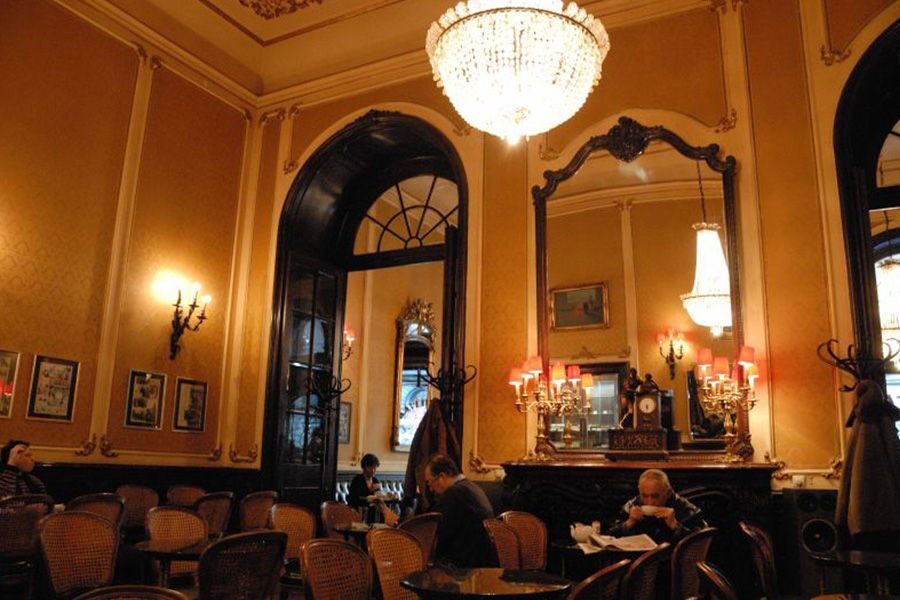
Your meeting point is Café Gerbeaud at Budapest Vörösmarty tér 7-8, 1051. That location matters. Vörösmarty tér sits in the middle of the city’s everyday flow, so Gerbeaud is the perfect anchor: historic glamour in a spot where modern life keeps moving.
Gerbeaud is the first café on your route, and the guide sets the tone fast. This is where you get the early framing of Imperial Budapest—how cafés served as meeting points for both visitors and locals during the late 19th century. You’re not just looking at furniture; you’re seeing a social hub that helped shape public life when the city was growing and ambitions were high.
The Danube tram connection to Central Café 1887
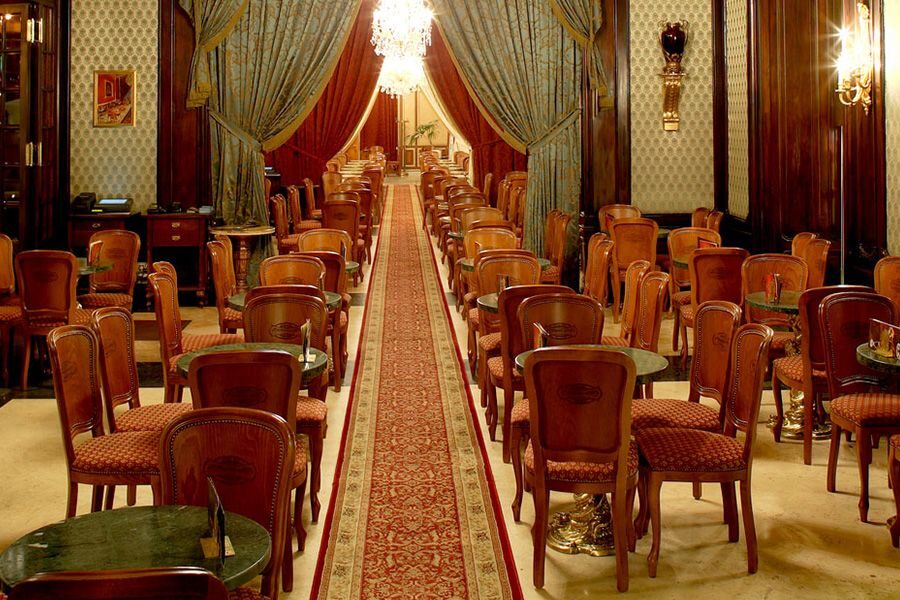
After Gerbeaud, you take a tram ride along the Danube to Central Café and Restaurant 1887. This stretch does two useful things for you. First, it breaks up walking with a quick, scenic transit. Second, it connects the cafés to the wider urban rhythm of Budapest, where the river is both a landmark and a backbone.
Central Café is described as dignified—an epitome of café culture during the peak of the Habsburg Empire’s economic and cultural power in the 19th century. That phrasing is basically telling you what to look for: formality, ceremony, and the feeling that you’re in a place that expects respectable company. You’ll notice how the space supports that mood, from how it’s arranged to how you’re meant to linger.
If you’re the type who likes to understand how design reinforces behavior, this stop clicks.
Café Astoria: where classic European grandeur gets very real
Next comes Café Astoria, which the tour highlights for its old-school, lavish interior vibe—classic European coffeehouse grandeur, the kind you picture in old postcards. The focus here is on scale and style. You’re meant to see the café as more than a place to grab something; it’s an environment built to impress.
This is also a great spot to slow down mentally. After earlier stops explain how cafés functioned socially, Astoria shows you what that looked like when it leaned into luxury and spectacle. If you love details—molding, ornamentation, and that slightly theatrical feeling old cafés do so well—Astoria is where your camera will earn its keep.
Museum Café and the Asian design motifs you’re meant to notice
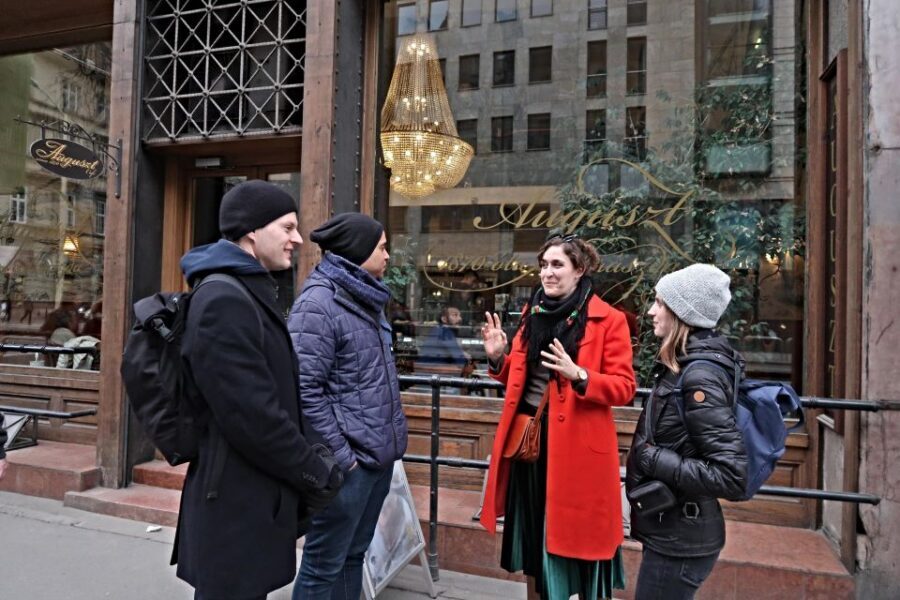
One of the more interesting tour angles is design language: the way certain interiors use Asian motifs and elements. The tour points you toward Museum Café for this kind of visual detective work, calling out the lavish, century-old interior walls and the Asian-inspired details used by designers.
Here’s the practical takeaway for you: don’t just look for one decorative flourish. Instead, scan patterns and motifs, and ask what role they play. Are they used to suggest exoticism, sophistication, or fashion? The tour’s framing nudges you to interpret the design choices rather than treating them like random decoration.
If you’ve ever walked into a historic interior and thought, I know it’s pretty, but why… this is the part that helps you answer that question.



Urania Café on Rakoczi street: the café that’s linked to ideas
After a short walk, you reach Urania Café on Rakoczi street. This stop has a double identity. It’s a café setting, but it’s also tied to culture through the fact that it houses the oldest film theater in the city.
The tour also highlights Urania’s reputation for lectures given by prominent intellectuals before large audiences. That’s the connection you’re looking for: cafés weren’t only about sweets and gossip. They were part of the city’s intellectual bloodstream, places where public conversation could happen.
Even if you don’t care about film history or lecture culture, you’ll still appreciate this stop because it adds another layer to the café story: Budapest’s cafés weren’t locked in the past. They kept hosting the public as tastes changed.
Művész Coffee House and New York Palace Café: art + attitude
The middle-to-late portion of the walk shifts from grand old cafés to places that feel tied to creative energy. You’ll visit Művész Coffee House (also called Artist Cafe), where the vibe is explicitly linked to art.
Then the tour includes a guided look at New York Palace Café. The name alone signals ambition, and the point of this stop is to experience how café culture also reflected social status and style during the era when Budapest was flexing its cultural power.
What I like about ending this stretch this way is that you’re not just receiving facts. You’re moving through atmospheres. The guide helps you connect the dots between design and the kind of people who would’ve felt at home in those rooms.
And if you want a quick strategy: take notes on one interior element per stop—lighting style, ceiling detail, wall decoration, or layout. By the time you reach the end, you’ll see patterns across the whole walk.
Finishing at Kazinczy Street Synagogue: art nouveau meets devotion
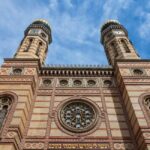
The tour concludes at the Kazinczy Street Synagogue, described as a fascinating art nouveau Orthodox synagogue. This is a strong ending for two reasons.
First, it changes your visual focus. You start the day in café interiors built for social life; you end in a religious space with a totally different purpose and a different kind of artistry. Second, it reinforces the larger theme: Budapest’s turn-of-the-century creativity showed up everywhere—public spaces, artistic spaces, and places of faith.
If your brain tends to remember cities through moments and mood, this finish helps. It gives you a final image that’s not just ornate, but specific and memorable.
Price and value: is $123 a good deal for this kind of tour?
At $123 per person for a 3-hour guided walk, you’re paying for three things: time, expertise, and a route that blends the café experience with key architectural viewing.
Here’s the honest value math. You get a guide with serious credentials (the tour notes they’re professors, doctoral students, historians, journalists, art critics, and authors). That matters because you’re not simply being shown places—you’re being taught how to see. You also get a small group limited to 8 participants, which usually means you can ask questions and actually hear the guide without fighting for attention.
The main cost you should plan for is food and drink. Refreshments and cakes/coffees selected at the cafés aren’t included. That’s not a scam—it’s normal. Just go in with the mindset of budgeting a little extra if you want to fully participate in café life.
If you’d rather do self-guided wandering with a map and a coffee budget, this might feel like a pricier choice. But if you want the context that turns décor into meaning, the guide component is where your money goes.
Who should book Café Wandering?
This is a great fit if you:
- Like architecture and interiors more than you like pure sightseeing
- Want a structured route that still feels human and story-driven
- Enjoy learning from someone with academic or professional arts background
- Prefer small-group pacing over joining a large bus crowd
It’s also a nice option for solo travelers who like discussion and for couples who want shared impressions without planning every stop. If you’re short on time in Budapest but want something more thoughtful than a standard highlights walk, this hits the sweet spot.
One thing to consider: you’ll be moving between multiple cafés, and the tour format is designed for looking, listening, and walking. If you’re hoping for a slow sit-down pub-style evening with long meal service, this isn’t that kind of experience.
About the guide: what that small-group size really changes
The tour’s group size is capped at 8 participants, which helps you get more out of each stop. When the guide is an art historian (or a scholar from closely related fields), you’ll get more than generic explanations.
In one highlighted experience, the guide Kota was called excellent. That points to a key strength of the operator: guides aren’t just narrators—they’re teachers. You’ll likely feel comfortable asking questions, and you’ll hear clearer answers inside ornate rooms where sound can bounce.
Should you book Café Wandering through insightcities.com?
If you’re the type who wants Budapest to feel like more than photos, I think you should book this. The route is built around café culture as a lens for understanding the city’s Belle Époque look and feel, and the art-historian angle makes the stops more satisfying than a casual walk.
Book it if you can budget a little for coffee and cake. Skip it (or at least downgrade expectations) if you’re trying to keep costs ultra-tight and you’re mainly interested in exterior views with no focus on interiors.
FAQ
FAQ
How long is Café Wandering?
The tour lasts 3 hours.
What is the meeting point?
You meet at Café Gerbeaud, Budapest Vörösmarty tér 7-8 1051.
How much does the tour cost?
The price is $123 per person.
Is the tour guided, and in what language?
Yes. It is guided by a live English-speaking guide.
What’s included in the price?
You get a 3-hour guided walk with an art historian guide.
Are refreshments or café items included?
No. The cost of refreshments, cakes, and coffees you choose at the cafés is not included.
How big is the group?
The group is small, limited to 8 participants.
Where does the tour go at the end?
The tour concludes at the Kazinczy Street Synagogue.
Can I cancel if plans change?
Yes. Free cancellation is available up to 24 hours in advance for a full refund.
Is pay-later available?
Yes. You can reserve now and pay later.