REVIEW · BUDAPEST
Rise Against the Soviet: The 1956 Revolution – Private Tour
Book on Viator →Operated by Fungarian · Bookable on Viator
Budapest remembers 1956 in real places. This private tour stitches together the revolt’s most important stops with guide-led storytelling and personal testimonies, so the history doesn’t stay trapped in a textbook. I also like that it’s small-group focused (up to 5), which makes it easier to ask questions and move at a pace that fits your group.
The main thing to keep in mind is the 3-hour time limit. It’s a big subject—some people will wish the tour lingered longer at certain sites or covered a couple of extra angles, especially if you already studied 1956 in depth.
In This Review
- Key things that make this tour worth your time
- The 3-hour private setup: pickup, pace, and what you actually do
- Stop 1: Kossuth Lajos Square and the crackdown after mass demonstrations
- Stop 2: Margaret Bridge area—communist power in a place locals called the White House
- Stop 3: Bem Square and Bambi Eszpresszó—student protests and the culture of resistance
- Stop 4: The Sándor Petőfi statue and how words sparked arrests
- Stop 5: The Radio Budapest building—when revolutionaries begged for help
- Stop 6: Corvin Cinema and Corvin köz—resistance with Molotov cocktails
- More than a walk: why the handouts and personal context matter
- Value for your money: $228.66 per group in real terms
- Who should book this 1956 Revolution tour—and who might want a different format
- Should you book Rise Against the Soviet: The 1956 Revolution private tour?
- FAQ
- How long is the Rise Against the Soviet: The 1956 Revolution private tour?
- How big is the group?
- Is pickup available?
- What language is the tour offered in?
- What’s included, and what should I budget for?
- Can I cancel if my plans change?
Key things that make this tour worth your time
- Private group of up to 5 for questions and a calmer pace than typical big tours
- Kossuth Lajos Square to Corvin köz: the route follows the revolt’s story in space, not just dates
- Bambi Eszpresszó on Frankel Leó út: a long-running intellectual hangout gives you a feel for daily life and resistance talk
- Radio Budapest stop: you learn how revolutionaries tried to reach the outside world during the fighting
- Imre Nagy and Petőfi references: specific names and moments connect speeches, arrests, and consequences
- Handouts + a communism-related souvenir: you leave with take-home material to keep the story straight
The 3-hour private setup: pickup, pace, and what you actually do
This is a private experience, so only your group participates. The tour runs about 3 hours, which is a good length for first-time visitors: long enough to connect locations into a narrative, short enough that you won’t feel dragged around all day.
Pickup is offered from your hotel in Budapest, or from another central point you agree on. In practice, that matters because it reduces the “where do we meet” stress and lets you start focused. The tour is offered in English, and it’s designed for guests with moderate physical fitness—think walking with breaks, not marathon touring.
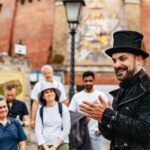
A small group also changes the feel. You’re more likely to get clarifying answers when you ask why people acted the way they did, or what life was like right before and after the revolt. In several experiences people highlight how guides bring the communist era to life, including personal context from living through that period.
You can also read our reviews of more private tours in Budapest

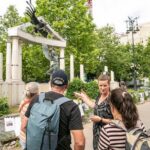

Stop 1: Kossuth Lajos Square and the crackdown after mass demonstrations
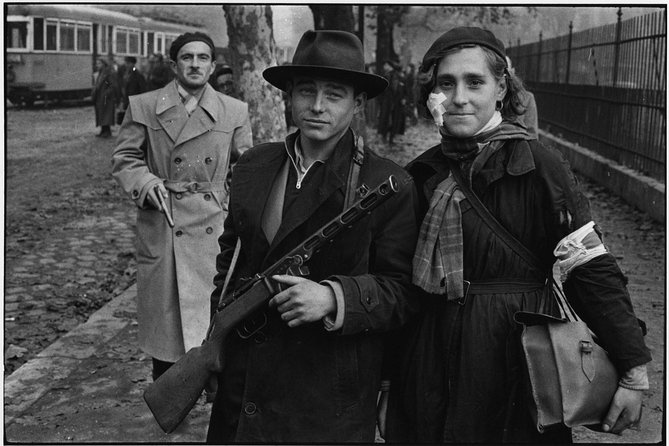
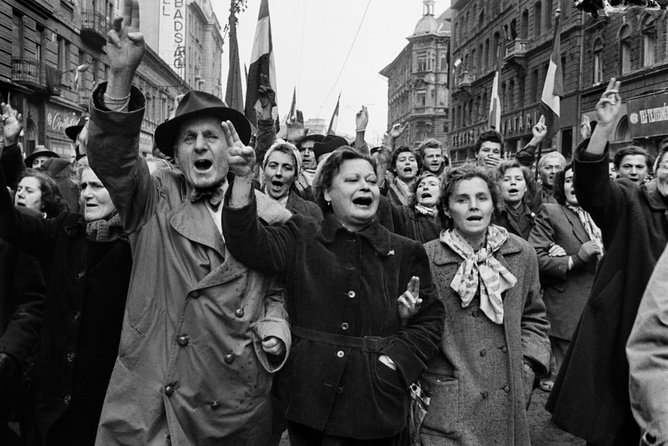
You begin at Kossuth Lajos Square, where the Hungarian Parliament stands. This square isn’t just scenic—it’s tied to a key 1956 turning point: after a mass demonstration, dozens were massacred by the government.
Why this stop hits: it shows how quickly crowds and politics can turn lethal. In many histories, 1956 is told as a chain of events. Here, you’re standing in the civic heart of the country while learning how the state used force when protests escalated.
Practical note: this is listed as around 25 minutes, and there’s no admission ticket required for this part. If you want to understand the revolt’s stakes, this is where the story gets serious.
Stop 2: Margaret Bridge area—communist power in a place locals called the White House
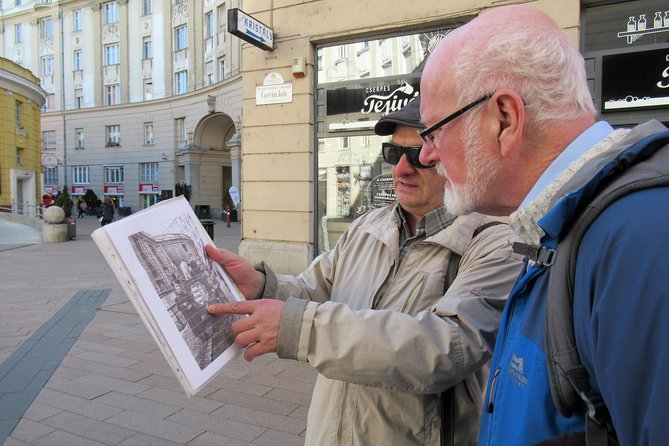
Next you head to the Danube riverfront near Margit Bridge. On the banks, there’s a building that communist authorities dubbed The White House. It served as the Party headquarters of the Hungarian communist government.
You also visit the statue of Imre Nagy, the prime minister during 1956 who was later murdered. That pairing is smart. It lets you see power in physical form, then immediately anchor it to a specific political figure whose fate symbolizes the revolt’s crushing outcome.
This stop is about 20 minutes, with no admission ticket required. I like it because it keeps the story balanced: you’re not only looking at protesters and resistance—you’re also seeing where the authorities made decisions and how the state organized control.
Stop 3: Bem Square and Bambi Eszpresszó—student protests and the culture of resistance
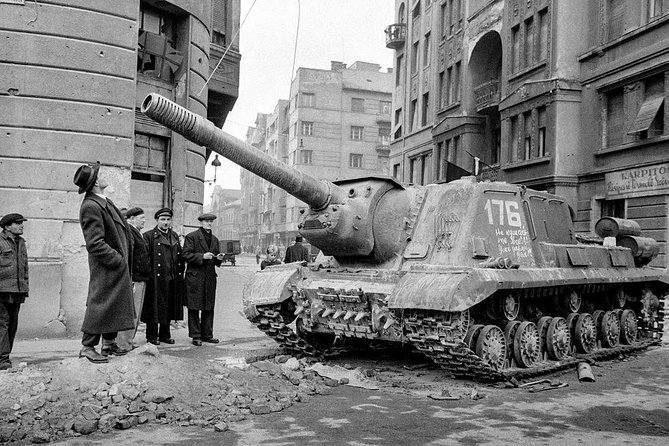
From the Margaret Bridge area, you go south to Bem Square. This is tied to a massive moment: 200,000 Hungarian students protested against Soviet rule in 1956. The rally originally grew from support for Polish workers, which is a useful reminder that the revolt didn’t happen in a bubble.
After the square, you also visit Bambi Eszpresszó on Frankel Leó útca. This long-running shelter for Buda-side intellectuals has been going since the 1960s, and it’s kept both its atmosphere and interior design.
Why this stop works: revolutions aren’t only street battles. They also live in conversations—who talks to whom, what gets debated, what people dare to say. A place like Bambi Eszpresszó helps you picture the social side of dissent, not just the dramatic side.
This part is about 30 minutes and includes no admission ticket. If you like history with texture—small details that make the era feel lived-in—this is one you’ll probably remember.
Stop 4: The Sándor Petőfi statue and how words sparked arrests
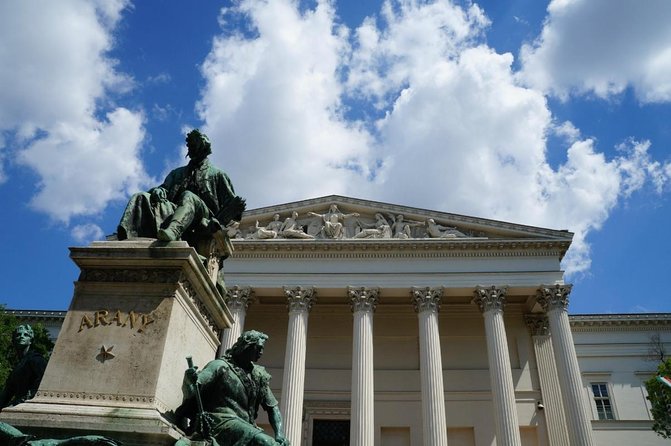
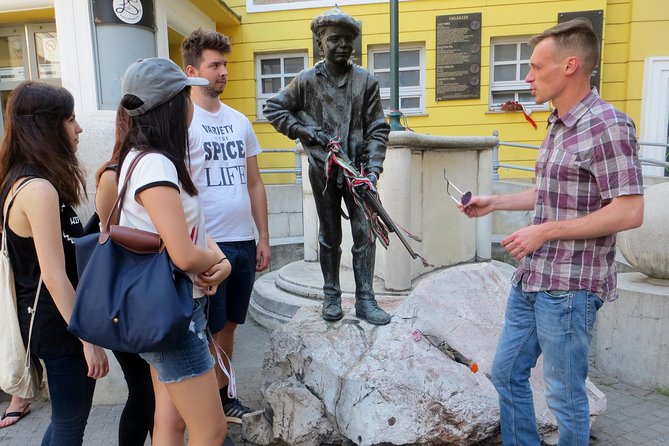
Then it’s over to the Sándor Petőfi statue. Petőfi is a key figure in the earlier 1948 revolution, and by 1956 his image had become shorthand for struggle against government.
This statue still functions as a meeting point for political events and protesters today. In other words, the past isn’t buried here—it’s still part of how people gather and speak.
A vivid 1956 moment is linked to the site: actor Sinkovits Imre came to the statue and recited Petőfi’s words that incited revolution. He was arrested and imprisoned afterward.
This stop is short—about 15 minutes—but it’s packed. If you care about how language turns into action, you’ll likely like it more than you’d expect from a quick statue stop. Admission is free for this part.





Stop 5: The Radio Budapest building—when revolutionaries begged for help
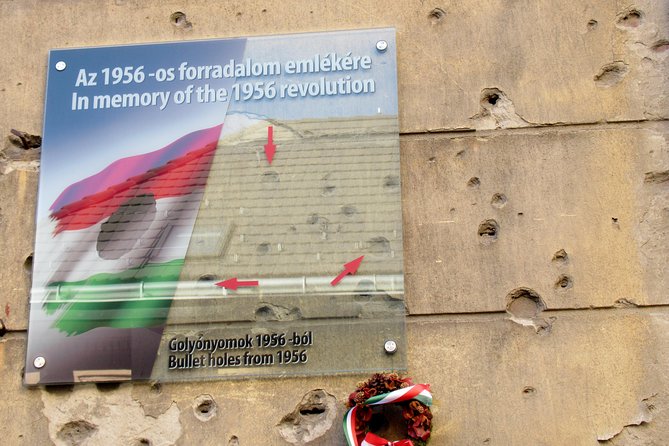
Next you visit the Hungarian National Museum area along Sándor Bródy Street, specifically the Magyar Rádió building, also known as Radio Budapest. It’s tucked along a small one-way street, away from the main traffic arteries, which makes it feel a bit like you’re discovering it rather than racing past it.
This radio building was one of the fighting epicenters in 1956. From here, revolutionaries begged for help from the world at large.
That detail matters. People often think of 1956 as something that happened entirely inside Hungary. But the revolt’s leaders and participants were trying to connect with outsiders—broadcasting urgency, looking for attention, and seeking support.
This stop is about 20 minutes, and entry is free according to the tour details. It’s also one of the places where a guide’s explanations can really change what you see, especially if they connect the radio’s role to what propaganda and information meant in communist-era control.
Stop 6: Corvin Cinema and Corvin köz—resistance with Molotov cocktails
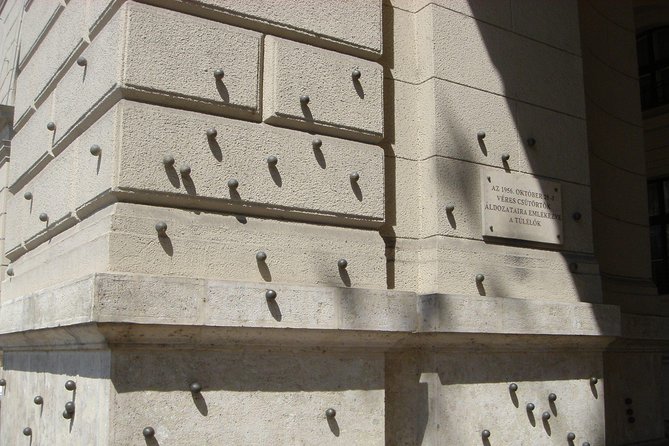
The tour finishes at Corvin Cinema in Corvin köz, on the south-east side of Budapest. This square and neighborhood area was a major resistance center in 1956.
Here you learn about a blunt, improvised reality: local youngsters fought invading Russians with Molotov cocktails and guns stolen from soldiers to fight against Soviet tanks. You’ll also be shown reminders of the battles in the area and talk through what happened in the aftermath.
This is about 30 minutes, again with no admission ticket required. I like ending here because it shifts the emotional register from command centers and memorials to what ordinary people tried to do with what they had.
If your history tends to focus on leaders, this ending helps rebalance the story. It’s harder, messier, and closer to the people who got hurt first.
More than a walk: why the handouts and personal context matter
What makes this tour feel useful—especially for people who like the human side of history—is how the guide frames 1956 in context rather than treating it like a standalone explosion.
In particular, I see a pattern in how guides are described: they connect 1956 to earlier causes and to what followed, including the longer trajectory that led to communism’s fall in 1990. Even if you don’t know the sequence now, the tour’s structure across physical locations helps your brain build a timeline that sticks.
You also get handouts plus a communism-related souvenir. That might sound like a small perk, but it helps more than you’d think. When you’re hearing names and dates in a short walking loop, a take-home page turns your memory into something you can review later at a café.
And because the tour is private, your guide can adjust emphasis. In one account, a guide even slowed down for an elderly father so the conversation stayed accessible. That’s exactly what you want from a history tour: not just facts, but pacing that respects your group.
Value for your money: $228.66 per group in real terms
Pricing is listed as $228.66 per group for up to 5 people. Since it’s per group, your best value comes when you can split the cost with others.
If you’re traveling as a couple, it may feel like a premium compared with group tours—mainly because you’re paying for the privacy. If you’re a group of 4 or 5, the cost per person drops fast, and the private format becomes a bargain.
The tour also includes free admission for the listed stops, plus handouts and a souvenir. That doesn’t make it cheap, but it does reduce the “nickel and dime” feeling that can ruin a short itinerary.
Who should book this 1956 Revolution tour—and who might want a different format
Book this if you:
- Love mid-20th-century European history and want your facts tied to real places
- Prefer a guided story with names like Imre Nagy and references like Petőfi (instead of generic generalities)
- Want a compact route that moves across multiple districts in one go
- Appreciate context that connects events before and after 1956, not just the day of the revolt
Consider a different option if:
- You already know 1956 extremely well and need a longer, more specialized deep-syllabus tour
- You strongly dislike walking and want something that stays in one tight neighborhood (this tour spreads out across major city areas)
Should you book Rise Against the Soviet: The 1956 Revolution private tour?
If you want the 1956 story in a short, organized, human way, I’d say yes. The stops are well-chosen: Kossuth Square for the crackdown, Imre Nagy’s shadow near the Party HQ, student resistance and Bambi Eszpresszó’s culture of ideas, then the radio site and finally Corvin köz for the fight-your-way-through ending.
Just go in with one expectation set: three hours is tight for something this huge. If you like your history with a little room to linger, you may want to add a self-guided walk afterward through the same neighborhoods while the story is fresh in your head.
FAQ
How long is the Rise Against the Soviet: The 1956 Revolution private tour?
It’s listed at about 3 hours.
How big is the group?
It’s a private tour, with your group only. The price is per group for up to 5 people.
Is pickup available?
Yes. You can be picked up at your hotel in Budapest, or from a central point you agree upon.
What language is the tour offered in?
The tour is offered in English.
What’s included, and what should I budget for?
Included: handouts and a communism-related souvenir. Not included: food/drinks, and public transportation tickets or pass.
Can I cancel if my plans change?
Yes. Free cancellation is available if you cancel at least 24 hours before the experience starts.