REVIEW · CITY TOURS
Budapest City Walk in Jewish Quarter
Book on Viator →Operated by Budapest Jewish Walk · Bookable on Viator
Walk the streets where memory lives. This 4-hour Jewish Quarter City Walk turns a small patch of Pest into a map of stories, from everyday Jewish life to WWII trauma and postwar persistence. What I like most is the small-group, private feel and the way the guide threads history into real places you can actually stand in.
You’ll visit major sites like Dohány Street Synagogue and the Wallenberg Memorial Garden, plus memorials along the streets and by the Danube. The main thing to consider is that entrance fees aren’t included, and you’ll pay extra if you want to go inside more than one synagogue (the tour notes a cap and a one-synagogue choice).
In This Review
- Jewish Quarter on Foot: Why This Area Clicks Fast
- Private-Style Storytelling With Guides Like Timea Tarjani
- Synagogue Triangle: Kazinczy, Rumbach, and Dohány Street
- Kazinczy Street Synagogue and the mikveh moment
- Rumbach Synagogue and the architectural storytelling
- Dohány Street Synagogue: the heavyweight landmark
- WWII Memory in the Raoul Wallenberg Garden and Beyond
- The Wallenberg Memorial Garden with the Emmanuel tree
- Carl Lutz Memorial and the network of saving stories
- The last remaining part of the WWII ghetto wall
- Jewish Museum and Jewish Archives: Context You’ll Still Use Later
- Stumbling Stones and Shoes on the Danube
- Local Life Stops: Gozsdu Courtyard, Mikveh Street Energy, and Szimpla Ruin Bars
- Timing, Pickup, and Group Size: Making the 4 Hours Worth It
- Price Reality Check: What’s Included and What Costs Extra
- How to Prepare: Moderate Walking and a Synagogue Dress Check
- So Who Is This Walk For?
- Should You Book This Budapest Jewish Quarter City Walk?
- FAQ
- How long is the Budapest City Walk in the Jewish Quarter?
- What’s the group size limit?
- Do you get hotel pickup and drop-off?
- Are entrance fees included for synagogues?
- Is food included?
- Is there a dress code?
Jewish Quarter on Foot: Why This Area Clicks Fast
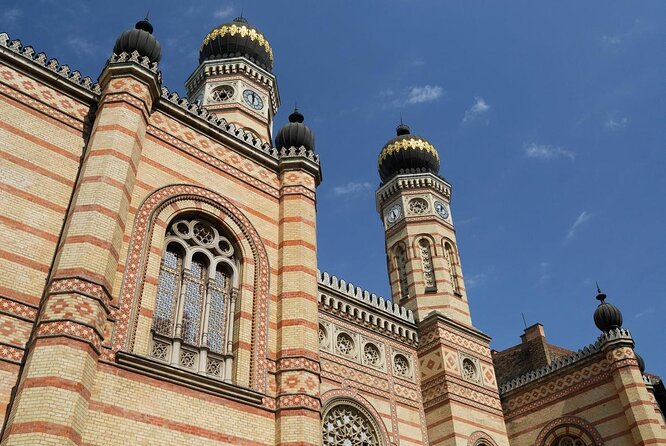
Budapest’s Jewish Quarter (District VII) is compact enough that walking is the best strategy. Instead of hopping between far-off stops, you move through a tight neighborhood where you can look at buildings, street traces, and memorial markers from close range.
That matters here, because the tour is built around contrasts. You’ll see religious landmarks, residential courtyards, memorial places, and the riverfront all within a reasonable walking loop. The goal is not just to name sites, but to help you get your bearings and understand what this neighborhood meant, and still means.
Private-Style Storytelling With Guides Like Timea Tarjani
This tour stands out because it doesn’t feel like a march through facts. The vibe is conversational and personal, and guides like Timea Tarjani are known for mixing Hungarian and Jewish history with lived perspective.
You get a licensed local guide and a maximum of 10 travelers, so questions don’t get swallowed. That’s a big deal in this subject area, where you’ll likely want context: how Budapest fit into wider Jewish history, what changed under different governments, and what resilience looks like in daily life.
A flexible approach is part of the deal too. If you want more time at a specific synagogue or memorial, you can ask. If something isn’t holding your attention that day, you can skip it and keep the walk moving.
You can also read our reviews of more walking tours in Budapest



Synagogue Triangle: Kazinczy, Rumbach, and Dohány Street
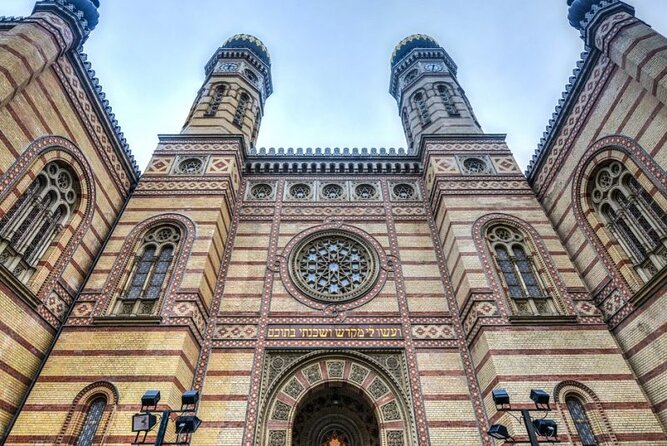
Expect the “synagogue triangle” theme to anchor the tour. This is where the neighborhood’s spiritual history becomes easy to visualize, because the buildings sit close enough for a walk-and-talk comparison.
Kazinczy Street Synagogue and the mikveh moment
Kazinczy Street is part of the triangle, and it’s also tied to a very practical detail: the tour includes the mikveh in Kazinczy Street. A mikveh is a ritual bath, and seeing it in context helps you understand Jewish life as more than big historic events. It’s also where the tour’s pacing feels human—places that can look similar on a map suddenly have different functions and atmospheres on the ground.
Bring a hat/cap and scarf if you don’t want to wear head coverings provided by synagogue sites. It’s a small prep step that makes entry smoother.
Rumbach Synagogue and the architectural storytelling
Rumbach is another triangle stop. Even if you’ve seen photos of Budapest’s synagogue buildings, a guide’s narration tends to change how you read the details: why these landmarks were built, what communities were trying to express, and how the neighborhood changed across time.
If you want to understand why different synagogues mattered to different segments of Jewish life, this is a good way to start.
Dohány Street Synagogue: the heavyweight landmark
Dohány Street Synagogue is highlighted in the tour materials as the second largest non-Orthodox synagogue in the world. That size alone signals importance, but the real value comes from the guide’s WWII context—because the story doesn’t end at architecture.
One practical catch: synagogue entry is not included in the base price. The tour states that travelers can choose visiting one synagogue only with discounted prices (family/senior options), and it sets a maximum additional entrance cost of €46 per person. So if you care most about “inside access,” plan accordingly.
You can also read our reviews of more city tours in Budapest





WWII Memory in the Raoul Wallenberg Garden and Beyond

If WWII is part of what draws you to this tour, you’ll feel it quickly. The Jewish Quarter isn’t just about grand monuments; it’s about how loss is marked across small spaces and streets.
The Wallenberg Memorial Garden with the Emmanuel tree
The tour includes the Raoul Wallenberg Memorial Garden, and it specifically calls out the touching Emmanuel tree. This is the kind of stop where you may pause more than you expect, because it frames heroism and survival in a way that’s easier to hold than a timeline.
It also balances the heavier parts of the walk. You still learn, but you also get a sense of renewal—how memory can be planted in living forms.
Carl Lutz Memorial and the network of saving stories
You’ll also visit the Carl Lutz Memorial. The tour treats these memorials as part of the same larger human story: people who used their influence and risk to protect others when protection became dangerous.
A guide helps here by connecting names to places, rather than leaving them as distant trivia.
The last remaining part of the WWII ghetto wall
One of the most striking elements is the last remaining part of the WWII ghetto wall. Having a guide matters because this is exactly the sort of thing you might not notice—or interpret correctly—on your own.
It’s one of those stops where your brain goes quiet for a minute. The guide’s explanations help you see why a small leftover section can carry so much weight.
Jewish Museum and Jewish Archives: Context You’ll Still Use Later
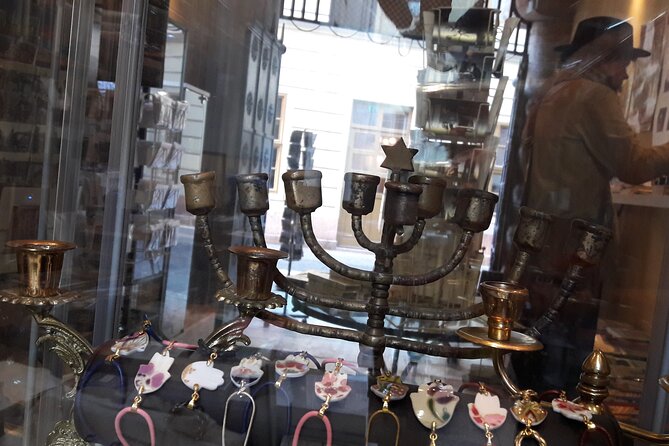
The tour also includes the Budapest Jewish Museum and the exhibitions of the Jewish Archives. These stops give you the “why” behind what you see outside—so the neighborhood doesn’t become a collection of disconnected sights.
This is especially helpful if you want more than the headline events. Museum and archives content is where themes like community life, historical documents, and postwar continuity become easier to understand.
A practical note: since entrance fees are a separate cost, you’ll want to decide in advance how many indoor sites are worth it to you. The tour’s pricing guidance suggests choosing one synagogue, but museums may be part of the included route depending on site access timing.
Stumbling Stones and Shoes on the Danube
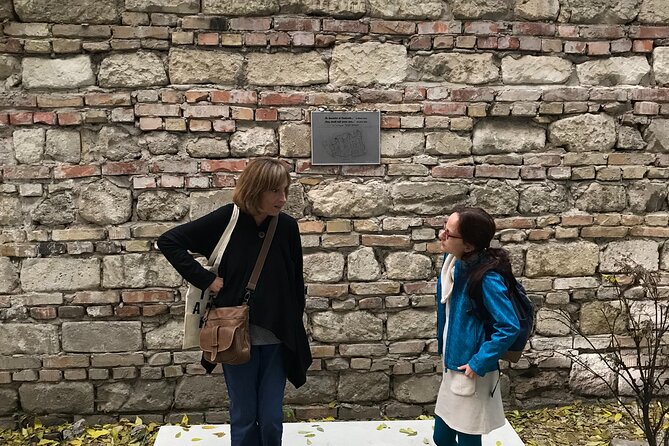
This part of the experience is built around how memory can be embedded in everyday geography.
You’ll see stumbling stones—small memorial markers that interrupt the regular flow of street life. The guide’s narration is crucial because these stones can look subtle until you understand what they indicate. Once you do, you start noticing patterns in the neighborhood that you couldn’t spot at first glance.
Then you’ll reach the riverbank for the iconic Shoes Monument on the Danube. This is the type of memorial that doesn’t ask for complex explanation. A good guide still adds context, so you understand what you’re looking at and why it’s placed there.
Local Life Stops: Gozsdu Courtyard, Mikveh Street Energy, and Szimpla Ruin Bars
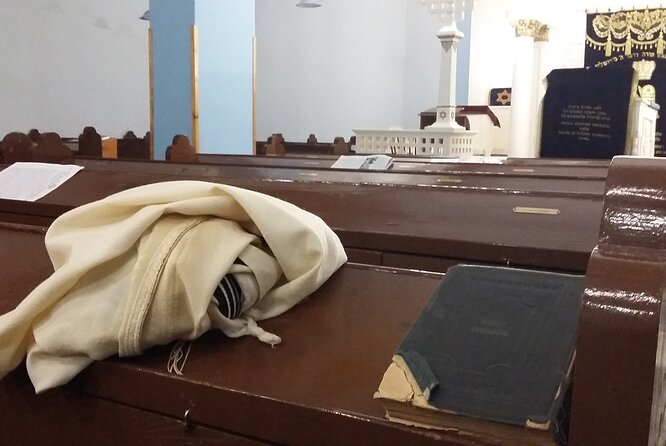
The tour doesn’t stay stuck in the past. It shows you what the neighborhood feels like now—where locals actually spend time.
You’ll have stops tied to everyday life, including Gozsdu Courtyard, with its courtyard atmosphere and layered storefront energy. The tour also points out little shops, eateries, and confectioneries, plus art galleries and places tied to festivals.
Ruin bars are part of the picture too, including the iconic Szimpla. This matters because it shows a neighborhood that has not just survived history, but adapted its culture. A guide’s perspective helps you connect that present-day energy to the historical context you just learned.
The tour also describes visiting spots mostly used and visited by locals, so you’re not just ticking off famous stops. You’re learning how the quarter lives when you’re not looking at it through a postcard lens.
Timing, Pickup, and Group Size: Making the 4 Hours Worth It
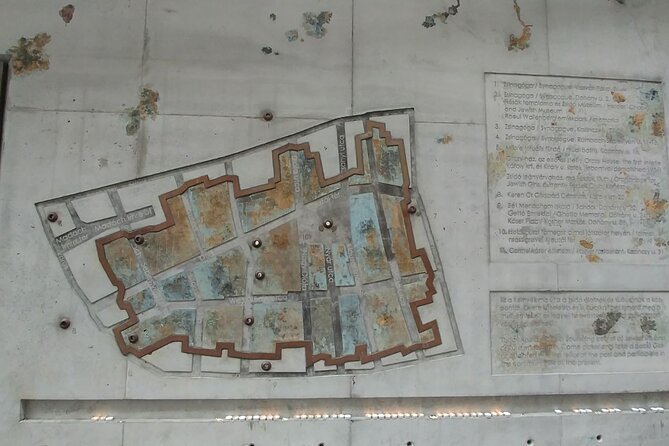
This is a 4-hour walking tour with hotel pickup and drop-off (or restaurant drop-off if it lines up with lunch/dinner). For many people, that’s a quiet win: less time figuring out transit, more time in the neighborhood.
Logistics matter even for great tours. When you’re dealing with multiple synagogues, memorials, and indoor stops, you don’t want to waste energy crossing the city. Pickup also helps you start on time and reduces friction, especially if you’re traveling with limited mobility or tight schedules.
Group size is capped at 10 travelers, and the pricing is listed as $356.90 per group (up to 6). That setup can feel more expensive if you’re traveling solo. But for couples or small families, the “cost per person” math can improve fast, especially because you’re paying for a licensed local guide plus convenience like pickup and drop-off.
The tour is often booked well ahead (average booking window is 77 days). If you’re planning around synagogues and specific days, don’t wait for the last-minute spark.
Price Reality Check: What’s Included and What Costs Extra
Here’s the clean way to think about value:
Included in the price:
- A professional, licensed local guide
- Hotel pickup and drop-off (or restaurant drop-off for lunch/dinner)
- Help recommending and booking a local restaurant table
- Arranging kosher meals/snacks if required
- A mobile ticket
Not included:
- Food and drinks
- Entrance fees for sites like synagogues
The tour sets an entrance fee expectation with a maximum additional cost of €46 per person, and notes you can choose visiting one synagogue only with discounted prices (family/senior options). In practice, that means you control your spend. If you mostly want exterior context plus one key interior visit, you can keep costs predictable.
How to Prepare: Moderate Walking and a Synagogue Dress Check
This experience involves moderate walking, and you can ask for breaks. So if you’re comfortable with a few hours of walking but not a full marathon, you’ll likely be fine.
For dress, plan for synagogue entry. The tour notes you should bring your own hat/cap and scarf if you don’t want to wear pieces provided by synagogue sites. It’s an easy “check once, feel ready” task that prevents last-minute stress.
Also, service animals are allowed, and the meeting area is near public transport—handy if you don’t want to rely entirely on the pickup.
So Who Is This Walk For?
I think this tour is best for you if you want:
- A clear sense of the Jewish Quarter’s role in WWII history
- A guided way to connect names like Raoul Wallenberg and Carl Lutz to specific places
- Synagogues you can compare in one neighborhood cluster (the triangle approach helps)
- A route that includes both memorials and present-day neighborhood texture
It’s also a strong choice if you like learning in a human way—where questions are welcome and the guide can adjust the pace. If you want pure sightseeing without context, you might find yourself wanting fewer stories. But if you want meaning, this is the kind of walk that stays with you.
Should You Book This Budapest Jewish Quarter City Walk?
Yes, if you care about understanding the neighborhood instead of just seeing it. The combination of private feel, WWII-linked memorial stops, and synagogue-focused architecture makes this more than a standard checklist.
Book it especially if you’re traveling with a small group and you want hotel pickup to cut friction. Also, if you’re the type who likes to compare places by theme—religious life, community resilience, and memorial geography—this tour gives you the framework to do it.
Before you choose your time slot, think about entrance fees. Decide upfront whether you want one synagogue interior visit or plan for additional indoor access. If you match the tour to your priorities, the value becomes clear fast.
FAQ
How long is the Budapest City Walk in the Jewish Quarter?
The tour lasts about 4 hours.
What’s the group size limit?
The experience has a maximum of 10 travelers.
Do you get hotel pickup and drop-off?
Yes. Pickup is available from your hotel lobby or in front of your accommodation, and you’ll also be dropped off afterward (or at a restaurant for lunch/dinner).
Are entrance fees included for synagogues?
No. Entrance fees are not included. The tour notes a maximum additional cost of €46 per person, and that you can choose visiting one synagogue only with discounted prices.
Is food included?
Food and drinks are not included. The guide can recommend and help book a table at a local restaurant, and can arrange kosher meals or snacks if required.
Is there a dress code?
You should be prepared with a hat/cap and scarf if you don’t want to wear synagogue-provided pieces. The tour also involves moderate walking, with breaks available if needed.