REVIEW · COFFEE EXPERIENCES
Private Budapest Walking Tour with Cake & Coffee
Book on Viator →Operated by Budapest Urban Walks · Bookable on Viator
Budapest clicks into place fast. This private Budapest walk ties together major landmarks and everyday street scenes, with hotel pickup and a coffee-and-cake stop built right in.
I also love the feel of a tour that stays flexible for your group—this is just you, so you can move at a human pace instead of rushing like you are on a conveyor belt. I do think the main drawback is budgeting for extra entry if you want inside access at St. Stephen’s Basilica and the Hungarian Parliament Building, since admission there is not included.
In This Review
- Key Highlights Worth Prioritizing
- Private Budapest on Foot: Coffee, Cake, and Real Context
- Price and Value for a 3.5-Hour Private Tour
- Getting Started: Pickup That Saves Your Morning
- Heroes’ Square and the Seven Chieftains in Stone
- Széchenyi Baths and Pool: Thermal Water Without the Pressure
- Vajdahunyad Castle: City Park’s 1896 Time Capsule
- Andrássy Avenue: A World Heritage Walk You Can Feel
- Hungarian State Opera House Exterior: Miklós Ybl’s Neo-Renaissance Face
- St. Stephen’s Basilica and Liberty Square’s Memory
- Hungarian Parliament, Chain Bridge, and Shoes on the Danube Bank
- The Small Extras That Make This Tour Easier
- How Much Time You’ll Actually Get at Each Stop
- Should You Book This Private Budapest Walking Tour?
- FAQ
- How long is the Private Budapest Walking Tour with Cake & Coffee?
- How much does the tour cost?
- Is this a private tour or a shared group tour?
- Does the tour include hotel or port pickup?
- What is included with the coffee and cake stop?
- Are entry tickets included for all stops?
- What if the weather is bad?
Key Highlights Worth Prioritizing
- Private group only: your guide can slow down, answer questions, and tailor the route to your timing.
- Coffee and cake break: a real reset mid-walk, not just a quick photo stop.
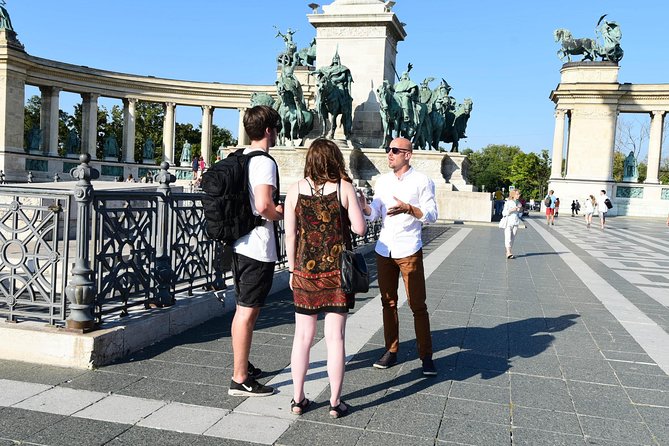
- Heroes’ Square details: the Seven chieftains and a Memorial Stone of Heroes that people often mix up with another monument.
- Architecture run: Andrássy Avenue and the Hungarian State Opera House exterior in one smooth stretch.
- Danube memorial stops: Shoes on the Danube Bank adds a heavy, important moment to the walk.
Private Budapest on Foot: Coffee, Cake, and Real Context
If Budapest sometimes feels like two cities stacked on top of each other, this tour helps you sort out what you are looking at. You are walking through landmarks that matter, but also through the connective tissue—boulevards, squares, and river views—that make the big sights make sense.
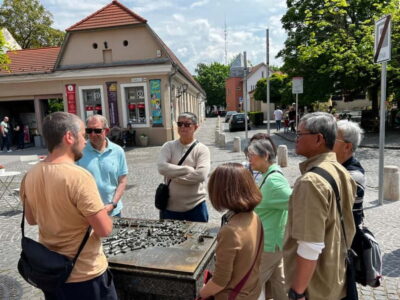
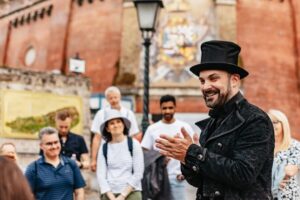
The private format is the big comfort factor. I like that the guide meets you at your requested address, so you do not waste time figuring out where to stand and when. When I read accounts from guides like Adam and Ferenc, the same theme shows up: they do not just list places. They explain what you are seeing and what to look for next, including small bits of context that make the city feel less like a checklist.
This is also not a tour where you spend the whole time staring at glass doors. The route leans toward outdoor viewing and street-level moments, which is a smart approach when you have limited time.
You can also read our reviews of more walking tours in Budapest


Price and Value for a 3.5-Hour Private Tour
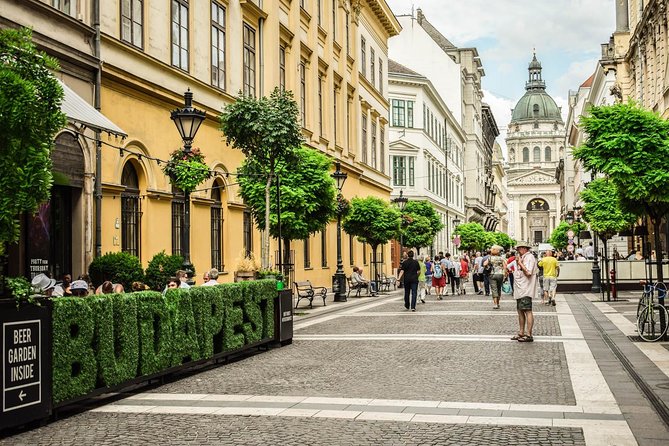
At $156.53 per person, this is not the cheapest way to see Budapest. But you are paying for two things that often cost extra elsewhere: private guiding and the “starter kit” extras—coffee/cake, snacks, and a map with recommendations.
In practice, value depends on your group. If you are two people splitting the cost, it usually feels far more reasonable than joining a larger walking group where you cannot ask as many questions. If you are traveling solo, it is still a solid option if you want the convenience of pickup and a guided route that already connects the major sights efficiently.
One more reason the price can feel fair: the tour is set up for a 3.5-hour window that covers a lot of ground without turning your day into a sprint. Most of the stops are listed as free to access for viewing, which helps you avoid surprise entry fees at every corner.
And yes, it books ahead. On average, it gets reserved about 9 days in advance, so I would not wait until the last minute if your dates are popular.
Getting Started: Pickup That Saves Your Morning
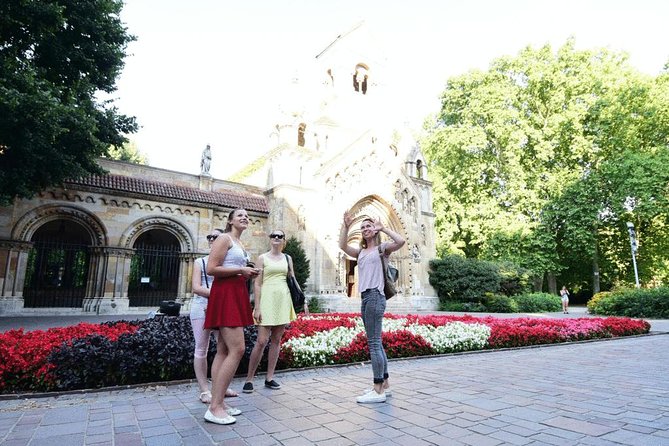
This tour meets you at your requested address, with hotel/port pickup offered. That matters in Budapest because distances and transfers can eat time if you are not careful. Instead of losing the first chunk of your day to logistics, you start walking where it counts—near major sights that help you orient yourself fast.
You also get a mobile ticket, plus a coffee-and-cake stop, snacks, and coffee or tea. That is one of those details that sounds small until you are standing in wind or sitting under a gray sky trying to decide if you should break for refreshments. This tour handles that for you.
Operating in all weather conditions is also worth noting. If it rains or the sky turns, you still keep moving, so dress like you are actually going outside, not like you are just popping between cafés.
Heroes’ Square and the Seven Chieftains in Stone
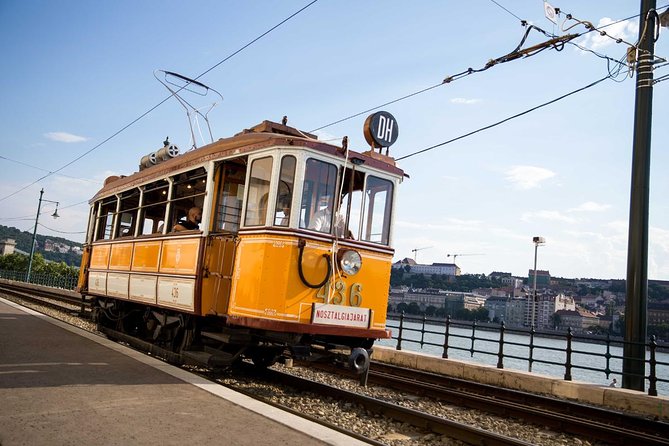
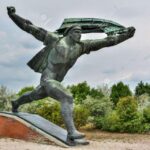
Heroes’ Square (Hősök tere) is the kind of place that stops you mid-sentence. It is built to make an impression, with a statue complex featuring the Seven chieftains of the Magyars and other Hungarian national leaders. There is also the Memorial Stone of Heroes, which people sometimes misidentify as the Tomb of the Unknown Soldier—so having a guide to clarify what you are looking at is genuinely useful.
You get about 20 minutes here. That is enough time to:
- take in the main figures and layout,
- orient yourself to the scale of the square,
- and understand how the memorial symbolism fits into Hungarian national storytelling.
Drawback check: if you are hoping for a long, museum-style visit, this is not that. It is a focused viewing stop. You will be moving on, and that is part of the tour’s efficiency.
Széchenyi Baths and Pool: Thermal Water Without the Pressure
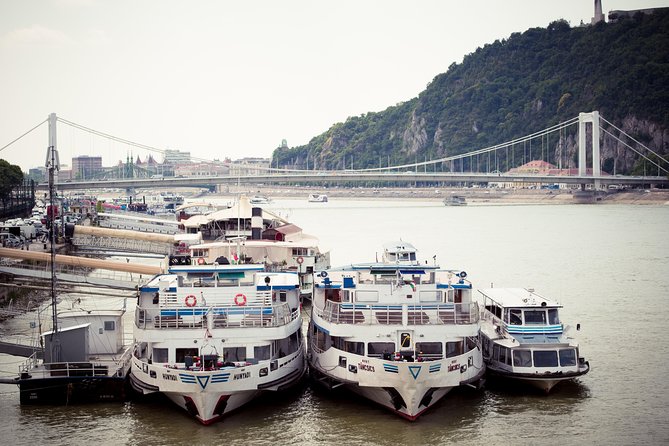
Next up is Széchenyi Medicinal Bath and pool area. Even if you do not plan a full soak, you are stepping into the European-famous scale of it. The tour time here is around 20 minutes, which works well for a quick look and photo moments.
A key detail: Széchenyi’s medicinal water comes from two thermal springs, with temperatures listed at 74 °C (165 °F) and 77 °C (171 °F). That temperature information is not just trivia—it helps you understand why this place feels like a destination. It is not a spa that is just styled for tourists. It is built around real thermal water.
One possible consideration: Széchenyi can be a busy, active venue in general, and time is limited. So I would treat this stop as a chance to see and understand the bath complex, not a promise of long time inside soaking facilities. If you want a deep spa experience, you might plan that separately on another day.
You can also read our reviews of more private tours in Budapest





Vajdahunyad Castle: City Park’s 1896 Time Capsule
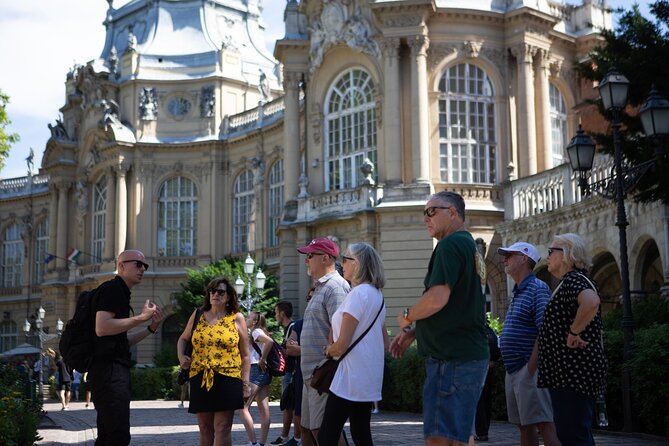
Vajdahunyad Castle (Vajdahunyad vára) sits in City Park and gives you a pleasant change of scenery. The tour stops here for about 20 minutes, which is long enough to appreciate the architecture and snap pictures without feeling rushed.
What makes the castle extra interesting is its origin story: it was built in 1896 as part of the Millennial Exhibition marking 1,000 years of Hungary since the Hungarian Conquest in 895. That historical anchor is exactly the kind of thing you miss if you just walk past.
The practical benefit: this stop is visually rewarding even on a gray day. If your legs are starting to feel it, this is a good moment to slow down and let your eyes recover.
Possible drawback: if you are only looking for interiors and big ticket museums, this again is mostly an exterior and orientation-style stop. It is designed to keep your day flowing.
Andrássy Avenue: A World Heritage Walk You Can Feel
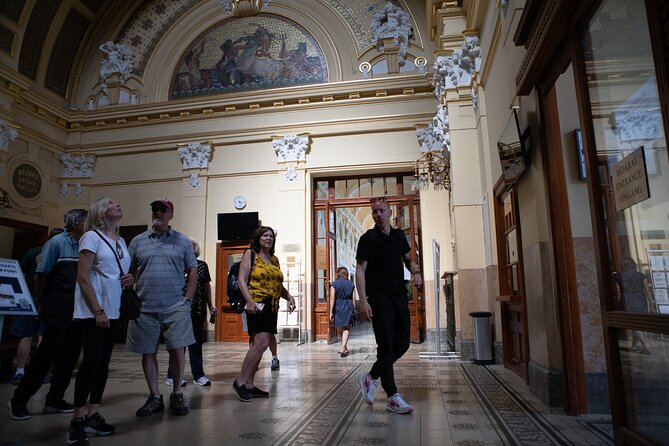
Andrássy Avenue (Andrássy út) is the boulevard section that turns your route from “sights” into “a real city experience.” It dates back to 1872 and links Erzsébet Square with Városliget. You also get the architectural payoff: lined with neo-Renaissance mansions and townhouses with impressive facades.
This avenue was recognized as a World Heritage Site in 2002, and the streetscape is the reason. The street itself teaches you how Budapest shaped a grand, European-style core.
You spend about 10 minutes here, which is just enough to notice the style and line up your photos. It is also a good “breather” stop: the pace is straightforward, and you are not stuck in a single spot.
Hungarian State Opera House Exterior: Miklós Ybl’s Neo-Renaissance Face
The Hungarian State Opera House (Magyar Állami Operaház) is another 10-minute stop, and it is worth it for the exterior alone. The building is neo-Renaissance, originally known as the Hungarian Royal Opera House, and designed by architect Miklós Ybl.
This is the part of the tour where I think a guide really earns their keep. When you know who designed the building and what style you are looking at, the facade stops being just pretty. It becomes readable.
Possible consideration: if you want to see performance spaces or do a full interior visit, this stop is not built for that. It is a quick, high-impact photo and orientation moment.
St. Stephen’s Basilica and Liberty Square’s Memory
St. Stephen’s Basilica (Szent Istvan Bazilika) gets about 15 minutes. It is named for Stephen, the first King of Hungary, whose right hand is housed in a reliquary. That detail gives the basilica extra meaning, and it is exactly the kind of fact that makes you look up instead of just walking through.
Admission is not included for this one, so if you want to go inside, you will need separate entry planning.
Then you move to Szabadsag ter (Liberty Square) for about 25 minutes. This is one of those places where the city does not look away. Liberty Square is famous for two controversial memorials: one for Hungarian Jewish victims of the Holocaust, and another commemorating Soviet soldiers who liberated Budapest from the Nazis in 1945.
On top of the memorials, the area includes the United States Embassy in Hungary and the historicist headquarters of the Hungarian National Bank on the west side of the square. That blend of diplomacy, banking, and memorial culture gives the square weight beyond what you see in a postcard.
Possible drawback: this is an emotionally heavier stop. If you prefer lighter sightseeing all day, you might want to mentally prepare. I actually think the tour handles it well by giving it enough time (25 minutes) to be more than a quick photo.
Hungarian Parliament, Chain Bridge, and Shoes on the Danube Bank
Now you hit the big-picture Budapest trio: Parliament, the river crossing, and the Danube memorial.
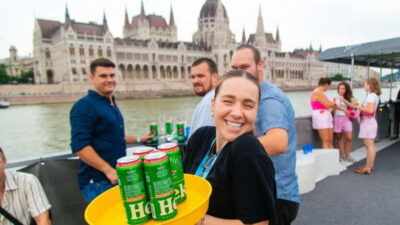
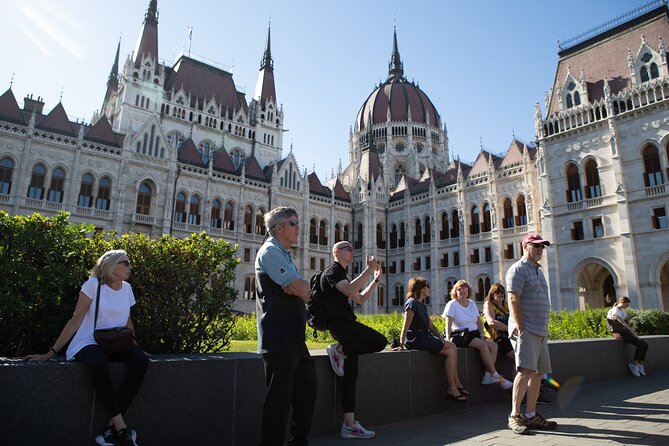
The Hungarian Parliament Building (Országház) is a 15-minute stop. The tour listing notes admission is not included. In other words: you get the experience of seeing it as a landmark, and if you want to go inside, that is on you to arrange separately. Still, even from outside, Parliament’s scale makes it feel like the center of gravity for the whole city.
Then comes Széchenyi Chain Bridge (Széchenyi lánchíd), a 15-minute look. It spans the Danube between Buda and Pest. This is one of those moments where the guide’s job is partly to point you toward the best angles and partly to help you understand why this bridge matters for how the two sides relate.
Finally, you reach Shoes on the Danube Bank, with about 10 minutes here. It is a memorial built to honor the Jews massacred by fascist Hungarian militia associated with the Arrow Cross Party in Budapest during World War II.
This is not a casual stop. It is brief by design, and it works because you do not get numb. Having a guide to provide context helps you avoid turning it into just another stop on a walking route.
Possible consideration: if you are traveling with kids, it can still be done, since children must be accompanied by an adult. Just keep in mind that this stop is hard subject matter.
The Small Extras That Make This Tour Easier
A big part of what you are buying here is convenience. You get:
- Coffee and cake at a local café
- Snacks
- Coffee or tea
- A map and further recommendations
Those extras matter because they make your day smoother. You are less likely to break away randomly to hunt for food, and you end up with a clearer plan for what to do after the tour.
The map/recommendations piece is especially valuable in Budapest, where a single tram ride can change your entire day. A good guide can point you toward sensible next stops instead of leaving you to guess.
Also, departures are offered with choice of timing, which helps if you want to dodge the worst crowds or align with how you like to pace your day.
And yes, group discounts exist. If you are booking with friends or family, it is worth checking how pricing scales for your group size.
How Much Time You’ll Actually Get at Each Stop
The route is designed to be efficient, not endless. You should expect short, focused viewing windows:
- Heroes’ Square: about 20 minutes
- Széchenyi Baths and pool area: about 20 minutes
- Vajdahunyad Castle: about 20 minutes
- Andrássy Avenue: about 10 minutes
- Opera House exterior: about 10 minutes
- St. Stephen’s Basilica: about 15 minutes
- Liberty Square: about 25 minutes
- Parliament: about 15 minutes
- Chain Bridge: about 15 minutes
- Shoes on the Danube Bank: about 10 minutes
That adds up to an approx. 3 hours 30 minutes. It is enough to see a lot and feel oriented, but not enough to become a “deep research” tour.
If your dream day is long inside visits—multiple churches, long museum time, and a full bath session—you might enjoy this less. But if your dream day is getting the story of Budapest stitched together quickly, it fits.
Should You Book This Private Budapest Walking Tour?
Book it if you:
- want a private walking route with pickup and no guesswork,
- like seeing major landmarks plus city street flavor,
- appreciate breaks built into the schedule (coffee, cake, snacks),
- and enjoy learning what you are looking at, including the harder memorial context.
Consider passing if you:
- want long entry times inside buildings like St. Stephen’s Basilica or the Parliament (admission is not included for those),
- plan to spend a whole afternoon at a thermal bath,
- or you are not comfortable with a 3.5-hour walking format.
If you are aiming to get your bearings fast—then go explore on your own later—this tour is a strong starting point. And based on what guides like Adam and Ferenc bring to the conversation, it is also the kind of experience where the city feels more human by the end.
FAQ
How long is the Private Budapest Walking Tour with Cake & Coffee?
It lasts about 3 hours 30 minutes.
How much does the tour cost?
The price is $156.53 per person.
Is this a private tour or a shared group tour?
It is private. Only your group participates.
Does the tour include hotel or port pickup?
Yes. The guide meets you at your requested address, and hotel/port pickup is offered.
What is included with the coffee and cake stop?
The tour includes coffee and cake at a local café, plus snacks and coffee and/or tea.
Are entry tickets included for all stops?
Not for everything. St. Stephen’s Basilica and the Hungarian Parliament Building are listed as admission not included. The other listed stops are marked as free.
What if the weather is bad?
It operates in all weather conditions, so dress appropriately for walking outside.