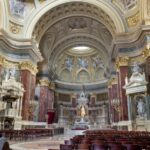
REVIEW · CLASSICAL MUSIC CONCERTS
Concert on the Oldest Working Organ in Budapest
Book on Viator →Operated by Majestic Sounds Organ Concerts · Bookable on Viator
You can feel the music in the stone. In Budapest’s St Michael’s Church, this concert pairs a Baroque setting with an organ that’s still working today. You’ll hear centuries of repertoire, from Bach to Romantic composers, performed by Hungarian soloists.
What I like most is the chance to listen on the oldest working organ in the city, in a church that feels made for sound. I also love that you’re not stuck guessing what the organist is doing, because there’s a remote camera so you can follow the playing up in the balcony.
The one thing to consider is that the program style can vary by date (solo organ, chamber music, and sometimes voices or trumpet), so check what’s scheduled if you’re set on one specific kind of performance.
In This Review
- Key things to know before you go
- Budapest’s oldest working organ, in a Baroque church
- What you’ll hear: Bach to Franck, with a Romantic spark
- The 7:00 pm start: how to time your evening
- Inside St Michael’s Church: seating, sound, and what to listen for
- The remote camera: why it helps (a lot)
- Solo organ or chamber music plus voices: the program question that matters
- Performers you can look for: Teleki or Lozsányi
- Price and value: $23.50 for a full concert evening
- Who this concert is best for
- Should you book this Budapest organ concert?
- FAQ
- How long is the concert?
- What is the price per person?
- Where does the concert take place?
- What time does it start?
- Who performs the music?
- What kind of music can I expect?
- Is the ticket digital?
- Can I get a confirmation after booking?
- Are service animals allowed?
- Is there free cancellation?
- Is it easy to reach using public transportation?
- Is it suitable for most travelers?
- Quick booking advice
Key things to know before you go
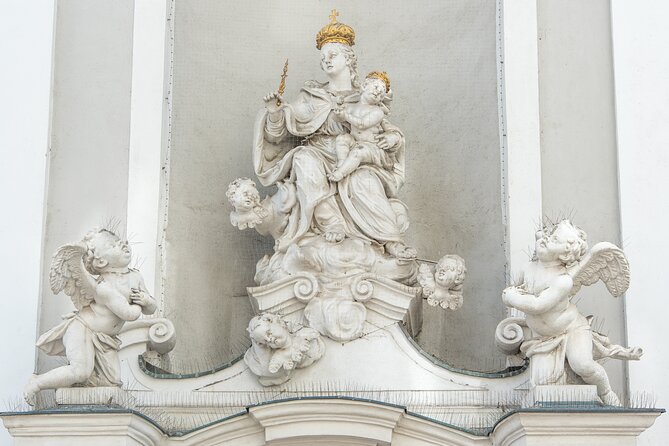
- St Michael’s Church is the venue, with Budapest’s oldest working organ you can hear live
- One hour 10 minutes means a complete concert without eating your whole evening
- Expect a range of styles: Bach and Handel on one side, Franck and Romantic virtuosity on the other
- Remote camera view helps you track the organist’s hands and feet from your seat
- Concerts feature excellent Hungarian artists, such as Miklós Teleki and Tamás Lozsányi, depending on the date
- Programs can include more than organ alone, like soprano and trumpet, based on the day’s menu
Budapest’s oldest working organ, in a Baroque church
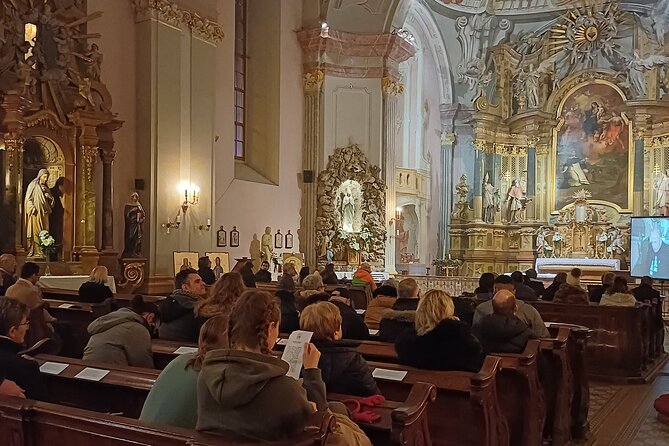
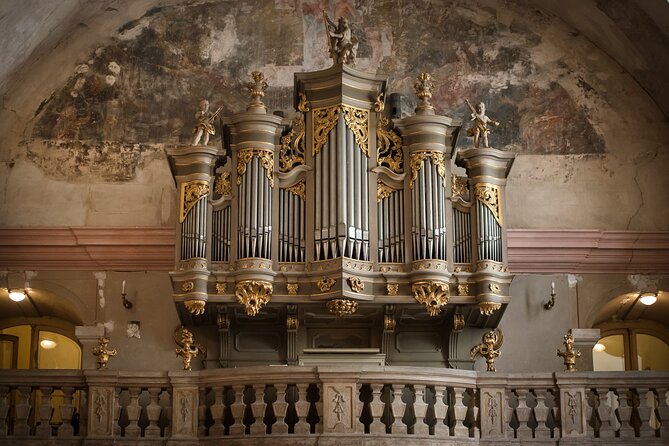
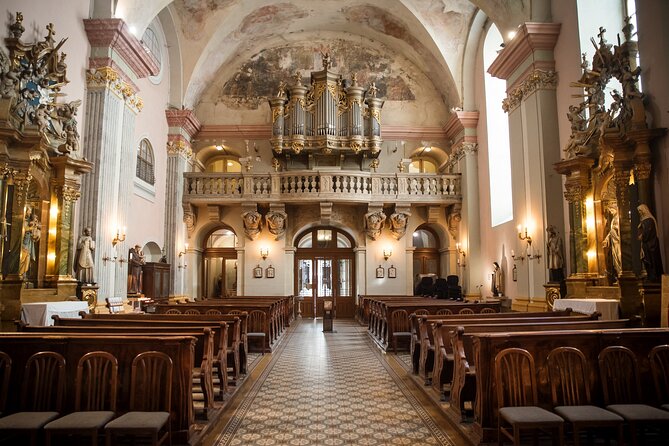
If you’re trying to understand why pipe organs inspired whole generations of composers, this is a smart way to do it. The concert takes place at St Michael’s Church in Budapest, described as the city’s oldest Baroque church, and the same building houses the oldest working organ still operating in Budapest.
That matters more than you might think. A working historic organ does not behave like a museum piece. The sound is part of the instrument’s design, the wind system, the stops, and the way the hall shapes frequencies. So even if you’ve never studied organ music, you’ll likely notice the “realness” fast, especially during preludes, fugues, and fast passagework.
And the vibe isn’t formal-gala stiff. It’s an evening you can treat as a calm “sit and listen” break from sightseeing. Plan on getting there a few minutes early so you’re settled before the first notes.
You can also read our reviews of more tours and experiences in Budapest


What you’ll hear: Bach to Franck, with a Romantic spark
The program planning focuses on variety. You’re not just getting one composer, or one mood. You’ll usually hear a mix that lets you catch the organ’s full range: clarity for Baroque writing, drama for French and Romantic music, and sometimes lighter or lyrical moments.
Pieces mentioned for the series include composers such as Bach, Dubois, Franck, Handel, Liszt, Mozart, Purcell, and Vivaldi. That list is useful because it points to what you’ll likely experience across the concert, even if the exact lineup changes from date to date.
Here’s a concrete example from the sample program for 4 April 2025:
- J. S. Bach: Prelude and Fugue in B minor, BWV 544
- Bach: Trio Sonata in E-flat major, BWV 525
- Antonio Vivaldi – J. S. Bach: Concerto in A minor, BWV 593
- Pastorella BWV 590
- Bach: Prelude and Fugue in E-flat major, BWV 552
If you’re new to classical music, the Bach items are a great entry point. You’ll hear structure you can track: repeated motifs, layered lines in fugues, and the way a prelude sets the emotional weather before the “conversation” of the fugue begins.
If you’re more experienced, you’ll appreciate how organists handle balance and articulation. Fugues on an organ can turn into mud in the wrong room. In this church, the historic instrument plus the Baroque acoustics typically helps individual lines stay readable.
The 7:00 pm start: how to time your evening
The concert starts at 7:00 pm, and it runs about 1 hour 10 minutes. That makes it a workable plan for most Budapest days. You can do a normal dinner, then swing by without feeling like you need an all-day schedule.
One detail to keep an eye on: the series description refers to Friday evening concerts, while the local guide notes say Sunday evenings. Since your start time is still listed as 7:00 pm, the safest approach is to verify the day and date on your booking confirmation and not assume every week follows the same pattern.
Practical tip: if you’re pairing this with nearby sightseeing, pick attractions that don’t require last-entry stress. Once the concert starts, it’s not the kind of place you want to dash in mid-movement.
Inside St Michael’s Church: seating, sound, and what to listen for
Even without any special musical background, you can get a lot out of an organ concert if you know what to pay attention to. Here’s how I’d approach it so you leave feeling satisfied, not confused.
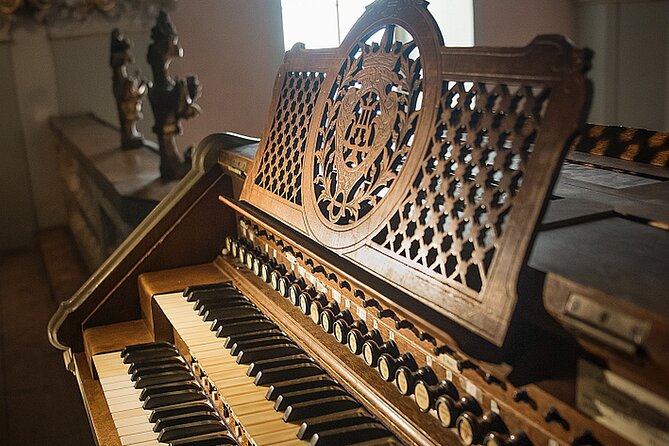
First, listen for changes in color. On an organ, that often happens through stop changes, which can feel like a new “palette” rather than a simple volume adjustment. In Bach, these stop shifts can highlight structural sections. In Romantic-era writing, they add weight and emotion.
Second, notice how the instrument moves between loud and soft without losing shape. Organ music is often described as sustained, but a good performance still creates rhythm and direction. You’ll hear that especially in faster sections where the player’s timing keeps everything crisp.
Third, let the church do its job. Baroque spaces tend to give you a blend of clarity and resonance. If the sound seems to hang a little longer than you expect, that’s part of the point. It’s what makes organ music feel physical.
The remote camera: why it helps (a lot)
One of the most useful perks here is that the concert setup includes a remote camera that lets you see the organist playing from the balcony area. If you’ve ever watched organists from far away and thought, I can’t really tell what they’re doing with their hands, this solves that problem.
That visual layer makes the performance easier to follow. You’ll likely notice how quickly the organist moves between manuals, how the left and right hands divide work, and how pedaling supports the bass line. Even if you’re not tracking notation, you’ll feel the mechanics that create the music’s flow.
It also makes the concert friendlier if you’re bringing someone who isn’t a classical devotee. People often enjoy the human side of the performance: the coordination, the focus, and the quick decisions in complex passages.





Solo organ or chamber music plus voices: the program question that matters
This series may be solo organ or chamber music depending on the date. The church can also host programs with additional performers, including soprano voices and a trumpet when it’s listed on the day’s menu.
So here’s your decision-making shortcut: if you love pure organ sound, look for the dates described as elegant and majestic Baroque organ programming or Romantic pieces centered on the organ. If you’re hoping for a bigger “theatre of sound” experience, look for programs that include voice or trumpet elements.
Based on what’s been praised, these added parts tend to work well when they’re woven into the concert rather than treated like an afterthought. When a soprano sings with the organ, you often get a satisfying blend of sustained tones and lyrical phrasing that makes even familiar melodies feel fresh.
Performers you can look for: Teleki or Lozsányi
The concert series features excellent Hungarian artists, with names mentioned such as Miklós Teleki or Tamás Lozsányi depending on the date. If you have a favorite performer style, the booking info can help you choose the date that matches your taste.
Even if you don’t know their work, the fact that the lineup is specified helps. You’re not rolling the dice on an unknown setup. A consistently high-performing organist makes a huge difference in how Bach or Franck lands, and the feedback for this series is strongly tied to performance quality.
Price and value: $23.50 for a full concert evening
At $23.50 per person for about 1 hour 10 minutes, this is priced like a thoughtful cultural add-on rather than a premium “once-in-a-lifetime” splurge. And in a city where classical concerts can vary wildly in cost and quality, you’re getting a very specific value proposition: historic instrument plus an organized program.
Think of it like this. You’re paying for:
- a real concert setting (not just organ music piped in),
- a performance built around recognizable repertoire,
- and a church space that supports the sound.
If you’re a traveler who likes to get “one great local thing” without spending half a day planning, this fits well. You don’t need prior organ knowledge, and the length is short enough to slot into a normal evening.
Who this concert is best for
This experience is a great match if you:
- like classical music and want a setting that doesn’t feel generic
- want an easy, schedule-friendly evening plan at 7:00 pm
- enjoy historic venues and want your “why” to be sound-first, not just architecture-first
- are traveling with someone who might be curious but not deep into music theory
It might not be the best fit if you:
- only want a full-length solo-organ program every time (since chamber music and other performers can appear depending on the date)
- prefer concerts with a lot of spoken narration or interactive explanation (no such add-ons are listed here)
Should you book this Budapest organ concert?
I’d book it if you want a calm, high-satisfaction evening with a clear payoff: a historic instrument, a strong set list concept, and a performance setup that helps you actually see what’s happening. The price is reasonable, the duration is tight, and the church setting makes the music feel purposeful.
Do one quick check before you confirm: look up the date’s scheduled program style so you get the experience you want—solo organ focus versus chamber-and-voice moments. If that fits your taste, this is exactly the kind of Budapest evening I’d recommend for travelers who want something authentic without turning it into a project.
FAQ
How long is the concert?
It runs about 1 hour 10 minutes.
What is the price per person?
The price is $23.50 per person.
Where does the concert take place?
It takes place at St Michael’s Church in Budapest.
What time does it start?
The start time is listed as 7:00 pm.
Who performs the music?
The series features excellent Hungarian artists, with Miklós Teleki or Tamás Lozsányi mentioned depending on the date.
What kind of music can I expect?
The program may include old Hungarian organ music and works by composers such as Bach, Dubois, Franck, Handel, Liszt, Mozart, Purcell, and Vivaldi. Programs can be solo organ or chamber music.
Is the ticket digital?
Yes, it’s a mobile ticket.
Can I get a confirmation after booking?
You’ll receive confirmation at the time of booking.
Are service animals allowed?
Yes, service animals are allowed.
Is there free cancellation?
Yes. You can cancel up to 24 hours in advance for a full refund.
Is it easy to reach using public transportation?
Yes, it’s near public transportation.
Is it suitable for most travelers?
Most travelers can participate.
Quick booking advice
Pick the date that matches the kind of sound you want, arrive a few minutes early, and treat this like an evening of listening rather than a “see everything” stop. When the organ is playing in a working historic church, it’s one of those experiences where you don’t have to understand everything to feel the effect.