REVIEW · HISTORICAL TOURS
Historical and Cultural Walking Tour in Budapest
Book on Viator →Operated by György Rashad Salamon · Bookable on Viator
Budapest makes sense when someone tells the story. This private 4-hour walking tour strings together the big sights in Buda and Pest with a guide who explains what you’re looking at, how locals lived, and why certain places mattered. It’s not just sightseeing. It’s also a chance to shape the route to what you care about most.
I especially like the way the itinerary mixes postcard views with real context, from the Holy Right Hand at St. Stephen’s Basilica to the political story told at Liberty Square. The other win is the pacing: you cover a lot on foot without it feeling like a sprint. The one thing to keep in mind is that this is still a walking tour, so if you’re not comfortable with a moderate pace, it may feel long—plus food and drinks aren’t included.
In This Review
- Key things I’d circle before you book
- Why Budapest’s two sides need a real guide
- The 9:00 a.m. start and how the 4 hours actually feel
- Heroes’ Square: where Hungarian history shows up as statues
- City Park and Vajdahunyad Castle: 1,000 years in one walk
- Széchenyi baths, explained without needing a long detour
- Andrássy Avenue: Budapest’s grand boulevard moment
- Hungarian State Opera House: beauty you can’t ignore
- St. Stephen’s Basilica and the Holy Right Hand relic
- Liberty Square to the Hungarian Parliament: politics told in stone
- Buda Castle and the Chain Bridge crossing for the Danube payoff
- Price and value: what $277.64 gives you
- Who this tour fits best (and who should adjust expectations)
- The guide factor: when history feels like a story
- Should you book this Budapest history walk?
- FAQ
- Where does the tour start?
- How long is the walking tour?
- Is hotel pickup included?
- Are admission tickets included?
- Does the price include food or drinks?
- What’s the group size limit?
- Can I cancel and get a refund?
- Is a mobile ticket provided?
Key things I’d circle before you book

- On-foot hotel pickup included, so you start the day already in motion
- Small group size (maximum 10) keeps the guide’s attention focused
- Free admission tickets listed for the stops where entry is involved
- Andrássy Avenue to the Opera: grand façades and street-level details, not just photos
- Széchenyi bath culture talk while you’re already in City Park
- Buda Castle + Chain Bridge gives you the Danube-and-history payoff
Why Budapest’s two sides need a real guide
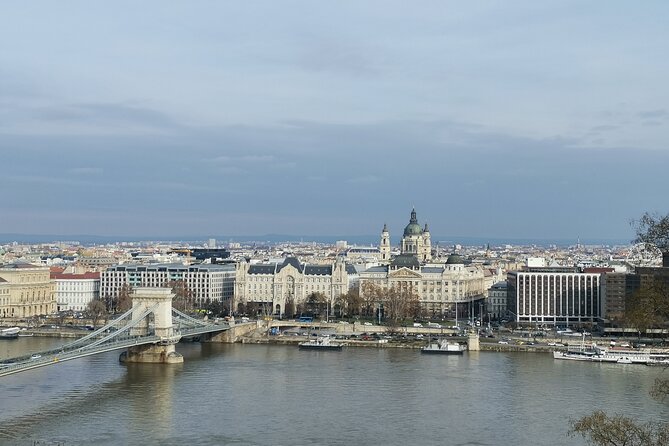
Budapest is easy to visit and tricky to understand. The city sits in two major zones—Buda on the hilly west side and Pest on the flatter east side—with different architecture, different eras, and different kinds of daily life.
A solo walk can turn into a photo hunt. A guided walk helps you see patterns. For example, statues don’t just look impressive. They’re used to explain national identity. Churches don’t only serve as sights. They hold relics tied to the story of Hungary’s first king. And big government buildings aren’t just pretty stone. They reflect how power changed over time.
This tour is built to connect those dots, with a guide who shares local customs and everyday life alongside the landmarks. The result is that you leave with a mental map of the city’s layers instead of a list of places.
You can also read our reviews of more walking tours in Budapest



The 9:00 a.m. start and how the 4 hours actually feel
The tour starts at 9:00 am at Deák Ferenc tér, and it ends back at the same meeting point. There’s pickup offered, so you’re not forced to navigate yourself into the right starting spot first thing.
The experience is about 4 hours total, and that timeframe matters. You get enough time to walk a meaningful loop and stop for real viewing, but it’s short enough that you still have energy left for lunch after.
One more practical note: transportation tickets are not included. That’s usually fine on a walking tour like this, but it’s good to know you may need to handle any local transport on your own if your guide uses it. The good part is that the tour is planned around walking between major sights, so you’re not spending the day in transit.
Heroes’ Square: where Hungarian history shows up as statues
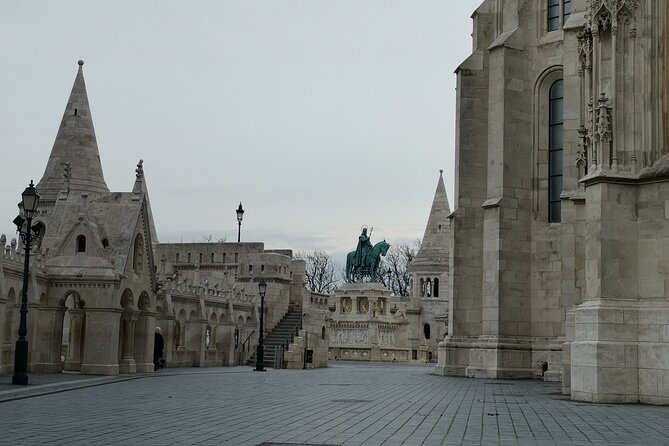
Your tour begins at Heroes’ Square, one of Budapest’s most iconic spaces. This is the kind of place you can’t help noticing, because the scale is huge and the message is bold.
What makes this stop work on a walking tour is the guide’s focus on roots—who the figures are, and why they were placed there. These statues are not random decoration. They’re a visual statement about Hungarian history and identity, meant to be read like a story from a distance and up close.
At around 20 minutes, you’re not stuck forever in a big plaza. You get the big-picture context early, which makes the later stops easier to understand. If you’re the type who likes knowing what you’re looking at before you move on, this start sets you up well.
City Park and Vajdahunyad Castle: 1,000 years in one walk
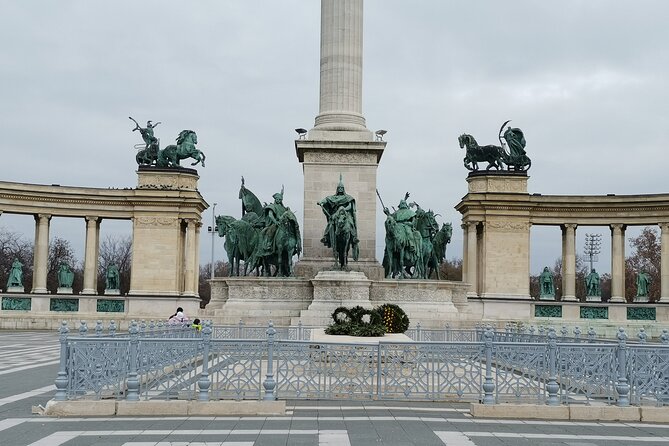
Next comes City Park, one of the first public parks created for people to relax. That detail matters. This isn’t only a sightseeing corridor; it’s a space designed for everyday strolling, which makes it feel more like you’re moving through a real part of the city.
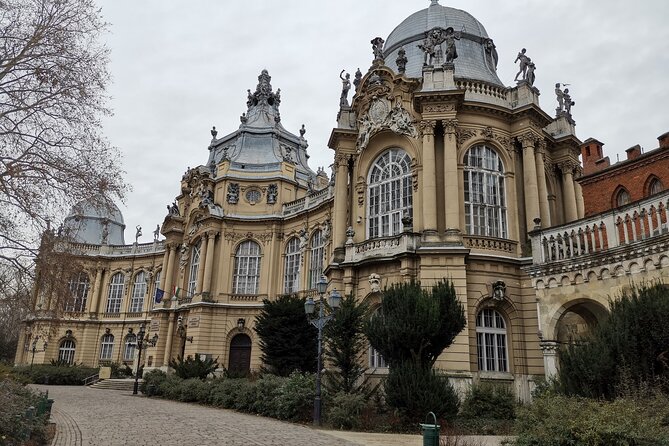
Inside City Park, you get to Vajdahunyad Castle, described as embodying 1000 years of Hungarian architecture. The cool part is that you’re not just looking at one building style. You’re seeing architecture treated like a timeline.
There’s also time for a look inside, so you can get beyond the exterior postcard view. Just plan to slow down slightly here. “Inside” stops tend to take longer than you expect, especially when a guide is pointing out how different parts represent different periods.
Széchenyi baths, explained without needing a long detour
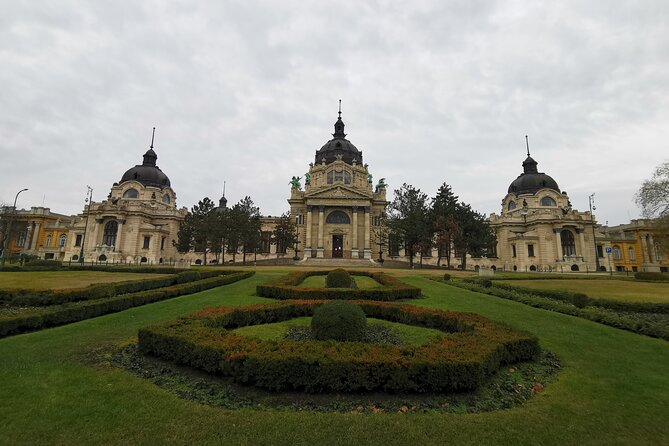
While you’re in City Park, you’ll also see the famous Széchenyi bath and talk about the culture of bath. You don’t need to plan a full separate spa trip to understand why thermal bathing matters in Hungary.
This is the kind of stop I like because it adds local flavor without turning your day into a schedule shuffle. You’ll learn the background—how bathing fits into the idea of health, relaxation, and social life—then you move on while the city is still fresh in your mind.
If you’re dreaming of a bath visit later, this is a smart primer. It helps you make better choices about what kind of bath experience you want, based on what you learned.
You can also read our reviews of more historical tours in Budapest






Andrássy Avenue: Budapest’s grand boulevard moment
After City Park, you’ll walk through Andrássy Avenue, often described as Budapest’s own Champs-Élysées. That’s a good way to think about it, because the vibe here is about elegance and street grandeur.
You’ll see Neo-renaissance mansions and townhouses, along with high-end boutiques and fashionable restaurants and coffee houses. This is where the city shows a more formal face—wide streets, impressive façades, and the sense that this is a place people associate with style.
The drawback at a boulevard stop is that it can turn into only-looking. Here, the guide helps prevent that by connecting what you see to the broader story of the city, so you’re not just watching shop windows go by.
At about 30 minutes, it’s a strong “wow and context” balance: long enough to enjoy the architecture, not so long that you get bored or stuck in crowds.
Hungarian State Opera House: beauty you can’t ignore
Then you reach the Hungarian State Opera House (Magyar Állami Operaház), and the stop is focused on the building itself—why it’s famous and what stories sit behind it.
This is one of those landmarks where the exterior already does a lot of the work. But the guide’s job is to make the building meaningful. Even if you’re not an opera person, learning the story behind the house helps you appreciate why this structure matters to Budapest’s cultural identity.
It’s about 25 minutes, which is good. Opera houses can swallow time if you let them. This keeps the day moving, while still giving you time to take in the façade details and the setting.
St. Stephen’s Basilica and the Holy Right Hand relic
Next is St. Stephen’s Basilica (Szent István Bazilika), the largest church in Budapest dedicated to Hungary’s first king. This is a stop with immediate emotional pull because the tour isn’t only about architecture. It’s about a major relic: the Holy Right Hand, a mummified hand associated with St. Stephen.
If you like religious art and symbolism, this is a standout. Even if you don’t share the faith background, relics like this carry a heavy cultural role. They’re one of the ways a country preserves memory and legitimacy through objects people still treat as meaningful.
At around 15 minutes, it’s short, but it’s also a focused hit. You’ll get the essential facts you need to understand why the basilica is worth your time, then you’ll move on before it becomes a rushed check-the-box moment.
Liberty Square to the Hungarian Parliament: politics told in stone
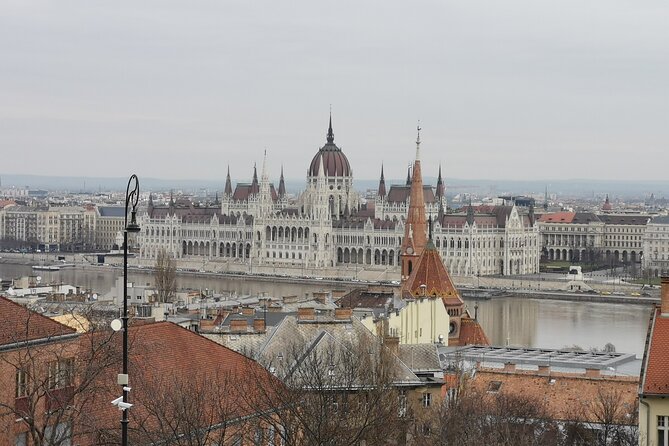
After St. Stephen’s Basilica, you cross through Liberty Square toward the Hungarian Parliament. This portion is about political life across time—how the country shifted from dictatorship to communism and then to democracy.
That’s a lot of history for one walking segment, and it works because the guide ties it to what you can actually see around you. Liberty Square’s monuments set the tone, and then the Parliament building is the visual anchor for the story.
Even if you’re not into politics, this stop is useful because it gives you a framework. You’ll start noticing that buildings in Budapest aren’t just pretty. They’re arguments about power, national identity, and legitimacy.
Plan to stay alert here. This is where it’s easy to admire the view and miss the meaning unless you’re paying attention. The guide helps keep that connection tight.
Buda Castle and the Chain Bridge crossing for the Danube payoff
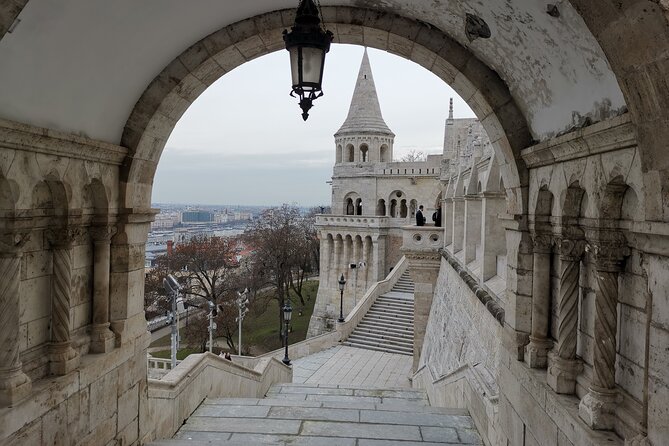
The tour finishes with Buda Castle, the royal residence area dating back to the 14th century. This is where the city’s hills turn from scenery into perspective.
You’ll also cross the famous Chain Bridge as part of the move into Buda Castle. Bridges are practical, but they’re also dramatic. From here, you get the Danube layout in your head, and you can understand why the city developed the way it did on both sides of the river.
At about 1 hour for Buda Castle, you get enough time to feel like you’re actually in the right neighborhood, not just passing through a viewpoint. You’ll be walking in an area that was built for rulers, institutions, and prestige—so the vibe changes from the commercial and cultural streets of Pest.
If you’re taking photos, this is the block where you can get good angles without feeling like you’re doing a full sunrise session. It’s simply a strong finish.
Price and value: what $277.64 gives you
The price is listed as $277.64 per group for up to 10 people (with a small group size noted). That’s not cheap if you’re used to per-person walking tours, but here’s how I’d think about value:
- You’re paying for a private guide rather than splitting a guide fee with a huge crowd.
- It includes professional guide time plus hotel pickup on foot, which saves you time and hassle.
- The itinerary includes major sights where admission tickets are listed as free for the stops mentioned.
Where it becomes a strong deal is if you’re traveling with someone else. Turn it into a group-cost calculation: if the tour stays small, the guide attention stays high. And the guide’s storytelling is what you’re really buying, because Budapest’s big sights make the most sense when you have context.
Where value can feel weaker is if you’d rather spend the day at museums you didn’t plan for, because this is a half-day walking loop. It’s focused, not open-ended all day long.
For most people doing a first visit, it’s good value because it gives you a city framework that makes everything after it easier.
Who this tour fits best (and who should adjust expectations)
This fits best if you want an efficient way to see the highlights while still learning the human side of the city. It’s especially good for:
- First-timers who want both Pest and Buda in one coherent route
- People who prefer a guided explanation over a self-guided wandering day
- Anyone interested in how Hungary’s culture connects to architecture and public spaces
It may be less ideal if you dislike walking for several hours or you need frequent long breaks. The tour is rated for moderate physical fitness, so it’s manageable, but it’s still walking time.
Also, this is not a food tour. Food and drinks aren’t included, so you’ll want to plan lunch or a snack stop after.
The guide factor: when history feels like a story
The experience is built around a guide who shares context, and that part matters more than most people expect. A good guide helps you notice details you would miss: why a monument faces a certain way, what a building’s style signals, and how everyday life and national identity overlap.
The tour provider is György Rashad Salamon, and the tour has been praised for staying interesting and for providing clear, organized city touring (including using the local transit network when it fits the plan). If you want your Budapest day to feel structured rather than chaotic, this is the kind of guide-led approach that keeps things smooth.
Should you book this Budapest history walk?
If you’re planning a first trip—or even a short one—and you want a guided route that ties Budapest’s major sights to the country’s story, I think this is a smart booking. The focus on iconic landmarks, plus the flexible, guide-led storytelling, makes it a strong “set your bearings fast” kind of tour.
Book it if:
- You like walking city blocks with a clear plan
- You want context for Heroes’ Square, St. Stephen’s Basilica, the Parliament area, and Buda Castle
- You’d rather spend money on a guide than on hopping between random stops alone
Skip or consider alternatives if:
- You’re planning to spend most of your day at museums or food stops instead of landmarks
- Long walking segments are a challenge for you
- You want an included meal experience (this tour doesn’t include food)
FAQ
Where does the tour start?
It starts in Budapest at Deák Ferenc tér.
How long is the walking tour?
The duration is about 4 hours.
Is hotel pickup included?
Yes. Hotel pickup is offered, and it’s included in the tour features.
Are admission tickets included?
The listed stops show admission ticket free, so you don’t need to buy separate entry tickets for those parts as part of the tour as described.
Does the price include food or drinks?
No. Food and drinks are not included.
What’s the group size limit?
The tour has a maximum of 10 travelers.
Can I cancel and get a refund?
You can cancel for a full refund up to 24 hours before the experience’s start time. Changes within 24 hours of the start time aren’t accepted.
Is a mobile ticket provided?
Yes. The tour includes a mobile ticket.