
REVIEW · FOOD & DRINK
Enjoy a Hungarian Strudel Class & Local Wine Tasting
Book on Viator →Operated by eatwith · Bookable on Viator
A warm kitchen, a shared table, and pastry magic. This 2-hour Budapest experience pairs hands-on Hungarian strudel making with a white/rose wine tasting, led by Zita and her family vibe. I like that you learn by doing (not just watching), and I like that you get fed: snacks while the strudels bake and a sit-down lunch so you do not need to plan food afterward.
If you’re gluten-free, read the fine print carefully: gluten is key to strudel dough, and the class cannot accommodate gluten restrictions.
In This Review
- Key Things You’ll Notice Right Away
- Why This Strudel Class Works Better Than a Usual Food Tour
- Meeting Zita on Pannónia Street: Simple Start, No Guesswork
- What Happens in the Kitchen: The Flow of a Typical Class
- Dough, Stretch, Roll: What You Learn (Even if You’re a Beginner)
- Three Fillings You Can Actually Taste: Sweet and Savory Results
- While You Bake: Snacks, Lunch, Coffee, and the “Local Family Table” Feel
- Hungarian Wine Tasting: What You Get and How to Think About It
- Dietary Requests: What’s Supported and What’s Not
- Price and Value: Is $126.66 Worth It?
- Who Should Book This (and Who Might Skip)
- Should You Book This Hungarian Strudel and Wine Class?
- FAQ
- Where is the meeting point?
- What time does it start, and how long does it last?
- Is lunch included?
- Can the class handle gluten-free diets?
- Do I need to be of drinking age?
- What is the cancellation policy?
Key Things You’ll Notice Right Away
- Small group (max 12): more attention while you stretch and roll dough
- Three fillings on the menu: cottage cheese–sour cherry, poppy seed–zucchini, apple–cinnamon
- Lunch built in: snacks while baking, then a meal when the oven work is done
- Wine tasting included: Hungarian white/rose, plus still water and Nespresso coffee
- Diet requests accepted except gluten: tell them at least 48 hours ahead
- Easy meeting point: on Pannónia Street, near public transportation
Why This Strudel Class Works Better Than a Usual Food Tour
Budapest has plenty of places to eat. This class is different. You do the work. Then you eat what you made, while the kitchen stays warm and informal.
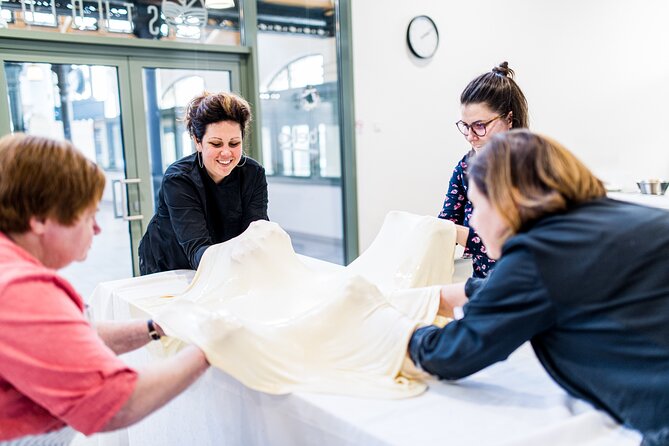
For me, the best part is that you’re not trying to memorize a recipe from a screen. You’re learning the technique: how thin the dough needs to be, how to handle it without tearing, and how fillings behave in the oven. That matters because strudel is one of those foods where process is the whole point.
The second win is the value angle. You’re getting cooking instruction, multiple strudels, lunch, coffee, water, and a Hungarian white/rose tasting in about 2 hours. In a city where food plans can get pricey fast, bundling it like this makes sense.
One more good detail: the group stays small, so your guide can spot what you’re doing and correct it. This is the kind of class where even if you’re nervous in the kitchen, the pace stays doable.
You can also read our reviews of more food & drink experiences in Budapest


Meeting Zita on Pannónia Street: Simple Start, No Guesswork
The class starts at 10:00 am and meets on Pannónia Street (Pannónia u., 1136 Hungary). The good news is that it is in a centrally located spot and close to public transportation, so you are not hunting for a side street that turns into a dead end.
You get a mobile ticket, which is handy on a travel day when you’re already juggling maps, transit cards, and reservations. Confirmation comes at booking time, so you should have what you need in advance.
Timing-wise, two hours is a sweet spot. You avoid the long “half-day cooking fantasy” that can eat up your sightseeing plan. You can do this in the morning and still have the rest of the day for neighborhoods, markets, or a museum stop.
What Happens in the Kitchen: The Flow of a Typical Class

The experience is designed to feel friendly and structured. You will get guidance from your host, and the teaching style stays practical: you learn what to do, then you do it.
Here’s the general rhythm you can expect:
- You start with dough and technique.
- You add fillings for both sweet and savory strudels.
- Strudels go in the oven.
- While they bake, you snack and build up an appetite.
- Then you sit down for lunch as the class finishes up.
- You wrap with coffee, and you taste local Hungarian white/rose wine if you’re of legal drinking age.
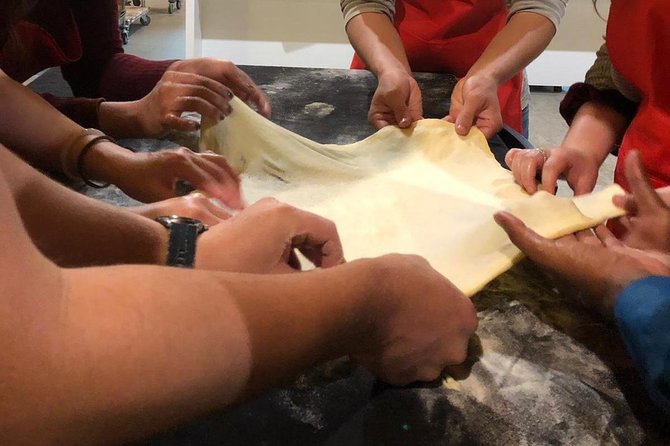
The “hands-on” part matters. Strudel-making is not just rolling pastry. It is stretching thin dough without ripping it, then building a roll that stays intact long enough to bake well. That is a skill you can actually pick up in one session, even if you have never made dough before.
Dough, Stretch, Roll: What You Learn (Even if You’re a Beginner)
The class welcomes all levels of chefs. That phrase is common in tourism, but the proof is in how this works. You’re not expected to already know dough handling. The goal is to help you get a workable result, not a showpiece.
In practice, you learn core technique that transfers to other pastries too:
- How to work gently so the dough stays smooth and pliable
- How to manage thickness so it bakes into layers that do not go tough
- How to portion fillings so they cook through without making the roll soggy
- How to roll and shape so your strudel keeps its form
One thing I appreciate about a class like this is that it gives you real context. If you’ve ever wondered why strudel is different from pie or hand-held pastries, you start to understand. Thin dough + controlled filling = the texture.
And yes, you’ll probably realize strudel is skilled work. Even good home bakers take a couple tries to get it right. The class is a good place to learn because you get coaching without judgment.
Three Fillings You Can Actually Taste: Sweet and Savory Results
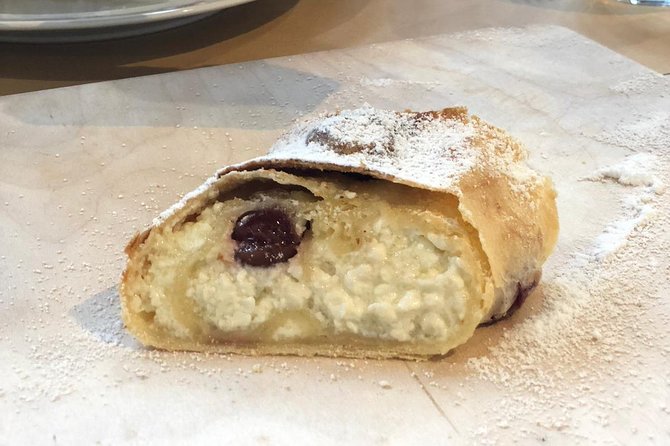
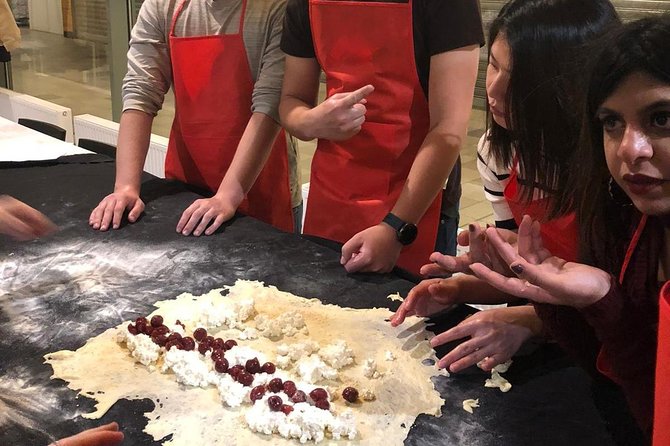
You will make multiple strudels with seasonal fillings. The menu includes both sweet and savory options, and three named combinations show up in the class:
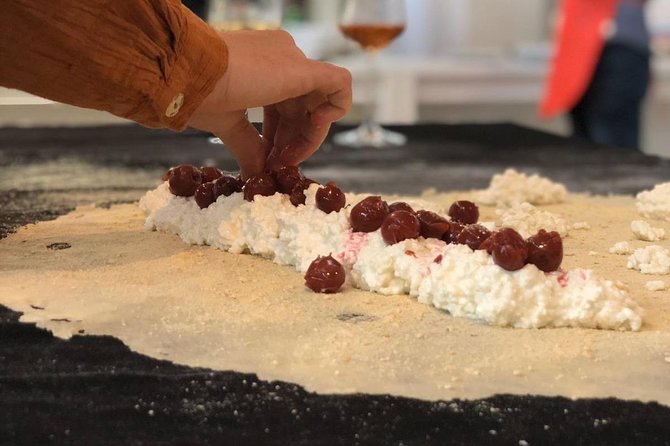
- Cottage cheese–sour cherry
- Poppy seed–zucchini
- Apple–cinnamon
This is a smart setup. It keeps the class fun, and it helps you learn by contrast. Each filling behaves differently:
- Sour cherry brings a tang and moisture, so you learn how to balance fullness.
- Zucchini has water content, so you learn why filling choice and portion control matter.
- Apple and cinnamon feel classic, so you can focus on dough handling while still getting that familiar comfort flavor.
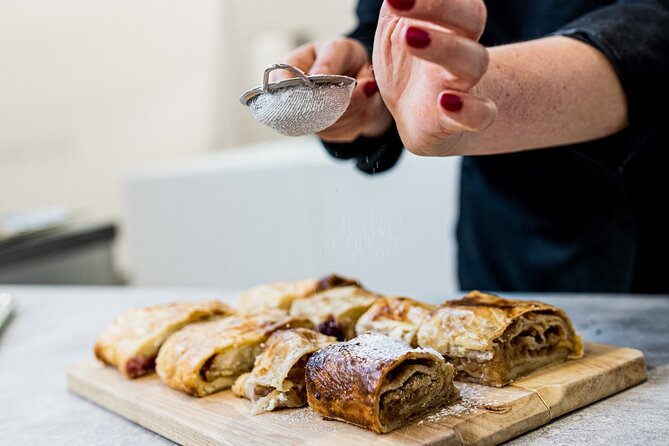
The result is that you do not just leave with one pastry. You leave with a mini tasting tray from your own hands. That’s the kind of memory that sticks because it is sensory, not theoretical.
You can also read our reviews of more wine tours in Budapest



While You Bake: Snacks, Lunch, Coffee, and the “Local Family Table” Feel
One of the best bits is that you do not have to plan lunch around the class. Snacks come out while the strudels are in the oven, then you sit down to a meal once the baking finishes.
You also get:
- still water
- Nespresso coffee
This is a small detail but it helps the whole experience flow. When you’re cooking, you can burn energy fast. Having food built into the schedule keeps you from turning your morning class into a hangry sprint across town.
Also, the vibe is very family-style. Reviews describe meeting multiple generations and chatting in the home setting. That matters for value. You’re not only learning food technique. You’re getting the social part of Budapest: how local people talk about what to eat, where to go, and what matters when you’re new in town.
Hungarian Wine Tasting: What You Get and How to Think About It
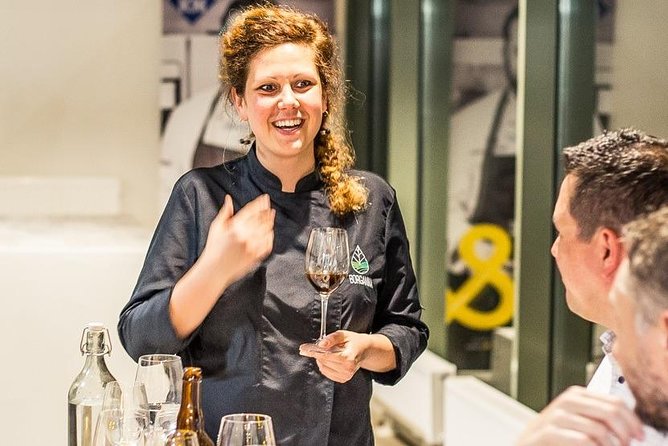
The class includes a Hungarian white/rose wine tasting. If you are legally old enough to drink, you’ll sample wine alongside the meal.
Even if you don’t consider yourself a wine person, this is worth it for two reasons:
- You learn what locals drink with local food. Strudel can swing sweet, savory, tart, and creamy. Wine pairing is not random here.
- It gives you a quick flavor education without turning the class into a lecture.
Just be aware of the rule: you must be of legal drinking age to be served alcohol. If you’re not, you should still enjoy the food and the rest of the tasting setup (water is included).
Dietary Requests: What’s Supported and What’s Not
The class can accommodate most dietary requests, with one hard exception: gluten. Because gluten is a key ingredient in strudel dough, gluten-free substitution is not available.
If you have allergies or other restrictions, you need to communicate them at least 48 hours in advance. That advance notice helps the host plan safely, so you’re not stuck improvising at the last minute.
Practical tip: when you message your restriction, keep it specific. Say the ingredient you must avoid and the severity if it matters. “Sensitive to gluten” and “must avoid gluten completely” are not the same thing in many kitchens.
Price and Value: Is $126.66 Worth It?
At about $126.66 per person for roughly 2 hours, this class is not a bargain basement deal. But it also is not “pay for a pastry and a photo.”
You’re paying for:
- guided, hands-on cooking instruction
- multiple strudels with different fillings
- snacks and a sit-down lunch
- coffee and still water
- a white/rose wine tasting (for those of legal age)
If you were to separately book cooking instruction, then add a lunch and a tasting, the total would climb fast. This format keeps costs down because it’s a group class with a small cap of 12 travelers, plus included meal components.
Also, strudel has a built-in souvenir factor. You eat it right away (so it’s not just a take-home gimmick), and you learn a technique you can repeat later.
Who Should Book This (and Who Might Skip)
This class is a great fit if:
- you like practical food experiences, not passive ones
- you want a morning plan that ends with a real lunch
- you enjoy learning how local families cook and talk about food
- you want a small-group setting where someone can help you fix mistakes
You might skip it if:
- you need a gluten-free option
- you dislike cooking activities and just want to eat
- you want a longer, museum-style walking itinerary instead of a kitchen experience
If you’re traveling with friends or family, this is also a strong choice. You can compare your strudel shapes, argue over the best filling, and share the win when the roll comes out of the oven in one piece.
Should You Book This Hungarian Strudel and Wine Class?
Yes, if you want an experience that’s more hands-on than sightseeing and includes your food and drink. The combination of three fillings, lunch on-site, and a wine tasting in a small group makes it a practical value in Budapest.
Book it especially if you like the idea of learning a traditional technique in a real home kitchen setting. The best case scenario is that you leave with warm memories, a belly full of strudel, and at least one filling you’re already craving again.
If gluten is an issue, though, skip this one and look for a different cooking style that can handle your needs safely.
FAQ
Where is the meeting point?
The class meets at Pannónia Street (Pannónia u., 1136 Hungary). The experience ends back at the same meeting point.
What time does it start, and how long does it last?
It starts at 10:00 am and runs about 2 hours.
Is lunch included?
Yes. Snacks are provided while the strudels bake, and lunch is included as part of the class.
Can the class handle gluten-free diets?
No. Gluten is a key ingredient in strudel, so gluten restrictions cannot be accommodated. Other dietary requests may be possible if you inform the provider at least 48 hours in advance.
Do I need to be of drinking age?
Yes. Alcohol is included as a white/rose wine tasting, and guests must be of legal drinking age to be served.
What is the cancellation policy?
You can cancel for a full refund up to 24 hours before the experience starts. If you cancel less than 24 hours before, the amount paid is not refunded. Free cancellation is available.