REVIEW · CHEESE
Budapest: Wine, Cheese, and Charcuterie Tasting
Book on GetYourGuide →Operated by Taste Hungary · Bookable on GetYourGuide
Hungarian wine can feel mysterious. One good tasting makes it click fast.
This sommelier-led session pairs five Hungarian wines with an artisan cheese and charcuterie board, walking you through regions and styles as you go. I also love the practical side: you get tasting sheets plus a map of the wine regions, so you can remember what you liked. The only drawback to watch for is that it’s wine-focused, so if you dislike wine (or you want a no-alcohol experience), it may not be your best use of time.
You’ll meet at a small tasting room in District VIII, just a short walk from major transit, and you’ll be in and out in about 1.5 hours. The vibe is relaxed and social, with plenty of time to ask questions while you taste. I’d call it a strong value play for Budapest food-and-wine time, especially because the pours are not tiny “samples.”
In This Review
- Key Things To Know Before You Go
- A Central Budapest Setting That Keeps It Easy
- The 90-Minute Flow: How You Learn Hungarian Wine Fast
- Indigenous grapes are the main character
- Expect frequent pairing moments
- The Tokaj Sweet Wine Finish: A Key Hungarian Story Beat
- Cheese and Charcuterie Pairings That Feel Proper
- Bread, Artisan Oils, and Tasting Sheets That Make It Memorable
- Price and Value: Is $50 Worth It?
- Who Should Book This (and Who Might Skip It)
- Tips for Making the Most of Your Afternoon
- Should You Book This Budapest Wine, Cheese, and Charcuterie Tasting?
- FAQ
- How long is the Budapest Wine, Cheese, and Charcuterie Tasting?
- What does the price include?
- Where do I meet for the tasting?
- Is the tour guided in English?
- Is there an age limit?
- How many wines do I taste?
- Is free cancellation available?
Key Things To Know Before You Go
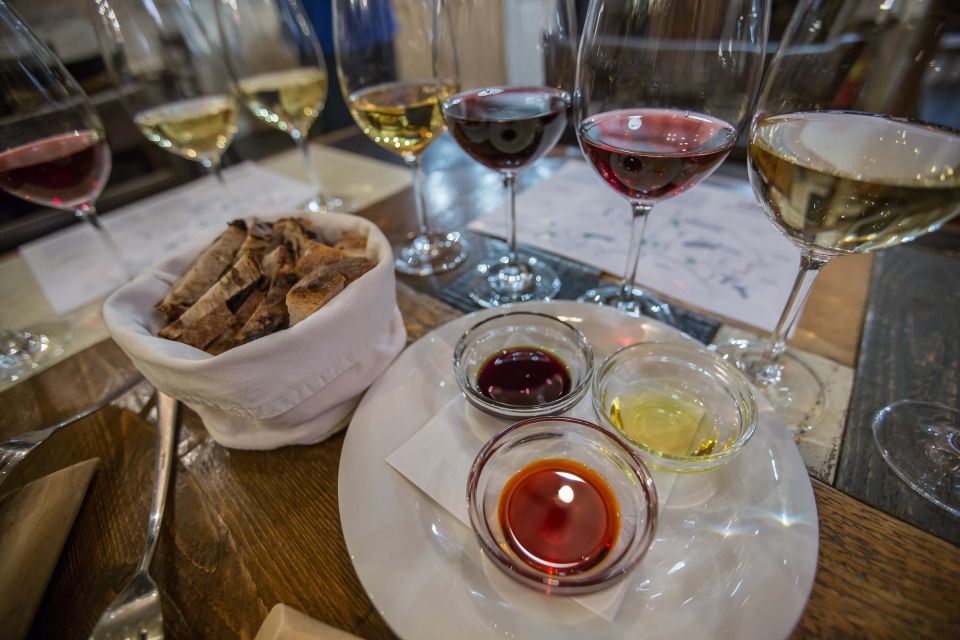
- 5 full glasses of Hungarian wine that cover reds, whites, and a Tokaj sweet finish
- Sommelier-led pairing with Hungary-style cheese and charcuterie, not random supermarket bites
- Bread and artisan oils that help you understand flavors beyond grapes
- Tasting sheets + a map of Hungarian wine regions so you leave with notes
- A central meeting point near the National Museum, with easy metro/tram access
- Guides you might meet include Thomas, Bence, Sam, and John/Jon (English, with a friendly tone)
A Central Budapest Setting That Keeps It Easy
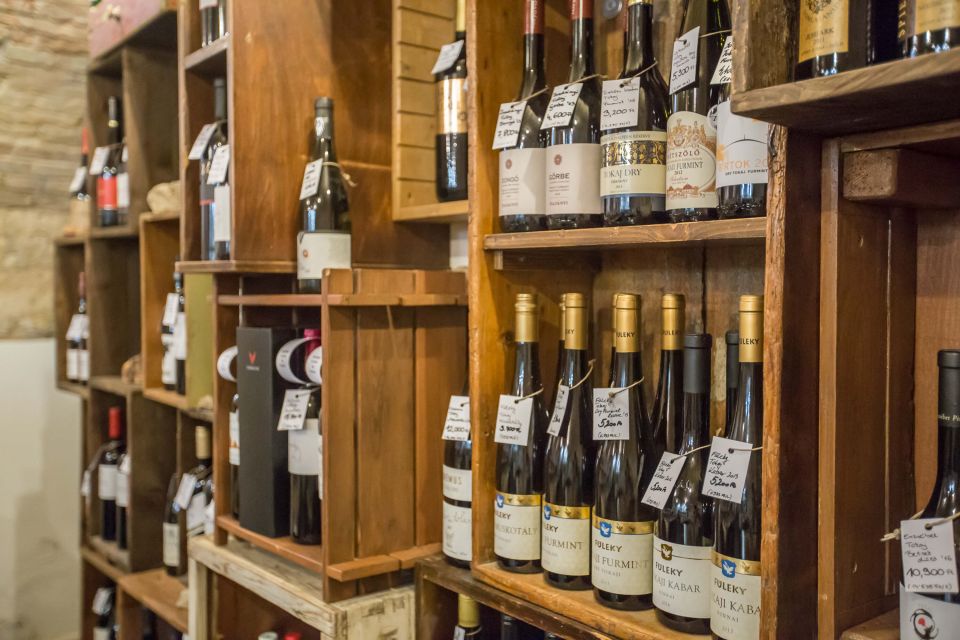
Budapest is big on architecture and big on ideas. This experience keeps things simple: you start with wine, you pair it with Hungarian bites, and you learn as you taste.
The meeting point is The Tasting Table Budapest, Bródy Sándor utca 9, 1088 Budapest (District VIII). It’s about 150 meters from the National Museum, and the walk from Astoria (M2) or Kálvin tér (M3) is around five minutes. Trams 47 and 49 also stop near Astoria and Kálvin tér, so you can arrive without a complicated route.
Inside, the space tends to feel intimate and comfortable, including a downstairs cellar-style room that some guests describe as brick with arches. That matters more than you’d think: in a basement tasting room, you’re not fighting the noise of the street, and the sommelier can actually talk you through flavors without shouting.
You can also read our reviews of more food & drink experiences in Budapest


The 90-Minute Flow: How You Learn Hungarian Wine Fast
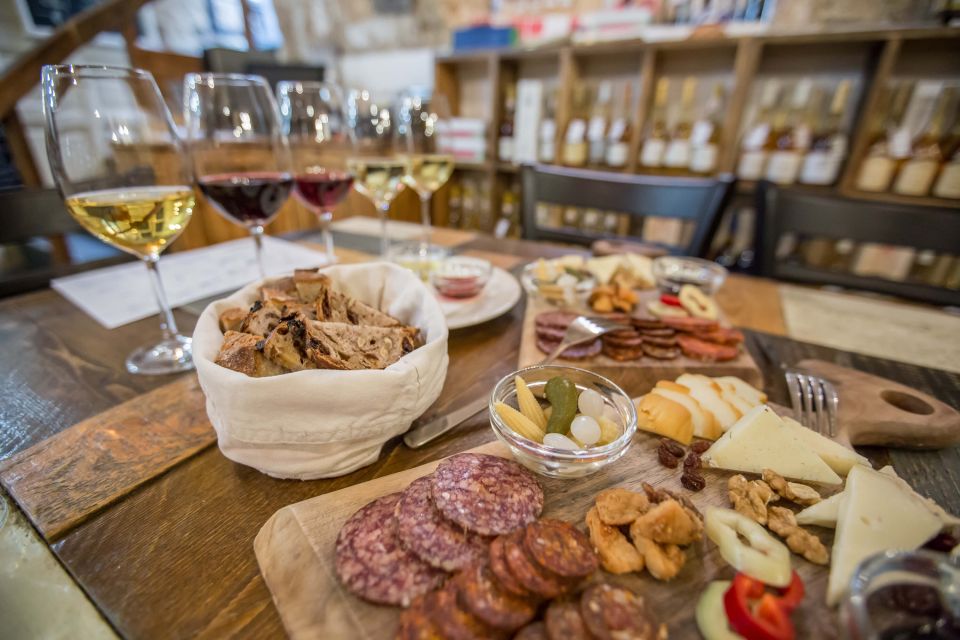
The core of this tasting is built like a guided crash course. You’re not just drinking—you’re getting context tied to each pour.
You’ll try five Hungarian wines, served as five glasses, which makes it feel more substantial than “a quick taste and move on.” The plan is designed to give you a broad overview of Hungarian wine: history, major wine regions, important grape varieties, how styles differ, and what trends are worth watching.
What I like about this approach is that it prevents the usual problem with tastings: you can end up with five separate sips and no connections. Here, the wines are meant to form a set, so you start seeing patterns—like how sweetness, acidity, and oak (or lack of it) affect what you notice next with cheese and charcuterie.
Indigenous grapes are the main character
A big promise of the experience is a focus on indigenous Hungarian grape varieties and local styles. That’s why you might taste bottles that feel unfamiliar, even if you’ve tried wines from big global names before. It also gives you something practical: after this, you’ll be more confident ordering Hungarian wine later because you’ll recognize the flavor logic, not just the label.
Expect frequent pairing moments
Between pours, the sommelier connects each wine to what you’re eating. That matters because cheese and charcuterie can either flatter wine or expose flaws fast. The food side isn’t an afterthought—it’s part of the lesson.
In plain terms: you’ll taste, then you’ll learn why that combination works (or why it doesn’t). That makes the learning stick.
The Tokaj Sweet Wine Finish: A Key Hungarian Story Beat

The lineup ends with a glass of sweet wine from Tokaj—a signature part of Hungary’s wine identity.
Tokaj is widely known as a serious sweet-wine region, but most people experience it in one of two ways: either as a rare splurge they order once, or as a “dessert wine” that feels too sugary to matter. This tasting puts Tokaj at the end, which is smart. It lets you build up your palate with dry whites and reds first, then compare how sweetness changes your perception of aroma and texture.
Here’s what to pay attention to with the Tokaj pour:
- Does it feel balanced, or heavy?
- Do you notice dried fruit, honey-like tones, or something more complex?
- How does the sweet wine interact with salt and fat from cured meats and cheeses?
If you’ve never had Tokaj, you’re not just trying a different bottle—you’re learning a different style of Hungarian wine thinking.
You can also read our reviews of more wine tours in Budapest


Cheese and Charcuterie Pairings That Feel Proper
If wine is the lesson, the food is the proof. The board is built from artisan producers, and it’s not shy about showing Hungary’s meat culture and cheese craft.
You can expect items such as:
- Mangalica pork sausages
- Free-range water buffalo salami
- Smoked duck breast
- Grey beef sausage
- A variety of cheese styles
That mix is useful. It gives you a spread of flavors:
- smoked and savory (duck breast, some sausages)
- salty and fatty (charcuterie in general)
- creamy or firm dairy textures (cheeses)
One of the most praised parts of the experience is how well these pair with the wines. People describe the board as genuinely tasty and well matched to each glass. Also, the tasting has enough food for the whole session, so you’re not walking away hungry while your palate is still trying to “figure it out.”
If you’re vegetarian, this still might work in part because the tasting includes bread and oils, and there will be cheeses. But you should go in knowing the platter heavily features meat. The experience is designed for a meat-and-wine pairing culture.
Bread, Artisan Oils, and Tasting Sheets That Make It Memorable
Two small touches make a big difference here: bread and artisan oils, plus tasting sheets with region maps.
The bread and oils help you reset your palate between heavier bites. They also teach you something underrated: wine is easier to appreciate when you’re also paying attention to fat, salt, and texture from food. Oils can be especially useful as a flavor reference point, because they sit differently than cheese or cured meats.
Then there are the tasting sheets. You get notes to take along the way, plus a map of Hungarian wine regions. That’s a practical gift. When you get home, you’re not stuck trying to remember which wine you liked based on vague feelings. You can flip back through your notes and start looking for those styles again.
This is also where the sommelier approach shines. Some guests mention guides like Thomas, Bence, Sam, and John/Jon bringing a friendly, fun tone, while still explaining history and regions clearly enough to follow. The point isn’t to turn you into a sommelier—it’s to make you fluent for your next order.
Price and Value: Is $50 Worth It?
At $50 per person for 1.5 hours, you’re paying for three things: instruction, a real amount of alcohol (five glasses), and a proper food pairing.
Here’s how I think about the value:
- Five glasses is a meaningful pour for the time. This isn’t a “one sip each” format where the price feels out of reach.
- The board includes multiple specific meat types plus cheese styles. Not every Budapest tasting gives you that level of variety.
- You also get extras that help you learn—tasting sheets and a map—so the value isn’t only in the food and wine. It’s in what you take away.
If you’re the kind of traveler who wants to drink a little, eat well, and leave with a clearer idea of what to order next, this price usually lands in the “yes” zone.
If you’re aiming for the cheapest way to eat in Budapest, it won’t beat a market meal. But as a focused experience that blends culture and taste, it’s a solid use of an afternoon.
Who Should Book This (and Who Might Skip It)
This works best for:
- People who are curious about Hungarian wine and want an introduction that feels specific, not generic
- Couples and small groups who enjoy learning at a table and asking questions
- Travelers who like food pairings and want cheese/charcuterie that’s more than an incidental snack
- Anyone who wants a straightforward way to try styles they might not find easily elsewhere, especially because the focus is on indigenous varieties
You might choose something else if:
- You’re not comfortable around alcohol (this is a wine tasting format)
- You want a food-first experience with zero emphasis on wine
- You’re under 18 (the legal drinking age in Hungary is 18, and it’s not suitable for children under that age)
Tips for Making the Most of Your Afternoon
A little planning makes this tasting more fun and more memorable.
- Arrive with curiosity. Even if you’ve never heard of Tokaj or Hungarian grape names, that’s normal. The tasting is designed to teach you as you go.
- Take notes during the session. The sheets and map are there for a reason, and your future self will thank you.
- Pace yourself. With five glasses plus food, it’s a lot to taste in 90 minutes—good fun, but don’t rush.
- Ask questions. This kind of guided format gets better when you prompt the sommelier. People often mention the guides’ humor and engaging style; use it to ask what you actually care about.
- If you find a wine you love, ask what options exist for buying it afterward. Some guests reported purchasing bottles after their tasting.
Should You Book This Budapest Wine, Cheese, and Charcuterie Tasting?
I’d book it if you want a high-value, low-stress way to understand Hungarian wine in one afternoon. The best reason is simple: you get five glasses, serious pairing food, and a guide who ties the tasting to regions, varieties, and styles. That combination turns wine into something you can order and recognize later.
Skip it if you’re picky about meat-heavy boards or you don’t drink wine. Otherwise, this is exactly the kind of experience that makes a big city feel personal—one table, one sommelier, and suddenly Hungary’s wine story stops being abstract.
FAQ
How long is the Budapest Wine, Cheese, and Charcuterie Tasting?
The tasting lasts 1.5 hours.
What does the price include?
It includes 5 glasses of Hungarian wines, a local cheese and charcuterie plate, bread and artisan oil, and tasting sheets (with a map of Hungarian wine regions).
Where do I meet for the tasting?
The meeting point is The Tasting Table Budapest, Bródy Sándor utca 9, 1088 Budapest (District VIII).
Is the tour guided in English?
Yes. The experience includes a live tour guide in English.
Is there an age limit?
The legal drinking age is 18 in Hungary, and the experience is not suitable for children under 18.
How many wines do I taste?
You’ll taste five Hungarian wines, served as five glasses.
Is free cancellation available?
Yes. You can cancel up to 24 hours in advance for a full refund.