REVIEW · EVENING EXPERIENCES
Communist History Evening Walking Tour of Budapest
Book on Viator →Operated by Perfect European Tours - Budapest FREE Walking Tours. · Bookable on Viator
Communism left fingerprints all over Budapest. This Communist History Evening Walking Tour uses a simple recipe—street views, key buildings, and a guide who connects the period to what you see today—so the topic stops feeling like a textbook.
I love two things right away: the small-group pace (max 15) and the way our guide—Victoria—explained how the communist era shaped daily life and even shaped attitudes that still show up now. You also get bottled water, which sounds small until you’re doing a 6:00 pm walk and want to stay comfortable.
One consideration: you’re mostly learning from the sidewalk. That means street noise and weather matter, and a few brief stops can feel a bit “city-crowd” instead of calm and museum-quiet.
In This Review
- Key things to know before you go
- Communist History in Budapest works best on foot
- Andrassy Avenue: where the city’s story gets edited
- St. Stephen’s Basilica: religion under communism and an escape story
- Liberty Square: the closed stock exchange and protest scars
- Hungarian Parliament Building: 1956 and the cost of defiance
- Timing, walking distance, and how the pace feels in real life
- Price check: $36.01 for a guide who connects the dots
- What you get, what to bring, and how to make it easy
- Who should book this Budapest communist history walking tour
- Should you book it?
- FAQ
- What is the price of the Communist History Evening Walking Tour of Budapest?
- How long is the tour?
- What time does the tour start?
- Where do I meet the guide, and where does the tour end?
- Is the tour offered in English?
- How far will I walk?
- How many people are in the group?
- What’s included in the tour?
- Does the tour run in all weather?
- Is there free cancellation?
Key things to know before you go
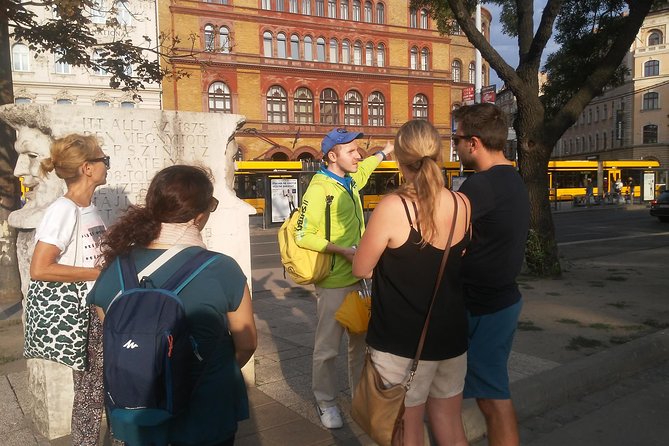
- English guide, small group (up to 15): more time for questions and less rushing.
- 2 hours at 6:00 pm: ideal for an evening cooldown while still hitting major sites.
- Street-level history, not just buildings: you connect communist-era decisions to visible changes across districts.
- Bottled water included: helpful for a few hours of walking.
- Walk requirement of about 3 km: doable for most people who can move under their own power.
Communist History in Budapest works best on foot
I like tours that don’t hide behind walls. This one is built for that. You don’t just see famous landmarks—you learn why they look the way they do, and what changed when communist rule tightened in Hungary.
The best part is the guide’s angle. Victoria doesn’t treat communism as a distant chapter. She explains the effects on religion, politics, public life, and the way people remember what happened. That’s also why this tour feels different from a museum stop or a quick photo session: you’re standing in the real urban “stage set” where those forces played out.
And because it’s an evening walk, you get another bonus: the city feels less like a sightseeing checklist and more like a place where people still live their normal day—right next to the heavy history.
You can also read our reviews of more walking tours in Budapest

Andrassy Avenue: where the city’s story gets edited
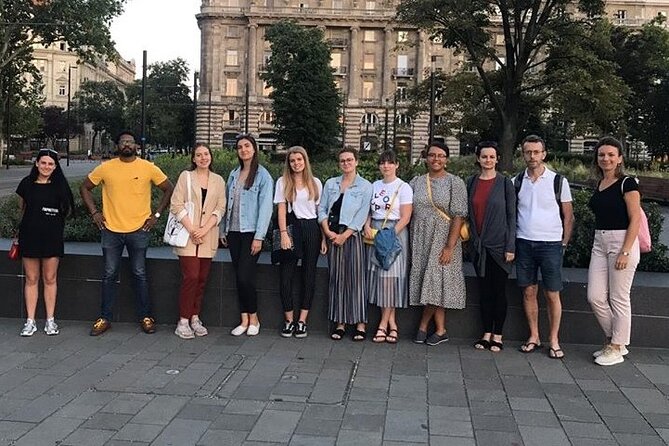
Before you hit the big-name sights, you start with a walk down Andrassy Avenue. This is the kind of opening that helps the rest of the tour click.
Your guide points out how areas and former monuments have changed over time. The idea is simple but powerful: communist rule didn’t just happen in offices or speeches. It reshaped what got celebrated, what got removed, and what people could publicly acknowledge.
You’ll also get your bearings fast because this is a real walking route through the city center. One review described the tour as covering a lot of locations and monuments across districts (V through VIII). Even if you don’t count every single stop, you’ll feel that you’re moving through multiple layers of Budapest, not just circling one square.
St. Stephen’s Basilica: religion under communism and an escape story
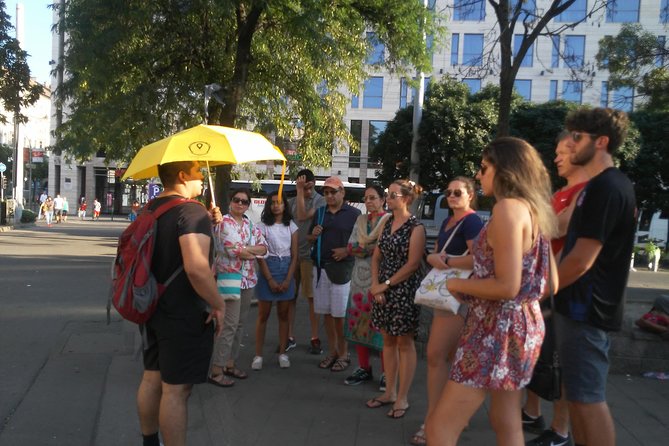
Your first major stop is St. Stephen’s Basilica (Szent Istvan Bazilika). You’ll spend about 10 minutes here, and it’s not just a look-and-leave moment.
Communism didn’t just control politics. It interfered with institutions, including the Hungarian church and religious life. At the basilica, you learn how the communist period impacted religion in Hungary—what pressures existed, and how the church fit into the larger story.
There’s also a human detail that makes the stop memorable: you’ll hear about a famous Hungarian football player who fled the communist system and later ended up buried at the church. Even without turning it into a sports anecdote, it drives home a key theme—people made real choices to escape, and those choices echoed long after.
Practical note: since the time here is short, come ready to listen. Save long photo sessions for later if you want them. This stop works best when you treat it as a mini lecture inside one landmark.
Liberty Square: the closed stock exchange and protest scars
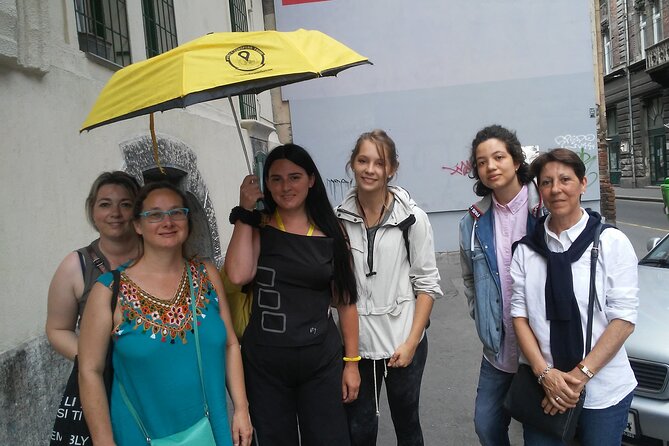
Next is Liberty Square, one of the most direct “history in the street” parts of the itinerary. You’ll spend around 15 minutes here.
This is where the tour gets especially concrete if you care about communist history beyond headlines. You learn that the stock exchange was located here and closed at the start of communism. Think about the symbolism: when a system takes power, it also changes institutions tied to trade, money, and public life.
Liberty Square is also tied to protest history. Your guide explains that the area became a site of bloody protests, which helps you understand communism as more than a set of rulers—it was contested, and people resisted.
If you’re the type who likes causality, this stop delivers. It connects the dots between political control and what people did when they felt cornered. It’s also a useful contrast with the basilica stop: religion and faith on one side, public action and political tension on the other.
Hungarian Parliament Building: 1956 and the cost of defiance
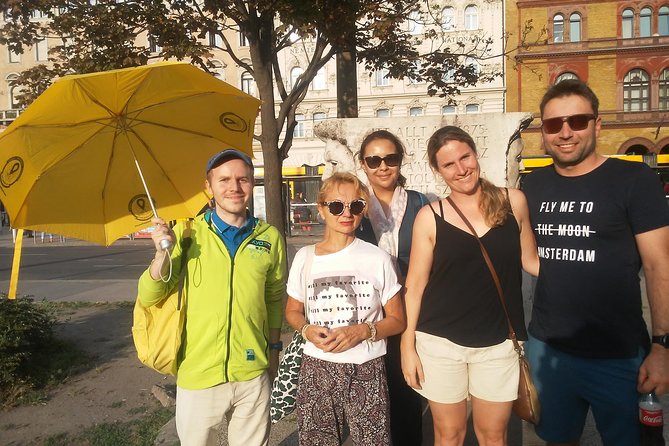
The final stop is the Hungarian Parliament Building, again about 15 minutes. Even though this is a landmark you’ll likely recognize from photos, the tour approach is what makes it meaningful.
Your guide links the parliament site to the 1956 uprising against the ruling Communist party. You’ll hear that significant bloodshed happened there. That detail matters, because it turns a grand building into a witness of a turning point.
The value here isn’t that you learn a date. It’s that you learn why that date still sits in the national memory. You also get a sense of how later generations interpret that conflict through the lens of what came after.
One small perk: after walking a lot of Budapest’s history, standing near parliament gives you a natural “big picture” moment. The tour doesn’t end in chaos—it ends with a clear, heavy anchor.
You can also read our reviews of more historical tours in Budapest


Timing, walking distance, and how the pace feels in real life
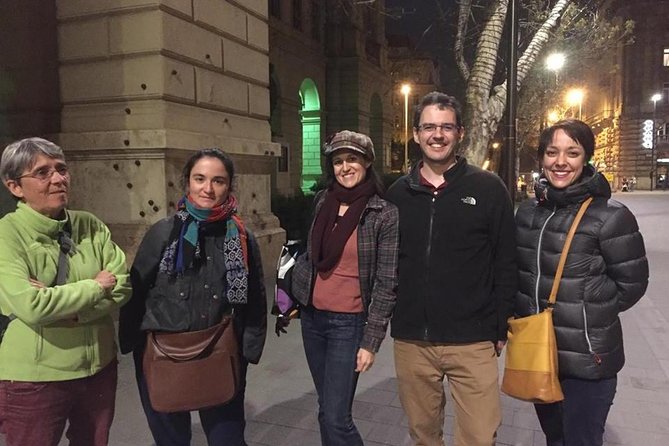
This tour runs at 6:00 pm and lasts about 2 hours. That timing is smart in Budapest. In the evening, the light softens, and you’re not fighting the midday heat as much.
It’s also manageable. The requirement is that you can walk (or wheel) yourself for about 3 km. With a short group and planned stops, it doesn’t feel like an all-out hike, but you should still wear comfortable shoes. This is a city-walking experience, not a sit-down lecture.
The group size is capped at 15 travelers, which helps a lot. The tour doesn’t feel like you’re being herded. You can ask questions and get answers instead of watching history flash by.
Price check: $36.01 for a guide who connects the dots
The price is $36.01 per person. For Budapest, that’s not “cheap enough to ignore,” so I look at value differently than just cost.
Here, the value comes from:
- A focused topic that’s hard to piece together on your own
- A guide who teaches with context, not just facts
- A small group and a walking format that keeps the learning tied to the setting
- Bottled water included
The tour also saves you effort. Instead of hunting down separate sources for religion under communism, protest history, and the 1956 uprising, you get a structured route that ties them together in one evening.
If you’re the kind of traveler who likes one good guide telling the story clearly, this price starts to feel fair fast. If you only want sweeping generalities and don’t care about the “why,” you might find the topic heavier than you need.
What you get, what to bring, and how to make it easy
Included is straightforward: bottled water. That’s helpful, because the tour’s about staying comfortable while you listen.
Not included items listed are mainly about personal extras—alcoholic beverages, parking fees, and anything like scuba equipment (you won’t need that). Translation: bring your normal walking basics.
What I recommend you bring:
- Comfortable walking shoes
- A light layer for the evening
- A phone charged for maps (the tour uses a mobile ticket)
- Any usual essentials you need for an outdoor 2-hour walk
One more real-life tip: the experience depends on good weather. If the sky doesn’t cooperate, the operator should offer a different date or a refund. So don’t schedule anything tight right before or after.
Who should book this Budapest communist history walking tour
Book it if you want:
- A focused communist-era story in real locations
- A guide who explains impacts on religion, society, and resistance—not just dates
- A walking tour you can finish within a normal evening plan
Skip it (or at least consider another format) if:
- You hate being outside and listening in street conditions
- You can’t comfortably walk around 3 km
- You prefer inside-only sightseeing where noise is controlled
This tour also pairs nicely with a bigger follow-up if you want more depth. One review recommended adding the Museum of Terror for additional context. If you’re already planning a deeper history day, this evening walk can be the narrative bridge that makes the museum visit land harder.
Should you book it?
Yes, if your trip includes Budapest’s communist history as a real interest. The standout strength is the guided, street-level connection: you’re not just seeing landmarks—you’re learning what communism changed and why it still matters when you look at the city today.
You’ll probably feel especially happy with this booking if you want an evening plan that’s educational without being exhausting, with small-group attention and a guide who tells the story in a way that sticks.
FAQ
What is the price of the Communist History Evening Walking Tour of Budapest?
The price is $36.01 per person.
How long is the tour?
The tour lasts about 2 hours.
What time does the tour start?
The tour starts at 6:00 pm.
Where do I meet the guide, and where does the tour end?
You start at Budapest, Blaha Lujza tér, 1085 Hungary. The tour ends at Budapest, Kossuth Lajos tér 1-3, 1055 Hungary.
Is the tour offered in English?
Yes, it is offered in English.
How far will I walk?
You must be able to walk (or wheel) yourself about 3 km.
How many people are in the group?
The maximum group size is 15 travelers.
What’s included in the tour?
Bottled water is included.
Does the tour run in all weather?
The tour requires good weather. If it’s canceled due to poor weather, you’ll be offered a different date or a full refund.
Is there free cancellation?
Yes. You can cancel up to 24 hours in advance for a full refund.