REVIEW · IMMERSIVE MUSEUMS & EXPERIENCES
Communism in Budapest: Private Tour with House of Terror Museum
Book on Viator →Operated by Travel Curious · Bookable on Viator
A city can be beautiful and still tell hard truths. This private Communism in Budapest walk hits the big political beats in real places, from the 1956 student uprising to the House of Terror museum. I like that it includes the right mix of landmark sights and street-level details, and I also like the private-guide pacing for photos and questions. One thing to consider: the final museum stop can be emotionally heavy, so plan your day with care.
You’ll start at Bem József Memorial Square, then move through central districts where politics shows up in statues, squares, and even street-side quirks. The tour is about 3 hours on foot, with plenty of time to pause, look around, and keep the story straight as you go.
By the end, you’ll have the context to understand why Hungary’s 20th-century history still shapes everyday Budapest. It’s a walking tour with moderate fitness needs, and it’s near public transportation, but you’ll still want comfy shoes and a little patience for city walking.
In This Review
- Key highlights you’ll actually feel during the tour
- Budapest’s political history, told street by street
- Bem József Memorial Square: where the revolution starts
- Central Budapest streets: retro bars, butcher shops, and Soviet-era life
- Falk Miksa Street and the Columbo statue moment
- Kossuth Lajos Square: the Parliament building as a political stage
- Finishing at the House of Terror Museum: plan for emotional weight
- Price and logistics: what $180 gets you
- Timing and how the 3 hours works in real life
- Who this tour is best for
- Should you book this Communism in Budapest tour?
- FAQ
- FAQ
- How long is the private walking tour?
- Where does the tour start and end?
- What is the main focus of the tour?
- Is the House of Terror Museum ticket included?
- Is the Hungarian Parliament Visitor Centre admission included?
- Do I need to arrange transportation during the tour?
- Is this a private tour?
- What’s the fitness level like?
- Do I get a mobile ticket?
- Is there free cancellation?
Key highlights you’ll actually feel during the tour
- 1956 at Bem József Memorial Square: the protest site linked to Soviet rule, tied to the 200,000 student figure
- Falk Miksa Street’s surprise: a Columbo statue that makes the political story feel human and odd (in a good way)
- Kossuth Lajos Square and Parliament views: Neo-Gothic architecture that frames Hungary’s public life
- Liberty Square and Ronald Reagan: a striking monument that sparks the question of how history gets remembered
- House of Terror Museum access: entrance included, plus a finishing point that you can explore after your guided time
- Private-group experience: your own group only, with a professional guide and time for photos
Budapest’s political history, told street by street
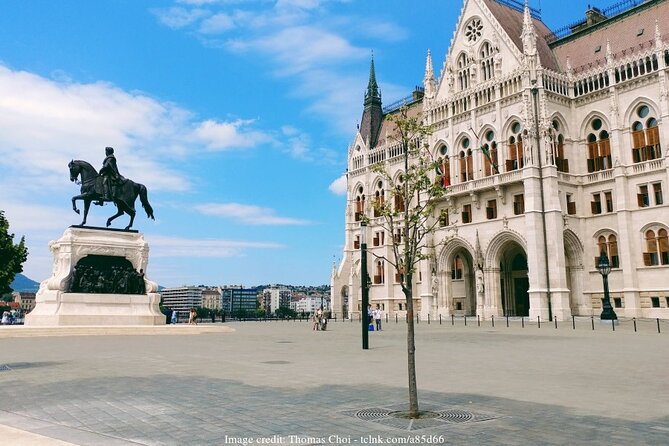
Budapest is stunning, but it doesn’t hide its past. This tour is built to help you read the city like a document, using major squares and smaller streets to connect the story from Nazi Occupation to the rise and fall of Communism, and finally toward democracy.
What makes this experience worth your time is the method. You don’t just stare at buildings and move on. You pause at specific places that connect to specific political moments, and your guide helps you connect those dots without turning the whole thing into a lecture.
You’ll also notice how the city signals change. Some memories are official and monumental. Others show up as unexpected public art or references that feel almost too strange to be real until your guide explains why they matter.
You can also read our reviews of more private tours in Budapest



Bem József Memorial Square: where the revolution starts
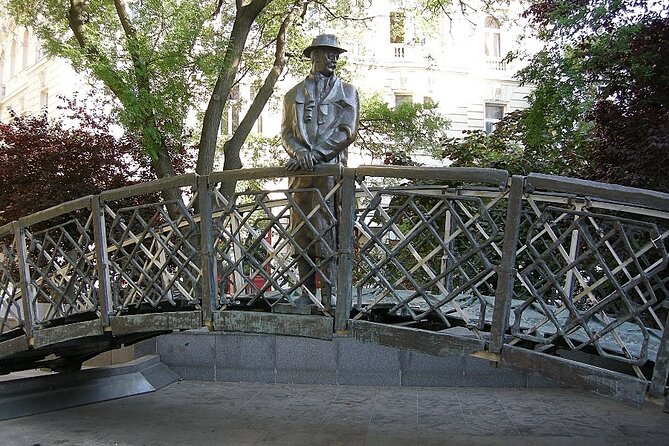
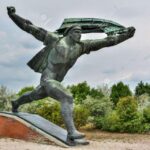
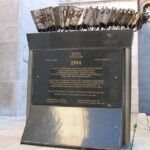
You’ll begin at Bem József tér 2, 1027, right at Bem József Memorial Square. This is the moment-setting stop, because it anchors the whole tour in the 1956 revolution and the student protests against Soviet rule. The scale mentioned here is huge: 200,000 Hungarian students.
It’s a powerful opening for two reasons. First, it tells you that this story isn’t only about leaders and offices. It’s also about young people, public courage, and mass action. Second, it sets the tone for everything that follows at a walking pace that doesn’t rush you.
You’ll spend about 30 minutes here, and because admission is free for this stop, you can focus on the site itself and how it connects to what you’re about to see. If you’re the type who likes your history with clear anchors, this start will feel satisfying.
Central Budapest streets: retro bars, butcher shops, and Soviet-era life
From the memorial square, the tour moves into central Budapest, where your guide discusses life under communist rule while you walk past everyday street scenes. This is where the experience becomes more than sightseeing. Seeing retro bars and butcher shops in the same central district as political landmarks helps the story feel grounded.
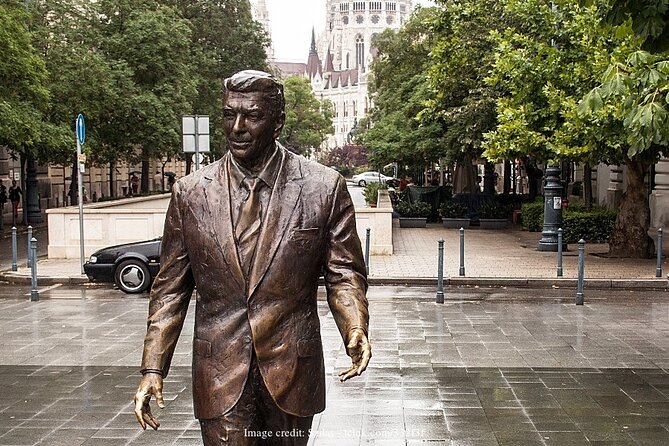
You’ll also stop for monuments and squares tied to the past, including Ronald Reagan in Liberty Square. That statue detail may sound surprising at first, but it’s exactly the kind of memory-marker you learn to pay attention to on this tour. Public monuments don’t just reflect history. They reflect choices about what a society wants to remember and how.
This portion runs about an hour, and it’s mostly walking plus discussion. That means you’ll have time to look around rather than speed through. It’s also one of the best parts for photos, because the streets and façades are the kind you can frame in a dozen different ways while your guide keeps the political context connected.
Falk Miksa Street and the Columbo statue moment
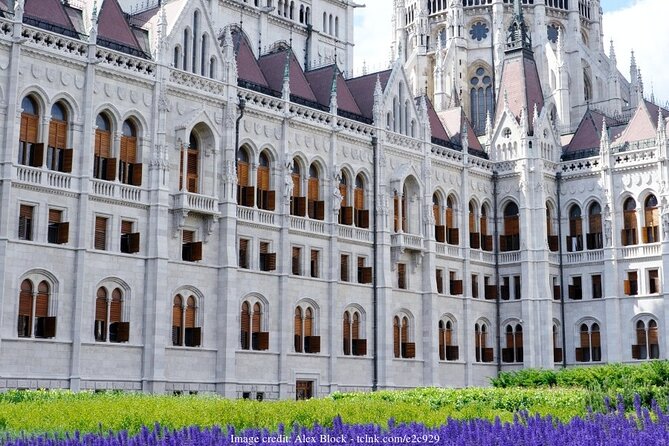
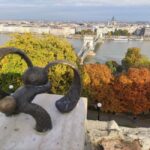
One of the most memorable details in the route is a stop along Falk Miksa Street. Here you’ll see an unlikely statue of Columbo, the fictional LAPD detective known for his scruffy look and stubborn drive for the truth.
Now, here’s why this matters in a political-history tour. The statue works like a clue about cultural life. It hints at how ideas, entertainment, and foreign references show up in public space, even when politics is tight and controlled. It’s not just a funny photo stop. It’s a visual reminder that people experience history through everyday symbols too.
If you like tours that keep you alert, this is where you’ll perk up. It breaks up the heavy topics with something unusual, but it doesn’t feel random. Your guide connects it back to the bigger story so it doesn’t become a distraction.
Kossuth Lajos Square: the Parliament building as a political stage
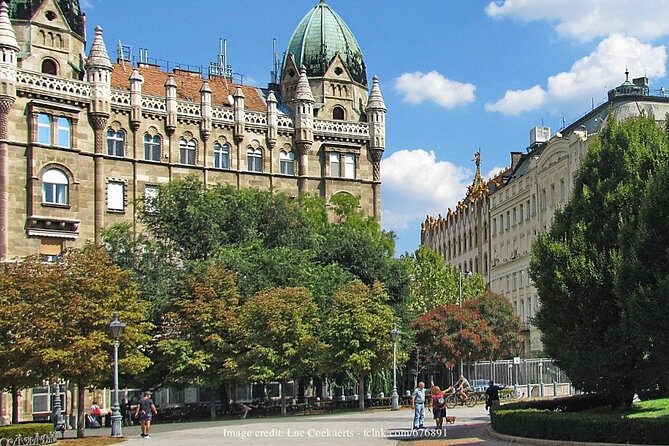
Next comes a big visual payoff at Kossuth Lajos Square, where you’ll see the impressive Neo-Gothic Parliament building. From here, the tour shifts from street-level symbolism to the kind of architecture that declares authority and national identity.
Your guide helps set the political backdrop, including how the story reaches toward the present-day national assembly. Even when you’re just standing outside, it’s a place where you can feel the role of institutions in public life.
You’ll also get a short stop connected to the Hungarian Parliament Visitor Centre. Admission to the visitor centre itself is not included, and your time at this point is about 15 minutes. So think of it as a focused exterior-and-explanation moment rather than a long museum detour.
This short stop still adds value. It helps you connect what you saw earlier about repression and resistance to the institutions that came later, and to the idea of governance after Communism’s rise and fall.
You can also read our reviews of more museum experiences in Budapest





Finishing at the House of Terror Museum: plan for emotional weight
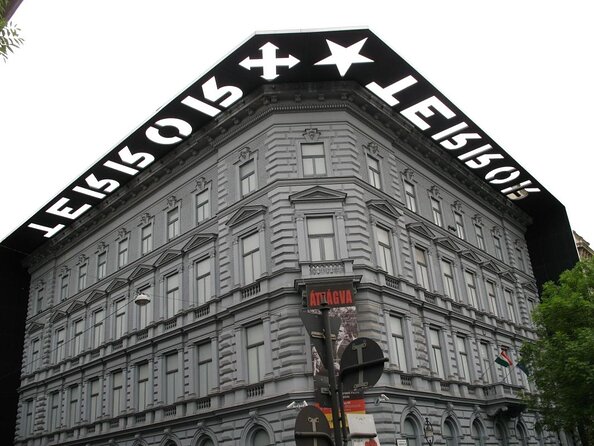
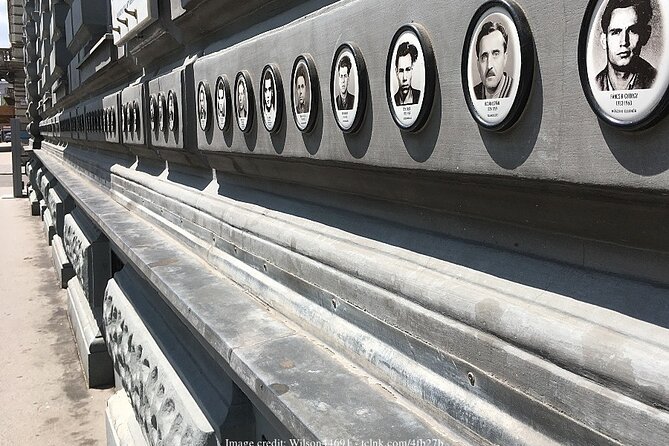
The day ends at the House of Terror Museum on Andrássy út 60, 1062. This is the heart of the tour and, frankly, the heaviest stop.
The House of Terror is a memorial to victims of the past: people detained, tortured, and killed inside the building. The museum exhibits focus on the fascist and communist regimes of 20th-century Hungary. Entrance is included, and your guide provides you the tickets.
The time you’ll get with your guide here is about 30 minutes. After that, your tour finishes, and you can explore the museum at your own leisure using the entrance tickets your guide hands over.
How to get the most out of it? Go in with your expectations adjusted. This isn’t a quick “see and move on” museum. Even if you don’t read every label, you’ll likely want a slower pace than you would at a lighter attraction. If you’re sensitive to grim material, give yourself room to breathe between rooms.
This stop is also where the whole tour clicks. After walking through squares and streets tied to political memory, you’ll have a clearer sense of why the museum exists and why this specific building is still treated as a memorial space.
Price and logistics: what $180 gets you
At $180 per person, this tour isn’t a bargain-basement option. But it does include the big-ticket element that many walking tours skip: House of Terror museum entrance plus the guidance needed to connect the sites to the political story.
For value, the private format matters. It’s only your group, so your guide can control pacing based on your interests. That can be especially important for a history-focused experience where you might want more time at one stop or a clearer explanation at another.
Logistically, it’s fairly simple. You start at Bem József tér and finish at the House of Terror. No hotel pickup or drop-off is included, and transportation during the tour is not included either. Still, the tour is near public transportation, so you can arrive without a complicated plan.
In other words, you’re paying for a guided walking route with museum access. If you like history that’s anchored to real places (and you’re okay with ending at a difficult museum), the price can feel fair. If you want a purely scenic walk with no heavy themes, you may find the ending not worth the cost for you.
Timing and how the 3 hours works in real life
The tour is about 3 hours. That’s enough time to cover several major stops without feeling like you’re sprinting through Budapest.
Because the route includes exterior time at major squares and a short guided period inside the museum, you should expect some mix of standing, walking, and reading context from your guide. The pace is manageable for a moderate fitness level, but it’s still a walking tour. Comfortable shoes are not optional.
Also, keep in mind the tour ends at the House of Terror. That’s convenient if you want to keep exploring on your own right after the guided portion. It’s less convenient if you were planning to relocate immediately after the tour with no nearby plan. Since the finish is at the museum itself, you can decide on the spot how long you want to stay.
Who this tour is best for
This one fits best if you want history you can see.
You’ll likely enjoy it if you:
- want political history connected to Budapest landmarks like Bem József Memorial Square and the Parliament area
- like walking tours where a guide explains what you’re looking at, not just where to stand for photos
- want the House of Terror in a guided context rather than wandering in cold
It may not be the best match if you:
- want only light, scenic stops and dislike emotionally intense museums
- prefer a longer museum experience with detailed guided time throughout (this one includes entrance and guided time, but not a full-length guided walkthrough)
It’s a private-group format, so it’s also well-suited for couples, small friend groups, or families who want fewer people and more flexibility.
Should you book this Communism in Budapest tour?
If your goal is to understand how Hungary’s 20th-century political turning points show up in the city itself, I’d say this is a strong booking. The route is structured around meaningful stops, and the combination of street-level scenes, major squares, and the House of Terror gives the story a clear beginning, middle, and heavy finale.
The biggest reason to book is simple: it pairs walking context with museum access. You leave with more than photos. You leave with a map in your head for what you just saw.
The main reason to skip is also simple: if you know you don’t want to spend part of your afternoon in a memorial space with exhibits about detention, torture, and killings, then don’t force it. You’ll enjoy Budapest more when your day matches your comfort level.
FAQ
FAQ
How long is the private walking tour?
It runs for about 3 hours.
Where does the tour start and end?
It starts at Bem József tér 2, 1027, Budapest, and ends at the House of Terror Museum on Andrássy út 60, 1062, Budapest.
What is the main focus of the tour?
The tour covers Hungary’s political history, from Nazi Occupation through the rise and fall of Communism, and toward the birth of democracy.
Is the House of Terror Museum ticket included?
Yes. Entrance to the House of Terror Museum is included, and your guide provides your entrance tickets.
Is the Hungarian Parliament Visitor Centre admission included?
No. The Parliament Visitor Centre admission is not included.
Do I need to arrange transportation during the tour?
No. Transportation throughout the tour is not included. The tour is near public transportation, though.
Is this a private tour?
Yes. It’s a private tour/activity, and only your group participates.
What’s the fitness level like?
You need a moderate physical fitness level, since it’s a walking tour.
Do I get a mobile ticket?
Yes. The experience includes a mobile ticket.
Is there free cancellation?
Yes. You can cancel for a full refund up to 24 hours in advance.