REVIEW · FOOD
Budapest: Private Food Tour – 10 Tastings with Locals
Book on GetYourGuide →Operated by Withlocals · Bookable on GetYourGuide
Budapest tastes better with local stories. In just 3 hours, you’ll sample 10 tastings of savory, sweet, and drinks while stopping at major spots like the Great Market Hall and the Jewish Quarter, with food that feels unmistakably Hungarian. One consideration: if you’re in town on a Sunday, some food places may be closed, so your guide may have to adjust where you eat.
The tour’s best value is how it ties dishes to place and culture. I like the way you’re not just ordering food; you’re learning why things taste the way they do, from sour cream habits to paprika styles, all while walking short stretches between stops.
You’ll also want to plan for walking. This experience isn’t suitable for mobility impairments or wheelchair users, and comfortable shoes matter because you’ll be on your feet for most of the tour.
In This Review
- Key points to know before you go
- A smart way to eat your way through Budapest in 3 hours
- Starting at Great Market Hall: where Hungarian food starts to make sense
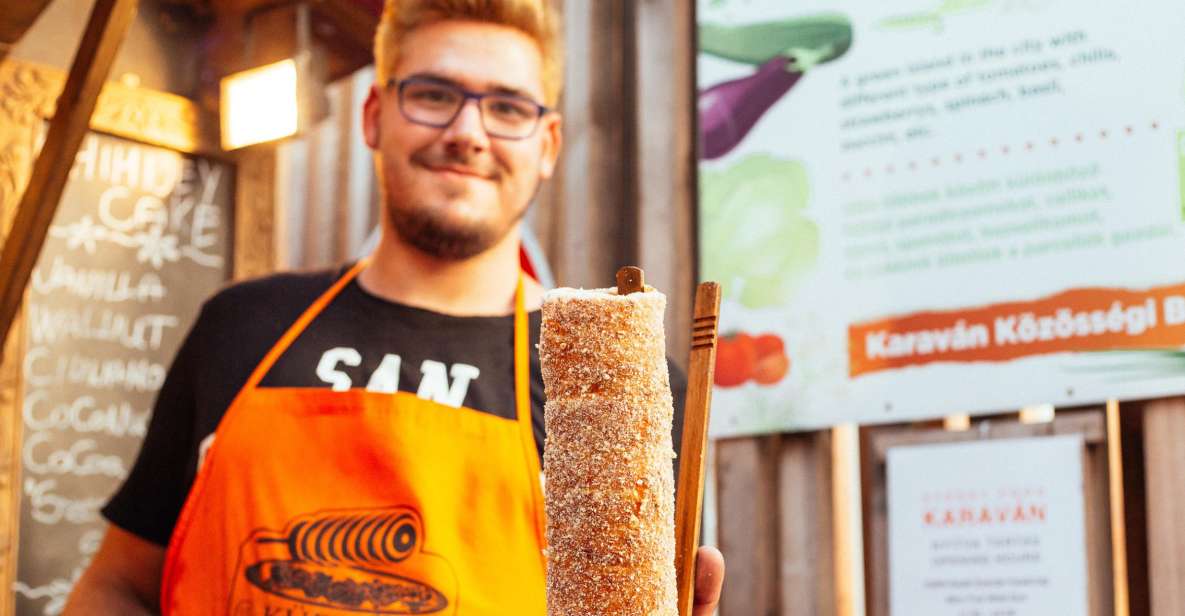
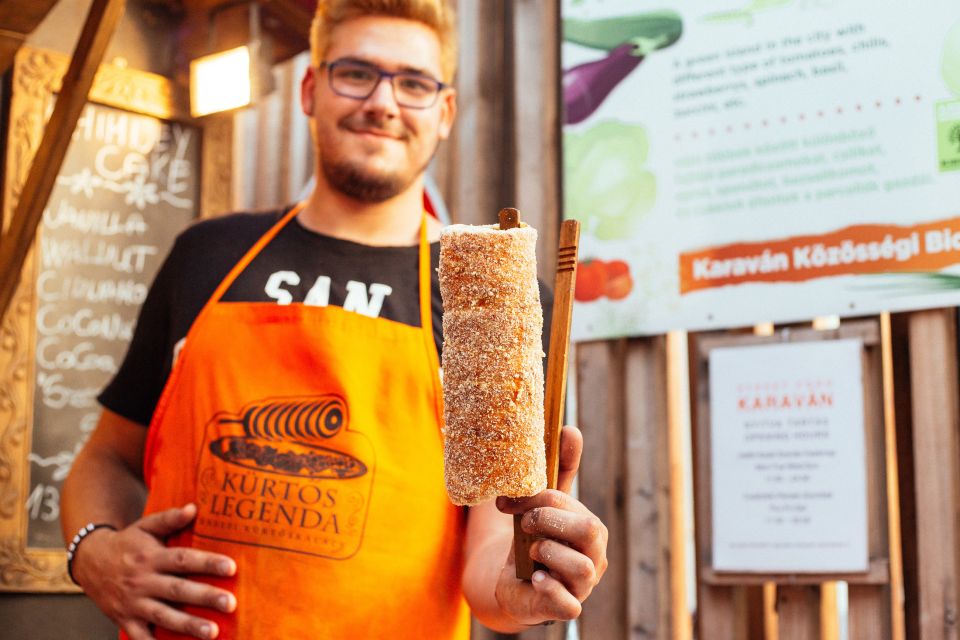
- Lángos and chimney cake: Hungary’s street-food icons, explained by the way they’re made
- Jewish Quarter walking + the Great Synagogue area: food steps with city context
- Szimpla Kert: the ruin-bar stop that turns your break into a scene
- Pastry finale: tunnel cake and the reason your stomach feels smug
- Vegetarian options: how the menu adapts when you tell your guide early
- Price and value: what $206 buys in real eating time
- Logistics that matter: footwear, mobility limits, and finding your guide
- Who should book this tour, and who might not
- Should you book it?
- FAQ
- What’s included in the Budapest private food tour?
- How many tastings do you get, and how long is the tour?
- Is the tour private or group-based?
- Where do I meet the guide?
- Is the tour offered in English?
- Do they offer vegetarian options?
- Is this tour suitable for wheelchair users or limited mobility?
- What should I bring?
- Is hotel pickup included?
- FAQ
- What’s the cancellation policy?
- Can I book now and pay later?
Key points to know before you go
- 10 tastings in 3 hours: a fast, satisfying hit of Hungarian flavors without feeling like a marathon
- Great Market Hall meeting point: the tour starts at a clear landmark, then builds from there
- Classic street food included: chimney cake and lángos show up for a reason
- City highlights between bites: you’ll pair food with sights like Szimpla Kert and the Great Synagogue area
- Vegetarian menu adapts: tell your guide at the start and they’ll adjust the tastings
- Private group pacing: you can move at the right speed and ask questions freely
A smart way to eat your way through Budapest in 3 hours
Budapest has a lot going on. This tour is designed for people who want real food, not just photos of food. With 10 tastings packed into a short time, you get enough variety to understand what Hungarian cuisine tastes like at street level and in everyday meals.
The private format also helps. You’re not fighting for attention in a crowd, and your guide can steer you toward the right bits based on your interests and dietary needs. The best tours like this do one thing well: they keep the pace easy while still feeling like you’re doing something meaningful.
One reason I think this works so well is the balance. You’ll get savory and sweet, but also drinks, so the tour lands like a mini-course on local eating habits rather than a “snack tour.”
You can also read our reviews of more food & drink experiences in Budapest


Starting at Great Market Hall: where Hungarian food starts to make sense
You meet outside the entrance of the Great Hall Market (Great Market Hall). That matters because it sets the tone immediately: this is a tour rooted in how people actually buy and talk about food.
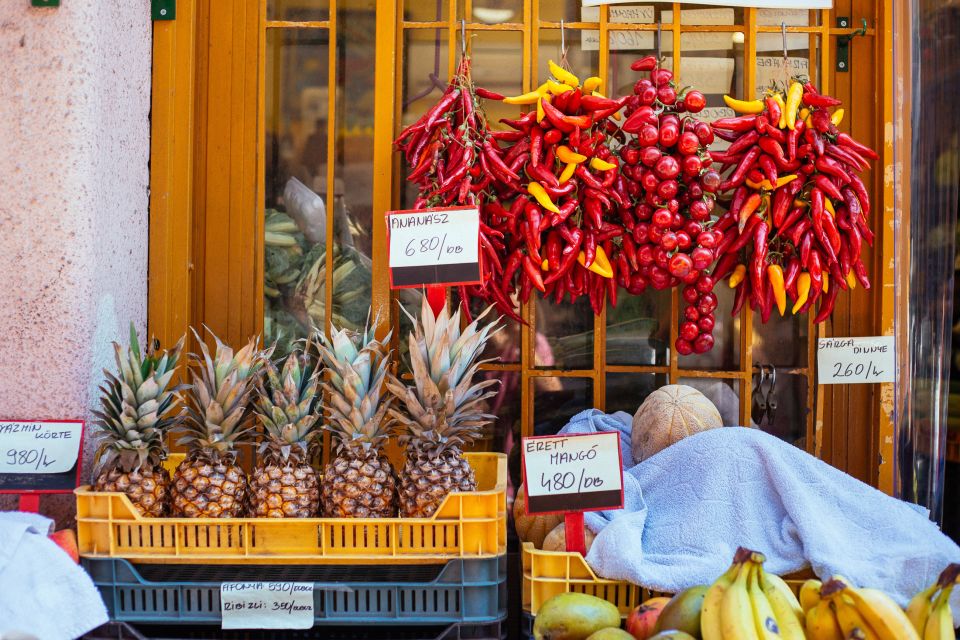
From here, expect a quick orientation and a guided walk that connects ingredients to flavor. You’ll likely see the market as more than a tourist stop. It’s the kind of place where you can understand why paprika is a big deal, how sour cream shows up again and again, and why dishes often taste comforting rather than fancy.
One of the most useful takeaways you can get on this kind of tour is how to interpret flavors. For example, paprika in Hungary isn’t just one thing. You’ll hear that paprika varies in style, and that ranges from hot to smoky to sweet, which changes the personality of goulash, sauces, and stews. Once you know that, you’ll recognize what you’re eating much faster after the tour.
Practical note: market areas can be busy. If you’re the type who likes to reduce stress, arrive a few minutes early and stand where you can be seen clearly from the entrance area.
Lángos and chimney cake: Hungary’s street-food icons, explained by the way they’re made
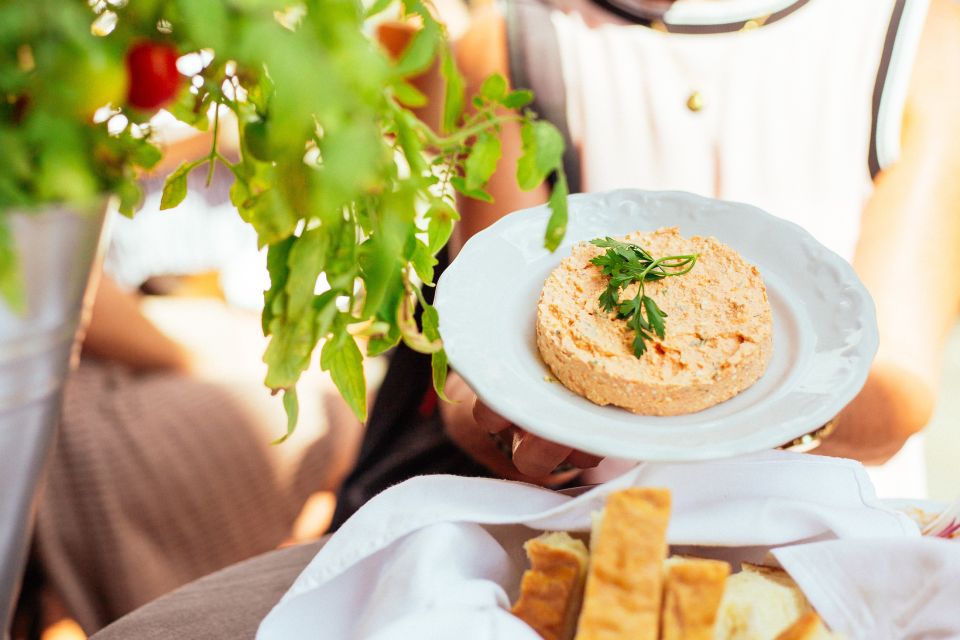
Two of the tour’s signature classic tastings are lángos and chimney cake. These aren’t random “famous foods.” They show up in Budapest street life for a reason: they’re simple, handheld, and deeply tied to how the city snacks.
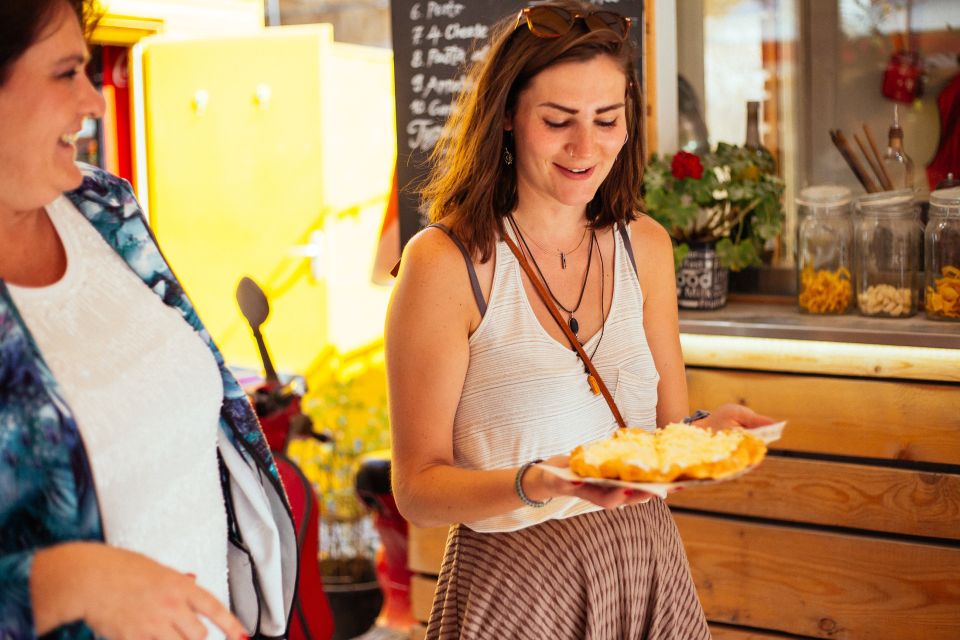
Lángos is the kind of food that instantly teaches you something about texture. It’s usually hot and fried, which is why you’ll taste that contrast between crisp outside and tender inside. What makes it Hungarian isn’t just the frying technique; it’s the toppings and the overall flavor direction your guide helps you connect to local preferences. Even if you’ve had lángos before elsewhere, Budapest tends to feel more grounded in everyday comfort.
Chimney cake (often associated with a spiral shape and a sweet or sometimes cinnamon-forward finish) is similar in spirit: it’s made for people walking, not sitting at a table. On this tour, the point isn’t only eating something iconic. It’s learning why it’s a go-to treat and how guides steer you toward the authentic versions you’ll actually want to remember.
If you have a sweet tooth, plan to pace yourself. Ten tastings sounds like a lot, and it is, so leave a little room in your stomach for the tour’s later sugar moment.
Jewish Quarter walking + the Great Synagogue area: food steps with city context
The route includes the Jewish Quarter and a stop near the Great Synagogue area. This is where the tour earns its “it’s not just food” promise.
Even when the walking is short, your guide can give you a sense of how neighborhoods evolved. You’ll connect food choices to the rhythm of the area—where people ate, what was available, and how culture shaped daily life. The walking part matters because it helps you understand why you’re seeing what you’re seeing, instead of treating landmarks like separate sightseeing tickets.
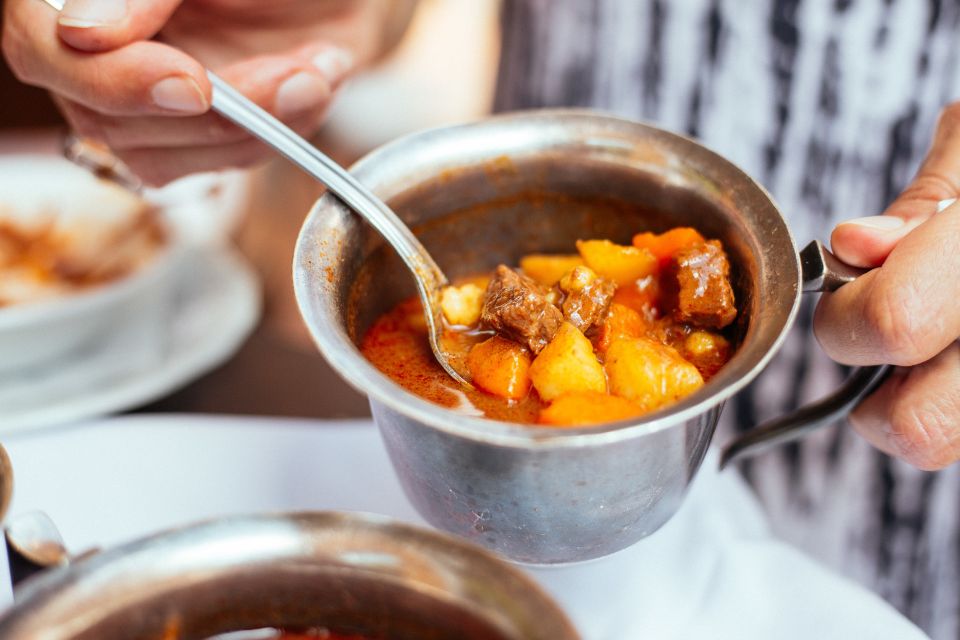
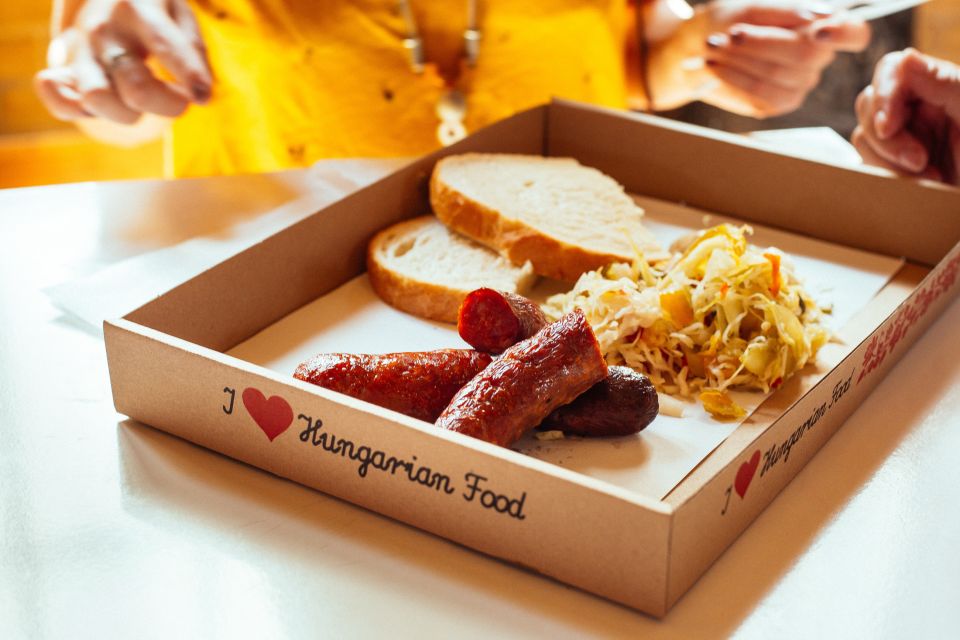
This is also a likely segment for some of the heartier items. One version of the experience includes an outside food court moment in the area with mici (those grilled minced-meat rolls). If that’s on your schedule, it’s a good contrast to fried street snacks and pastry later on. It tastes substantial enough to anchor the tour, so you don’t just bounce between sweet and fried.
A bonus: guides often use this neighborhood stretch to share historical context in a way that sticks. Names like Nick and Tibi (heard through the guide roster) are often described as strong at blending Budapest history with what you’re eating, which is exactly how you want a walking tour to feel.
Szimpla Kert: the ruin-bar stop that turns your break into a scene
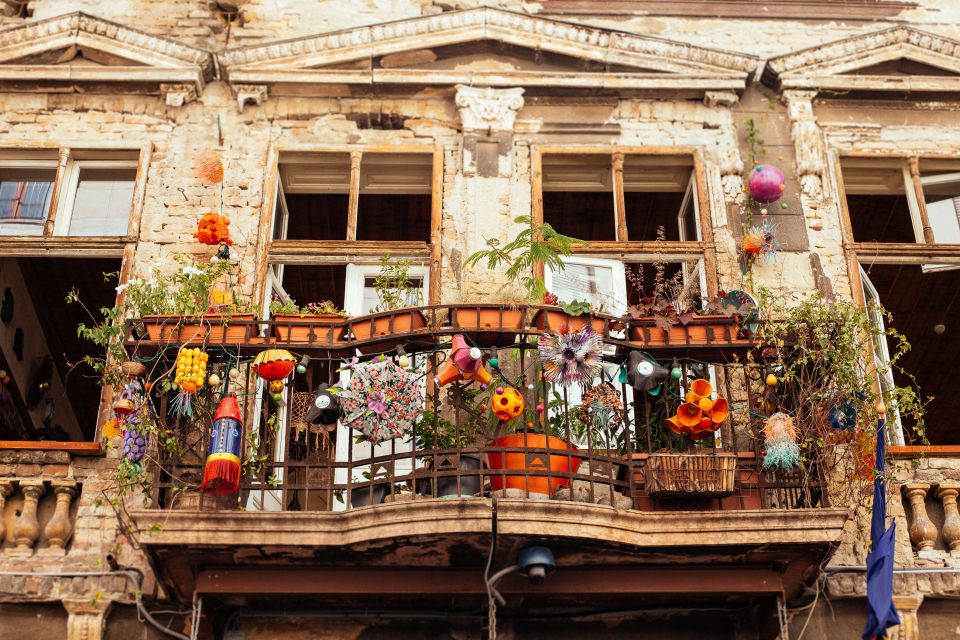
At some point, you’ll make it to Szimpla Kert, one of Budapest’s most famous ruin-bar settings. The tour doesn’t just toss you into a cool-looking place. It uses the stop as a reset—food continues, but you also get a real sense of Budapest atmosphere.
A ruin bar is a specific kind of city culture, and Szimpla is one of the big names. If you’ve never been to one, the first thing you’ll notice is that it feels like a living space built from the past. It’s not a museum look; it’s a social look.
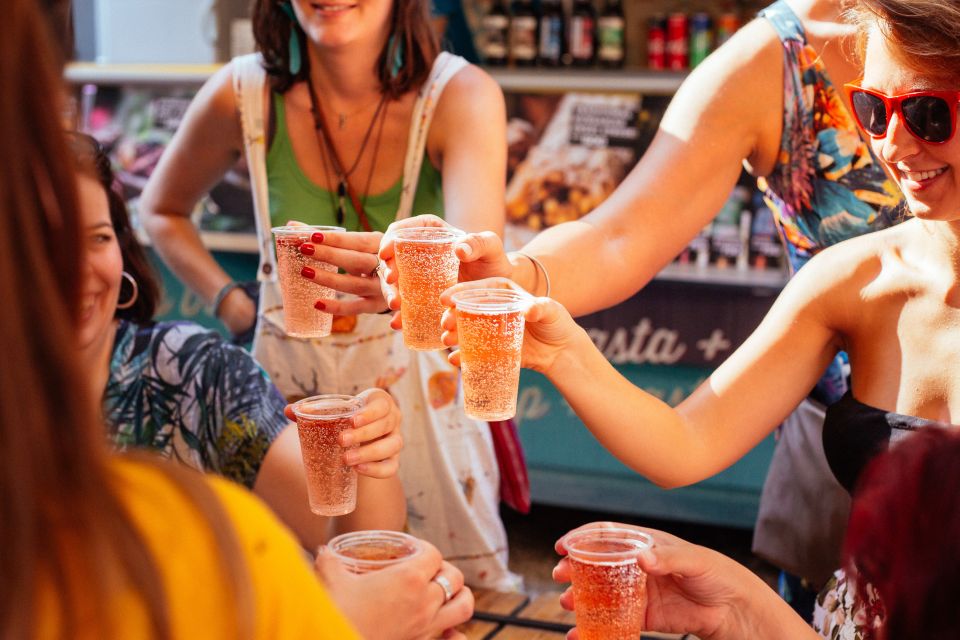
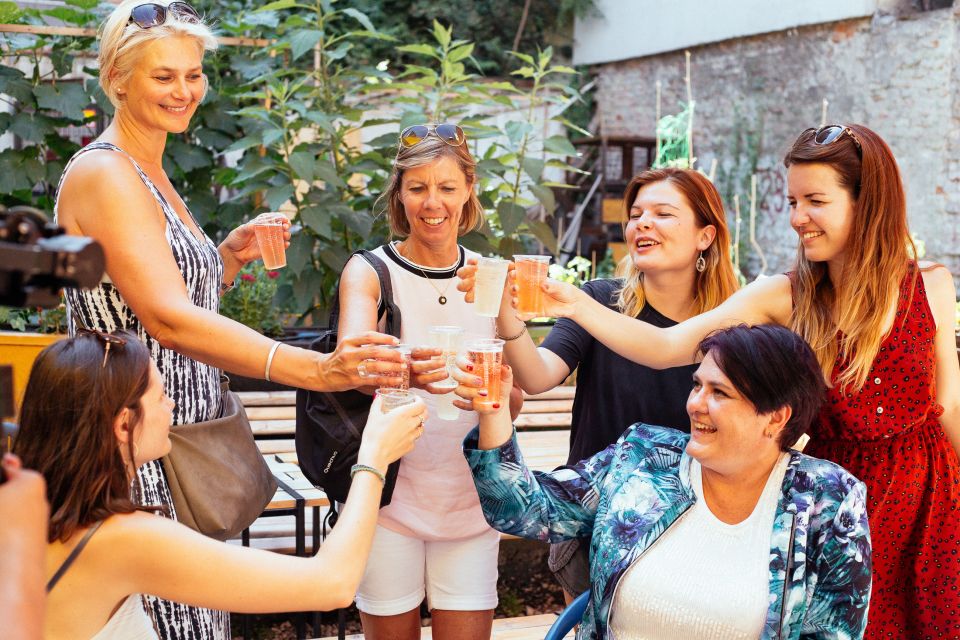
This stop typically includes a drink tasting element. And that’s smart, because Hungarian cuisine often leans on comforting flavors that drink pairings can balance. If beer or other local beverages are part of your tastings, this is where the tour’s pace becomes more relaxed, which makes the later sweet portion feel earned rather than forced.
You can also read our reviews of more tours and experiences in Budapest





Pastry finale: tunnel cake and the reason your stomach feels smug
By the time you reach the pastry stop, you’ll likely be ready for a sweet finish that feels unmistakably Hungarian. One common highlight is tunnel cake—often sold in shops that look made for grabbing a treat and continuing your walk.
This is the part where the tour turns into a full-circle street-snack story. You started with fried and savory comfort, and you end with a pastry that’s basically designed for pleasure. It’s also a great time to slow down for a minute, take a photo, and let your guide wrap up what you’ve learned about Hungarian flavors.
Don’t underestimate how full you’ll feel by the end. With 10 tastings across multiple styles (savory, sweet, drinks), the tour is built to leave you satisfied, not just curious.
Vegetarian options: how the menu adapts when you tell your guide early
If you eat vegetarian, you’re not stuck watching everyone else eat. Vegetarian alternatives are included, and the key is simple: tell your guide at the beginning and they’ll adapt the tastings.
What I like about this approach is that it keeps the tour honest. You don’t want a token substitute that tastes random or secondhand. The tour’s model—selecting items that are typical and chosen by the local guide—means you’re more likely to get a coherent food experience rather than a salad and a shrug.
If you have stricter preferences, be explicit in plain language before you start (for example, whether you eat eggs/dairy). The tour data specifically says they adapt based on what you tell them, so you’ll get the best result by being clear early.
Price and value: what $206 buys in real eating time
At $206 per person for about 3 hours, this isn’t a bargain bargain. But it also isn’t overpriced for what you’re getting.
Here’s how I think about value on tours like this:
- You’re paying for access to local spots and a guide who can match you with the right tastings.
- You’re paying for convenience. Ten tastings across multiple neighborhoods saves you from planning your own food crawl and hunting down the best versions.
- You’re paying for pacing. Food tours work best when the guide keeps you from wasting time waiting, walking the wrong way, or missing busy windows.
If you compare it to booking tastings one by one on your own, the guide’s selection and the grouped timing start to make sense. You’ll get enough variety that you’re not just paying for one meal—you’re buying a slice of Budapest food culture in a concentrated timeframe.
For solo travelers, couples, and small groups, the private format can feel especially worth it because the guide can tailor attention. For big groups, private pacing helps a lot because everyone experiences the stops together without being split into “your turn” lines.
Logistics that matter: footwear, mobility limits, and finding your guide
Bring comfortable shoes. This is a walking-based experience, and while the tour is only three hours, it still adds up. If you’re the type who gets sore feet quickly, treat this as city-walking, not museum-strolling.
Mobility is another practical piece. The tour is not suitable for wheelchair users or people with mobility impairments. If that applies to you, it’s better to look for a seated option or a shorter, more accessible food arrangement.
Finding your guide at the start can also be a small variable. The meeting point is outside the entrance of Great Hall Market, but in at least one described situation, the guide wasn’t easy to spot immediately. My advice: stand at the entrance area and have your voucher info ready so you can contact the operator quickly if needed.
Who should book this tour, and who might not
I’d point you toward this tour if you:
- Want Hungarian classics like chimney cake and lángos, plus local dishes and drinks
- Prefer a structured food experience rather than planning a crawl on your own
- Like learning how food connects to neighborhood and culture
- Want a private, English-speaking guide with vegetarian alternatives available
I’d suggest skipping or rethinking it if you:
- Need wheelchair access or have mobility limitations that make walking difficult
- Are only interested in one specific category of food (like only pastry or only meat), because you’ll get a balanced spread instead
If you’re visiting on a Sunday, I’d treat it as an extra reason to ask your guide about which places will be open. There’s evidence that some restaurants, including parts associated with the Great Market Hall area, may be closed on Sundays, which can make your tasting lineup more limited.
Should you book it?
Book this private Budapest food tour if you want a high-return way to taste a wide slice of Hungarian cuisine while also picking up meaningful city context. The strongest part is the combination: 10 tastings plus short landmark stops like Great Market Hall, the Great Synagogue area, and Szimpla Kert, guided by people who connect dishes to how Budapest lives.
Skip it if walking is tough for you, or if you’re the type who hates adjusting plans on the fly. And if your schedule lands on a Sunday, go in with flexibility, because your guide may have to shift where you eat so the tour still works.
If you want Budapest food in one easy afternoon, this is a solid bet.
FAQ
What’s included in the Budapest private food tour?
The tour includes a local guide and 10 food and drink tastings. A vegetarian option is available.
How many tastings do you get, and how long is the tour?
You get 10 tastings, and the tour lasts 3 hours.
Is the tour private or group-based?
It’s a private group tour.
Where do I meet the guide?
You meet your host outside the entrance of the Great Hall Market.
Is the tour offered in English?
Yes, the live tour guide speaks English.
Do they offer vegetarian options?
Yes. Vegetarian alternatives are available. Let your local guide know at the beginning so the tastings can be adapted.
Is this tour suitable for wheelchair users or limited mobility?
No. It’s not suitable for people with mobility impairments or for wheelchair users.
What should I bring?
Bring comfortable shoes.
Is hotel pickup included?
No. Hotel pickup and drop-off are not included.
FAQ
What’s the cancellation policy?
Free cancellation is available up to 24 hours in advance for a full refund.
Can I book now and pay later?
Yes. You can reserve now & pay later, keeping travel plans flexible.