Budapest walls talk if you slow down. This unusual street art tour in District VII turns graffiti and murals into something you can actually read, with ET guiding you through the meaning behind what’s painted (and pasted) across thin city streets. I especially like the focus on street art messaging, not just photos, and the way the pace stays slow enough to notice details most people miss.
One thing to consider: it’s a 2-hour, mostly walking experience, so you’ll want comfortable shoes and a willingness to stand, look, and talk as you interpret the artwork.
In This Review
- Key highlights at a glance
- Street Art in District VII: What You’ll Actually Notice on the Walls
- What makes it feel authentic
- Start at Telep-Art Galéria Budapest, Finish at Szimpla Kert
- The 2-Hour Walk: How ET Guides You Through Murals, Stickers, and Street-Level Messages
- Different art forms you may spot
- Why “Message First” Street Art Makes Budapest Feel Different
- A useful mindset for your own viewing
- Pace, Group Size, and Comfort Rules That Matter
- Language and ticket type
- Price and Value: Is $36.20 Worth It?
- Who Should Book This Budapest Street Art Alternative Tour
- Should You Book This One?
- FAQ
- FAQ
- How long is the Street Art and Alternative Tour in Budapest?
- What is the price per person?
- Is the tour offered in English?
- Where do I meet the guide?
- Where does the tour end?
- How big is the group?
- Do I need a printed ticket?
- Are service animals allowed?
- Can I cancel and get a full refund?
Key highlights at a glance
- Small group, big attention: capped at 8 travelers for real back-and-forth questions
- Meaning over decoration: murals and stickers explained through context and intent
- A slow walk on thin streets: the route is designed for spotting artwork you’d normally pass
- Multiple street art mediums: you’ll encounter different kinds, including stickers and wall pieces
- English-guided throughout: offered in English with a mobile ticket for easy entry
Street Art in District VII: What You’ll Actually Notice on the Walls
If you’ve only seen Budapest from the main sights, this is a different way in. The whole point is to train your eyes. Street art is often treated like background noise, but on this tour you learn how to read it as communication—sometimes political, sometimes personal, sometimes just sharp social commentary.
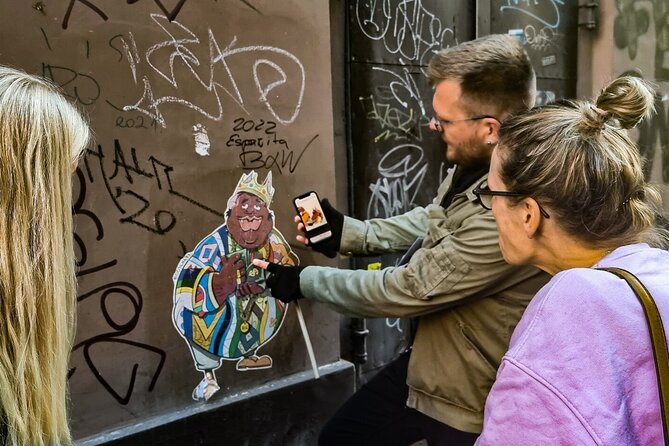
ET’s style is built around the idea that art isn’t one-size-fits-all. The walk tends to include different mediums you might see around Budapest, such as stickers and larger wall works, and even more “object-like” forms the neighborhood displays. You’re not just being shown pretty images—you’re learning why the artist chose the medium, the placement, and the message.
You’ll also get a sense of how the area is shifting. One of the strongest recurring themes from past guests is the way ET ties the artwork to what’s happening around the neighborhood, including the political events and local conditions that shape how artists express themselves. That makes the street art feel grounded in real life, not like a museum exhibit dropped onto a wall.
You can also read our reviews of more tours and experiences in Budapest



What makes it feel authentic
Instead of following a checklist of famous murals, this tour is about seeing the everyday street art people live with. You walk like someone who knows where to look, and by the end you’ll probably start noticing tiny sticker remnants and small stencil bits the next time you’re in town.
Start at Telep-Art Galéria Budapest, Finish at Szimpla Kert
You start at Telep-Art GalériaBudapest, Madách Imre út 8, 1075 Hungary. It’s a solid “launch point” because it signals the theme immediately: this is art with a pulse, not just sightseeing.
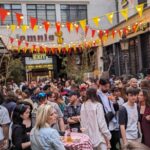
You end at Szimpla Kert, Kazinczy u. 14, 1075 Hungary, which is described as the oldest ruinbar in Budapest and one of the city’s symbols. That’s a smart finish. Ruinbars are part of Budapest’s alternative culture, and arriving there after a street art-focused walk makes the whole experience feel connected instead of random.
Practically, the tour is set up so you’re not stuck wandering for hours on your own. It’s still walking, but the route has a purpose: you’re moving through small streets slowly enough to read what’s on them.
The 2-Hour Walk: How ET Guides You Through Murals, Stickers, and Street-Level Messages
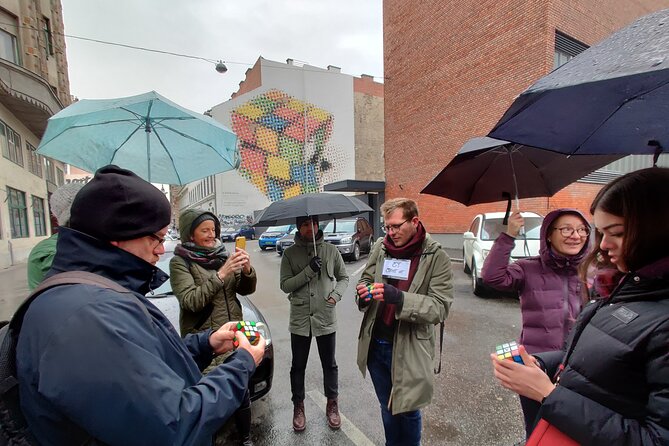
The core of this experience is the slow foot journey from start to finish. There isn’t a rushed “look and go” plan; the walk is deliberately paced so you can stop often and actually take in what you’re seeing. In the tour format, ET shows you many pieces while you’re moving through the neighborhood, on those thin streets where the most interesting work tends to hide in plain sight.
Here’s what you can expect from the walking rhythm:
- Stop and look
ET points out street art you might otherwise overlook, including smaller details that get missed when you’re only sightseeing quickly.
- Decode the message
You’ll learn the meaning behind the murals and other art forms, with the explanation grounded in the context of what influenced the artists. This is where the tour becomes more than scenery.
- Notice patterns across styles
Even when the art looks totally different from one wall to the next, ET helps you connect the dots. Guests consistently describe this as a tour that changes how they see the city afterward—because it teaches you the habits of attention.
- Talk while you walk
Expect an interactive feel. The group dynamic can vary (mixed ages and backgrounds are common), but ET leans into discussion rather than a one-sided lecture. If you like asking questions, this tour rewards you for it.
Different art forms you may spot
Based on what past participants describe, you might come across:
- Stickers and smaller street pieces that act like quick messages
- Smart-art images and other graphic styles that carry political or social themes
- Large wall works that force you to slow down
- Even bronze sculpture-like street pieces, when they appear along the route
Because the tour is structured as a walk through real streets, not a single curated wall of famous art, what you see can depend on timing and what’s been put up (or survived) in the neighborhood.






Why “Message First” Street Art Makes Budapest Feel Different
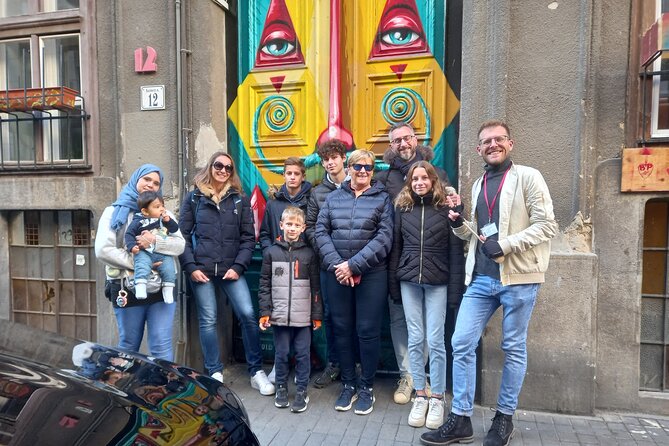
Plenty of city street art tours show you visuals. This one focuses on meaning—why the artwork exists and what it’s trying to say. That may sound heavy on paper, but in practice it’s what makes the experience memorable.
From the guest feedback, you can expect ET to frame pieces through the lens of local politics and historical influences on artists. This is why people who love creative work (and people who like politics, social issues, or both) tend to have a great time here. The tour helps you connect the artwork to the world that produced it.
At the same time, it’s not all doom-and-gloom. Guests highlight the way the conversation feels welcoming and how ET tries to create a comfortable atmosphere for everyone in the group. The overall vibe is curious and human: you’re learning to interpret, not being told what to think.
A useful mindset for your own viewing
As you walk, try to ask yourself two quick questions:
- Who is speaking here, and who are they trying to reach?
- What changed in the neighborhood or society that would make this artwork matter?
ET’s explanations give you handles for those questions, and soon you’ll start noticing the tone shift between pieces—some are confrontational, some are playful, some are blunt. That variety is part of the point: street art isn’t one style, it’s a whole language.
Pace, Group Size, and Comfort Rules That Matter
This is capped at a maximum of 8 travelers, which is rare for this kind of themed walking tour. That small number isn’t just a “nice to have.” It changes how the experience plays out: you get time to ask questions, you hear answers without the guide having to repeat everything, and you’re more likely to keep up during the slow street-stops.
The tour lasts about 2 hours, and you should assume it will include frequent pauses. You’ll also want to pay attention to the wording from the experience itself: you walk slowly on thin streets, with lots of artwork shown along the way. So the tour is best for people who enjoy being out, not people who want a quick photo walk.
Good news: it’s described as suitable for most travelers. Past guests also specifically mention that it works for families and people of different ages, with the key idea being that art speaks across age groups.
Language and ticket type
The tour is offered in English and uses a mobile ticket. That’s practical if you want to avoid extra paper and keep your meetup smooth.
Price and Value: Is $36.20 Worth It?
At $36.20 per person for roughly 2 hours, you’re paying for three things you don’t always get on budget tours: a small group size, a guide who actively interprets the art, and a walk designed around attention (not speed).
Here’s how I’d judge the value:
- If you want a basic sightseeing loop, you can find cheaper walks.
- If you want a guided way to understand street art messages—murals, stickers, and other forms tied to local context—then the price starts to make sense.
- The capped group size matters because it turns the tour into a conversation. You’re not just receiving information, you’re discussing it.
And because it’s booked about 25 days in advance on average, it’s clearly something people plan for, not an afterthought. For a themed tour, that’s a good sign.
Who Should Book This Budapest Street Art Alternative Tour
Book this if you:
- Like street art as communication, not just decoration
- Want to see Budapest from a local’s perspective in District VII
- Enjoy political or social themes in art
- Prefer walking at a steady, slow pace with stops and discussion
- Want a tour that works across different ages and interests
It also fits solo travelers who enjoy meeting a small mixed group. Several past guests mentioned varied nationalities and life experiences in their group, and ET seems to encourage that kind of interaction.
Where it may not fit:
- If you strongly dislike walking or standing still to read explanations
- If you only want famous, postcard-style murals without interpretation
- If you prefer silent tours where you don’t talk or ask questions
Should You Book This One?
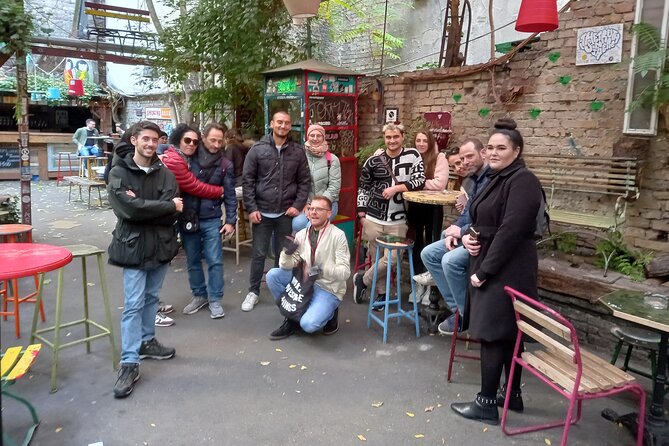
Yes, I’d book it if you want a different Budapest experience—one that trains your eyes and changes how you look at street walls after the tour ends. The combination of a slow on-foot route, small group size (max 8), and ET’s focus on what the artwork means makes it feel worth your time, even if you’re only in town for a short stay.
If you’re unsure, here’s the quick test: do you enjoy asking what something is saying? If the answer is yes, you’ll probably have a great afternoon here.
FAQ
FAQ
How long is the Street Art and Alternative Tour in Budapest?
The tour lasts about 2 hours.
What is the price per person?
The price is $36.20 per person.
Is the tour offered in English?
Yes, it’s offered in English.
Where do I meet the guide?
The tour starts at Telep-Art GalériaBudapest, Madách Imre út 8, 1075 Hungary.
Where does the tour end?
The tour ends at Szimpla Kert, Kazinczy u. 14, 1075 Hungary.
How big is the group?
The group is capped at a maximum of 8 travelers.
Do I need a printed ticket?
No. The tour uses a mobile ticket.
Are service animals allowed?
Yes, service animals are allowed.
Can I cancel and get a full refund?
Free cancellation is available up to 24 hours in advance for a full refund.