Budapest can feel like a puzzle at first, but this tour helps you solve it fast. You get a Spanish-led route packed with big landmarks and strong context, from Hungary’s early story to myths, empires, and world wars. I really liked the way Rafa keeps things fun and clear, and I also appreciated that you’re guided through both famous sights and the meaning behind them, not just a photo stop line.
The main thing to note: it’s a packed circuit with lots of walking, and some of the most famous buildings are explained from the outside (like Parliament), so you won’t get every interior you might hope for.
In This Review
- Quick hits before you go
- Meet at Kossuth Lajos tér and get your bearings fast
- Parliament to the big themes: tribes, empire, and world wars (in plain language)
- St. Stephen’s Basilica: what to notice even if you don’t go in
- Andrássy út and the State Opera lobby: grand buildings with real context
- Metro 1 to Heroes’ Square: symbolism you can actually read
- Varosliget Park and the Szechenyi Baths planning question
- Vajdahunyad Castle and Dracula legends: fun learning in a fairytale setting
- Trianon emlékmű and the Lajos Batthyányi Eternal Flame: the tour adds gravity here
- Price and value: why $3.43 can still be a smart buy
- Who should book this Spanish Essential tour
- Should you book Free Tours Budapest Essential in Spanish?
- FAQ
- What language is the tour in?
- How long is the Free Tour Budapest Essential?
- Where does the tour start and end?
- Do you enter the Hungarian Parliament Building?
- Do you enter St. Stephen’s Basilica?
- What about the Opera House?
- Are there any admission tickets included?
- Is the metro ticket included in what I pay?
- What should I bring for the hot springs topic?
Quick hits before you go
- Spanish guide with a lively pace that makes a long day of sightseeing feel manageable
- Parliament, Opera, and the Metro 1 ride give you both grand architecture and quick context
- Heroes’ Square symbolism gets explained so it makes sense, not just looks impressive
- City Park + the Szechenyi Baths talk helps you plan your next step with less guesswork
- Vajdahunyad Castle and Dracula legends turn a fairytale setting into a story lesson
- Trianon and the Eternal Flame add weight at the end, so the tour doesn’t stay all light and fun
Meet at Kossuth Lajos tér and get your bearings fast
The tour starts at Kossuth Lajos tér 10 at 10:30 am, right where Budapest’s most dramatic political stage is set. The meeting point is a smart choice because it immediately places you in the city’s power center. From the first moments, the vibe is: you’re here to understand Budapest, not just tick off monuments.
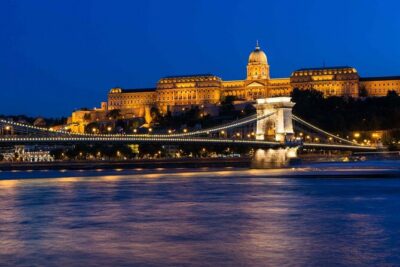
You’ll spend time at the Hungarian Parliament Building, with an explanation of its history and “secrets” from the outside. That matters because it helps you look at the building like a real structure with symbolism and timeline, not like a backdrop for selfies. You also get orientation around Kossuth Lajos Square, which makes it much easier to navigate later on your own.
Practical tip: show up a little early. Meeting groups can take a few minutes to form, and you’ll want to start with the best sightlines before the crowd shifts.
You can also read our reviews of more tours and experiences in Budapest.



Parliament to the big themes: tribes, empire, and world wars (in plain language)
One reason this tour works well for newcomers is that it gives you a framework. You’re not stuck with random facts. You get a guided storyline that touches Hungary’s early 7 tribes, the Austro-Hungarian Empire, and the 1st and 2nd World Wars. It’s the kind of timeline that helps later when you see names on buildings, memorials, and plaques.
I like this approach because it reduces the “Where am I in history?” panic. After this kind of overview, Budapest starts to feel like one connected city rather than separate postcards. You’ll also notice how the guide ties places to eras while you’re walking. That’s what turns geography into meaning.
Possible drawback: if you prefer very slow pacing or lots of interior time, this “big themes” style can feel busy. The tour moves across eras quickly, because the goal is to give you a start point for the rest of your stay.
St. Stephen’s Basilica: what to notice even if you don’t go in
Next up is St. Stephen’s Basilica (Szent István Bazilika). The tour focuses on explaining the building’s history rather than spending time inside. Even if admission isn’t included, you still benefit, because you’ll know what to look for while you stand there.
From the outside approach, the value is in learning the story behind the church’s presence in the city. Without that context, people often treat basilicas like they’re simply impressive stone. With the guide’s explanation, it becomes easier to understand why it matters culturally and historically.
If you’re the kind of person who likes to photograph façades and domes, this stop still delivers. Just don’t expect a full interior visit.
Andrássy út and the State Opera lobby: grand buildings with real context
The tour then shifts to Andrássy út, described as a world heritage site and known for being one of Budapest’s most luxurious avenues. You get part of the walk along this grand stretch, which is perfect for two reasons. First, you can actually see the architectural rhythm of the boulevard. Second, it breaks up the timeline so you’re not only bouncing between monuments and memorials.
After that comes the Hungarian State Opera House (Magyar Állami Operaház). This is one of the stronger value moments because you get to enter the lobby. That’s the right compromise: the tour isn’t trying to sell you extra tickets for everything, yet you still get a sense of the building from the inside where details stand out.
The guide also explains the Opera’s story, and that’s where your photos become more than decoration. You’ll understand why the building feels theatrical even before you step fully into a performance space.
Practical tip: go slow during this stretch. Even when the tour stops for only a short time, Andrássy út rewards patience. It’s one of those places where details matter.
Metro 1 to Heroes’ Square: symbolism you can actually read
One of the most memorable parts is the Metro 1 ride, called out for its historical feel (1896). This isn’t just a transfer. It’s built into the tour so you move through the city the way Budapest wanted to show itself at a different time.
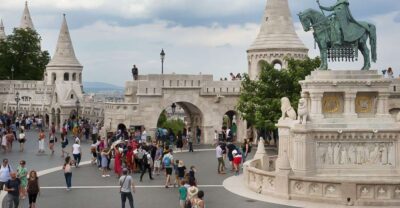
When you arrive at Heroes’ Square, you get the explanation the square deserves. The tour doesn’t treat it as a “big open space with statues.” You’ll be guided through what you’re looking at and how the symbolism works. That changes your whole experience, because the square stops being abstract and turns into a visual language tied to national memory.
I also like that this stop gives you a big-city pause. After walking and then riding transit, you can regroup and take in the scale.



Varosliget Park and the Szechenyi Baths planning question
Now you head into Varosliget (City Park), described as the green lung of Budapest. This is a good mid-tour adjustment. You’re still in sightseeing mode, but the park setting makes the pace feel less heavy and more like a walk with breaks.
Around this area, the tour brings up hot springs, with special attention to Szechenyi Baths. The guide even frames it in practical terms: it’s a place you should plan for, and you might want to bring a swimsuit. The way it’s presented makes sense for a newcomer. You’re being told not only about a famous spot, but also how to think about the experience you’ll have later.
Practical tip: if you want to use your day well, keep a change of plan ready. This part of the tour is basically a nudge to decide quickly whether baths are your next stop.
Vajdahunyad Castle and Dracula legends: fun learning in a fairytale setting
Finishing the core sights brings you to Vajdahunyad Castle, sometimes called Dracula’s Castle. This is where the tour turns playful without losing its meaning. You’ll hear how Dracula legends connect to Budapest in more ways than you’d guess at first glance.
The castle setting also helps. Even if you’re not usually into “myth” tours, this works because the environment makes the storytelling believable. When the architecture looks like it belongs in a storybook, the legends stop feeling random and start feeling like part of Budapest’s identity.
The stop includes time to take in the scene and then you get pushed into the more serious memorial area after. That contrast is a smart ending rhythm: wonder first, then weight.
Trianon emlékmű and the Lajos Batthyányi Eternal Flame: the tour adds gravity here
After the fairytale atmosphere, the tour moves to two memorial stops with included admission: Trianon emlékmű and Lajos Batthyányi Eternal Flame.
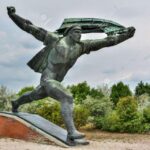
These are the moments where the tour stops acting like an “essentials” highlight reel and becomes more of an education. The guide explains the symbolism of Trianon’s memorial and why it’s controversial. That’s important, because it prepares you to see memorials as arguments and memories, not just stone and dates.
Then there’s the Lajos Batthyányi Eternal Flame, built to commemorate the dead of the 1848 revolution, and the guide explains why it’s so important for the Hungarian population. The eternal flame concept lands even harder when you understand who it honors and what it represents to locals.
Note on pacing: these two stops take longer than a typical “look and go” photo break. Plan for that. They’re the emotional part of the tour, and you’ll likely want a few minutes to absorb what you’re seeing.
Price and value: why $3.43 can still be a smart buy
The listed price is $3.43 per person, and that’s where you need to think about how value works with free tours. With this one, your payment isn’t just a formality. It secures your reservation and also includes a metro ticket. You also get a mobile ticket, so you’re not scrambling for paper.
At the end, you can pay the guide what you think is appropriate based on your satisfaction. That means you’re buying structure, guidance, and context upfront, while the final tip is based on how much the guide earned your trust.
For me, the best value here is the mix:
- major sights you’d otherwise struggle to explain to yourself
- a transit component (Metro 1) that adds story and saves time
- two memorial sites with included admission, which many similar tours either skip or make you pay extra for
Bottom line: this is a strong “first Budapest day” purchase because it helps you organize your future choices.
Who should book this Spanish Essential tour
This tour makes the most sense if you:
- are new to Budapest and want your bearings fast
- prefer a guide who connects buildings to events, myths, and meaning
- like architecture but also want the story behind it
- want a route that covers Parliament, Basilica area, Opera, Heroes’ Square, City Park, Dracula Castle, and memorials without building an itinerary yourself
It also fits well for people who enjoy a lively guide style. In particular, Rafa gets credit for being engaging and for offering strong recommendations for the rest of your stay. That’s the kind of extra that turns a single tour into several better decisions.
Should you book Free Tours Budapest Essential in Spanish?
I’d book it if you want a fast, readable introduction to Budapest with a Spanish-speaking guide and a route that balances big sights, local symbols, and at least two memorial stops where the message sticks. It’s also a good fit if you like practical planning nudges, like thinking about Szechenyi Baths early while you’re already in the City Park area.
Skip it only if you mainly want long interior visits. Parliament and the Basilica are handled from the outside, and the tour is designed to cover many points in limited time. Also, if your schedule is tight and you can’t handle a packed day of walking plus a metro ride, pick a slower, single-neighborhood option instead.
If you’re aiming to understand Budapest quickly and then explore with confidence on your own, this one is a solid starting move.
FAQ
What language is the tour in?
This tour is offered in Spanish.
How long is the Free Tour Budapest Essential?
It runs about 2 hours and 40 minutes.
Where does the tour start and end?
It starts at Kossuth Lajos tér 10, 1055 Hungary, and ends at Vajdahunyad Castle area (Vajdahunyad stny., 1146 Hungary).
Do you enter the Hungarian Parliament Building?
No. The Parliament is explained from the outside.
Do you enter St. Stephen’s Basilica?
The tour explains the basilica’s history, but admission tickets are not included.
What about the Opera House?
You can enter the Opera lobby, and the tour includes that access. The story is explained during the stop.
Are there any admission tickets included?
Yes. Admission tickets are included for Trianon emlékmű and Lajos Batthyányi Eternal Flame.
Is the metro ticket included in what I pay?
Yes. With your payment, you secure your reservation and have the metro ticket included.
What should I bring for the hot springs topic?
The tour specifically suggests bringing a swimsuit for the Szechenyi Baths idea, so pack one if you might want to go after the tour.