REVIEW · WALKING TOURS
Communist Budapest Private Walking Tour
Book on Viator →Operated by Insight Cities · Bookable on Viator
Communist Budapest tells its story in plain sight. This private 3-hour walk traces the arc of communist rule from 1949 to 1989, and I really like how a historian guide turns streets and statues into understandable cause-and-effect. You’ll also hit standout stops like Bem József Square and the former secret service area tied to the Cold War era. One possible drawback: parts of the route use public transit, and the House of Terror museum itself isn’t included, so you may want to plan extra time if you want to go inside.
What makes this tour feel worth it is the historian host quality and the small-group format. In past runs, guides such as András and Kata have been praised for explaining clearly, bringing a wider world view to the story, and adding charm and humor without turning the facts into a lecture. It’s also designed to be adjustable—if you care more about politics, everyday life, or propaganda, the pacing can shift.
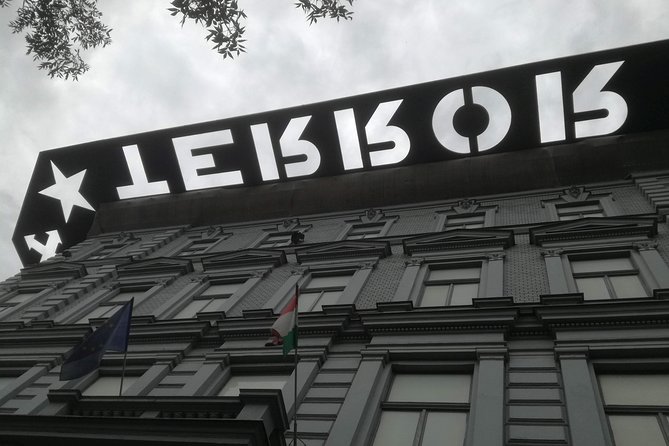
You’ll move from major monuments to more quiet street corners that reveal how the regime shaped public life—think May Day parade routes, socialist-era statues, and even the kind of 1970s housing that tells you what “normal” looked like under “goulash communism.” The tour ends outside the House of Terror on Andrássy út, a strong visual finish with the Berlin Wall slab out front.
In This Review
- Key things to know before you go
- Seeing Communist Budapest From Kossuth Square to Bem József Square
- Price and Group Size: What You’re Really Paying For
- Meeting Up and Getting Around Without Stress
- Stop-by-Stop: Parliament, Kossuth Square, and Cold War Symbols
- House of Terror: A Powerful Endpoint (Not an Included Entry)
- Puskas Soccer Stadium and the Power of Socialist Realist Propaganda
- Ronald Reagan’s Statue: Why the US Figure Matters Here
- Bem József Square and the 1956 Uprising Spark
- How You’ll Understand Life Under Goulash Communism
- Who This Tour Suits Best
- Should You Book This Communist Budapest Private Walking Tour?
- FAQ
- How long is the Communist Budapest private walking tour?
- Is this tour private?
- Is pickup available?
- What does the tour cost?
- Are public transportation tickets included?
- Do I need tickets for the House of Terror Museum?
- Can I choose a morning or afternoon departure?
- What if my plans change and I need to cancel?
Key things to know before you go
- Private historian-led pacing with an ability to tailor the focus to your interests
- A direct Cold War route through Parliament area landmarks, US and Soviet symbols, and secret-service history
- Great outdoor stops where propaganda is still visible, even when you aren’t paying museum entry
- Bem József Square + 1960s coffeehouse interior connects the 1956 uprising to everyday life
- Transit support included (your guide helps with metro/tram tickets if you don’t have a pass)
Seeing Communist Budapest From Kossuth Square to Bem József Square
This tour is built like a story you can walk through. Instead of treating communist Hungary like one big blur of dates, the route links key public spaces to specific moments: the postwar takeover, the Cold War face-off, the shocks of 1956, and the long grind of the years after. You’ll spend time around major government and symbolic locations—then shift to the kind of streets and buildings where the political system affects daily routines.
I like that the focus isn’t only on leaders. The experience includes the privations and tradeoffs of “goulash communism,” where the system tried to look softer than classic Soviet rule while still controlling life. You’ll also get a sense of how propaganda worked in public space, not just on posters: statues, ceremonial routes, and grand buildings designed to project authority.
Timing matters, too. The tour runs about 3 hours, but a private guide can naturally stretch things a bit depending on your questions and walking pace. If you love asking follow-ups—especially about 1956 or Hungary’s relationship to the US and USSR—this format tends to reward you.
You can also read our reviews of more walking tours in Budapest

Price and Group Size: What You’re Really Paying For
The price is per group at $393.17, listed for groups up to 10. At the same time, the tour run you’re booking is shown with a maximum of 8 travelers. Either way, you’re not paying per person for a generic route—you’re paying for a private historian guide who can slow down, reframe, or zoom in.
That’s the real value with a topic like communist-era Budapest. It’s dense, and it’s easy to get lost without context. A good guide does two important jobs here:
- Turns symbolism into meaning (why a statue matters, what a square was used for)
- Connects the dots between events (how 1956 fits into the broader Cold War timeline)
If you’re traveling with a friend or small family group, the cost per person drops quickly compared with typical private “sit in a van” alternatives. It’s also a good fit if your group has mixed interests—someone can focus on 1956 while you follow the Cold War politics, and the guide can steer between them.
Meeting Up and Getting Around Without Stress
Your guide offers pickup from your central hotel or flat and will lead you to the start area using metro, tram, or foot when things are close. If you don’t want pickup (or if you don’t send your address in time), you’ll meet at the default start point at Frankel Leó út 2-4, 1027.
For getting around, the tour includes practical support: your guide can help you purchase the tram/metro tickets if you don’t already have a pass. So you’ll want to factor in a little time for transit between stops, especially because the story moves through different parts of central Budapest rather than staying in one tiny neighborhood.
The tour is offered in English, and the timing can be either morning or afternoon. If you can choose, I’d pick the time when you’re least likely to be rushed by other plans—this is the kind of tour where questions are part of the payoff.
Stop-by-Stop: Parliament, Kossuth Square, and Cold War Symbols
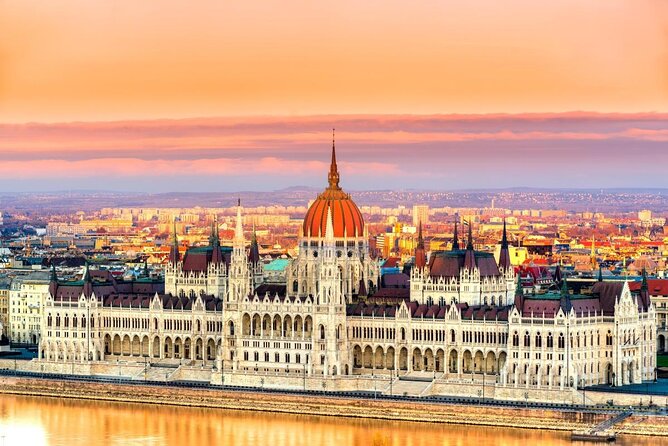
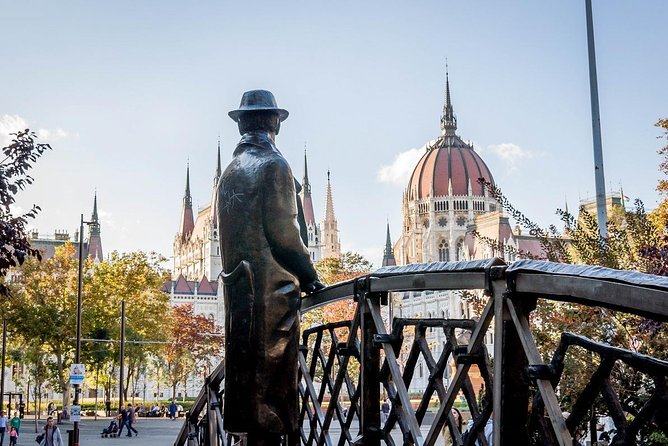
The route starts in the Parliament area, using the subway to reach Kossuth Square in front of the Hungarian Parliament Building. This is a smart opener because it places you at the visual “stage” of national identity and power. From here, the tour connects the modern-looking setting to 1956-era monuments you’ll see around the square.
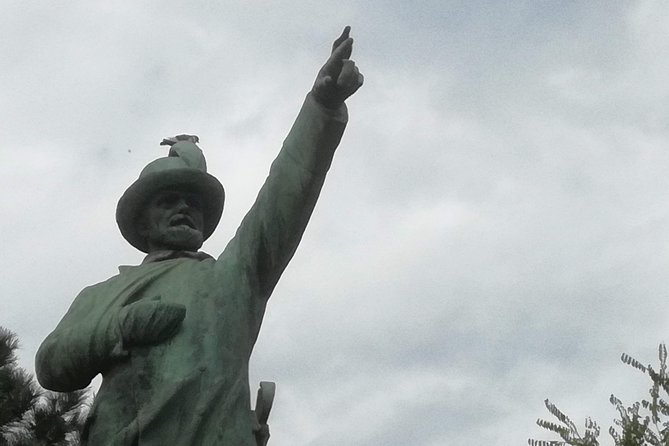
Next comes Liberty Square, where the story turns outward to international tensions. Expect discussion tied to the Cold War—especially in the way the area frames competing narratives. You’ll pass landmarks connected to the US Embassy area and see the monument to the Soviet Army, plus a Ronald Reagan statue and an atomic shelter.
Even if you’ve seen a lot of European history tours before, this stop works because it’s about reading space. You’re learning how Cold War politics shows up as fixed, physical signals you can point to: which figures are celebrated, which forces are commemorated, and how public architecture reinforces the message.
One practical note: some of these are outdoor viewing moments rather than “go inside” stops. That keeps the pace moving, but it also means you’ll get the most from your guide’s explanation. If your group is quiet or hesitant to ask questions, try to encourage at least a few.
House of Terror: A Powerful Endpoint (Not an Included Entry)
The walk then concludes outside the House of Terror Museum on Andrássy út, in the former headquarters of Hungary’s communist secret services. Even from outside, it’s striking—there’s also a slab of the Berlin Wall in front, which visually tightens the story to the larger European Cold War.
This is a key consideration: the museum’s exhibit is not included in the tour. You’re getting the context and the symbolism, not the ticketed interior experience. I like this approach for two reasons:
- It keeps your guided walk on time and focused.
- It gives you a clean choice afterward: if the topic grabs you, you can head in on your own.
If the House of Terror is a top priority for your trip, you’ll likely want extra time right at the end of the tour so you’re not rushing. If you’re primarily interested in seeing the communist-era influence in the streets and public monuments, the outdoor finish is still a strong payoff.
You can also read our reviews of more private tours in Budapest





Puskas Soccer Stadium and the Power of Socialist Realist Propaganda
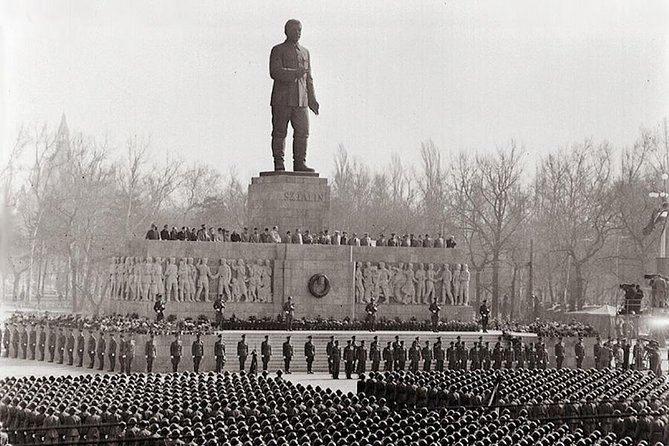
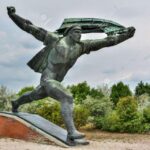
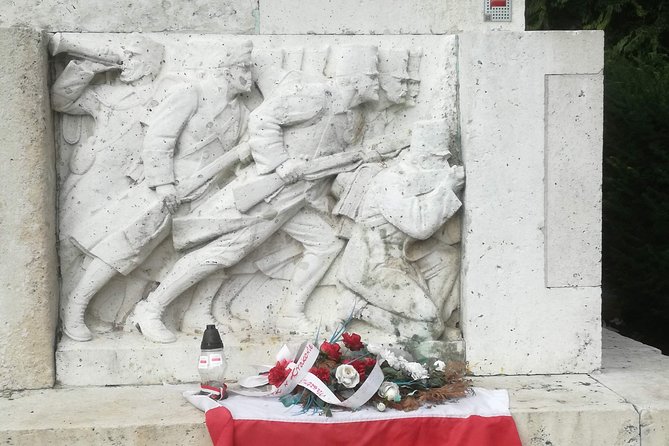
One of the most interesting stops is the former People’s Stadium, now Puskas Soccer Stadium. This is where you can see classic socialist realist-style statues still standing. That matters because propaganda wasn’t only delivered through speeches and newspapers—it was built into public monuments and sports-and-ceremony spaces.
From a visitor’s point of view, this is a great balance: you get political context without needing museum tickets. The stadium area helps you connect “big state messaging” to places people would associate with major gatherings and collective life. Even if you aren’t a stadium person, the statues and setting tell you what the regime wanted to broadcast.
The tour also signals that not all communist-era influence is gloomy and grim. Some of it is loud, grand, and designed to make the system look permanent. Seeing that contrast outdoors helps you understand why propaganda could feel normal to people living with it every day.
Ronald Reagan’s Statue: Why the US Figure Matters Here
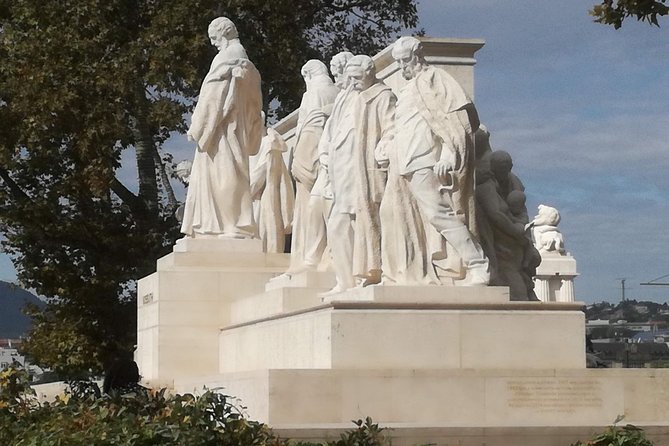
At one point you’ll pause at the Ronald Reagan statue. It’s a specific detail, and it’s not random: the tour frames it as part of the Hungarian sense of obligation to the US president for his efforts connected to bringing down the Iron Curtain.
This kind of stop is valuable because it complicates a simple “US vs USSR” story. Hungary sits in between, and public memory shows that. The statue becomes a clue for how post-communist societies decide what to honor and what to credit—especially when the old regime is gone but its influence still lingers in the built environment.
If you like symbol-reading, don’t treat this as a quick photo moment. Ask your guide what makes the message land the way it does in Hungary. The answer often reveals a lot about the country’s transition and its relationship with the wider West.
Bem József Square and the 1956 Uprising Spark
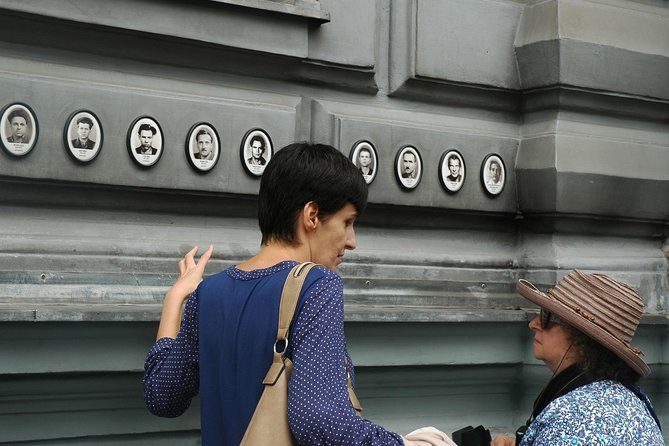
The tour’s emotional center shows up at Bem József Square. This is where the first big demonstration of the 1956 uprising began. That single fact turns the square from a place you might otherwise pass into a location with real weight.
A particularly nice detail is the presence of a coffeehouse on the square that has kept its original interior from the 1960s. That’s the kind of on-the-ground reminder that history wasn’t only in political buildings. It also lived in everyday spaces—cafés, street life, habits, and small routines.
This stop also pairs well with the earlier Cold War parts of the walk. You can feel the shift from international chess moves to internal pressure and collective action. If you want to understand how 1956 worked as more than a single year, Bem József Square is the place where the story becomes human.
How You’ll Understand Life Under Goulash Communism
A strong communist-era tour does two things: it shows the dramatic moments and it explains the daily costs. This one is designed for both. You’ll learn about the privations of life under “goulash communism,” which was often described as a more flexible version of Soviet-style control—still controlling, but with different coping mechanisms and consumer realities.
You’ll also notice how the regime used public space to shape behavior. The tour includes mentions of socialist-era statues and streets used for May Day parades—meaning you’re not only viewing monuments, you’re learning how mass ritual worked as social glue and political instruction.
And don’t overlook the built environment angle. The experience references a 1970s housing estate, which is crucial if you want to understand communist rule as a practical system. Housing tells you about resources, planning priorities, and what the government assumed people needed most.
Who This Tour Suits Best
This is a great choice if you:
- Want a focused walk through Budapest’s communist and Cold War landmarks
- Like political context explained in plain language, with room for questions
- Prefer a small group to a crowded group bus tour
- Care about 1956 and how it’s remembered in public space
It might be less ideal if you hate walking or if you only want museum admissions included. Since key sites like the House of Terror are handled as outdoor contextual stops, you’d need to add time on your own if you want the interior exhibit.
If you’re someone who enjoys clear explanations and light humor, look out for the kind of guide quality highlighted by András and Kata in past tours—clear, structured storytelling with personality. That combination helps when the material covers decades and systems, not just one event.
Should You Book This Communist Budapest Private Walking Tour?
Yes, if you want a guided route that makes communist-era Budapest make sense fast—and you want to see the message built into the city’s monuments, squares, and street rituals. The private historian format is the core strength, and the tour’s layout helps you connect 1956, Cold War symbolism, propaganda in public space, and the everyday reality behind the slogan.
Book it especially if your group includes history-minded people but at least one person who appreciates good explanations over long reading. The pacing and clarity tend to work well. If you’re laser-focused on museum interiors, plan to add entry to the House of Terror yourself after the walk.
FAQ
How long is the Communist Budapest private walking tour?
It runs about 3 hours (approx.).
Is this tour private?
Yes. It’s described as a private walking tour with a historian guide.
Is pickup available?
Yes. Pickup is offered from your central hotel or flat, and your guide leads you to the group by metro, tram, or foot when sites are close.
What does the tour cost?
The price is listed as $393.17 per group (up to 10), with a maximum of 8 travelers shown for the tour.
Are public transportation tickets included?
Tram and metro tickets are not included, but your guide will assist you with purchasing tickets if you don’t already have a transport pass.
Do I need tickets for the House of Terror Museum?
The House of Terror museum exhibit is not included in the tour, and the stop is outside the museum. You can go inside on your own if you want, but that would require a separate visit.
Can I choose a morning or afternoon departure?
Yes, it’s offered with a choice of morning or afternoon departure.
What if my plans change and I need to cancel?
You can cancel for a full refund up to 24 hours before the experience starts.