REVIEW · HISTORICAL TOURS
Classic Walk in Budapest Historical Center
Book on Viator →Operated by Italiano a Budapest · Bookable on Viator
Budapest looks better at walking speed. This 2-hour Pest walk strings together major sights with Danube views and clear local context, so you leave knowing what you just saw and why it matters. It’s a simple way to orient yourself fast in central Budapest without spending a day zigzagging.
I especially like how the route hits both the “postcard” spots and the everyday city feel: Váci Street has that classic pedestrian buzz, then you roll straight into big landmarks you can recognize from photos. I also like the history framing the guide brings in, turning monuments and squares into stories you can actually remember.
One possible drawback: the pacing isn’t nonstop strolling. There can be longer stop-and-explain moments, so if you prefer constant walking, you may want to keep an eye on the tour tempo.
In This Review
- Key takeaways before you go
- Why this Pest walk is a smart intro to Budapest
- Starting at Molnár’s Kürtőskalács on Váci u 31
- Váci Street first: shopping street energy and easy people-watching
- Danube views and the bridge-and-Buda-Castle sightline
- Pesti Vigadó and the walk toward pastries and cafés
- Elizabeth Square: ferris wheel energy and the Danube Fountain monument
- St. Stephen’s Basilica: see it big, learn the symbolism (entry not included)
- Szabadság tér: monuments tied to Nazi and Soviet occupations
- Kossuth Lajos Square and the 1956 revolution
- Hungarian Parliament Building: a big exterior moment with a strong payoff
- Pace, comfort, and how the guide keeps the group moving
- Price and value: why $3.60 can still feel like a real tour
- Who should book this walk (and who might prefer another style)
- Should you book Classic Walk in Budapest Historical Center?
- FAQ
- How long is the walking tour?
- How much does it cost?
- What language is the tour offered in?
- Where does the tour start and end?
- Is church or museum entry included?
- How large is the group?
- Is the tour suitable for most people?
Key takeaways before you go
- A tight 2-hour route through Pest that helps you get oriented quickly.
- Danube views and bridge sightlines with Buda Castle across the river.
- Váci Street as your “city energy” start point before the monument stops.
- Outdoor sightseeing focus where church/museum entry isn’t included.
- Hungarian history in plain language, not just dates and plaques.
- Small-group feel (up to 30) with a guide who adjusts for comfort.
Why this Pest walk is a smart intro to Budapest
This is the kind of tour that works because it’s built for getting your bearings. In about two hours, you cover a stretch of Pest that most visitors mentally divide into two buckets: the scenic Danube areas and the grand civic landmarks. Instead of picking one, you get both, with a local guide turning the route into a map you can keep using after the tour ends.
The value here is practical. The price is low, but the format still includes live guided narration and time to ask questions. That matters because Budapest’s “big stuff” (basilicas, parliaments, squares) can feel like isolated photo backdrops—until someone explains what you’re looking at and how it connects to Hungary’s modern history.
One more plus: you’re walking through the parts people actually experience day to day. Pedestrian streets, café terraces, and public squares are all part of the picture, not just museum walls.
You can also read our reviews of more walking tours in Budapest



Starting at Molnár’s Kürtőskalács on Váci u 31
The tour begins at Molnár’s kürtőskalács, Váci u 31 (near the heart of Pest’s pedestrian zone). It’s an easy start point because Váci Street is already a “destination” street, not a random address tucked away from the action.
From the beginning, you get two travel benefits for the price of a coffee: first, you’re walking with a plan, and second, you get a sense of what’s within easy reach from this part of town. If you’re only in Budapest for a short window, that kind of orientation is gold—especially before you start committing to bigger sights later in your trip.
Also, you’re walking in a guided group with a maximum size of 30. That usually keeps things lively but not chaotic. And since you’re near public transportation, you can fit this walk into a busy schedule without it becoming your whole day.
Váci Street first: shopping street energy and easy people-watching
The first stop is Váci Street, the famous pedestrian shopping strip. This is a great opener because it immediately shows you what Budapest’s city center feels like: street-level life, movement, and the sense that you’re in the thick of things.
What I like about starting here is that it sets context for everything after. When you later see monuments and major buildings, you’ll understand that they’re not sitting in a vacuum. They’re part of a living urban area where people walk to shops, cafés, and events.
Practically, this is also a good place to settle your pace. You’re only a few minutes into the tour when you start absorbing tips about the area. And since admission is free for this part, you’re not waiting on tickets or timed entries. You just start walking and looking.
Danube views and the bridge-and-Buda-Castle sightline
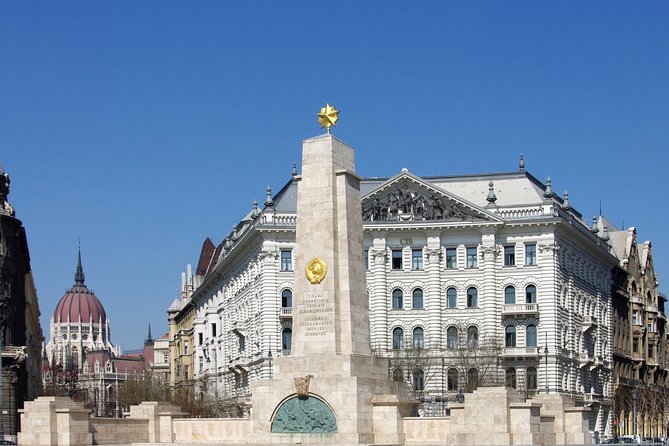
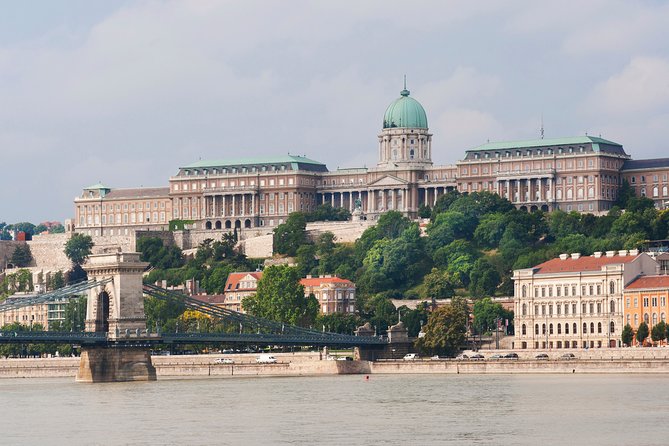
After Váci Street, the route swings you toward the water. You’ll walk along the Blue Danube, with panoramic views of the historical bridges and Buda Castle across the river.
This is one of the most useful sightseeing moments because it gives you a mental “split screen.” Pest is where you’re walking; Buda is across the water. Once you see that relationship clearly, it’s easier to understand why Budapest developed the way it did—and why the skyline is so central to the city’s identity.
You’ll also be in that sweet spot where photos work, but conversation matters too. A good guide can point out what you’re seeing in a way that makes the view stick in your head after you stop filming and start moving again.
Pesti Vigadó and the walk toward pastries and cafés
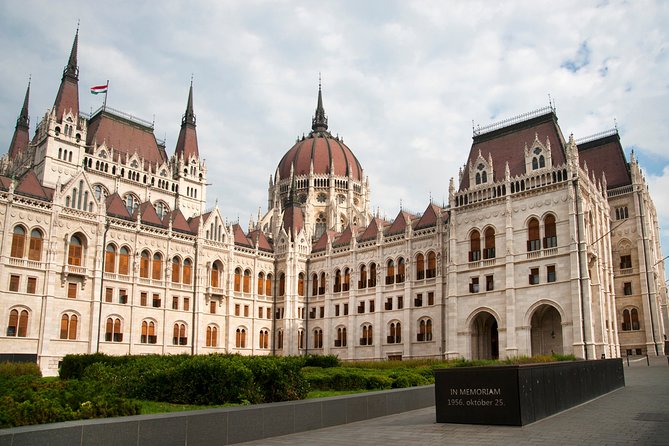
Next up is Pesti Vigadó, the dance palace built in the 1860s in Hungarian Romantic style. This is one of those buildings that feels important even if you don’t know a single architectural term. The “why” is what makes it worth your attention—your guide will connect its story to the broader cultural image of Budapest in that era.
Important practical note: admission here isn’t included, so don’t plan on going inside. Think of it as an exterior stop where you get context and photos, then keep moving.
After that, the route reaches the end of the pedestrian street area, where you’ll find a square surrounded by some of the best pastry shops and café terraces. This is a smart pause in the walk because you’re not just looking at buildings—you’re in the area where you’d actually take a break on your own. If you like to keep your trip feeling spontaneous, this is the point where your guide’s food and drink recommendations can really help you choose where to go next.
You can also read our reviews of more historical tours in Budapest






Elizabeth Square: ferris wheel energy and the Danube Fountain monument
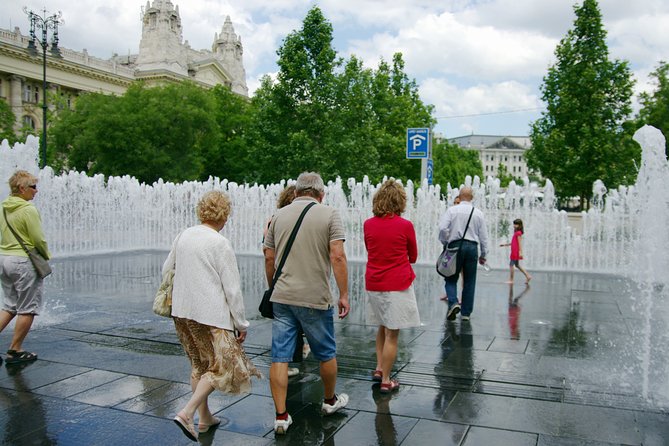
Then you’ll reach Elizabeth Square, crossing a park area and checking out the Danube Fountain monument and the giant ferris wheel. This stop is visually fun, especially if you like landmarks that look dramatic even from a distance.
The key value of this segment isn’t just the objects. It’s the transition. You go from long pedestrian streets and river views into a more open, park-like space. That helps the tour feel balanced, not one-note.
You’ll also get a change in perspective. Parks and squares like this make Budapest feel less like a museum city and more like a place where people spend time. That’s a big part of why walking tours work here: your brain starts seeing the city as lived-in, not staged.
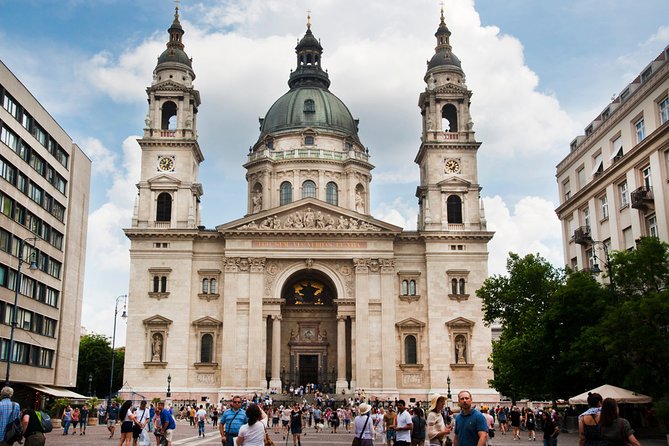
St. Stephen’s Basilica: see it big, learn the symbolism (entry not included)
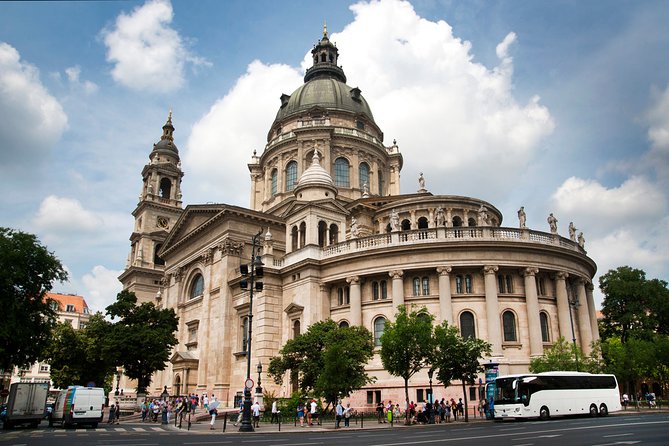
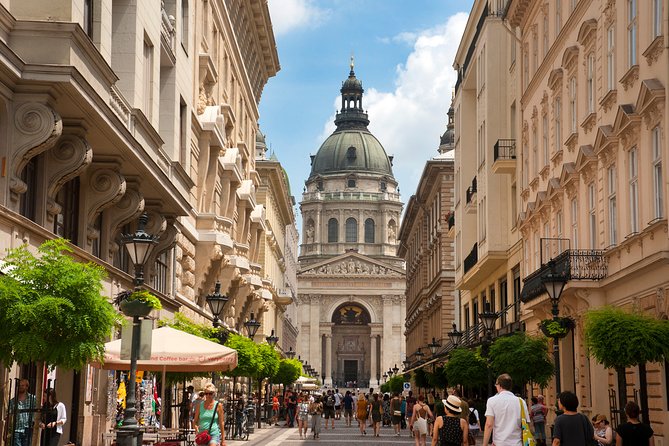
At St. Stephen’s Basilica (Szent Istvan Bazilika), you’ll admire the huge church and hear the story of its building and symbolism. This is another stop where the guide’s voice matters. A basilica can look impressive in photos, but without context it’s easy to forget what makes it special.
Admission isn’t included here, so you’re set up for outside viewing and explanation, not a ticketed interior visit. That said, hearing the story often makes the building feel more personal—like a landmark with an argument behind it, not just a size comparison.
If you’re the type who enjoys learning symbols—what they represent and why they were chosen—this is a strong moment in the walk. If you mainly want to go inside, you’ll need to pair this tour with a separate church visit later.
Szabadság tér: monuments tied to Nazi and Soviet occupations
Next is Szabadság tér, a square that hits hard. You’ll see dramatic monuments connected to Nazi and Soviet occupations and the dictatorships of the 20th century.
This is where the tour becomes more than sightseeing. Squares like this can feel emotionally heavy, and the guide’s job is to explain it clearly without turning it into a lecture you’d rather skip. The goal is to help you read the space: what the monuments are saying and what they mean for Hungary’s recent past.
You’ll also find the “miraculous fountain” in the area, but timing matters. It’s noted as active during warm season, so in cooler months you might not see it operating the same way. Either way, it’s worth looking at because it adds a different tone to the square—public space, not just memorial space.
Kossuth Lajos Square and the 1956 revolution
At Kossuth Lajos Square, the focus shifts to Hungarian freedom heroes and the 1956 revolution against the Communist dictatorship. This is another stop where “what you’re looking at” and “what it represents” are inseparable.
If you’ve ever seen photos of Budapest monuments and felt unsure what era they belong to, this is where things click. Your guide connects the pieces so you understand how modern Hungarian history shaped the civic landscape you’re walking through today.
This is also a good segment to ask questions. If something feels confusing—dates, names, what exactly happened—this is one of the parts where a good guide can translate it into understandable context.
Hungarian Parliament Building: a big exterior moment with a strong payoff
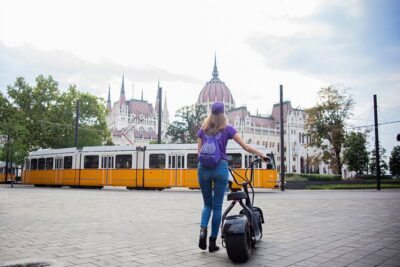
Finally, you’ll reach the Hungarian Parliament Building, one of the most magnificent parliamentary buildings you’ll ever see from the outside. The tour includes time to admire the structure and hear about its history.
Admission isn’t included, so this is a look-and-learn stop rather than a timed-entry visit. But even as an exterior experience, it’s a strong finale. Parliament buildings tend to be symbolic by design, and when you get the story behind the building during your walk, you’ll see more than just architecture—you’ll see politics turned into stone.
The tour ends at Kossuth Lajos tér 1-3. After this, you’ll be in a place where it’s easy to keep exploring on your own, whether you want more photos, a café break, or to branch out into other nearby sights.
Pace, comfort, and how the guide keeps the group moving
The tour lasts about 2 hours, and the walking pace is designed for most people. The experience runs with a maximum group size of 30, so you won’t feel like you’re in a giant herd.
From the guide style notes, one thing stands out: the guide has been careful about comfort—adjusting the pace and making sure the group can find shade when possible. That matters in Budapest, where sun can pop out fast even when you think the day looks mild.
If you’re coming with specific interests—history, architecture, or just wanting the best snack stops—this tour gives you a chance to ask. One named guide, Oliver, was described as friendly and attentive to what visitors care about, including providing practical advice on where and what to eat and drink. That kind of personalization can turn a standard highlights walk into something you’ll feel in your day-after plans.
Still, remember the earlier caution: some people want constant walking. If you’re that type, treat the tour as an orientation and explanation experience first, then do extra wandering on your own afterward.
Price and value: why $3.60 can still feel like a real tour
At $3.60 per person, this is priced like a low-cost orientation walk, and in practice it mostly delivers what you’d hope for: live guiding, a curated route through central Pest, and context you can’t easily get from a phone app while you’re on foot.
You’re not paying for museum or church entries. Admission is not included for certain stops (like Pesti Vigadó, St. Stephen’s Basilica, and the Parliament building), so you should budget separately if you want to go inside. But for many visitors, that’s also the point. You get the “seen it and understood it” version, then decide later what deserves a deeper ticketed visit.
A small detail that helps your confidence: it uses a mobile ticket, so you’re not hunting for printouts. That’s one less hassle in a city where you’ll already be juggling transit, walking, and planning.
Who should book this walk (and who might prefer another style)
This tour fits best if you:
- Want a fast, guided orientation to Pest in a short time.
- Like to understand history in context while you’re standing in front of the landmarks.
- Prefer a route with clear highlights rather than a free-form wandering day.
- Enjoy asking questions and getting local recommendations.
If you mainly want deep museum time or long interior visits, you might be happier combining this walk with separate ticketed attractions. Since entry to churches and museums isn’t included, you’ll likely want a second activity later to satisfy that itch.
Should you book Classic Walk in Budapest Historical Center?
Yes, if you want a low-cost way to connect Pest’s main sights with the stories behind them. The route is compact, the sights are recognizable, and the guide time adds meaning you won’t get from walking alone—especially around the Danube views and the 20th-century monument context.
Book it with the mindset of orientation plus explanation, not a museum pass. If you like moving steadily and dislike stops, you may want to plan lighter after the tour so the pauses don’t feel like a slowdown.
FAQ
How long is the walking tour?
It runs for about 2 hours.
How much does it cost?
The price is $3.60 per person.
What language is the tour offered in?
The tour is offered in English.
Where does the tour start and end?
It starts at Molnár’s kürtőskalács, Váci u 31, 1052 Hungary, and ends at the Hungarian Parliament Building, Kossuth Lajos tér 1-3, 1055 Hungary.
Is church or museum entry included?
No. Entry to churches and museums is not included.
How large is the group?
The tour has a maximum of 30 travelers.
Is the tour suitable for most people?
Most travelers can participate, it allows service animals, and it’s near public transportation.