REVIEW · BUDAPEST
Capital Budapest – Half Day Private Tour (4hr)
Book on Viator →Operated by Fungarian · Bookable on Viator
Danube to Buda Castle in one tidy sprint. This private 4-hour route gives you quick orientation across Budapest, and I really like how the guide uses Metro Line M1 and short walks to keep the day moving without feeling rushed. One trade-off: several of the headline sights along the way require separate entry tickets.
If you want a plan that feels more like a smart conversation than a checklist, this tour is built for that. You get pickup options, an English-speaking guide, and practical extras included like a city map, a notebook with pen, and a hot or cold beverage at the end.
One more thing to weigh: the route covers a lot of ground across both sides of the river, so you’ll want comfortable shoes and you’ll likely spend more time viewing from viewpoints than doing long interior visits—especially since entry tickets for places like Fisherman’s Bastion, Parliament, and the Synagogue are not included.
In This Review
- Key points worth knowing before you go
- Starting in Budapest’s Jewish Quarter, with Pickup That Actually Helps
- Using Metro Line M1 Like a Local (and Why It’s a Good Choice)
- Liberty Bridge to St. Gellért Square: Danube Views That Set the Tone
- Clark Square and the Castle Approach: Where Budapest’s Layers Meet
- Fisherman’s Bastion and Matthias Church: Short Stops, Big Payoff
- Bécsi kapu Square to Széll Kálmán tér: Medieval Gate Energy Meets Modern Transit
- Heroes’ Square and the Hungarian Parliament: Big Architecture, Clear Geometry
- St. Stephen’s Basilica and Deák Ferenc tér: Sacred Icon Plus Night-Edge People-Watching
- Dohány Street Synagogue and Kamara Café: Finish With Culture and a Real Breathing Space
- Price and Value: How $489.24 Per Group Works in Real Life
- Who This Half-Day Private Tour Suits Best
- Should You Book This Capital Budapest Half Day Private Tour?
- FAQ
- How long is the Capital Budapest half day private tour?
- What is the price and group size?
- Is pickup available?
- Where does the tour start and end?
- What’s included in the tour price?
- Are entry tickets included for the main attractions?
- Is the tour offered in English?
- What’s the meeting time window?
- Does the tour use public transportation?
- What if weather is bad?
Key points worth knowing before you go
- Private pace for up to 4 people, so you can ask questions and move at a comfortable speed
- Metro Line M1 included via the transport pass, a simple way to connect major squares efficiently
- Castle District viewpoints are the focus, with Fisherman’s Bastion and Matthias Church kept to short, high-impact stops
- Some major sights are free, including Liberty Bridge and Heroes’ Square
- A café break at Kamara Café finishes the route with an included drink near the Synagogue
- Several top interiors cost extra, so plan for entry fees if you want inside time
Starting in Budapest’s Jewish Quarter, with Pickup That Actually Helps
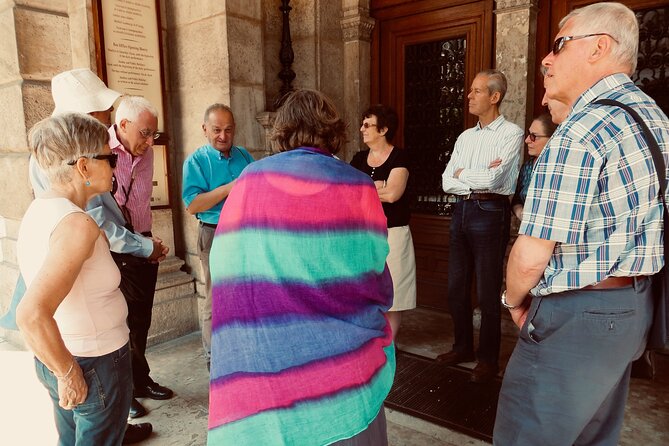
The tour starts at Dohány u. 4 (near the Great Synagogue area), which is a smart way to begin if you want to understand Pest from the inside out. You’ll also have the option to meet your guide at your hotel or another central point you agree on, which matters in a city where a “short walk” can still eat up time.
I like that the experience is framed as a guided route with included basics (city map, notebook, and pen). That gives you something tangible to help you keep your bearings, especially after you’ve crossed between districts and seen how the Danube divides Budapest into two very different moods.
You’ll finish in the downtown area, often around Károly körút near Astoria Metro (though the exact end point can shift based on a personalized itinerary). That makes it easier to keep going after the tour—dinner, museums, or just a slow walk without needing another big plan.
You can also read our reviews of more private tours in Budapest



Using Metro Line M1 Like a Local (and Why It’s a Good Choice)
This is one of those tours where the transit plan is part of the value. You’re provided a public transport pass, and the route specifically includes Metro Line M1, the Millennium Underground Railway.
M1 matters because it’s not just a way to travel; it’s a Budapest experience. It’s the oldest metro line on the European mainland, and it’s also one of the world’s oldest underground railways after London and Liverpool’s Mersey line. On a half day, that’s a great way to get a sense of the city’s modern identity without losing time stuck in traffic.
Practically, the metro also helps you avoid long backtracking. With multiple “must-see” stops on both sides of the Danube, you want clean connections—and this route uses them.
Liberty Bridge to St. Gellért Square: Danube Views That Set the Tone
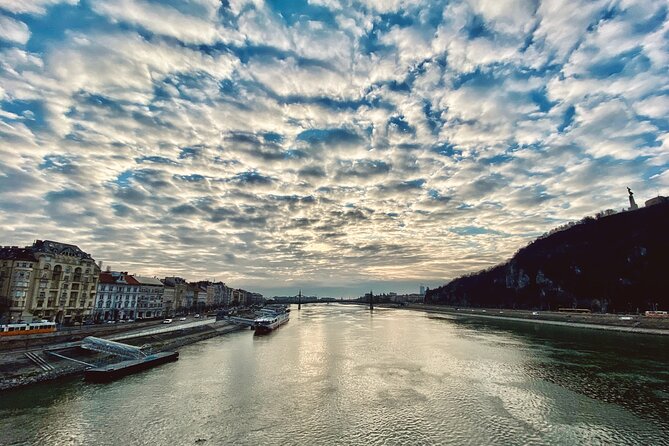
The first major stop is Liberty Bridge (Szabadság hid). It connects Buda and Pest and sits at the southern end of the City Centre. It’s also noted as the third southernmost public road bridge in Budapest, and it was originally named the Franz Joseph Bridge.
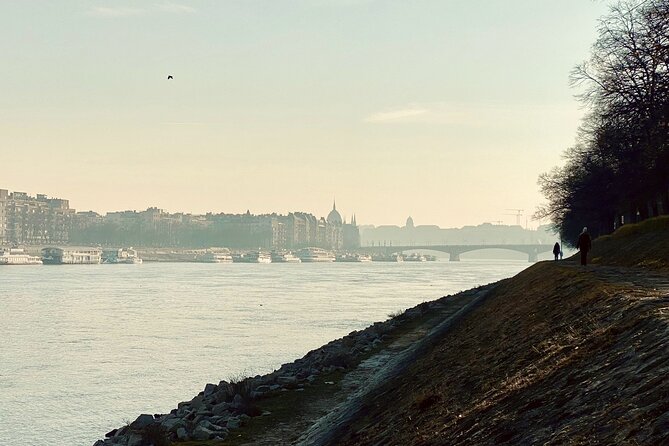
Why I’d prioritize this early: it gives you a visual “map” of the river and the two halves of the city before you head toward the Castle District. Even if you’re not doing any interior visits yet, the bridge helps your brain start connecting locations.
From there, you move through St. Gellért Square, which is named after Bishop St. Gellért (often called the Martyr for Hungarian Christendom). The point here isn’t just the name—it’s that you’re getting Buda’s major landmarks and religious references threaded into the geography, so the city feels like one story instead of isolated stops.
Liberty Bridge is marked free, so it’s a low-cost win for photos and orientation right away.
Clark Square and the Castle Approach: Where Budapest’s Layers Meet
Next comes a pass-through at Clark Square, a place that’s busy because it’s a junction point for multiple routes and transit lines. The description specifically ties it to big connections: the Chain Bridge, the tunnel leading beneath Castle Hill, the funicular up to Szt. György Square by the Royal Palace, and major streets feeding into the area.
This is one of those moments where a guide can save you confusion. If you’ve ever looked at Budapest on a map and wondered how all the Castle Hill access points actually relate, this is your “okay, I get it” stop. You see the logic of where roads meet and why certain viewpoints feel close even when they aren’t.
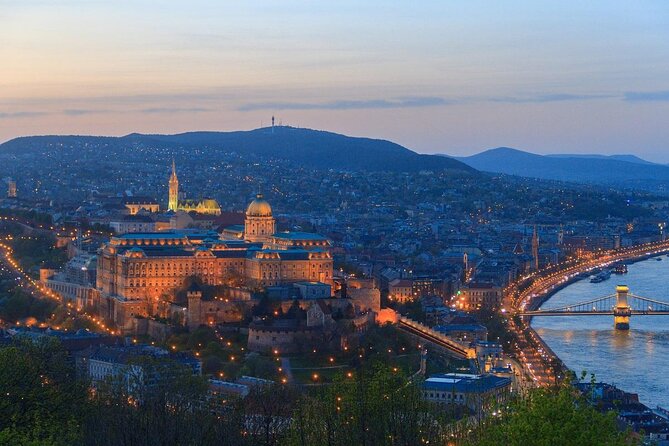
Then the route heads toward the Buda Castle area, with a stop along the winding road leading up to Buda Castle. You’ll be looking toward Fisherman’s Bastion and the Royal Palace area for photos, which is the right move: you’re capturing the iconic skyline from a position that makes the terrain feel real.
After that, you reach Dísz tér, the residential-feeling square in the Castle District. It’s known for its older one- and two-storey buildings and the remnants of simple Gothic houses in foundations and walls. If you’ve only seen the Castle District as a tourist postcard, this stop adds texture—it feels like a lived-in historic core.
Fisherman’s Bastion and Matthias Church: Short Stops, Big Payoff
Fisherman’s Bastion (Halászbástya) is one of Budapest’s best-known monuments, and it’s easy to see why. The terrace views over the Danube and across the city are the headline, and the structure’s seven high-pitched stone towers symbolize the seven chieftains of the Hungarians who founded Hungary in 895.
In a half-day tour, you don’t want to spend ages hunting for the best angles. This stop is kept to a short window (about 10 minutes), which is enough to get the main viewpoints without stalling the whole itinerary.
One note you’ll want to plan for: admission tickets are not included for Fisherman’s Bastion. That doesn’t make it a bad stop—just budget time and money if you want the full experience rather than mostly viewing from outside.
Close by is Matthias Church (Mátyás-templom), located right in front of Fisherman’s Bastion in the Castle District. The description says church tradition places an early Romanesque start in 1015, even though no archaeological remains are mentioned. The practical point for you is that the church sits right inside the same photo zone, so you get another “icon” without needing to travel far.
Like Fisherman’s Bastion, Matthias Church entry isn’t included. If you specifically want inside time, consider whether this half-day window is enough once you factor in lines, ticketing, and weather.






Bécsi kapu Square to Széll Kálmán tér: Medieval Gate Energy Meets Modern Transit
After the Castle District focus, the route shifts into wider, more urban territory.
You’ll pass through an area connected to Bécsi kapu (Vienna Gate). The square’s name points to its role as a port connecting the Castle with the highway toward Vienna. Even if you’re mostly walking for orientation, these kinds of references matter because they explain why certain roads and corridors exist.
Then you reach Széll Kálmán tér, an important square and transport interchange in Buda. It’s also described as one of the busiest transport hubs and a kind of center for Buda due to traffic and shopping around it, including Mammut (a shopping mall).
For you, this stop acts like a reset: you go from medieval-looking terrain to a working transit-and-shopping node. It’s also useful because it helps you understand how locals move, not just how tourists photograph.
Heroes’ Square and the Hungarian Parliament: Big Architecture, Clear Geometry
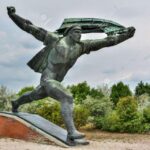
Heroes’ Square is next, with about 15 minutes there and entry listed as free. The statue complex is the headline: it features the Seven chieftains of the Magyars plus other important Hungarian national leaders. You’ll also see the Memorial Stone of Heroes, often mistakenly referred to as the Tomb of the Unknown Soldier.
Why this square is a strong match for a half-day tour: it’s visually straightforward and easy to understand quickly. With a guide, you can also connect the symbolism to what you’ll see next without needing extra museum time.
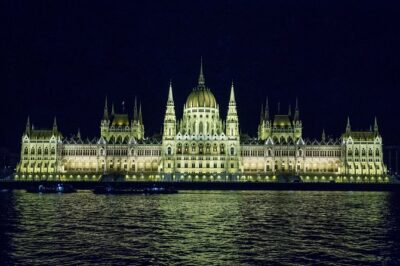
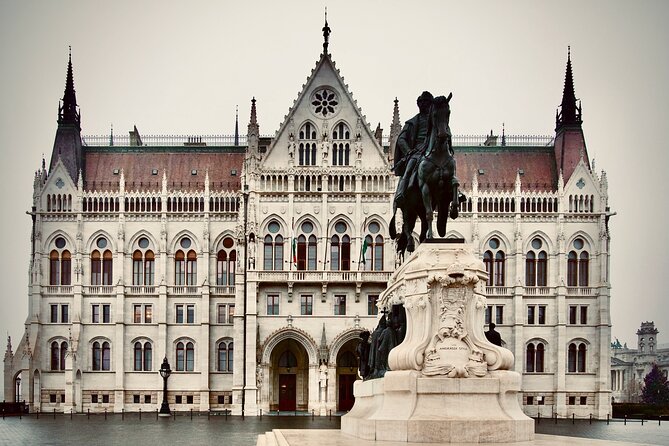
From Heroes’ Square you connect toward the Hungarian Parliament Building at Kossuth Square on the Pest side of the Danube. The building is described as neo-Gothic, designed by Imre Steindl, and opened in 1902. It’s also said to be the largest building in Hungary at the time of completion.
Entry isn’t included here, so don’t expect an inside visit on this specific route. But you still get the big architectural moment. If you want to remember Budapest as more than cathedrals and castles, this is the stop that proves the city also has power and institutional scale.
St. Stephen’s Basilica and Deák Ferenc tér: Sacred Icon Plus Night-Edge People-Watching
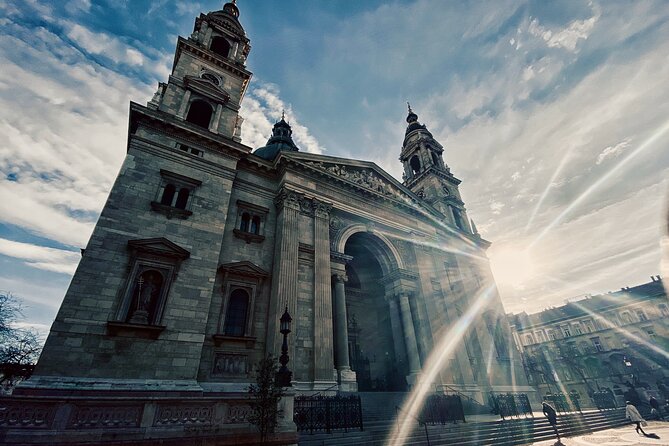
St. Stephen’s Basilica (Szent Istvan Bazilika) is timed at about 15 minutes, with entry not included. The basilica is dedicated to Stephen, the first King of Hungary, and the description notes his supposed right hand is housed in a reliquary.
Even without going inside, it’s worth using this stop to frame your mental “Budapest religion map.” This part of the itinerary ties religious iconography directly to central squares, so the city feels like it’s connected, not random.
Then the route moves to a park next to Deák Ferenc tér, which is described as a popular gathering for young people. Alcoholic beverages are sold at the grassy area, and it’s common for this area to be populated until midnight hours.
That’s the one practical consideration I’d flag: this isn’t a silent, museum-only park. If you prefer calmer spaces, you might still enjoy the stop as a quick breather and people-watching moment, but it won’t feel like a quiet postcard.
Dohány Street Synagogue and Kamara Café: Finish With Culture and a Real Breathing Space
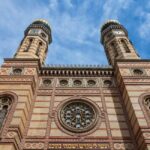
One of the most distinctive parts of this tour is the visit near Nagy Zsinagóga (Great/Central Synagogue, also known as the Dohány Street Synagogue). It’s described as the largest synagogue in Europe, with seating for 3,000 people, and it’s a center of Neolog Judaism.
Entry isn’t included, but you still get it as a major cultural landmark within your half day. In my view, that balance matters. Many shorter Budapest tours lean heavily on castles and political monuments; this route puts Jewish history and architecture right alongside them.
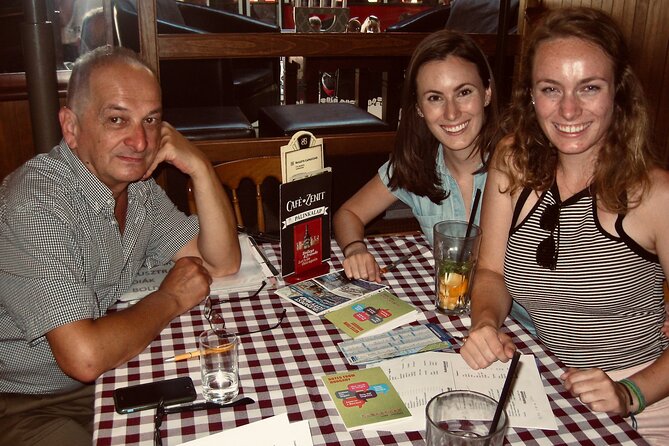
Then you wrap the experience with a quiet break at Kamara Café near the synagogue. The itinerary includes about 30 minutes here and specifically includes one hot or cold beverage. This is a smart way to end because your brain has been working hard on navigation: you get a pause, a drink, and time to plan the rest of your day.
The provided notebook and pen fit well here. You can write down what you want to revisit later, or map your next hop while it’s still fresh.
Price and Value: How $489.24 Per Group Works in Real Life
The price is $489.24 per group (up to 4) for the 4-hour private tour. That’s not the cheapest way to see Budapest, but it can be good value if you’ll use the private format well.
Here’s the simple math: if you fill the group limit with 4 people, you’re effectively spreading the cost across the party. You also get things that add up quickly on your own—especially a public transport pass, an English-speaking guide, and the included drink at Kamara Café.
Also, private tours mean you’re not competing with other groups for the same guide attention. With a route that hits both Buda and Pest highlights, that personal pacing can save you stress, not just money.
The main value limiter is admissions. Several top attractions are noted as not included (Fisherman’s Bastion, Matthias Church, Parliament, St. Stephen’s Basilica, and the Great Synagogue). If you plan to go inside each one, your total day spend will be higher than just the tour price.
One last practical point: the tour is commonly booked about 15 days in advance on average, so if you have a tight schedule, plan ahead rather than assuming last-minute availability.
Who This Half-Day Private Tour Suits Best
This is a strong choice if:
- you want a structured orientation across Budapest in a short window
- you like seeing landmarks in a logical order (river → Castle District → key Pest squares)
- you prefer transit that doesn’t require constant map-checking, thanks to the included public transport pass
- you’re traveling with a small group and want the flexibility of a private format
It may be less ideal if:
- you’re hoping for long interior visits at multiple major sights (because time is limited and entry tickets are not included for several places)
- you want a super-quiet “escape from people” vibe in every stop (Deák Ferenc tér’s park area has a nightlife edge)
The tour is listed as near public transportation and service animals are allowed, and it says most people can participate.
Should You Book This Capital Budapest Half Day Private Tour?
If you want a fast, well-planned introduction to Budapest that covers both sides of the Danube and connects major icons to their geography, I think this is worth considering. The included transport pass, the practical end point near Astoria, and the café finish make it feel designed for real visitors—not just photo stops on rails.
I’d book it with one clear expectation: it’s a half-day overview, not a collection of long museum sessions. If you’re happy to prioritize viewpoints, quick landmark time, and then decide later what to go deeper on, this route gives you a smart starting platform.
FAQ
How long is the Capital Budapest half day private tour?
It runs about 4 hours.
What is the price and group size?
It costs $489.24 per group, up to 4 people. The tour is private, so only your group participates.
Is pickup available?
Yes. You can meet your guide at your hotel in Budapest or at a central point you agree on.
Where does the tour start and end?
The start point is Budapest, Dohány u. 4, 1074 Hungary. The end is listed near Károly körút (Astoria M) in Budapest, 1072, and the exact end may vary based on a personalized itinerary in the greater downtown area.
What’s included in the tour price?
Included items are a public transport pass, a city map, one hot or cold beverage, and a notebook with pen.
Are entry tickets included for the main attractions?
Not always. Liberty Bridge and Heroes’ Square are listed as free. Admission tickets are listed as not included for Fisherman’s Bastion, Matthias Church, the Hungarian Parliament Building, St. Stephen’s Basilica, and the Great Synagogue.
Is the tour offered in English?
Yes, it’s offered in English.
What’s the meeting time window?
The opening hours are listed as 8:00 AM to 6:00 PM, Monday through Sunday, for the dates shown.
Does the tour use public transportation?
Yes. You receive a public transport pass, and Metro Line M1 is specifically mentioned as part of the route.
What if weather is bad?
The experience requires good weather. If it’s canceled due to poor weather, you’ll be offered a different date or a full refund.