REVIEW · LUNCH EXPERIENCES
Budapest’s Greatest Hits – Full Day Tour with Lunch & Metro Pass
Book on Viator →Operated by Budapest Urban Walks · Bookable on Viator
One day in Budapest, done right. This full-day route hits the city’s icons from Heroes’ Square to Fisherman’s Bastion, with a private guide and included lunch plus metro pass to keep your day moving. I love how you get a tight, customized flow instead of a rigid checklist, and I love the blend of major monuments with a real taste of traditional Hungarian food and wine. One thing to plan for: several big interior stops cost extra on your own (like St. Stephen’s Basilica and Parliament).
The guides seem to be the secret sauce. Names like Lazlo Kaiser and Fanni show up in reviews for turning landmarks into stories you can actually remember, and Francy is praised for explaining Hungary in a way that sticks. You’ll also be walking, so this is best if you’re happy to trade long museum time for seeing a lot of Budapest in one go.
In This Review
- Quick highlights
- Why this Budapest greatest-hits day works when time is tight
- Price and what you really get: metro pass, lunch, and fewer logistics headaches
- How the day flows: from grand squares to the Danube views
- Heroes’ Square and the story behind Budapest’s biggest statues
- Széchenyi Baths: a major landmark that’s also a cultural pause
- City Park’s Vajdahunyad Castle: a “storybook” stop with real history
- Andrássy Avenue and the Hungarian State Opera House: where style meets power
- St. Stephen’s Basilica and Liberty Square: faith, symbols, and civic life
- Parliament’s grand exterior, the Chain Bridge, and a cultural crossroads
- Matthias Church, Fisherman’s Bastion, and the Buda Castle viewpoint payoff
- Central Market Hall and lunch: eating like you live here
- Metro pass tips so you spend more time seeing and less time figuring it out
- Who should book this tour, and who should skip it
- FAQ
- How long is the Budapest Greatest Hits tour?
- What’s the price per person?
- Does the tour include hotel pickup and drop-off?
- Is lunch included?
- Does the tour include public transportation tickets or a metro pass?
- Is this tour private?
- Are attraction entry fees included for everything on the route?
- What language is the tour in?
- Can I cancel for a full refund?
- Is there an age requirement for children or alcohol?
Quick highlights
- Private guide, tailored pacing: You can steer the day toward what you care about most.
- Hotel pickup and drop-off included: Less stress at the start and finish of a packed schedule.
- Széchenyi Bath stop with thermal-spring context: You’ll hear how the water comes from springs at 74°C and 77°C.
- Opera House + Andrássy Avenue in one sweep: Grand 19th-century Budapest, right where you can feel the history.
- Buda Castle District views at Fisherman’s Bastion: Classic panorama terraces included in the route.
- Central Market Hall time to snack and browse: A quick, local-feeling break before you head back.
Why this Budapest greatest-hits day works when time is tight
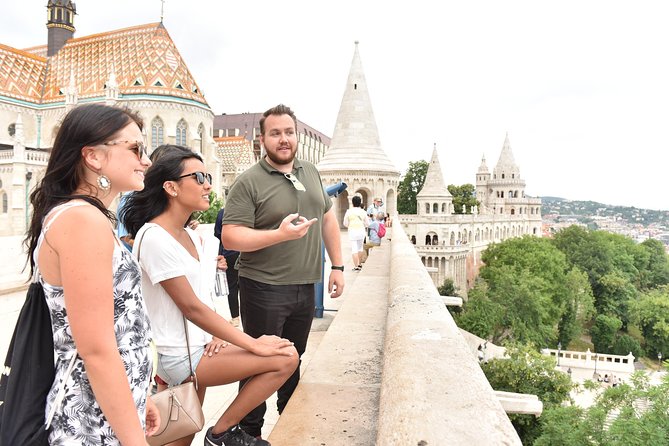
If you’re short on days, Budapest can be a little unfair. There’s too much to see, and the city’s points of interest are spread out between Pest and Buda. This tour solves that problem by stitching together the most famous landmarks into one logical loop, with enough time at each stop to look around, not just pose for one photo.
The best part is that it’s not only sightseeing. You get a private guide who can answer questions on the spot and adjust the order or emphasis based on what you actually want. That’s a big deal in Budapest, where a quick explanation can turn a pretty building into something you understand. It’s also just more comfortable: fewer lines, less guesswork, and less mental math about where to go next.
Still, it’s not a slow day. Expect a lot of movement over roughly 7 hours 30 minutes. If your idea of a perfect day is lingering for hours in one museum, this will feel like a sprint. But if you want your time to count, it’s one of the best ways to do Budapest hits without wasting hours in transit.
You can also read our reviews of more tours and experiences in Budapest



Price and what you really get: metro pass, lunch, and fewer logistics headaches
At $228.27 per person, this isn’t a budget-only option. The value is in the package: pickup, a private guide, a set route through top sights, plus lunch and dessert at a traditional Hungarian restaurant. There’s also a public transportation ticket component, so you’re not stuck figuring out how to bounce between districts all day.
You’re also getting included time at a bunch of stops marked free admission in the tour plan. That matters because Budapest has plenty of attractions where you can easily stack up extra costs if you’re planning everything independently.
What could change your math is the interior tickets. Some major attractions in this day are not included on the tour plan, including:
- St. Stephen’s Basilica
- Hungarian Parliament Building
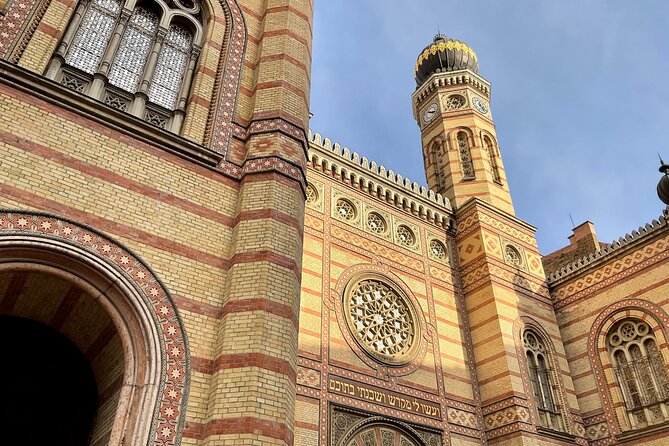
- Great / Central Synagogue
- Matthias Church
If you’re the type who wants to go inside all of them, you’ll need extra budget anyway. The upside is that your guide can help you choose which interiors are worth your time and money.
Finally, this tour is popular enough that it’s commonly booked about 73 days in advance, so if your dates are fixed, plan ahead.
How the day flows: from grand squares to the Danube views
This tour is built like a sightseeing arc. It starts with Pest’s most symbolic landmarks, moves through famous boulevards and major churches/opera, crosses into classic Danube-and-Buda territory, then finishes with a local-market stop.
That rhythm is practical. You start where the city makes its big statements—national monuments and ceremonial squares—then you head toward architecture that looks like it came straight out of a postcard. After that, you get the payoff: Buda Castle District panoramas from Fisherman’s Bastion, plus the kind of landmark views that make you stop walking for a minute just to stare.
One more practical note: the tour runs in all weather conditions and asks you to dress appropriately. Budapest winters can be sharp, and many days are gray. The pacing here still makes sense because you’re not stuck in one place waiting out weather; you’re constantly moving between stops.
Heroes’ Square and the story behind Budapest’s biggest statues
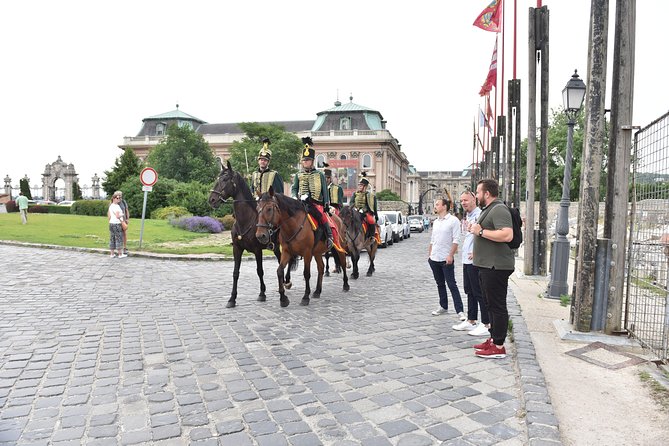
The day begins at Heroes’ Square (Hősök tere), one of the city’s major squares and a natural place to start if you want the “why” behind Budapest’s symbols. The statue complex features the Seven chieftains of the Magyars and other important Hungarian national leaders, which gives you a quick visual map of what the nation chose to remember and honor.
A fun detail: the memorial stone of heroes is often confused with the Tomb of the Unknown Soldier. Your guide can clear that up, and the correction is useful because Budapest is full of monuments where names and functions get mixed up by guesswork.
This is also a great first stop because it’s open and easy to orient yourself. Even if you’re not a history person, you’ll get something out of it: context. You’ll understand why later stops feel like they belong to the same story.
Széchenyi Baths: a major landmark that’s also a cultural pause
Next comes Széchenyi Medicinal Bath, often described as the largest medicinal bath in Europe. Even if you don’t treat baths as a must-do, this is still worth it here because it’s a classic Budapest experience and a landmark with real identity.
Two facts you’ll hear on the spot: the water is supplied by two thermal springs, with temperatures of 74°C and 77°C. That makes the bath feel less like a random tourist stop and more like a place built around the city’s natural resources.
The tour plan includes this as a free-admission stop, so you’re not paying separately for the entry time. You’ll want to use the time wisely. If it’s cold outside, the bath area can be a warm reset. If it’s warm, you can use the downtime to people-watch and appreciate the setting.
You can also read our reviews of more tours and experiences in Budapest




City Park’s Vajdahunyad Castle: a “storybook” stop with real history
Then you’ll be at Vajdahunyad Castle in City Park. It’s the kind of place that looks like multiple eras got folded into one building. It was built in 1896 for the Millennial Exhibition, which celebrated 1,000 years since the Hungarian Conquest of the Carpathian Basin in 895.
This stop works well in a day like this because it’s visual. You don’t need to spend forever reading plaques to get the idea: Budapest knows how to celebrate its past with architecture that looks dramatic even from a distance.
If you’re short on time, this is still worth the visit because it’s one of those “pause and look around” places. On a busy schedule, quick, satisfying stops like this keep the day from turning into nonstop walking.
Andrássy Avenue and the Hungarian State Opera House: where style meets power
From there, you’ll walk along Andrássy Avenue (Andrássy út), a boulevard dating back to 1872. It links Erzsébet Square with Városliget, and the whole stretch is recognized as a World Heritage Site since 2002. That’s the kind of credential that matters here: the street isn’t just pretty, it’s historically significant.
You’ll also spend time at the Hungarian State Opera House (Magyar Állami Operaház) on Andrássy út. This neo-Renaissance opera house was designed by Miklós Ybl, a major figure in 19th-century Hungarian architecture. Even if you don’t go inside, the building’s presence is a reminder that Budapest’s cultural life is part of its national identity, not an afterthought.
Practical tip: if you care about interiors, ask your guide what timing and ticket options make sense for your preferences. In this tour plan, the opera House stop is brief, so treat it as a landmark moment unless your day’s plan includes extra time.
St. Stephen’s Basilica and Liberty Square: faith, symbols, and civic life
Next is St. Stephen’s Basilica (Szent István-bazilika). The big detail tied to this church is that it’s named for Stephen, the first King of Hungary, and his right hand is housed in a reliquary. That’s not just trivia; it explains why this is a destination, not only a pretty building.
Important: in the tour plan, St. Stephen’s Basilica admission is not included, so you’ll decide on your own whether you want to pay for entry.
You’ll then reach Liberty Square (Szabadság tér). This is a more modern-feeling contrast: it’s a mix of business and residential, and it’s anchored by major institutions, including the United States Embassy and the historicist-style headquarters of the Hungarian National Bank. It’s a good stop for a breather because it’s not only about stone-and-statues. It shows you Budapest as a working capital.
Parliament’s grand exterior, the Chain Bridge, and a cultural crossroads
The day continues with a look at the Hungarian Parliament Building (Országház). It’s described as the seat of the National Assembly and one of Budapest’s standout landmarks. The tour plan marks Parliament interiors as not included, so you may simply do exterior viewing unless you buy extra access.
After that, you’ll go to the Széchenyi Chain Bridge, which spans the Danube between Buda and Pest. This bridge is one of those “you know it instantly” places. Even with limited time, you’ll understand why it’s used so often in photos: it’s a visual connector between the city’s two sides.
From there, the route moves toward the Jewish quarter area for the Great / Central Synagogue (Nagy Zsinagóga). The tour plan notes admission is not included, so you’ll decide if you want to add that on. If you do, your guide can help you understand why the synagogue is such an important piece of the neighborhood’s story.
Matthias Church, Fisherman’s Bastion, and the Buda Castle viewpoint payoff
On the Buda side, you’ll stop at Matthias Church (Mátyás-templom), also known as the Assumption Church of the Buda Castle and sometimes referred to as the Coronation Church of Buda. The tour plan lists admission as not included, so you’ll likely focus on the exterior and square area unless you add tickets.
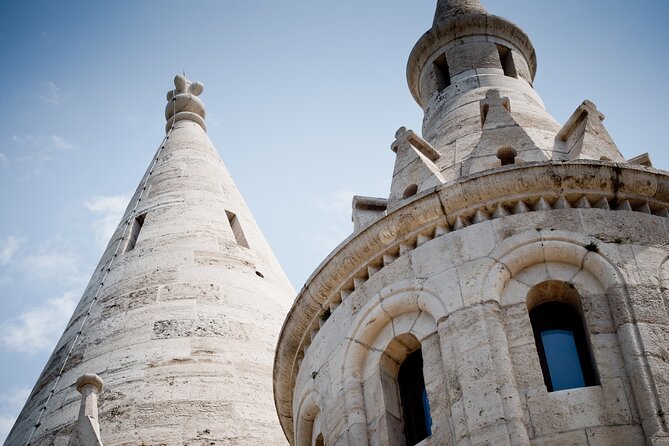
Then comes the moment that makes this day worth it for many people: Fisherman’s Bastion. The big draw is the panorama. The lookout terraces offer classic views over Budapest, and the structure is known for its Neo-Romanesque style. Even if you’re not obsessed with architecture, the view is the whole point here.
This is also where your guide’s timing matters. If the weather is decent, you’ll want to spend a few extra minutes here just looking. If it’s gray or windy, this is still a great place to get those postcard angles quickly before moving on.
Central Market Hall and lunch: eating like you live here
Mid-to-late in the day, you’ll have lunch and dessert at a traditional Hungarian restaurant, plus time for Central Market Hall (Nagyvásárcsarnok). The market stop is listed as free admission in the plan, and it’s worth using the time to browse, snack if you want, and get a feel for everyday Budapest.
Central Market Hall is described as the largest and oldest indoor market in Budapest. It traces back to Károly Kamermayer, the first mayor of Budapest, whose investment helped make the hall happen. He retired in 1896 and was at the opening ceremony on February 15, 1897. That kind of detail helps the market feel grounded in real city history, not just a place to buy souvenirs.
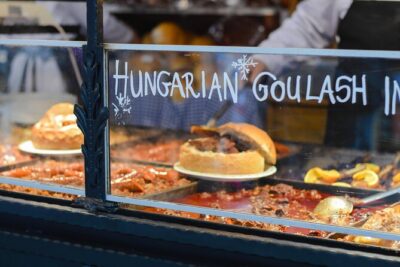
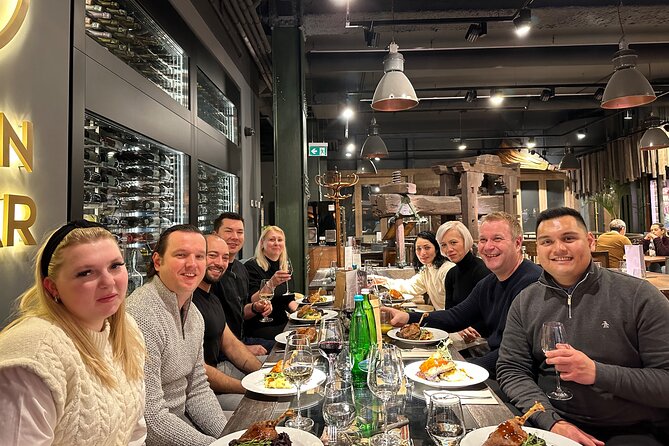
Lunch is one of the most practical parts of the tour’s value. You’re not left hunting for food between landmarks. You also get traditional Hungarian food and wine as part of the experience, which matters because you’re learning the basics of what locals actually order rather than guessing blindly. (There’s also a minimum drinking age of 18, so if you’re traveling with younger folks, you’ll still have food options.)
Metro pass tips so you spend more time seeing and less time figuring it out
This tour includes public transportation tickets, which is a real convenience in Budapest. The city can be easy to walk in parts, but the fastest route between districts often depends on transit.
Here’s how I’d use this to your advantage:
- Treat the metro pass as your buffer. If one stop runs long, you won’t lose the entire day to rerouting.
- Wear shoes you can handle for a full walking day. Even when entrances are free, you still have to get from place to place.
- Ask your guide how to use the pass for the next hop. That small question can save you real time, especially if you’re not familiar with the network.
Also, since this is offered with hotel pickup and drop-off, the start and finish are simpler than many self-guided days. That’s especially nice if you’re arriving with jet lag.
Who should book this tour, and who should skip it
Book it if:
- You want Budapest’s top landmarks in one day without building the plan yourself.
- You like architecture and civic history, but you also want a food break that feels local.
- You prefer a guided day with flexibility, not a rigid group bus route.
Skip it if:
- You want lots of museum time or long interior visits at each stop. Several interiors aren’t included, and the overall pace is designed to keep the day moving.
- You’re traveling with someone who hates walking for long stretches. Even with frequent landmark breaks, it’s still a full-day outing.
If you’re on the fence, I’d treat this as a “first Budapest day” or a “last Budapest day” tour. Use it to get oriented fast, then decide what to return to on your own. That approach turns a packed schedule into a smarter itinerary rather than a rushed one.
FAQ
How long is the Budapest Greatest Hits tour?
The tour lasts about 7 hours 30 minutes.
What’s the price per person?
The price is listed as $228.27 per person.
Does the tour include hotel pickup and drop-off?
Yes. Pickup is offered, and your guide will meet you at your requested location, then provide drop-off at the end.
Is lunch included?
Yes. Lunch and dessert are included at a traditional Hungarian restaurant.
Does the tour include public transportation tickets or a metro pass?
Yes. Public transportation tickets are included as part of the experience.
Is this tour private?
Yes. It’s a private tour/activity, and only your group participates.
Are attraction entry fees included for everything on the route?
Admission is free for several stops, but some are not included—specifically St. Stephen’s Basilica, the Parliament Building, the Great Synagogue, and Matthias Church.
What language is the tour in?
The tour is offered in English.
Can I cancel for a full refund?
Yes. You can cancel up to 24 hours in advance for a full refund.
Is there an age requirement for children or alcohol?
Children must be accompanied by an adult. The minimum drinking age is 18.