REVIEW · WALKING TOURS
Budapest Orientation Walking Tour
Book on Viator →Operated by Tourist Angel · Bookable on Viator
Strolling Budapest beats getting lost. This 3-hour orientation walking tour helps you read the city fast, with a guide leading you through major landmarks on foot plus a short public-transport hop for the castle area, all using a mobile ticket. It’s offered in English and runs at multiple times, which makes it easier to fit into a first-day schedule.
I like how it hits both sides of the Danube—Buda viewpoints and Pest landmarks—so you come away with real spatial sense, not just a list of monuments. I also love the human factor: guides can tailor the pace, and you’ll get personal attention since it’s a private activity for your group.
One consideration: you should budget for extra transit and optional entries. Public transport is 4 EUR/person for the ride to and from the Castle of Buda, and some buildings (and the inside of Matthias Church) cost extra.
In This Review
- Key highlights to watch for
- Why this Budapest orientation tour works on day one
- Meeting at Szent István tér and keeping the pace friendly
- St. Stephen’s Basilica: the mummified hand and the big art details
- St. Stephen’s Square: a short stop that sets the scene
- Hungarian Parliament exterior: the photo angles you’ll actually use
- Getting to Buda Castle with a smooth public-transport hop
- The Royal Palace panoramic terrace: where the city finally clicks
- Fountain of King Matthias: a quick beauty break
- Sandor Palace and the president’s guards in uniform
- Fisherman’s Bastion: the Danube panorama that earns its reputation
- Matthias Church: the Gothic finish (and a ticket option)
- Price and value: what you pay, what you still might spend
- Guides that can change the experience: real-world examples
- Weather and clothing: Budapest’s “all conditions” attitude
- Who should book this tour (and who might want a different plan)
- Should you book the Budapest Orientation Walking Tour?
- FAQ
- How long is the Budapest Orientation Walking Tour?
- What does the tour cost?
- Where do I meet and where does it end?
- Is the tour mostly walking?
- How much are the public transport tickets?
- Are entrances included?
- What language is the tour offered in?
- Does the tour run in bad weather?
- Is this tour private?
- Can I cancel for a full refund?
Key highlights to watch for
- A quick “you are here” map of Budapest built from real streets and viewpoints
- St. Stephen’s Basilica entry included, so you can focus on the art and stories
- Photo stops that make sense: Parliament exterior angles and big castle-terrace views
- Guides who adapt when weather turns nasty or your timing gets tight
- Finish in the Castle District near Matthias Church, where you can keep exploring
Why this Budapest orientation tour works on day one
If Budapest is your first stop in Hungary, you want two things: an easy route and a few strong reference points. This tour is built for that. In about three hours, you’ll see the city’s main “chapter headings” so later, when you roam on your own, streets start to make sense.
The pace is practical. It’s mostly walking, but the tour doesn’t force you to slog up every hill under your own steam. You’ll use public transport for the Castle of Buda area, which keeps the experience feeling like an orientation (not a workout challenge).
You can also read our reviews of more walking tours in Budapest



Meeting at Szent István tér and keeping the pace friendly
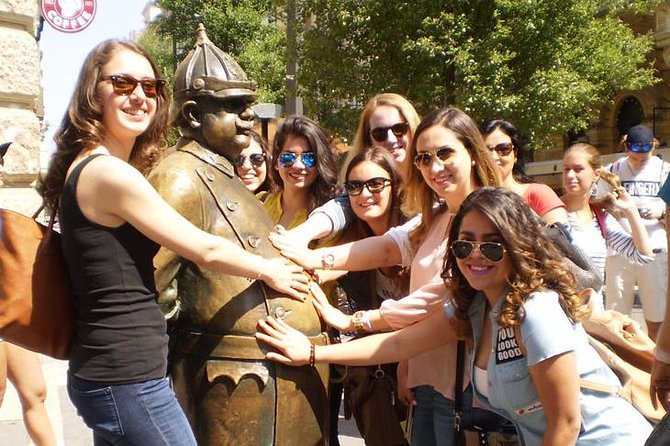
You start at Budapest, Szent István tér 4 (1051), a spot that’s easy to reach with public transport. The tour ends at the Castle District area near Szentháromság tér 2 (1014), close to where you’ll find Matthias Church.
Because it’s scheduled at multiple times and runs in all weather conditions, you can pick a slot that matches your energy. And if it’s raining, plan on the guide keeping everyone moving rather than stopping to admire statues for too long.
The best part of this format is how it protects your day. You don’t spend hours researching where to go next. You follow a guide from one landmark to the next, learning what each place represents and how it connects to the rest of the city.
St. Stephen’s Basilica: the mummified hand and the big art details
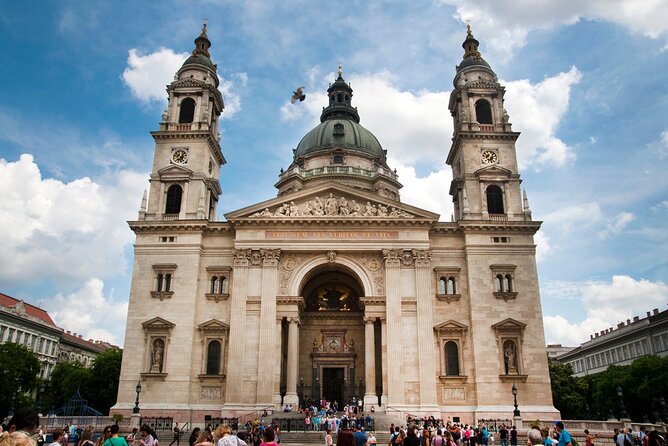
Your first stop is St. Stephen’s Basilica (Szent István Bazilika), Budapest’s most monumental religious building. You’ll have time to take in the statues and frescoes, and you’ll also hear about one of its most famous curiosities: the mummified right hand of Saint Stephen the First (dating from 1038).
This is a powerful opening because it anchors the tour in Hungarian identity—religion, state history, and symbolism all show up in the same place. The basilica is open every day, except Sunday morning religious service, so if you’re visiting on a Sunday, it’s smart to double-check your timing.
Entry time is about 30 minutes, and since the basilica ticket is included, you’re not hunting for lines or confusing ticket counters. You can just focus on what you’re seeing and let the guide translate the meaning behind the visuals.
St. Stephen’s Square: a short stop that sets the scene
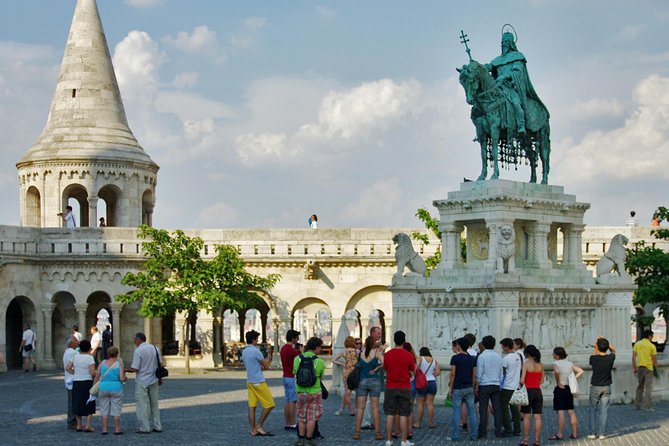
Next comes St. Stephen’s Square, just in front of the basilica. It’s not a long visit—think about 10 minutes—but it matters.
Squares like this are how Budapest shows you what was planned to be central, ceremonial, and walkable. Even a quick look helps you understand the city’s “layout language,” so later, when you’re near the Danube and the castle, your brain can connect the dots.
Hungarian Parliament exterior: the photo angles you’ll actually use
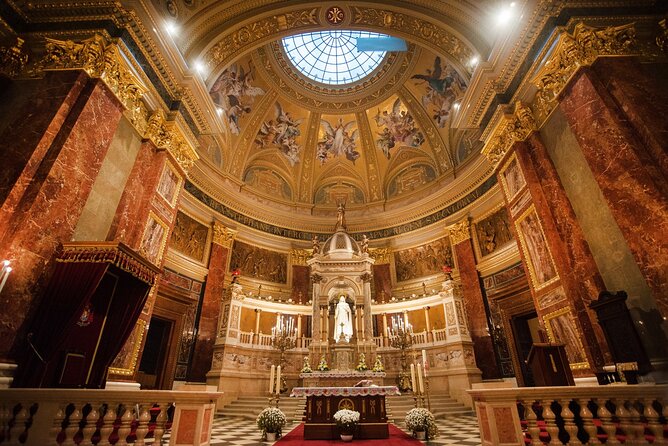
Then you head to the Hungarian Parliament Building, a late-19th-century masterpiece known for its scale and drama. Your time here is about 15 minutes, with emphasis on walking around outside and finding strong photo spots.
Important money note: the Parliament exterior stop is not included with admission. That’s fine for this tour’s purpose. The goal is orientation and viewpoints, not a full museum visit. If you want inside access later, you can decide based on your interests and time.
Even without going in, this stop has payoff. Parliament sits at the center of the city’s political story, and from nearby angles you’ll start noticing how the Danube acts like a corridor linking major sites.






Getting to Buda Castle with a smooth public-transport hop
The tour then shifts into the castle story. You’ll take public transport to the Castle of Buda, using included guidance but paying the transport separately. The total public transport budget listed is 4 EUR/person.
This is a smart setup. Castle areas can be steep and time-consuming if you’re trying to do it all by foot. By using transport strategically, the tour gives you the key vistas without turning your afternoon into a knee test.
Once there, you’ll get about 50 minutes in the Castle District. That longer chunk is where the orientation becomes real, because it’s hard to grasp Buda’s geography without standing at the right heights.
The Royal Palace panoramic terrace: where the city finally clicks
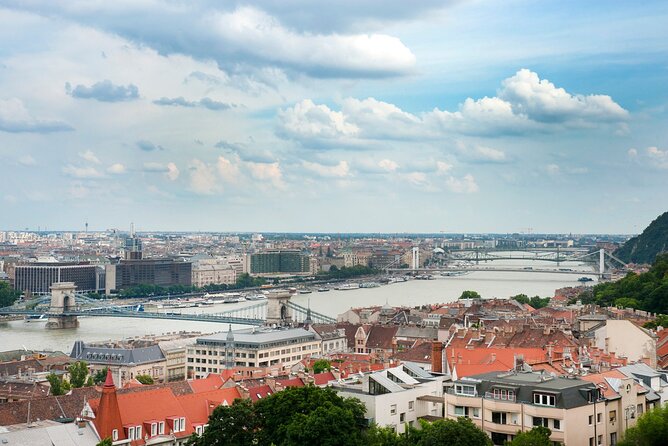
Inside the castle area, you’ll explore the panoramic terrace of the Royal Palace. This is where you get one of the tour’s biggest “aha” moments: the view shows how Pest’s wide streets and the Danube’s curve relate to the castle heights above.
This terrace stop is the heart of the Buda side. It’s also where you can reset your bearings, look back at what you’ve already seen, and plan a self-guided wander later. If you like skyline views and you want a confident sense of direction, this is the moment to linger.
Even in bad weather, you’ll usually still get a meaningful view, though rain can blur details. Dress for wet walking and bring the habit of wiping your phone lens once you’ve set your angle.
Fountain of King Matthias: a quick beauty break
After the terrace, the route stops by the Fountain of King Matthias, a 19th-century fountain. It’s a 10-minute pause, mostly for visual impact and a little variety in the scenery.
This short stop keeps the tour from feeling like a machine of big buildings only. It also gives you a softer, human-scale photo moment before you go into more ceremonial and fortress-like spaces.
Sandor Palace and the president’s guards in uniform
Then you move from the castle area to Sandor Palace, the palace of the president. You’ll see the palace grounds and the guards in historical uniforms.
This stop is about 15 minutes, and it’s not included with admission, so it’s mainly an exterior look. Still, it’s a memorable contrast to the basilica’s religious symbolism and Parliament’s political symbolism. Here you’re seeing state presence through tradition and ceremony.
Fisherman’s Bastion: the Danube panorama that earns its reputation
Next up is Fisherman’s Bastion, one of Budapest’s most famous viewpoints. You’ll have about 15 minutes here to admire the panorama over the Danube and toward the Hungarian Parliament Building.
This stop works because it connects what you’ve seen. Parliament isn’t just a standalone facade now—it’s a landmark in your line of sight from across the river. The bastion turns the city map into a view you can remember.
Like other non-admission stops, it’s built for orientation and photos. If you want deeper exploration of the bastion itself, you can return later once you know where everything sits.
Matthias Church: the Gothic finish (and a ticket option)
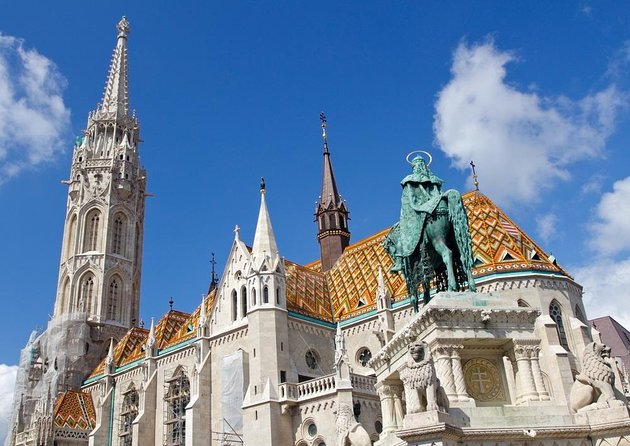
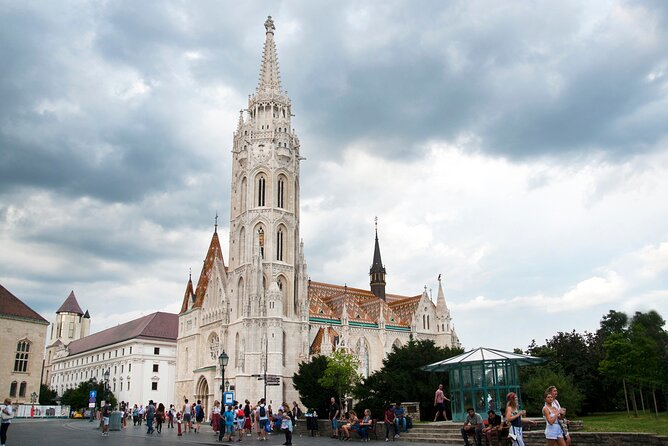
Your tour ends at the area around Matthias Church in the Castle District. You’ll get about 15 minutes outside and in the surrounding area, with the option to visit inside afterward if you want.
The inside visit is possible with an extra ticket costing 5 EUR/person, paid separately. That matters because many people think “Matthias Church” automatically means inside, but your tour is designed to end before that decision. You can choose based on your energy and interest.
The church’s Gothic style is a satisfying final note. By the time you arrive, you’ll have already seen the basilica’s grandeur, Parliament’s civic power, and Buda’s commanding views—so Matthias feels like a coherent capstone, not a random stop.
Price and value: what you pay, what you still might spend
The price is $42.01 per person for about 3 hours. For many first-time visitors, this is good value because it compresses a lot of heavy sightseeing into one efficient walk-and-view plan with a professional guide.
What’s included:
- A professional guide
- Entry fee to St. Stephen’s Basilica (the tour is set up so you can use it)
What’s not included (and you should plan for):
- Public transport tickets: 4 EUR/person (to the Castle of Buda and for the return)
- Admission not included for some stops like Parliament, Sandor Palace, Fisherman’s Bastion
- Matthias Church interior if you want to go in: 5 EUR/person extra
The value play here is mostly time and clarity. Instead of figuring out which sites deserve your attention and in what order, you get a guided route that hits the right “anchors.” If you’re traveling with limited time, that’s often worth more than a cheaper self-guided stroll.
Guides that can change the experience: real-world examples
One thing that really shines with this tour is how different guides bring it to life. In the group, you may hear stories that make the places feel less like postcards.
For example:
- Dominik was praised for being extremely knowledgeable and for sharing extra info about other landmarks along the walk.
- Bea led an experience that felt especially smooth and friendly, with guests appreciating the private feeling even when the group was small.
- Joel handled a rainy day well and kept guests engaged while still giving a solid overview of both Buda and Pest.
- Dalia adjusted the planned route when a guest needed to catch an earlier flight—so the tour didn’t feel rigid.
- Naomi was noted for covering both sides of the Danube and explaining Hungarian history and culture clearly.
- Kaitlin added useful local flavor, including details about cakes and sculptors.
- Vera was described as passionate and even as speaking perfect Portuguese, which shows how seriously the company takes language comfort when possible.
You won’t control the guide you get, but you can control your expectations: this is a guided orientation, and it tends to work best when you engage and ask questions. If you show up ready to listen, you’ll leave with much more than photos.
Weather and clothing: Budapest’s “all conditions” attitude
The tour runs in all weather conditions, so you should dress for walking in rain, wind, and cool temps. Budapest can change quickly, and the route involves both streets and open-view stops.
My practical tip: bring shoes you can trust on wet pavement and hills. Pack a small layer you can take off once you’re moving. And if you’re photographing, wipe your lens right after you get to each viewpoint so you don’t lose your shots to smears and mist.
Who should book this tour (and who might want a different plan)
This tour is a strong choice if:
- You want an orientation on your first day in Budapest
- You prefer walking with a guided storyline
- You’d rather spend 3 hours learning the city than 3 hours debating where to go
It’s also ideal if you like viewpoints. The Royal Palace terrace and Fisherman’s Bastion give you the kind of skyline and river perspective that makes future wandering easier.
You might choose something else if:
- You want a lot of indoor museum time
- You’re hoping for a fully ticketed visit inside multiple major sites
- You dislike paying extra for transport and optional entries
For most people, though, this sits in a sweet spot: you get the core landmarks, you learn what they mean, and you end in a great area for continued exploring.
Should you book the Budapest Orientation Walking Tour?
If you only have half a day to get your bearings, I’d book it. The route is built around the places that help you understand Budapest’s geography: basilica to square to Parliament to Buda Castle viewpoints to Fisherman’s Bastion and a Gothic finish at Matthias Church.
Choose it especially if you value guided context. A good guide turns stone and scenery into a mental map you can use the rest of your trip. And the guides in this experience have a track record of keeping things engaging—even when it’s raining or plans shift.
Just go in with two expectations: it’s mostly walking, and a couple of items cost extra (public transport and optional interior entry). If you’re fine with that trade-off, this is one of the more efficient ways to start Budapest on the right foot.
FAQ
How long is the Budapest Orientation Walking Tour?
It runs for about 3 hours.
What does the tour cost?
The price is $42.01 per person.
Where do I meet and where does it end?
You meet at Budapest, Szent István tér 4, 1051 Hungary. The tour ends in the Castle District area near Szentháromság tér 2, 1014 Hungary.
Is the tour mostly walking?
Yes. It’s mostly on foot, with public transport used to reach the Castle of Buda and to return.
How much are the public transport tickets?
Public transport tickets cost 4 EUR/person.
Are entrances included?
St. Stephen’s Basilica entry is included. Admission to other stops like Parliament is not included. If you want to go inside Matthias Church, the ticket costs 5 EUR/person paid separately.
What language is the tour offered in?
The tour is offered in English.
Does the tour run in bad weather?
Yes, it operates in all weather conditions, so dress appropriately.
Is this tour private?
Yes. It’s a private activity, meaning only your group participates.
Can I cancel for a full refund?
Yes. You can cancel up to 24 hours in advance for a full refund.