REVIEW · FOOD
Budapest Market and Food Tasting Tour with a Local Guide
Book on GetYourGuide →Operated by Magical Budapest Small Group & Private Tours · Bookable on GetYourGuide
Budapest is famous for ruin bars, but the market is the real show. This 3-hour walk-and-taste trip pairs the Great Market Hall with a simple plan: eat your way through Hungarian comfort food while learning how the city thinks about food. You’ll get a licensed guide who’s also a food person, so the stops feel practical, not performative.
What I like most is the mix of tastings and sights. You’re not just sampling bite-size food; you’re also walking past landmark-level sights like the Public Library (a former palace) and the National Museum, so you’re building context while your stomach fills up.
One thing to consider: the exact foods and tastings can shift with season, opening hours, and timing. If there’s one item you really want (like a specific sweet, drink, or snack), tell the guide ahead so you’re not left guessing.
In This Review
- Key highlights
- Great Market Hall: where your appetite and your bearings meet
- Your walking route: landmark stops mixed into real food breaks
- The main tastings: soup, sausages, snacks, and Hungarian comfort food
- Chimney cake: the sweet stop that also makes sense of Hungarian treats
- Drinks and Hungarian pálinka: what to expect and how to handle it
- Two licensed guides, plus the “real conversation” factor
- Price and value: is $86 worth it for 3 hours of tasting?
- Timing, hunger level, and how to get the most out of your 3 hours
- Should you book this Budapest market-and-food tasting?
- FAQ
- What is the meeting point for the Budapest Market and Food Tasting Tour?
- How long is the tour?
- What foods and drinks are included?
- Is the tour available in English?
- Is there a private group option?
- Is free cancellation and pay-later booking available?
Key highlights
- Great Market Hall start with an overview of the market and local food culture right away
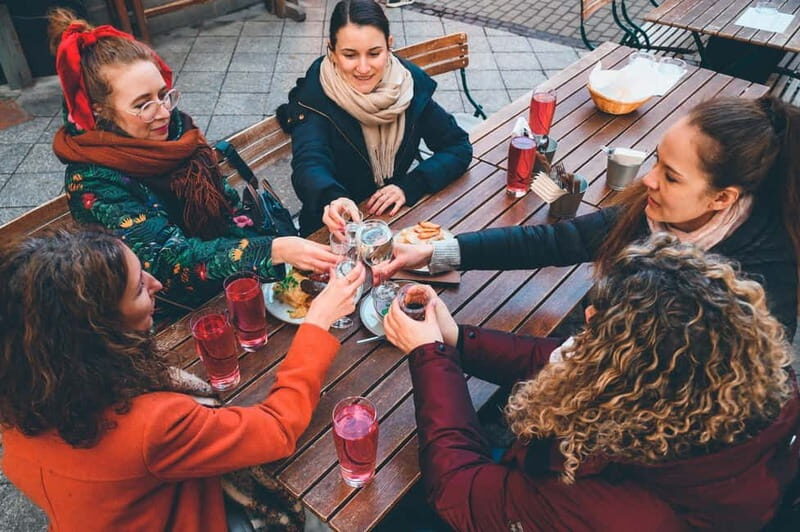
- 10+ tastings across at least 5 places, including hot food, drinks, dessert, and street-style favorites
- Hot meals + Hungarian alcohol like pálinka, plus local wine and non-alcoholic options
- Chimney cake and lángos make this feel like a real Hungary “greatest hits” snack run
- Licensed, two-guide team that can answer both food questions and everyday culture questions
- Small-group pacing that helps you meet other people without feeling rushed
Great Market Hall: where your appetite and your bearings meet
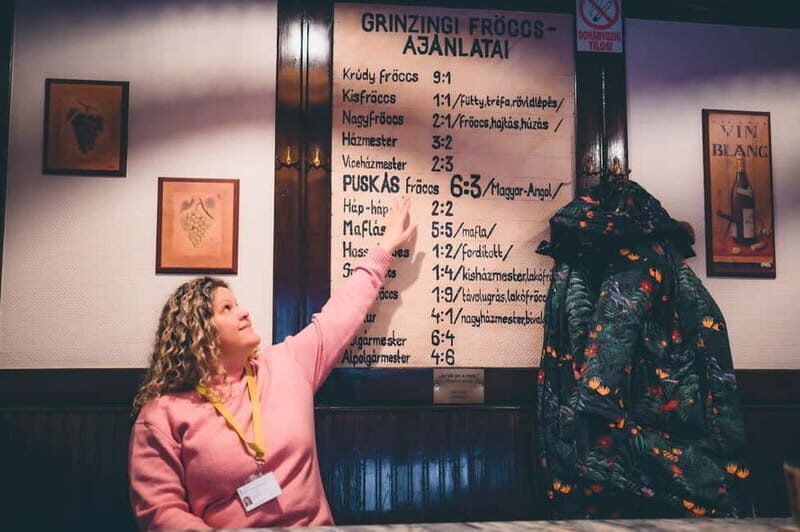
The tour begins at the Main Entrance of the Great Market Hall. You’ll spot your guide by the tour guide badge, which sounds small, but it matters in a busy place. This is one of those spots in Budapest where it’s easy to wander around staring at food, then later realize you didn’t actually taste the good stuff.
Before the eating starts, the guide gives you a historical and cultural overview of the market hall and the surrounding area. You don’t need a textbook. You just need the why behind what you’re seeing. Markets in Hungary aren’t only about buying ingredients; they’re about food culture—how people shop, what they eat across seasons, and what shows up on tables during everyday life and celebrations.
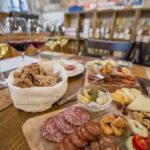
Then you get two tastings inside the hall: a charcuterie board-style stop and pastries. This works well as a warm-up. It gets you tasting right away, and it also helps you calibrate what Hungarian flavors are like before the tour turns into hot food, drinks, and dessert.
If you like tours that give you direction without killing your freedom, this opening is a strong start. You’ll leave with a better sense of what the market sells beyond souvenirs, and you’ll know what you’re looking at when you return on your own.
You can also read our reviews of more food & drink experiences in Budapest


Your walking route: landmark stops mixed into real food breaks
This experience is designed as a combo: a food tour plus a classic walking route. That matters because you can eat and learn at the same time, instead of doing separate half-days that compete with each other.
You’ll cover important sights as you go, including the Public Library and the National Museum. The Public Library is described as a former palace, and that detail changes how you read the building. Instead of just seeing another grand facade, you get a sense that Budapest keeps reusing impressive structures for modern life.
Along the way, you can ask questions far beyond the menu. The guides are licensed and can handle history and culture questions, not just food trivia. That’s a plus if you want real conversation—how people live now, why certain dishes show up often, and what to watch for when you walk around town later.
Also, the pacing is built for mingling. This isn’t a silent, line-up snack marathon. You’ll have time to meet other people during tastings and move at a human speed between stops.
If you’re the kind of traveler who likes your itinerary to have a little structure but still leave room for curiosity, this blend of sights and food breaks is a good fit.
The main tastings: soup, sausages, snacks, and Hungarian comfort food
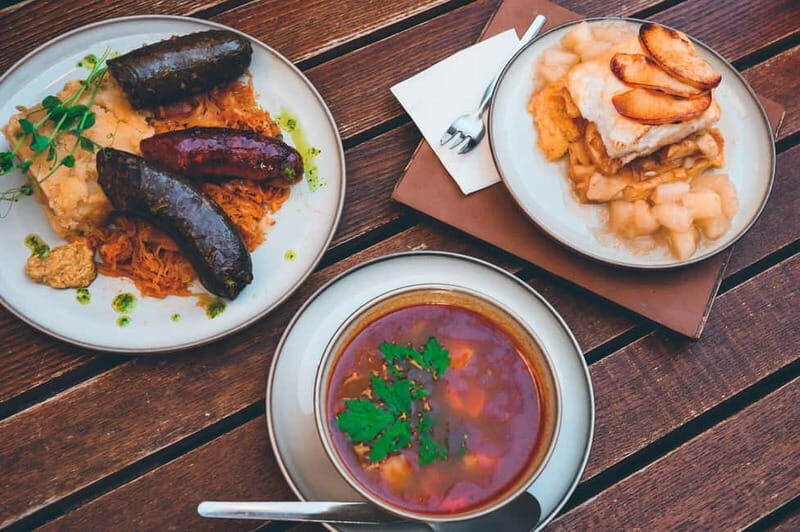
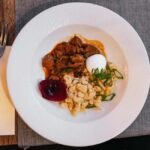
After the market hall start, the tour moves into a more full-on food phase. You’ll visit a local eatery for hot meals and drinks, and you’ll also sample other bites along the way—bar snacks and hearty classics.
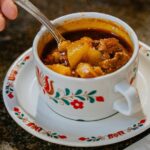
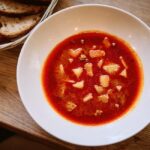
One included highlight is goulash soup (or another local soup). This is the kind of dish that immediately tells you what Hungarian comfort food feels like: filling, warm, and made for people who like strong flavor and straightforward satisfaction. Even if you’re not a “soup person,” it’s a great baseline dish for the rest of the meal plan.
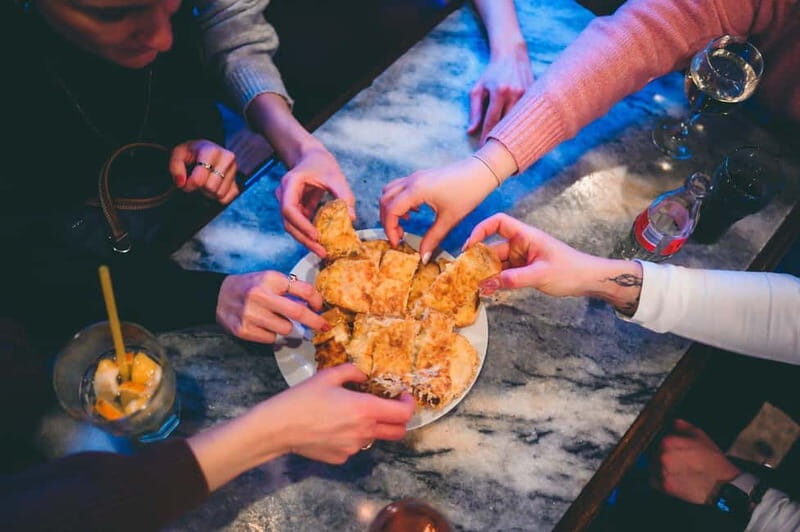
You also get included sausage tastings. Sausage in Hungary isn’t just a side idea—it’s part of the daily food identity. The tour doesn’t treat sausage like a tiny garnish either. It’s part of the tasting sequence, which means you’re learning how it compares to other bites you try later.
Bar snacks show up too, and that’s a smart choice. If you’ve got a night planned in Budapest, these snacks help you understand what’s typical when locals have drinks. You’ll be able to order with more confidence after the tour instead of playing “guess and hope.”
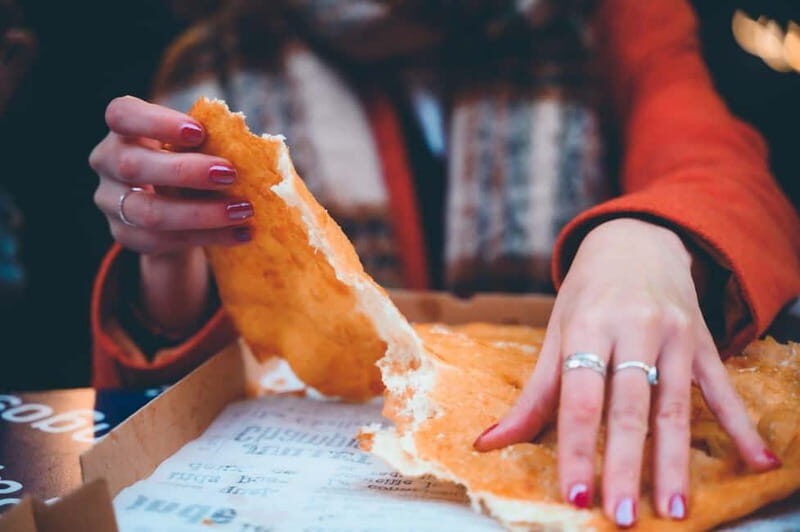
Then comes a street-style favorite included on the tour: lángos. It’s one of those foods that’s hard to replicate well if you just wander in the wrong place. Here, you’re sampling it as part of a planned tasting run, which is exactly what you want when you’re short on time.
The best part of this “hot food + snacks” design is how it avoids the usual trap: ending up with only desserts and sweet drinks. You’ll get enough savory variety that your dinner plans later feel lighter, not ruined by overeating.
Chimney cake: the sweet stop that also makes sense of Hungarian treats
A lot of tours throw in dessert and call it a day. This one treats sweet and savory as equals.
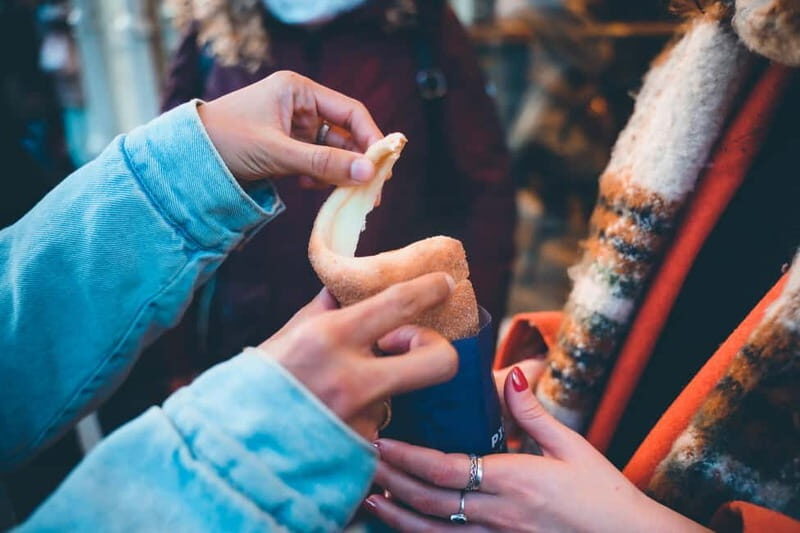
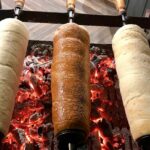
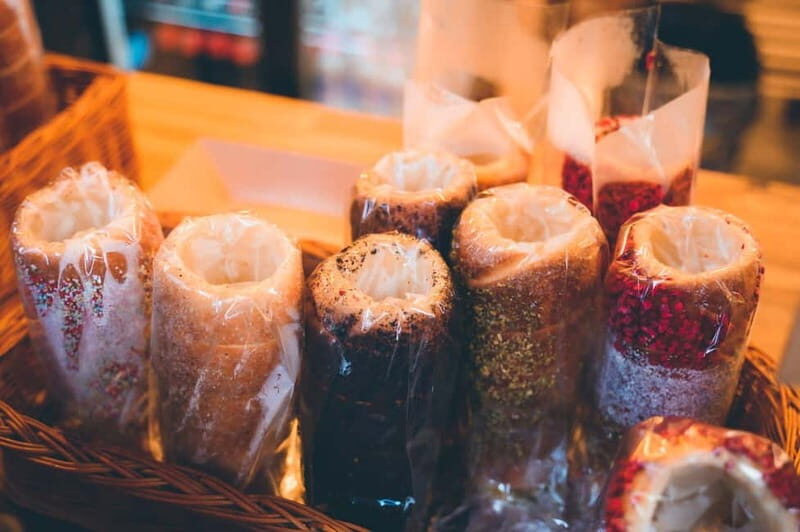
You’ll visit a confectionery for cakes and coffee, and you’ll also get chimney cake as part of the program. Chimney cake is one of those Hungarian treats people talk about because it’s memorable—warm, sweet, and usually served fresh. In a walking food tour, that freshness matters. It’s not the same as buying something pre-wrapped and hoping it still tastes great later.
What I like about pairing chimney cake with other cake tastings is that you get contrast. You taste a pastry style that feels “special” and then another cake style that’s more everyday-sweet in comparison. You start to notice what makes Hungarian desserts different: not only the sweetness, but the texture and how the flavors balance.
If you’re the type who loves sweets but doesn’t want to feel like you’re stuck eating sugar for three hours, this sequence is more balanced than it sounds. There’s enough savory along the way that the sweet stops actually feel like a reward.
Drinks and Hungarian pálinka: what to expect and how to handle it
Food tours can be two things: either they’re mainly about the meal, or they’re mainly about the drinks. This tour does both, without pretending everyone wants alcohol the same way.
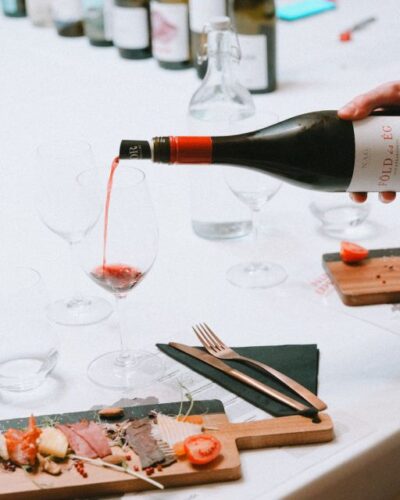
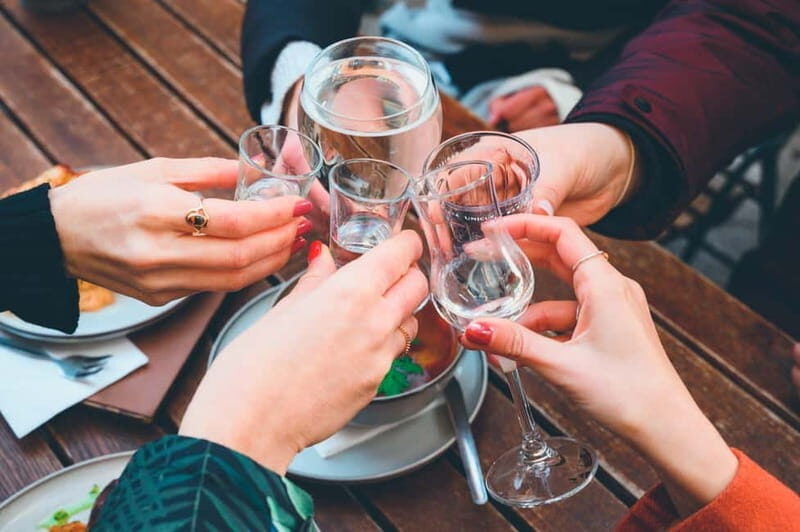
Included in the tasting plan is Hungarian alcohol, including pálinka, plus Hungarian wine. There are also local options like juice if you’re not drinking. That flexibility is useful, even if you do want to sample alcohol—you can pace yourself rather than feeling forced into everything.
Pálinka deserves its own mention because it’s a very Hungarian kind of strong spirit, and it can hit harder than people expect. You’re not expected to turn it into a drinking contest. Instead, it’s included as a tasting experience, the way it belongs in local food culture: a small sample tied to the meal.
Wine is also included, which is nice because it gives you a comparison point. After tasting wine and then pálinka (or vice versa, depending on the day’s flow), you start to understand how Hungarian drinks fit into the broader eating rhythm.
One practical note: pace your tastings. You’ll have hot food, snacks, dessert, and at least 10 tastings total. If you drink, do it slowly. If you don’t, you’ll still be able to enjoy everything because non-alcoholic local options are part of the included set.
You can also read our reviews of more tours and experiences in Budapest

Two licensed guides, plus the “real conversation” factor
The tour is run by two local guides. One is described as a former gastronomy journalist, and the other is a major foodie and restaurant enthusiast. That combo matters: you get both the storytelling side and the practical food obsession side.
This is where the experience feels more than just a checklist. During the walk, you can ask questions about Hungarian culture, history, and even day-to-day life. And because they’re licensed guides, the answers tend to have structure instead of feeling like random guesses.
It also comes through in how organized the day feels. The tour is set up so you don’t spend your 3 hours “figuring it out.” You’re guided from place to place, and the tasting plan is built in from the start.
That same organization extends to the vibe. You’ll have the chance to meet other people, not just stand in a line. The tour is also available as a private version for your group only, which is great if you want a calmer pace or you’re traveling with people who prefer not to mix.
A final nice touch: the guides keep in touch with guests during their stay and try to help after the tour. That can be helpful if you want follow-up ideas for what to eat or where to go next, based on what you actually liked during the tastings.
Price and value: is $86 worth it for 3 hours of tasting?
At $86 per person for a 3-hour tour, you’re paying for a few things at once:
- guided market and walking context
- access to multiple local food stops
- included tastings that add up quickly
The included list is where the value shows. You get a mix that includes goulash soup (or another local soup), sausage tastings, cake tastings with coffee, local alcohol or juice, local snacks, chimney cake, and lángos. On top of that, the tour plan guarantees a minimum of 5 places and 10 tastings.
If you tried to replicate this on your own, you’d spend time choosing places, figuring out which ones are actually worth it, and managing your schedule across the city. This tour compresses that decision-making for you. You get a guided route that’s focused on local foods rather than random tourist-friendly options.
Could you find some of these items cheaper solo? Sure. But you’d likely pay with time and uncertainty. For many visitors, that trade is not worth it. This tour gives you a structured, guided food crawl with built-in variety, plus landmark context.
Timing, hunger level, and how to get the most out of your 3 hours

The tour lasts about 3 hours, and start times depend on availability. That means you should plan your day so you’re hungry but not rushed. I’d treat this as a main meal or a heavy lunch rather than a light snack stop, because you’ll be tasting both hot and sweet foods.
Wear comfortable shoes. You’re doing a walking tour component, and you’ll move between the market and other spots on foot. Also, come with curiosity, not just a checklist. The best tours like this are the ones where you ask questions as you go—what to order next, what dish is typical, and what the guide recommends if you want to repeat the favorites later.
If you have strong preferences, use the chance to tell the guide. The tour notes that the exact tastings can vary by time of day, season, and opening hours. If you have a must-try item, mentioning it helps the guide tailor the experience within what’s available.
Should you book this Budapest market-and-food tasting?
Book it if you want a short, focused Budapest experience that mixes Great Market Hall flavors with a proper walking route and real local food stops. It’s especially a good choice if you’re limited on time and you don’t want to waste it choosing where to eat.
Skip it (or at least rethink it) if you’re picky about food and need guaranteed exact items every time, because the tour can adjust tastings based on season and opening hours. Also, if you want only alcohol-free experiences, it’s still offered with juice options, but the plan does include local alcohol tastings, so you’ll want to pace or choose accordingly.
One last reason I’d pick this tour: guide quality. The experience is described as perfectly organized with a super nice guide, and that kind of smooth control is what turns a food tour from chaos into a fun, confidence-building afternoon.
FAQ
What is the meeting point for the Budapest Market and Food Tasting Tour?
You meet at the Main Entrance of the Great Market Hall, and your guide will wear a tour guide badge.
How long is the tour?
The tour lasts 3 hours.
What foods and drinks are included?
Included tastings include local market items such as goulash soup (or another local soup), sausage tastings, cake tastings with coffee, local alcohol or juice, local snacks, and chimney cake. The plan also includes foods like lángos and Hungarian pálinka, along with local wine.
Is the tour available in English?
Yes, the live tour guide offers the tour in English.
Is there a private group option?
Yes, a private group version is available for your group only.
Is free cancellation and pay-later booking available?
Free cancellation is available up to 24 hours in advance for a full refund, and you can reserve now and pay later.