REVIEW · BUDAPEST
Budapest: Guided Tour of the House of Music, Hungary
Book on GetYourGuide →Operated by Városliget Ingatlanfejlesztő Zártkörűen Működő Részvénytársaság · Bookable on GetYourGuide
A roof like a soundwave in metal. That’s the vibe at the House of Music in City Park, where architecture, light, and sound design do the talking. The building was shaped by Japanese architect Sou Fujimoto, so even before you step inside, it feels like the park and the music world are sharing the same space.
I really love two things here: the undulating leaf-like roof canopy and the spiral staircase, both of which look sculpted rather than built. And because the tour is guided, you get the story behind the design, not just a pretty view.
One thing to consider: this tour shows the main spaces and explains the acoustics, but it doesn’t include the exhibitions or the Sound dome/Creative sound space, and you won’t sit in on a performance.
In This Review
- Key things to know before you go
- Why the House of Music belongs to City Park, not beside it
- Starting in the foyer: getting your bearings fast
- The undulating roof: thousands of leaf-like pieces and what they do
- Glass walls and exposed structure: light, warmth, and honest materials
- The spiral staircase: an artwork you’ll remember
- Concert hall spaces and acoustics: music design without a show
- Library and archives, plus outdoor moments with panoramic views
- Sustainability details you’ll actually hear about
- Price and pacing: is $13 worth it?
- Who this tour suits best (and who should skip it)
- Should you book this House of Music guided tour?
- FAQ
- How long is the House of Music guided tour?
- Where does the tour start and end?
- Is the tour available in English?
- Does the tour include the exhibitions?
- Are the Sound dome and Creative sound space included?
- Is this tour wheelchair accessible?
- Is the tour suitable for children?
- Are pets allowed?
Key things to know before you go
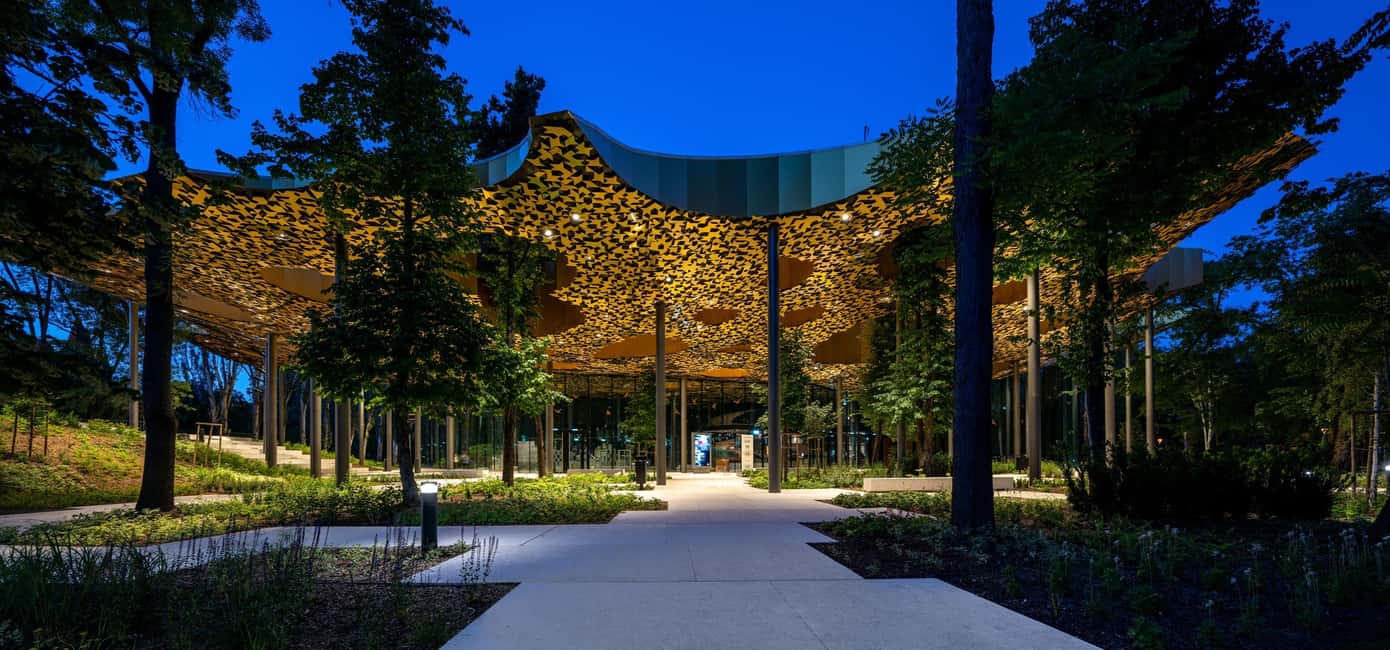
- Leaf-like metal canopy overhead: the roof’s thousands of elements create a dramatic shape and affect how the building performs with sound and light.
- Sou Fujimoto’s “park continuation” idea: the tour focuses on how inside and outside feel connected.
- Spiral staircase centerpiece: an architectural showpiece you’ll see up close during the walk-through.
- Acoustics explained, not experienced: guides talk through how design supports sound in performance and public areas.
- City Park views from multiple levels: you’re in Budapest’s biggest green space, and the building frames it.
- Geothermal and rainwater details: sustainability is part of the tour narrative, not just a footnote.
Why the House of Music belongs to City Park, not beside it
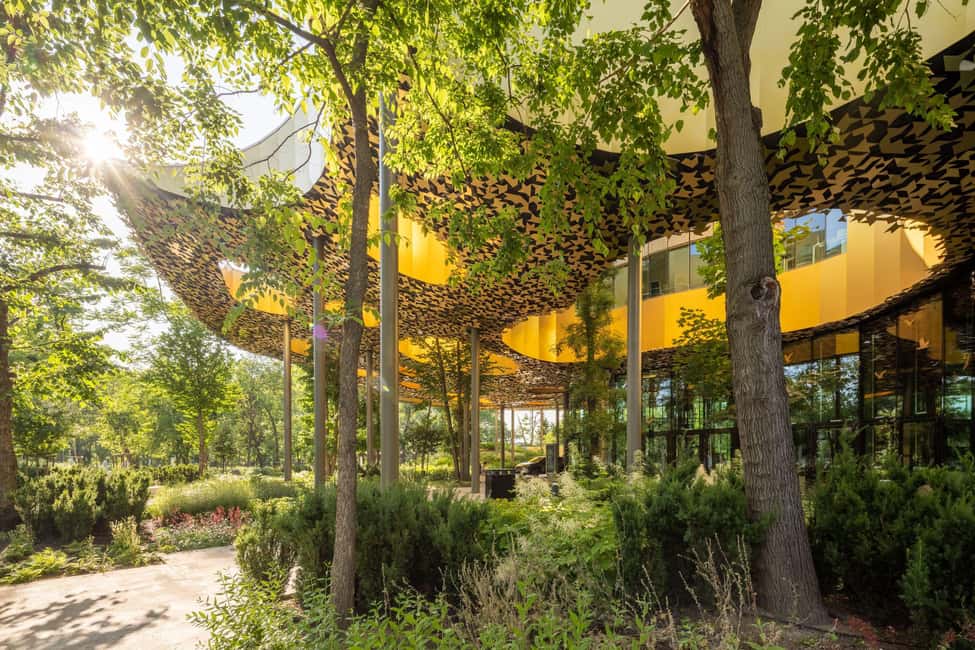
Budapest’s House of Music sits in City Park, and that setting matters. The tour doesn’t treat the building like a separate object you view from the outside. Instead, your guide frames it as a continuation of the park itself—an organic, shifting form that blurs the boundary between outdoors and indoors.
You’ll also notice the clever visual trick: the building uses lots of glass, so the park is always present in the background. That means even when you’re standing inside, you’re still getting that “out in the park” feeling. For an architecture tour, that’s a big deal. You’re not just looking at materials; you’re watching how the building edits the skyline of trees, paths, and sky.
You can also read our reviews of more guided tours in Budapest



Starting in the foyer: getting your bearings fast
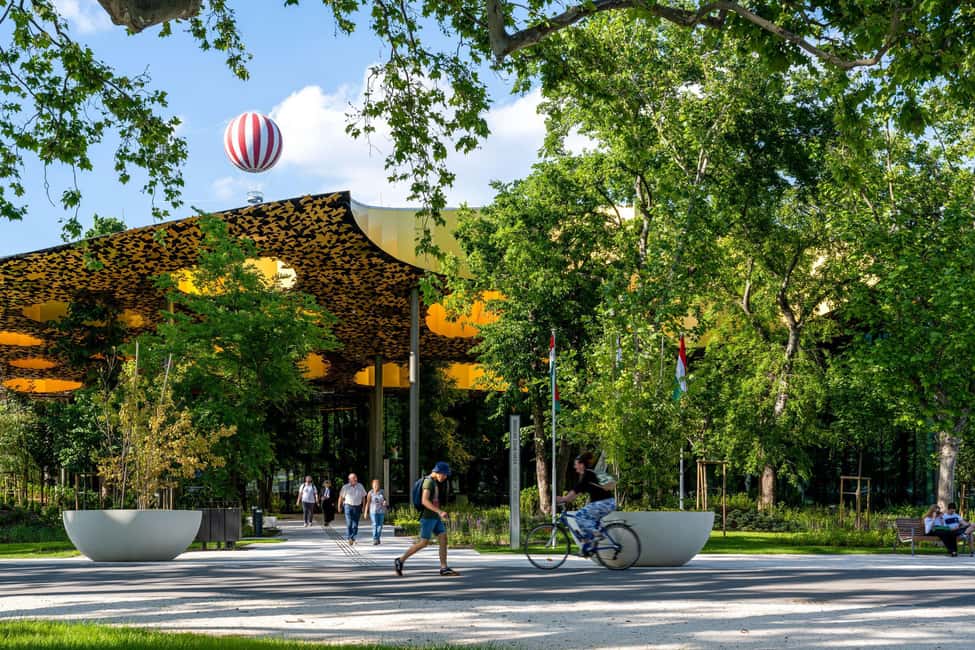
The tour begins inside the spacious foyer, where you can orient yourself quickly. The foyer is also a comfortable starting point because it’s open and bright, with space to gather before the group moves deeper into the building.
One practical plus: this is where you’ll see how the interior layout works with visitor flow. Your guide sets the rhythm of the tour—pointing out levels, open spaces, and where the design changes as you move—so the building doesn’t feel like a maze. There’s also a café here, so if you want a pause before or after, you’re in the right place.
If you like tours that move at a human pace, this one fits. It’s long enough to understand the main architectural ideas and short enough that you won’t feel dragged through hall after hall.
The undulating roof: thousands of leaf-like pieces and what they do
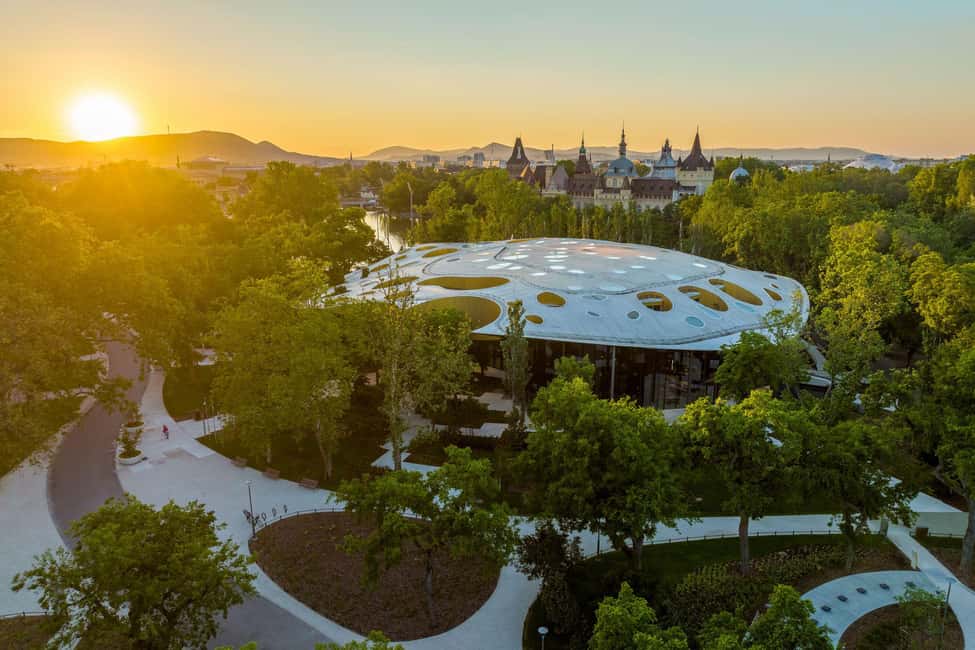
Step outside (early in the experience) and the building hits you with its roofline. It’s undulating—wave-like—and it’s topped by a striking canopy made of thousands of leaf-like metal elements. From certain angles, the canopy almost looks like a sound wave frozen mid-breath.
Here’s what I like about how the tour explains it: the roof isn’t only aesthetic. Your guide connects the roof structure to acoustics and natural lighting. In other words, you’ll hear how the building was shaped to work with sound rather than treating music as an afterthought.
You’ll also get attention on the design details, including circular openings. Those openings aren’t random. They’re part of the overall language of the building: smooth, curved, and slightly playful, while still precise.
Glass walls and exposed structure: light, warmth, and honest materials
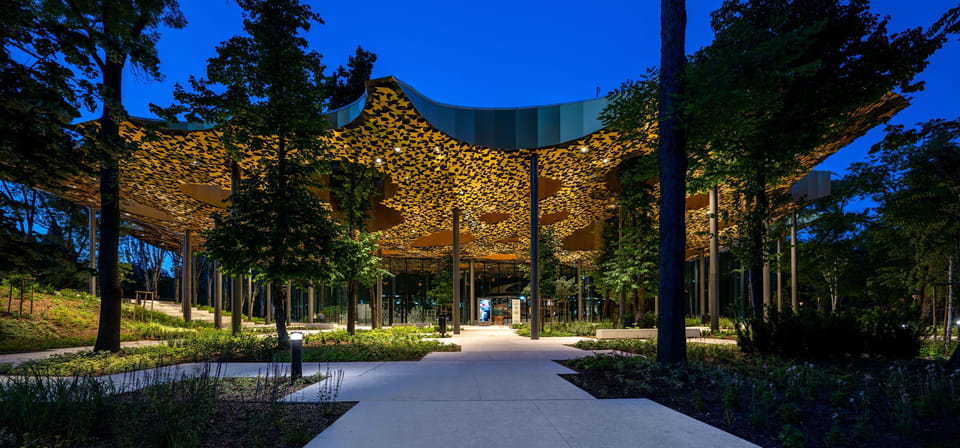
Inside, the tour shifts from the exterior drama to the day-to-day experience of the building. Glass walls and open spaces pull in natural light, so the interior stays bright rather than dim and museum-like.
You’ll hear about exposed concrete surfaces, which could feel cold in another context. Here, though, the building pairs that industrial look with intricate wooden elements. That mix matters because it changes how the space feels in person. The design is modern, but it doesn’t feel sterile.
Your guide will also point out how the building uses different levels and open spaces to support community engagement and music education. Even without access to exhibitions, the tour emphasizes the spaces meant for learning and gathering, so you understand the mission behind the architecture—not just the visuals.
The spiral staircase: an artwork you’ll remember
The spiral staircase is the star moment for a lot of people, and it’s easy to see why. It feels like a sculpture you can walk past, and your guide will treat it like one—something to be viewed from different angles, not rushed by.
As you look at it, pay attention to how the staircase visually reinforces the building’s organic shape. This is one of those places where the architecture doesn’t just hold you; it directs your attention. If you enjoy photography, you’ll have plenty of chances here because the staircase sits in a context of glass and open interior space.
And since this is a guided tour, you won’t just see it—you’ll get the design logic behind why it belongs where it does.






Concert hall spaces and acoustics: music design without a show
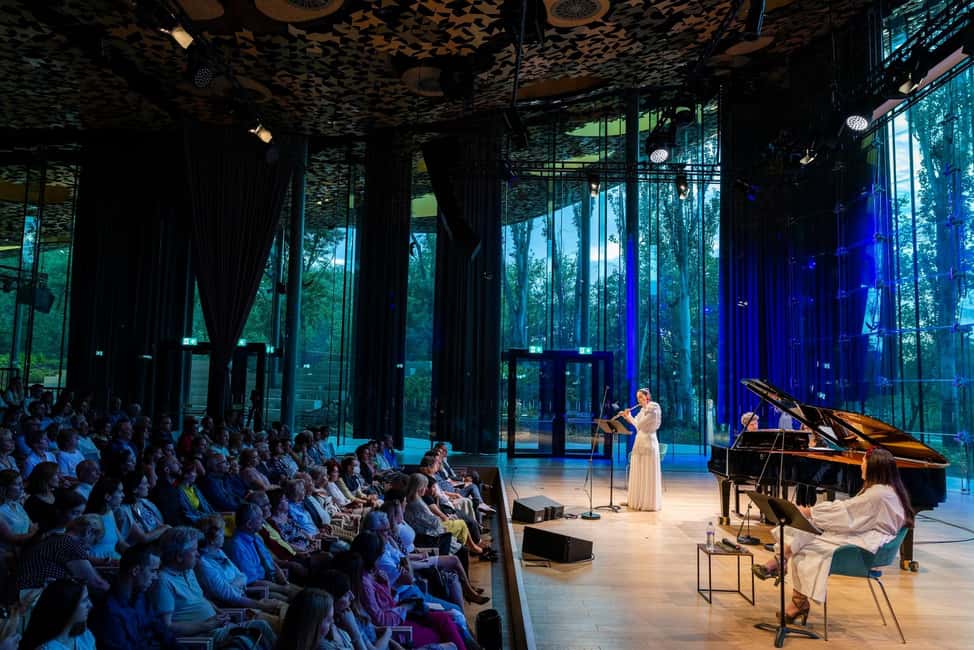
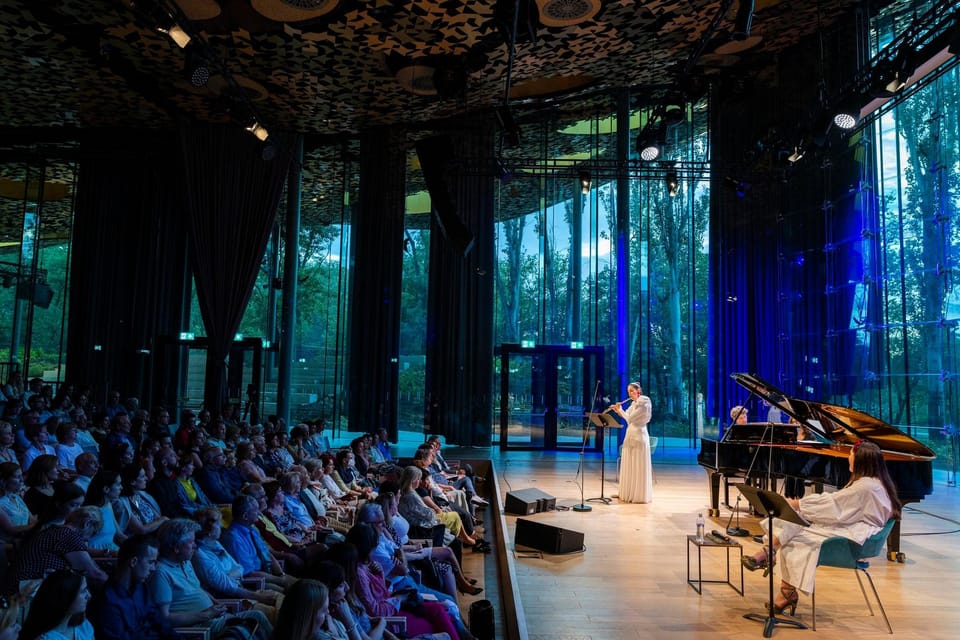
This is where the tour takes a thoughtful turn. You’ll see the concert hall area and other performance-focused spaces, but you won’t experience a performance during the tour. No seats, no show. Instead, guides explain how the building is designed to optimize sound quality.
That means you’ll hear the building described through acoustic terms: the shape, the materials, and the roof structure all play a role in how sound behaves in performance spaces and public areas. Even if you don’t test the acoustics yourself, the guide’s explanation gives you a framework for what you’re looking at.
For me, that’s the value: you leave understanding why the architecture supports music, instead of only thinking, That’s a cool building.
Library and archives, plus outdoor moments with panoramic views
The tour includes stops beyond the big architectural highlights. You’ll also visit the library and archives areas, which fits the overall theme: music as learning, not only entertainment.
You’ll likely spend time looking at how people would use the building day to day—spaces that feel meant for study, research, and quiet focus, not just spectacle. That’s a nice balance if you’re visiting from a city break and want something more thoughtful than a standard monument tour.
And since the House of Music is in City Park, you’ll get outdoor moments too. The experience highlights views of the park, including panoramic sightlines from the building’s relationship with the landscape. Even in a one-hour format, those views can be a mental reset.
Sustainability details you’ll actually hear about
A lot of tours mention sustainability in passing. Here, it’s part of the tour story. Your guide points out sustainability features such as geothermal energy and rainwater harvesting.
Why does this matter for you? Because it answers a practical question: Is this just an iconic building, or is it designed to function responsibly? Hearing these details makes the architecture feel less like a one-time visual performance and more like a system built for real use.
It also reinforces the Fujimoto approach the tour keeps returning to: the building acts like a living part of its environment.
Price and pacing: is $13 worth it?
At $13 per person for a one-hour guided experience, this tour looks like strong value for people who want architecture plus context. You’re paying for more than a walk around the building—you’re getting guided explanations of the roof, the staircase, the materials, the relationship to City Park, and how acoustics were considered.
The one-hour duration also keeps the value in check. You can fit this into a day without it eating your whole schedule. That matters in Budapest, where you’ll probably pack in multiple sights.
Just be honest with yourself about what’s included: you’ll see key areas like the concert hall, library and archives, outdoor spaces, and the gift shop. But you won’t get the exhibitions, the Sound dome, or the Creative sound space. If your main goal is hands-on sound experiences or exhibit time, you may want to plan those separately.
Who this tour suits best (and who should skip it)
This is a great match if you:
- love architecture and want design explained in plain language
- care about music as a science of sound and spaces, not only as performances
- enjoy bright buildings with views and outdoor framing
It’s less ideal if you:
- want a tour that includes exhibitions or sound-specific installations
- are traveling with kids under 15 (this tour isn’t suitable for children under 15)
Also, it’s in English with a live guide, and the building is wheelchair accessible. If your group wants a simple, guided, high-impact visit, this format is built for that.
One more tip: if you’re lucky enough to get Dora as your guide, expect a lively, question-friendly tour. The guides who lead with energy seem to turn the building into an easy story to follow, not a pile of facts.
Should you book this House of Music guided tour?
I’d book it if your priority is understanding the architecture and the building’s music-centered design. For a one-hour visit, it gives you a lot: the rooftop canopy, glass and concrete interior, spiral staircase, concert-hall spaces, and even sustainability elements like geothermal energy and rainwater harvesting.
Skip it (or at least treat it as step one) if you’re mainly chasing exhibitions or the Sound dome/Creative sound space. This tour explains and shows, but it doesn’t include those experiences.
If you like guided clarity and want a memorable Budapest stop that’s more about how a place works than what it sells, the House of Music is a smart use of your time.
FAQ
How long is the House of Music guided tour?
The tour lasts about 1 hour.
Where does the tour start and end?
It starts inside the foyer and ends back at the same meeting point.
Is the tour available in English?
Yes, the live tour guide offers English.
Does the tour include the exhibitions?
No. Entry to exhibitions is not included.
Are the Sound dome and Creative sound space included?
No. The Sound dome and Creative sound space are not included.
Is this tour wheelchair accessible?
Yes, the tour is wheelchair accessible.
Is the tour suitable for children?
It’s not suitable for children under 15.
Are pets allowed?
Pets aren’t allowed, but assistance dogs are allowed.