REVIEW · BUDA CASTLE & FISHERMAN'S BASTION
Budapest: Buda Castle Walking Tour & Folk Music Performance
Book on GetYourGuide →Operated by Maggino - Magic in Hungary · Bookable on GetYourGuide
Budapest’s Castle Hill hits different. In a 2–2.5 hour walk, you get the big sights of the UNESCO-listed Buda Castle District plus a live Hungarian folk music closer, taught by your guide—not a recorded soundtrack. Two things I really like: the stop-by-stop storytelling (you’re not just looking at buildings) and the way the folk performance lands right after the walking, so the whole day feels like one cultural arc.
I also like that the pace is built for questions. The route includes real viewpoints over to Pest, plus a focused route through historic streets where you can spot architectural layers. One consideration: this is an exterior monuments walk, so if you want to go inside churches or palaces, you’ll need to plan on buying tickets separately.
In This Review
- Key highlights you’ll actually feel during the tour
- The value of pairing Castle Hill views with live folk music
- Starting at Szentháromság Square: the Maggino meeting moment
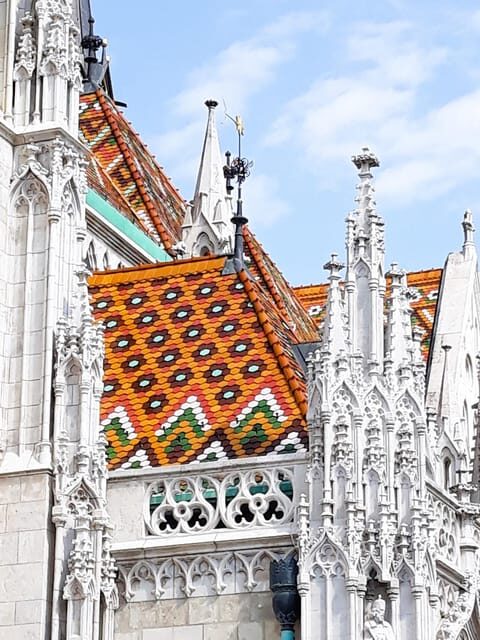
- Matthias Church and Fisherman’s Bastion: two must-sees, one guided lens
- Tárnok Street: the “architectural time machine” stretch
- Government buildings and the Pest panorama: views you can plan
- Royal Buda Palace grounds: King Matthias and Renaissance Florence vibes—on the Danube
- Sisi’s sweet tooth: Budapest’s oldest confectioner and royal pastry love
- The folk music performance: singing and dance steps led by your guide
- Price and logistics: is $58 worth it?
- Who should book this tour, and who might skip it?
- Should you book the Buda Castle walking tour with folk music?
- FAQ
- What is the duration of the Buda Castle walking tour?
- Where does the tour start?
- What monuments are included in the walking route?
- Is entry to monuments included in the price?
- Is the folk music performance included?
- What language is the live guide?
Key highlights you’ll actually feel during the tour
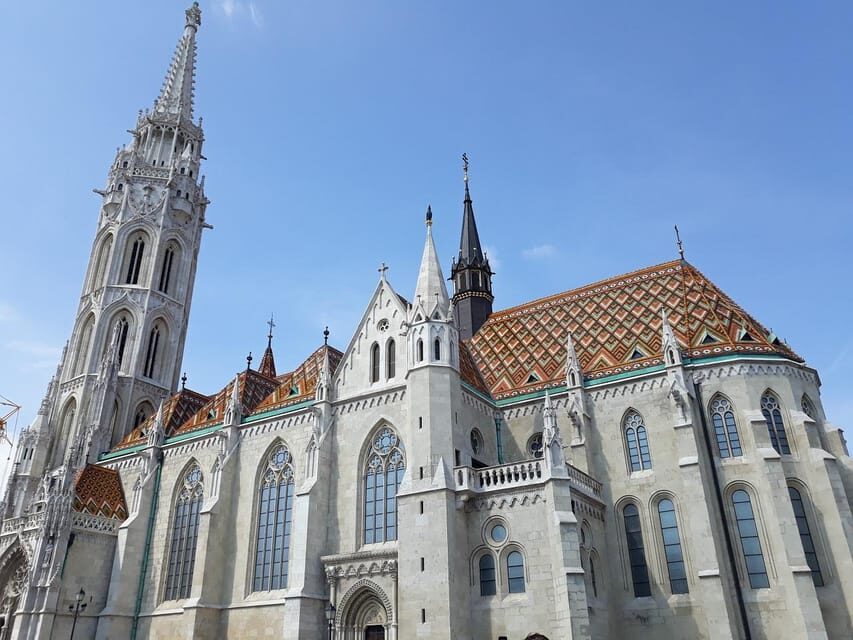
- Matthias Church + Fisherman’s Bastion: iconic exteriors with human-scale history behind them
- Tárnok Street’s mixed styles: a street-walk through architectural change up to the late 19th century
- Pest panorama and funicular views: you get a planned viewpoint instead of random wandering
- King Matthias stories at Buda Castle: Renaissance culture details plus the legend of wine-bubbling fountains
- Folk songs and dance steps: you finish with singing and simple dance moves led by your guide
The value of pairing Castle Hill views with live folk music
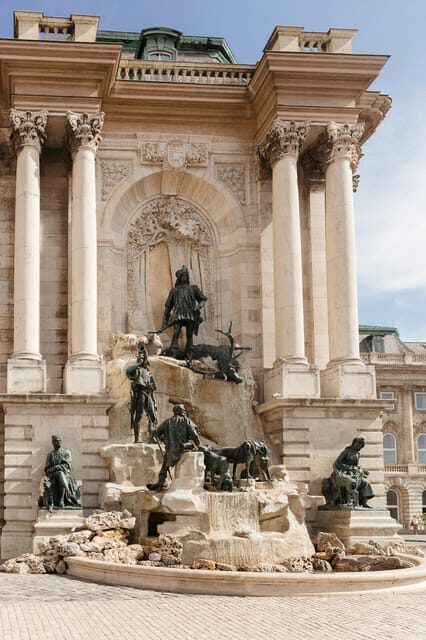
Most Buda Castle experiences split into two categories: either you do the monuments, or you do the culture show. Here, you do both in a single flow. That matters because the district can feel like a photo route if you’re not anchored in context. With the guide’s stories, you start noticing why each spot mattered to past city life and power—then the ending performance gives that same culture a voice.
The tour is priced at $58 per person, which is fair when you remember what you’re buying: a licensed guide for a structured route, exterior visits to multiple major monuments, and a live folk music performance that happens on your schedule. If you were to book a standard city-walk tour plus a separate performance, you’d likely spend more while also losing the “one-day meaning” that makes this feel special.
You can also read our reviews of more walking tours in Budapest



Starting at Szentháromság Square: the Maggino meeting moment
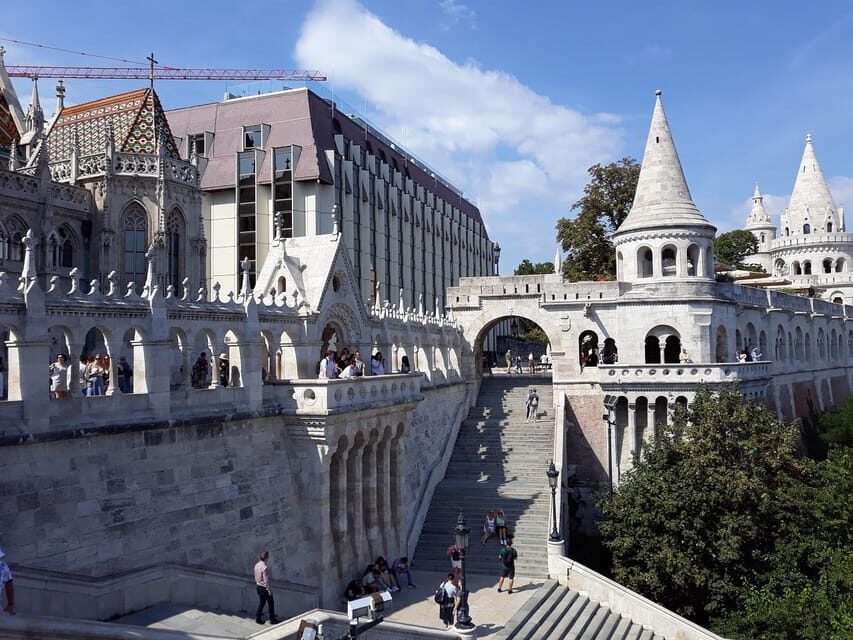
You’ll meet at Szentháromság-szobor (Holy Trinity Statue) at Szentháromság tér. The guide holds a board with the MAGGINO logo—dark blue stork with an orange musical note—so you can spot them quickly and not waste time hunting.
This start point is also smart. From here, you’re set up for an easy-going climb through Castle Hill’s main story beats. And because the tour is in English, you can focus on the details the guide shares rather than trying to translate while walking.
Matthias Church and Fisherman’s Bastion: two must-sees, one guided lens
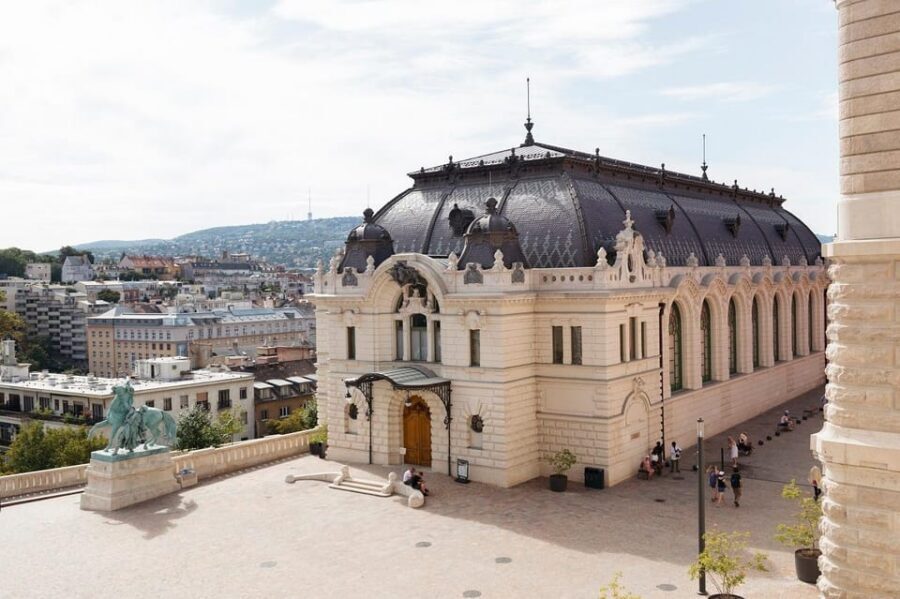
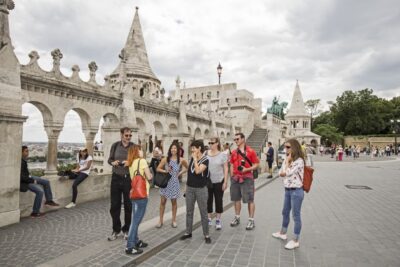
Your first major stops are Matthias Church and Fisherman’s Bastion. Even if you’ve seen photos, the difference is how the guide frames what you’re looking at: not just the look, but the why. You’ll spend about 20 minutes walking to Matthias Church and then roughly 15 minutes toward Fisherman’s Bastion.
Here’s what to watch for. Matthias Church is a visual anchor on the hill, and Fisherman’s Bastion offers those classic terrace lines and built-in viewpoints. If you care about architecture, this is where you’ll start connecting the district’s beauty to centuries of changes in taste and power.
One practical note: your tour is an exterior visit. If you want to step inside Matthias Church or go deeper into palace interiors, you’ll need entry tickets on your own.
Tárnok Street: the “architectural time machine” stretch
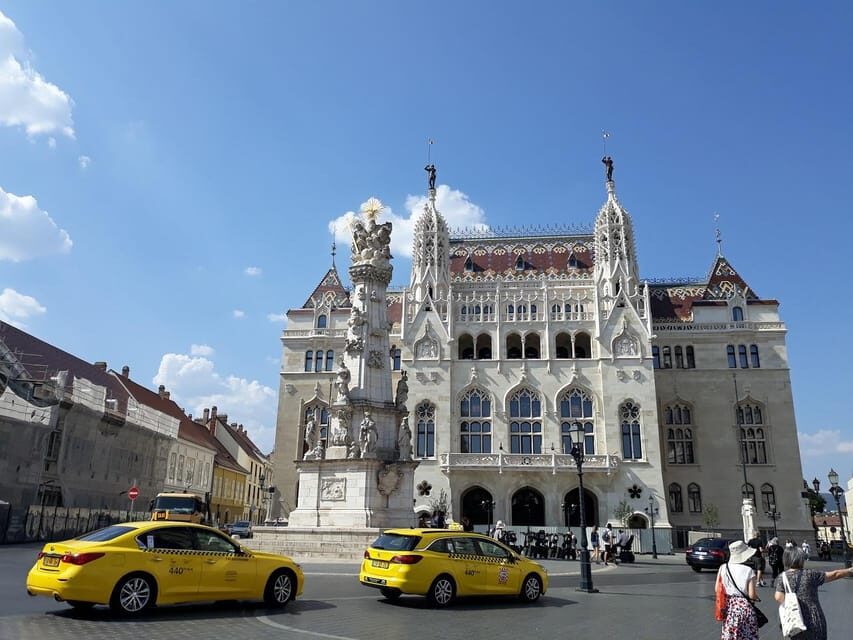
Next comes Tárnok Street, a shorter stop (about 20 minutes) that you’ll remember because it’s visual history. The guide points out a street where you can spot different architectural styles across historical Hungary, including building parts that are around 500 years old.
Why this is worth your time: it trains your eyes. Instead of thinking of Buda Castle Hill as one single style, you start recognizing it as a layer-cake city. That makes the rest of the tour more satisfying, because you understand what you’re seeing rather than just collecting landmarks.
If the weather is rough, this segment is still manageable since you’re not stuck in one long museum-style wait. You’re walking, looking, and learning at the same time.
Government buildings and the Pest panorama: views you can plan
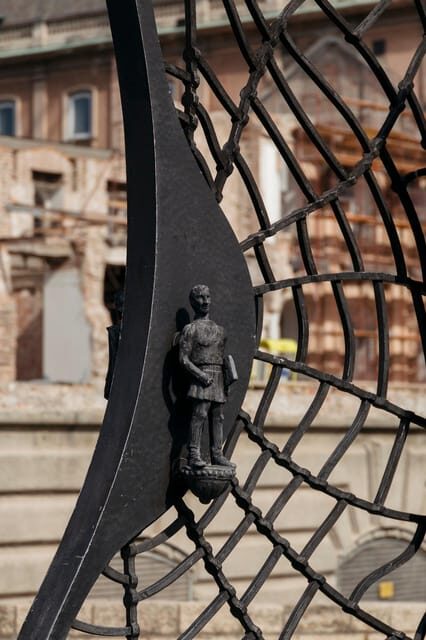
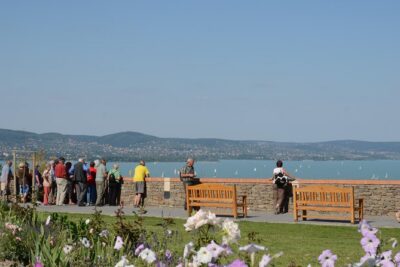
After Tárnok Street, you’ll move toward two major governmental buildings of Hungary and then to a viewpoint where you get breathtaking panoramas on the Pest side. You also get a specific angle on the second funicular built in Europe, which is the kind of detail that’s easy to miss if you’re not being pointed in the right direction.
This is the “breather” moment in a good way. Castle Hill can be all stone and angles until someone tells you how the city laid itself out across the river. With the planned viewpoint, you can see more than pretty rooftops—you start understanding Budapest’s structure: hill power on one side, city movement on the other.
Also, it’s a great time to pause and take photos without feeling like you chose the wrong viewpoint. The guide’s job here is to steer you away from wasted angles.






Royal Buda Palace grounds: King Matthias and Renaissance Florence vibes—on the Danube
Then you reach the Royal Buda Palace, also known as Buda Castle. You’ll spend about 50 minutes in this part of the walk, including scenic pauses along the way. This is the heart of the district for a reason: the palace served as the royal seat of Hungarian rulers throughout the centuries, so it’s where stories about authority and culture tend to gather.
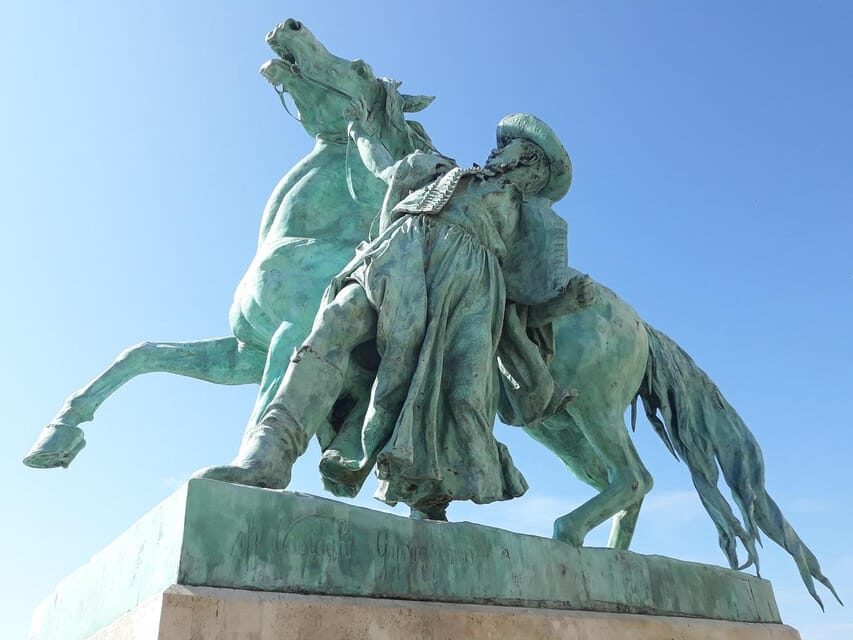
The guide’s focus is especially on King Matthias. You’ll hear how Matthias helped make Buda Palace a center for Renaissance culture in Europe. You’ll also get the vivid bit of folklore: granite fountains that supposedly bubbled with wine. Whether you treat that as literal or legend, it gives you a sense of how court life was described—grand, theatrical, and designed to impress.
Exterior visits can still be powerful here. From the outside, you can read the scale and imagine how the hill functioned as a seat of power. If you only do the palace as a photo backdrop, you miss the “why it looked like this” part.
Sisi’s sweet tooth: Budapest’s oldest confectioner and royal pastry love
A surprising and very human stop comes with stories about Budapest’s oldest confectioner’s pastries, loved even by Queen Elisabeth (Sisi), Empress of Austria and Queen of Hungary.
This is more than a food trivia moment. It makes the district feel lived-in. When a guide ties a landmark-heavy route to everyday cravings and royal taste, you stop seeing history as distant and start seeing it as people making choices—food, habits, and comfort.
Even if you don’t plan to buy pastries after the tour, you’ll leave with a sharper sense of how culture shows up in daily life, not only in palaces and churches.
The folk music performance: singing and dance steps led by your guide
The finale is the most memorable part for a lot of people, because it breaks the typical “walk and go home” pattern. At the end, your guide entertains you with a special Hungarian folk music performance: singing Hungarian folk songs and showing traditional folk dance steps.
This matters because you’re not just watching performance as entertainment. You’re getting it explained, and you’re getting the rhythm of the country through voice and movement. In particular, the guide’s passion comes through in how they connect songs to places and how they invite participation on the dance steps without making it intimidating.
The English-language delivery also helps. You’ll understand what you’re hearing, not just enjoy the sound. And if you like culture that feels personal—songs passed through families and local experience—this ending has that warmth.
One booking experience ran about 3.5 hours when additional church time was included, so if you have a strict next stop, build a little buffer.
Price and logistics: is $58 worth it?
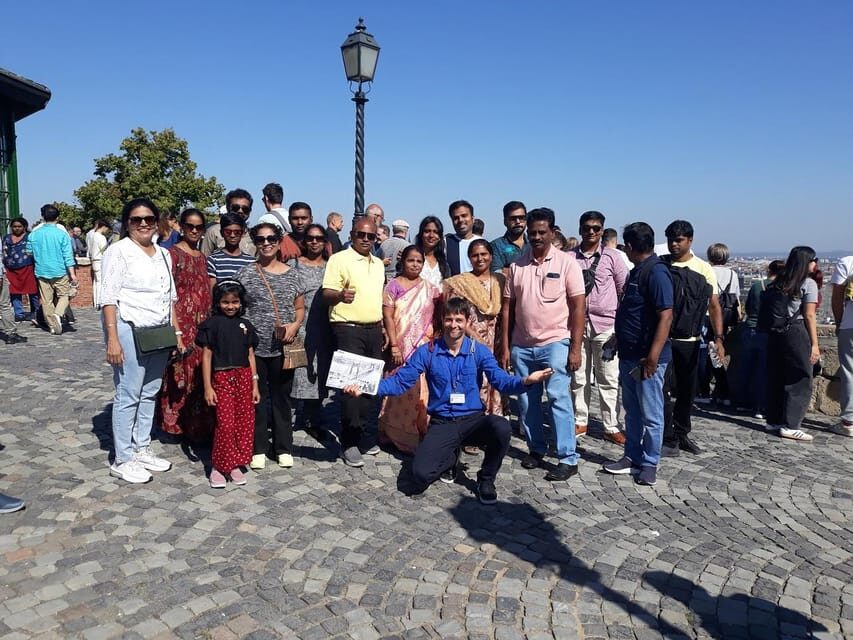
At $58 per person for a 2–2.5 hour guided walk with an included folk performance, the value comes from three things.
First, you get a licensed guide leading a set route through multiple major sights. That saves you the effort of piecing together the best Castle Hill stops and the right order.
Second, the tour bundles in the folk performance. Many Budapest tours treat “music” like an optional add-on. Here, it’s part of the core experience, which means you’re paying for a structured cultural wrap-up.
Third, you’re doing exterior visits. That’s actually a plus for time efficiency. You can see a lot without getting stuck on ticket lines during the walking portion. Just remember the tradeoff: entries aren’t included, so plan separately if you want to go inside.
Weather is handled in the standard way: the tour operates in all conditions, so dress for wind and changing skies. Comfortable shoes are non-negotiable.
Who should book this tour, and who might skip it?
This tour is a great fit if you want more than landmark photos. You’ll enjoy it if you like guided storytelling, planned viewpoints, and cultural moments that don’t feel generic. It’s also a solid choice for people who want an easy-to-follow route through Castle Hill without getting lost.
You might consider skipping or adjusting expectations if you’re mainly focused on interior monument visits. Since everything listed is an exterior stop experience, you’ll need additional tickets for entries if that’s your priority. Also, if walking 2–2.5 hours is hard for you, it’s better to choose a shorter option.
Small groups and private options are available, which can be ideal if you want more room for questions.
Should you book the Buda Castle walking tour with folk music?
I’d book this if you want a Budapest experience that connects the “stone and power” of Castle Hill to the “voice and movement” of Hungarian folk culture. The route hits major icons—Matthias Church, Fisherman’s Bastion, and the Royal Buda Palace area—while the folk performance gives you a memorable closing moment you won’t forget.
If you love asking questions, you’ll likely feel taken care of. The guide style described by guests is interactive and welcoming, and the folk segment isn’t treated like a quick party trick—it’s presented with care. Add comfortable shoes, keep some time buffer, and you’ll leave with photos and stories that actually stick.
FAQ
What is the duration of the Buda Castle walking tour?
The tour lasts about 2 to 2.5 hours.
Where does the tour start?
It starts in front of the Holy Trinity Statue (Szentháromság-szobor) at Holy Trinity Square (Szentháromság tér).
What monuments are included in the walking route?
You’ll do exterior visits in the Buda Castle District, including Matthias Church, Fisherman’s Bastion, Tárnok Street, and the Royal Buda Palace (Buda Castle) area.
Is entry to monuments included in the price?
No. Entry tickets to visited monuments are not included.
Is the folk music performance included?
Yes. The tour includes a special Hungarian folk music performance by your guide, with singing and traditional dance steps.
What language is the live guide?
The live tour guide speaks English.