REVIEW · WALKING TOURS
Budapest Art Nouveau Walking Tour
Book on GetYourGuide →Operated by insightcities.com · Bookable on GetYourGuide
Art Nouveau in Budapest feels almost futuristic. This 3-hour walk with an art/architecture historian takes you into the Palace of the Royal Post and Gresham Palace entrance halls, then lands at the Kazinczy Street Synagogue.
You get design context too, not just pretty façades. The guide ties it to Hungary’s own Secession style, especially Ödön Lechner’s porcelain-and-motif approach.
I love how the story starts with real buildings, like the Royal Post, and then teaches you what to notice while you’re standing there. I also love that Gresham Palace is more than an outside photo stop, since you can see the entrance-hall details up close.
One thing to consider: access can vary by day. On weekends you may not enter the Hungarian National Bank, and the Orthodox Synagogue is closed on Saturdays, with a couple possible small add-on entry fees.
In This Review
- Key Things That Make This Art Nouveau Walking Tour Worth Your Time
- Budapest Hungarian Secession: Art Nouveau with an Identity
- Entering the Royal Post and Gresham Palace (What You Actually Look For)
- Ödön Lechner’s Postal Bank: Why It Feels Like a Signature
- Zsolnay Porcelain at Thonet House and Other Ceramic Stops
- Asian Motifs: The Meaning Behind the Ornament
- The Mid-Walk Stops: Bedő House, Hungarian State Treasury, Rózsavölgyi utca, and Paris Passage
- Where Hungarian Art Nouveau Meets the Orthodox Kazinczy Street Synagogue
- Price and Value: Is $123 Fair for a 3-Hour Art History Walk?
- When This Tour Works Best for You
- Should You Book This Budapest Art Nouveau Tour?
- FAQ
- How long is the Budapest Art Nouveau Walking Tour?
- How much does the tour cost?
- What’s included in the price?
- What is not included?
- What language is the tour conducted in?
- Is pickup available?
- Which major buildings are highlights on the tour?
- Are there extra entry fees for any stops?
- Can the tour still work if certain sites are closed?
- Are there any schedule limits based on the day of the week?
Key Things That Make This Art Nouveau Walking Tour Worth Your Time
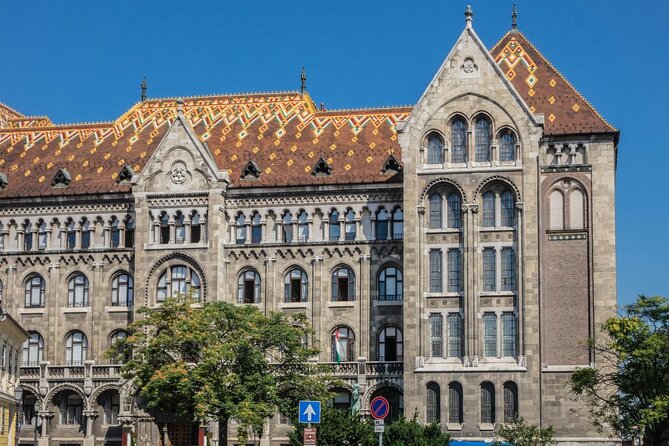
- Postal Bank by Ödön Lechner, often nicknamed Hungary’s Gaudí
- Inside access to entrance halls at both the Royal Post and Gresham Palace
- Zsolnay porcelain tiles in façades, including at Thonet House
- Asian motifs explained through Hungarian Secession and European Orientalism
- A finish at the Kazinczy Street Orthodox Synagogue for its Art Nouveau interior
- Day-of-week swaps if key sites are closed
Budapest Hungarian Secession: Art Nouveau with an Identity
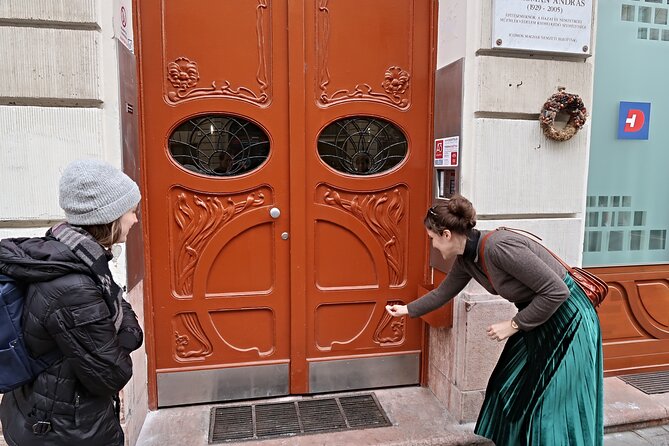
Budapest’s Art Nouveau isn’t just imported decoration. It’s a turn-of-the-century style that became a strong local statement, often labeled Hungarian Secession. The big idea is that design can be modern, national, and international at the same time.
On this walk, you’ll learn how Hungarian architects and applied-art designers used things like porcelain and symbol-heavy ornament. You’ll also get a sense of why the style looks the way it does: Hungary was working through national identity, plus wider European taste for so-called “Oriental” imagery.
If you care about architecture beyond façades, this tour helps you connect dots fast. You’ll leave with a practical eye for the small decisions that add up to a whole visual language.
You can also read our reviews of more walking tours in Budapest



Entering the Royal Post and Gresham Palace (What You Actually Look For)
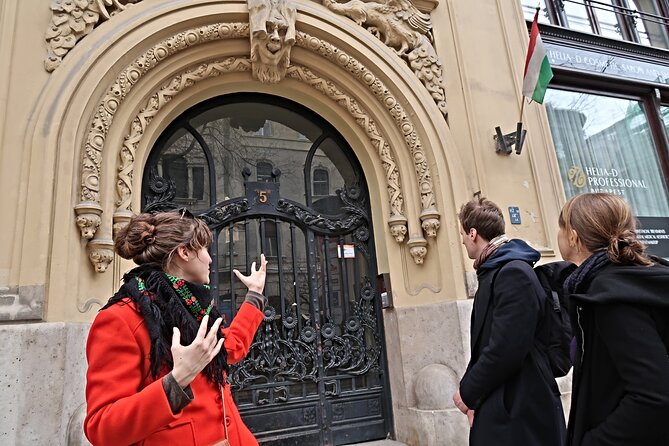
Two stops do the heavy lifting: the Palace of the Royal Post and Gresham Palace. The best part is access. Both buildings allow visitors into the entrance halls, so you can compare what you see from the street with what the designers did inside.
At the Royal Post, your focus is the building’s flamboyant character—especially its association with Ödön Lechner, described as Hungary’s Gaudí. Even before you learn the deeper design references, you’ll see why his work is famous: the ornament feels intentional, not added on. Your guide helps you spot how the structure and decoration work together.
At Gresham Palace, expect a similar payoff. The tour highlights both façade beauty and interior design. In the entrance hall, you can better understand the “rules” of Art Nouveau: flowing forms, decorative rhythm, and materials used to make surfaces feel alive.
A useful tip for your own attention span: when you’re inside, slow down and look for transitions. Art Nouveau often changes direction from outside to inside—corners, openings, and entry sequences are where you can see the design thinking most clearly.
Ödön Lechner’s Postal Bank: Why It Feels Like a Signature
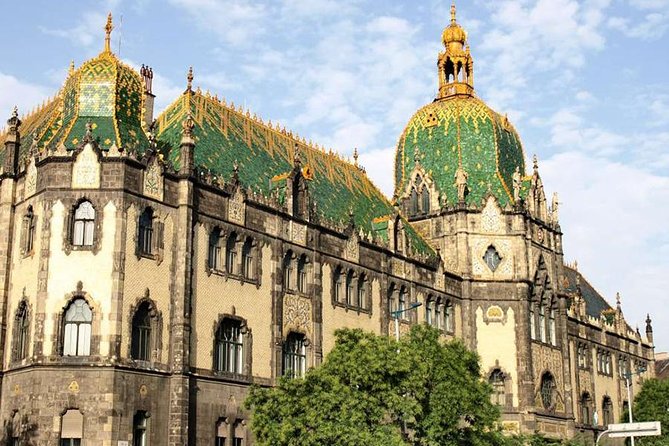
Lechner is one of the central figures in Hungarian Secession, and the Royal Post is the kind of stop that makes him real. The tour calls it flamboyant, and that’s exactly the feeling you’ll get when you’re standing in front of it and then in its entrance area.
You’ll also learn the bigger context behind why it got compared to Gaudí-like boldness. The connection isn’t about copying a look. It’s about pushing a style toward expressive architecture, where ornament is part of the experience, not background noise.
If you’ve ever wondered why some buildings feel theatrical while others don’t, Lechner is your answer. The Royal Post is where the city’s Art Nouveau mood clicks into place.
Zsolnay Porcelain at Thonet House and Other Ceramic Stops
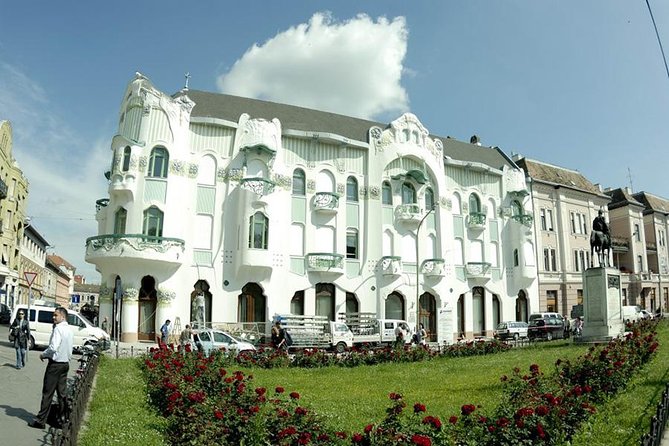
Hungarian Art Nouveau has a material fingerprint, and Zsolnay porcelain is a big part of it. The tour specifically points you to ceramics from the Zsolnay factory in Pécs, and it connects that material use to the way buildings were dressed for the era.
At Thonet House, the highlight is the use of porcelain tiles in the façades. That’s a smart focus, because porcelain is one of those elements you can miss if you’re just chasing sculptural shapes. Once you know to look for tilework, you start noticing how it catches light and creates pattern without needing literal statues.
Ceramics show up elsewhere too in the walk’s theme: the guide keeps bringing you back to how applied arts (like tile, metalwork, and decorative surfaces) helped Art Nouveau spread beyond big monuments.
The value for you is simple. Instead of seeing a pretty building, you start seeing a design system—how material choices became part of the aesthetic.
Asian Motifs: The Meaning Behind the Ornament
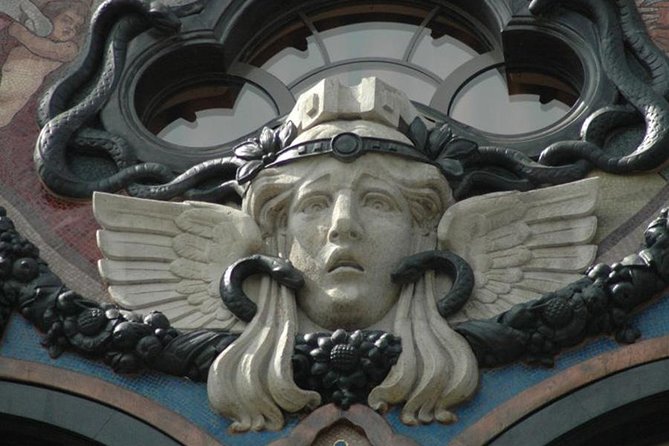
One of the most interesting parts of this tour is how it explains Asian motifs and elements. Hungarian Secession designers used these references in multiple ways, and your guide ties it to both Hungarian identity stories and broader European trend patterns.
You’ll hear the idea about supposed eastern origins of the Hungarian nation. You’ll also hear the counterpoint: European-wide Orientalism influenced Art Nouveau, so the motifs weren’t only about one thing. That distinction matters, because it changes how you read the ornament. You’re not just cataloging designs; you’re understanding cultural storytelling and the fashion of the time.
When you spot motifs during the walk, try this approach: ask whether the element is decorative, symbolic, or structural. Even when you don’t know the exact reference, you can often tell the intent. That’s how the tour turns sightseeing into real visual literacy.






The Mid-Walk Stops: Bedő House, Hungarian State Treasury, Rózsavölgyi utca, and Paris Passage
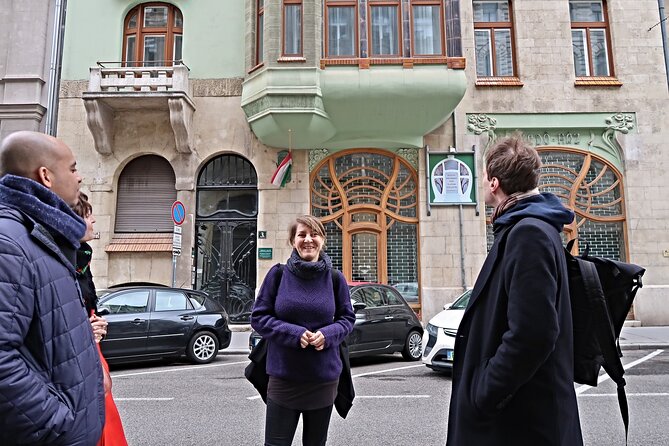
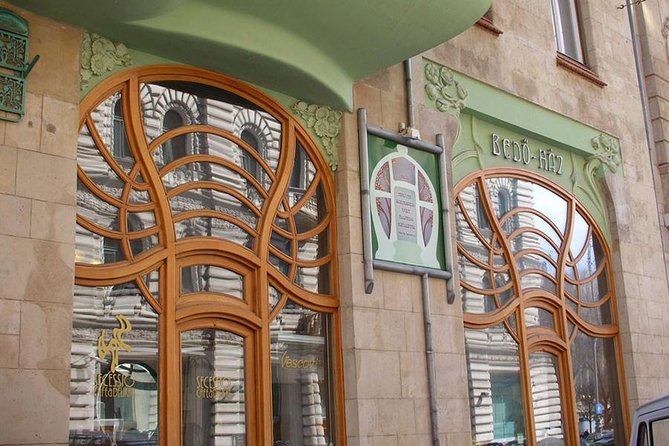
After the two big names, the walk keeps momentum with a sequence of guided looks that help you see patterns. You’ll visit sites like Bedő House and the Hungarian State Treasury area, plus guided stops along Rózsavölgyi utca and in Paris passage.
Even when you can’t go “deep” into every building, these stops matter because they show Art Nouveau wasn’t only for palaces and banks. It showed up in everyday-looking streetscapes through entrances, shop interiors, and the decorative language of urban commerce.
The tour also includes small, specific experiences that you’ll remember because they feel tangible. There’s a flower shop with its original interior, plus references to a department store, bank offices, and a small Art Nouveau museum and coffee house. These aren’t filler stops. They help you understand how Art Nouveau moved through daily life, not just elite architecture.
If you’re the type who likes to photograph, you’ll still get value even if you don’t. Your guide’s focus is on reading details, like how surfaces are divided, where ceramics are placed, and how motifs repeat from one building to the next.
Where Hungarian Art Nouveau Meets the Orthodox Kazinczy Street Synagogue
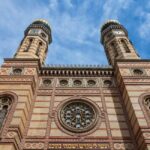
The finale is the Kazinczy Street Orthodox Synagogue, known for its Art Nouveau interior. This is the kind of stop that rewards patience: you get the visual drama of the era, but inside a space that also carries religious purpose.
The tour frames it as fascinating, and it’s a strong way to end because it shows how the style could be used beyond government or commercial buildings. Art Nouveau here isn’t just a look; it’s atmosphere.
One practical thing: the synagogue is closed on Saturdays. If you’re traveling on a weekend, you should expect the guide to adapt the route or the plan to match what’s actually open.
Price and Value: Is $123 Fair for a 3-Hour Art History Walk?
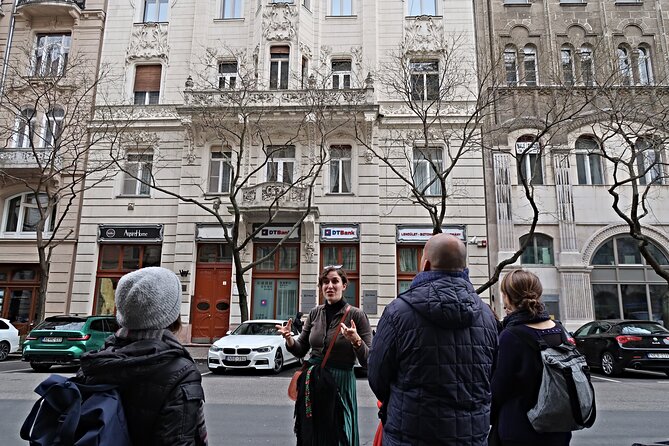
At $123 per person for a 3-hour walking tour, you’re paying for a few important components, not just a route. You get a live guide who’s positioned as an art/architecture historian, plus entry-hall access to two major buildings. That combination is what makes the tour feel more like structured learning than casual strolling.
You’ll also want to keep in mind what’s not included: tram and metro tickets are not included. It’s normal, but it affects how you should budget if you’re relying on public transit that day.
Then there’s the question of extra site fees. The tour notes possible additional costs if you include certain interiors when open, like the House of Hungarian Art Nouveau (1000 HUF, about $3.50) and the Orthodox Synagogue on Kazinczy Street (2000 HUF, about $7). Those aren’t always mandatory, but they’re worth factoring into your “all-in” estimate.
If you’re choosing between this and DIY wandering, the value argument is strongest if you like explanations. Hungarian Secession has enough details that without a guide you’d likely miss the logic behind the porcelain and motifs. This tour is built for people who want to look smarter, not just look more.
When This Tour Works Best for You
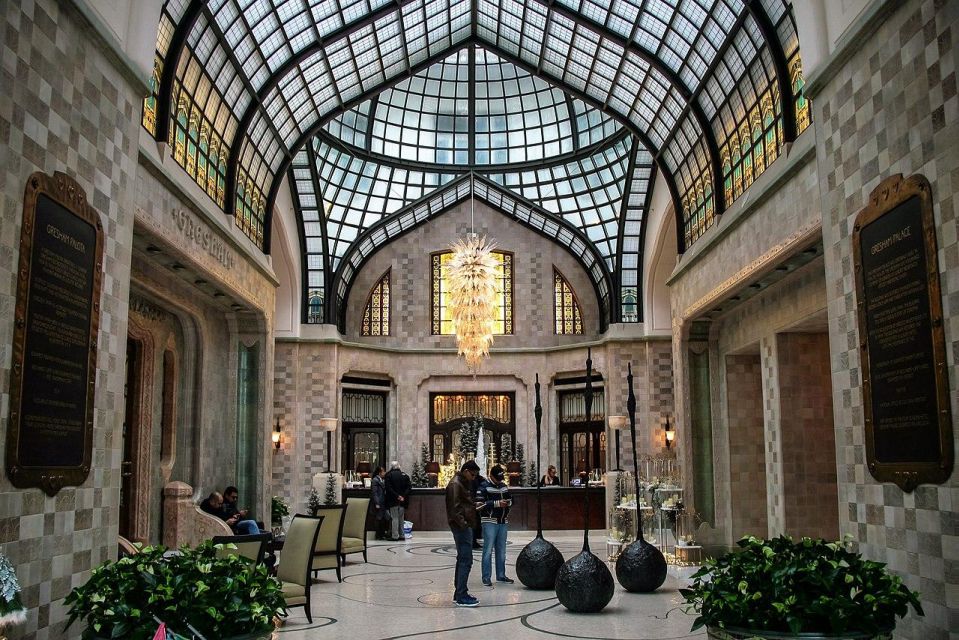
This is a great fit if you want:
- A focused 3-hour plan rather than trying to track Art Nouveau addresses on your own
- Time inside key entrance halls, especially at the Royal Post and Gresham Palace
- A clear explanation of Hungarian Secession and why it uses porcelain and Asian motifs
- A finish at a landmark interior, the Kazinczy Street Orthodox Synagogue
It’s also a good option if you’re the “I want the story with the buildings” type. The guide’s role is central here, and the tour is designed around that.
From the feedback style people attach to this tour, friendliness and education stand out. One highlighted guide named Anna has been described as friendly and well versed in Budapest art and history, and another booking noted strong German skills in addition to the English tour format.
Should You Book This Budapest Art Nouveau Tour?
Yes, if you want a guided way to see Art Nouveau that’s specific to Hungary, not just generic “pretty buildings.” The entrance-hall access at the Royal Post and Gresham Palace, plus the focus on Zsolnay porcelain and Asian motifs, is a strong combo.
Book it with a little flexibility. Weekend schedules can affect access, especially the Hungarian National Bank and the Kazinczy Street Synagogue on Saturdays. If your trip lands on those days, ask about route adaptation to other Art Nouveau sights like the Gellért Bath Hotel, the Museum of Applied Arts, and the Geology Museum.
If you’re the type who loves architecture but hates waiting, a 3-hour walk is a sweet spot. You’ll come away with a sharper eye and a sense that Budapest’s Belle Époque energy wasn’t accidental.
FAQ
How long is the Budapest Art Nouveau Walking Tour?
It lasts 3 hours.
How much does the tour cost?
The price is $123 per person.
What’s included in the price?
You get a 3-hour walking tour and a live historian guide.
What is not included?
Tram and metro tickets are not included.
What language is the tour conducted in?
The tour is offered in English.
Is pickup available?
Pickup is optional. If you prefer a central meeting point, you meet at Madal Café, Budapest, Alkotmány u. 4.
Which major buildings are highlights on the tour?
Key highlights include the Palace of the Royal Post (Postal Bank) and Gresham Palace, plus a finish at the Kazinczy Street Orthodox Synagogue.
Are there extra entry fees for any stops?
The tour notes possible extra costs: House of Hungarian Art Nouveau (1000 HUF, about $3.50) and Kazinczy Street Orthodox Synagogue (2000 HUF, about $7.00).
Can the tour still work if certain sites are closed?
Yes. The tour can be adapted or extended based on what’s open on your day.
Are there any schedule limits based on the day of the week?
Yes. On weekends you cannot enter the Hungarian National Bank, and the Orthodox Synagogue is closed on Saturdays.