REVIEW · 3-HOUR EXPERIENCES
Budapest: 3-Hour Walking Tour About Communism (Small Group)
Book on GetYourGuide →Operated by Budapest Explorers · Bookable on GetYourGuide
Communism isn’t stuck in the past here. This 3-hour Budapest walking tour uses what you can still see on the streets to explain how Soviet-style ideology arrived, took control, and left a long shadow. I love that it mixes an expert-led, historian-style explanation with real human detail, including family stories that cover everything from WWII to the 1956 revolution and onward to the late-80s/early-90s.
Two things I’d pick out right away: the small group setup (limited to 10) keeps questions from feeling awkward, and the tour ends with a drink in a retro café that has changed little since the 1970s, including that extra time to talk like a person, not a lecture. One consideration: if you’re expecting a fast, light “sights only” walk, the subject matter is political and emotional, so be ready for serious context along with occasional comic moments.
In This Review
- Key things that make this tour worth your time
- From Deák tér to communist-era streets in pleasant Pest
- Reading the “remnants” of WWII, 1956, and the road to 1989
- How the tour handles Communist ideology without turning it into dry politics
- Riding the M2 subway: a practical break that’s also part of the story
- The retro café drink (1961) and why that chat matters
- Small-group format: why max 10 people feels different
- Price, duration, and value: what you really get for $57
- Practical tips before you go
- Who should book this communist Budapest tour?
- Should you book it?
- FAQ
- Where is the meeting point?
- How long is the tour?
- What is the price?
- Is this a small group?
- What language is the tour guide?
- Is public transportation included?
- Is there a drink included?
- What period of history does the tour cover?
- Can I cancel for a refund?
- Is there an option to reserve without paying now?
Key things that make this tour worth your time
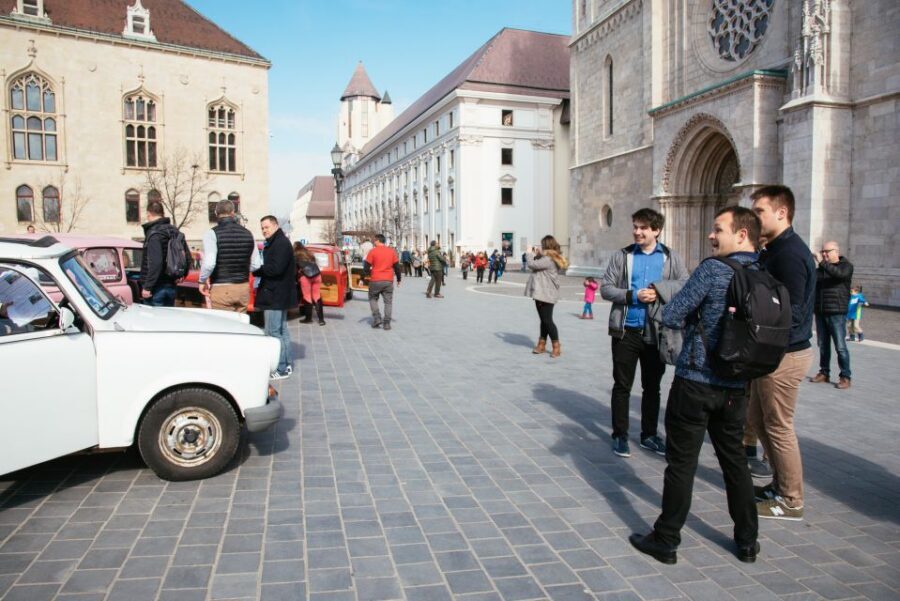
- Historian-guide commentary focused on the Communist ideology: how it arrived, how it ruled, and what legacy remains.
- Family stories tied to real periods—WWII, 1956, and the transition around 1989/early 90s.
- Pest-side remnants you can spot while walking, including heavy WWII-era damage like bullet holes.
- A ride on the red M2 subway during the route, so history moves with you.
- A retro café stop with a drink, in a place that’s been operating since 1961 and feels like it’s frozen in time.
- A small group size (max 10) that’s perfect if you like asking follow-up questions.
From Deák tér to communist-era streets in pleasant Pest
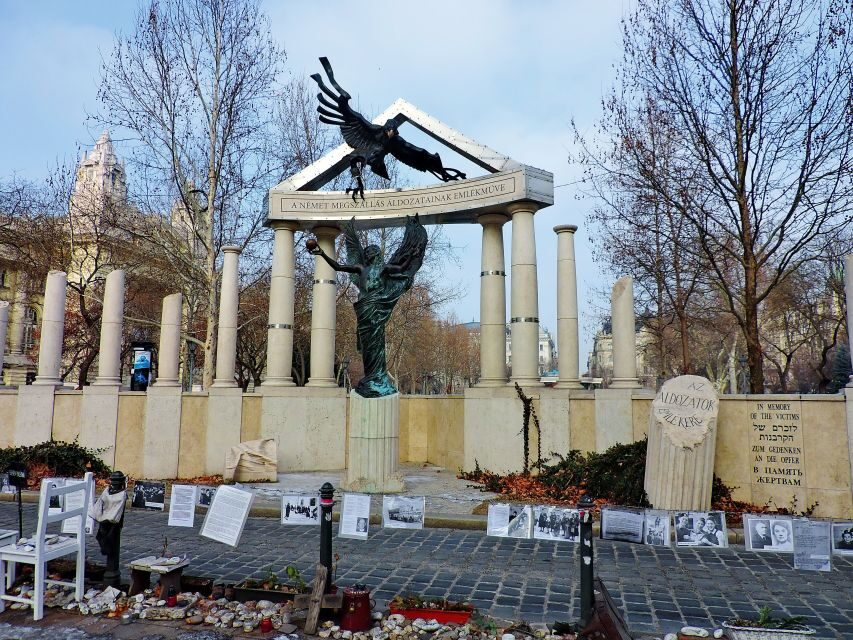
Most Budapest tours start you somewhere picturesque. This one starts you on a square that’s practical and central: Deák tér (Pest), with the meeting point in front of Kempinski Hotel Corvinus Budapest on Erzsébet square (Erzsébet tér 7). From there, you get walking right away into one of the more comfortable-feeling parts of the city—tree-lined and easy to navigate, with plenty of street-level detail as you move.
Why I like that approach: it stops communism from being treated like a distant museum topic. You’re looking at everyday streets, then your guide connects those blocks to the era’s reality—how power shaped daily life, what propaganda tried to do, and how people adapted. Expect the walk to be full of reminders, from war damage you can still recognize to symbols and stories that help you read what you’re seeing.
One more thing that matters: you’ll be in a group small enough to actually hear the guide and ask questions. Recent guides named in participant accounts include Judith, Zsuzsanna, Monica, Greg, Gergely, Virág, and Dániel—and what they have in common is a storytelling style that mixes big-picture context with personal perspective.
You can also read our reviews of more walking tours in Budapest

Reading the “remnants” of WWII, 1956, and the road to 1989
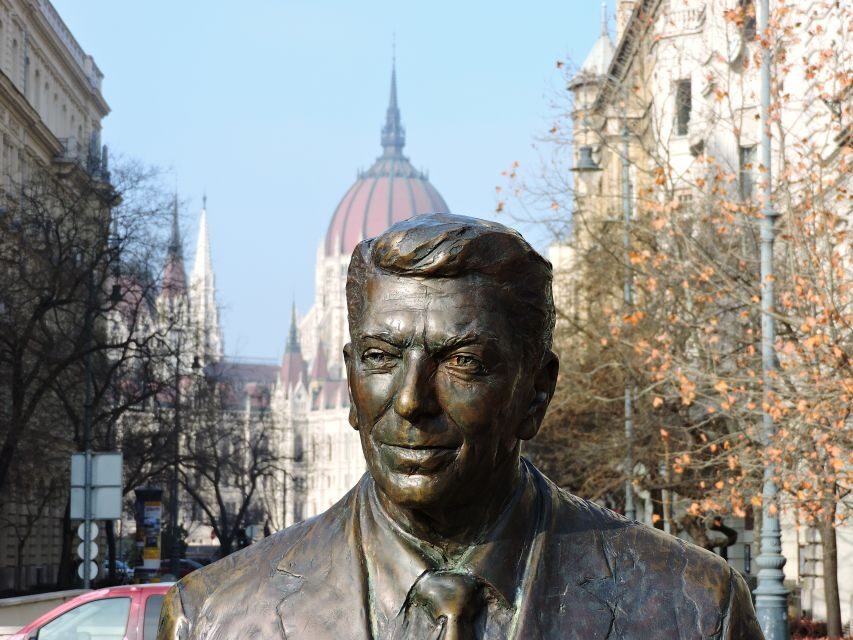
This tour’s core idea is simple: Budapest still carries signs of its 20th-century breaks. You start moving through areas where the Communist-era story isn’t only about ideology—it’s also about the physical and emotional marks left by earlier shocks, then later political control.
Your route aims to connect a timeline like this:
- WWII → the city gets damaged, and the scars remain visible
- 1956 → the revolution becomes a turning point in lived memory
- 1989/early 90s → the political system changes, but the legacy doesn’t vanish overnight
You’ll hear how Communist ideology was introduced and justified, but also how it felt from the inside—what people had to navigate, what they learned to keep quiet, and where they found humor or resilience. The “fun” here isn’t jokes for jokes’ sake. It’s the kind of everyday comedy that shows up when someone describes how life worked under rules designed to control behavior.
You’ll also hear family stories layered into the walking narrative. That’s a big deal. When your guide describes a period through personal memory—someone’s lived experience or what they were told through family lines—you stop thinking of history as a date list. Instead, you get a sense of why certain attitudes formed, why certain compromises happened, and why the country’s later politics can feel so emotionally charged.
If you’re the type who likes to ask: good. The tour is set up for questions, and the guide-style described in accounts suggests you won’t be brushed off with a quick answer and moved along.
How the tour handles Communist ideology without turning it into dry politics
A walking tour about Communism can go one of two ways: either it becomes a history lecture you can’t stay awake through, or it becomes vague and slogan-y. This one aims for a middle road by focusing on ideology—its arrival, its rule, and its legacy—while grounding it in what you can point to around you.
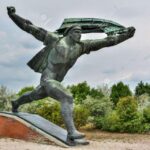
As you walk, the guide’s commentary is designed to help you “translate” the street-level world. You start to recognize that statues, symbols, and surviving architecture aren’t just decoration. They’re part of a story about who had power, what they wanted people to think, and how the public learned to read between the lines.
What’s especially useful for visitors is that the tour doesn’t isolate the Communist period like a bubble. It threads together what came before and what came after—because Hungary didn’t become Communist in a vacuum, and it didn’t exit cleanly either. Even the way the guide talks about late 80s/early 90s transition gives you the sense of continuity: change happens, but habits and memories stick around.
And yes, you’ll hear comic moments too. That balance is what makes the tour feel human. It’s not just “sad facts.” It’s people explaining how they survived, what they resented, what they adapted to, and what they quietly celebrated when they could.
Riding the M2 subway: a practical break that’s also part of the story
About a third of the route’s experience comes from transportation, not just walking. You get a ride on the red subway line (M2) as part of the tour.
This does two useful things for you:
- It gives your legs a reset in the middle of a 3-hour program.
- It keeps the tour grounded in real city movement rather than being a series of short stops.
It also reinforces an important idea: this isn’t a staged “history walk” that freezes you in front of one monument at a time. You’re moving through the living city, and your guide’s narration follows along. Even if you’ve already ridden Budapest’s metro before, this framing makes the ride feel like an extension of the storytelling.
The retro café drink (1961) and why that chat matters
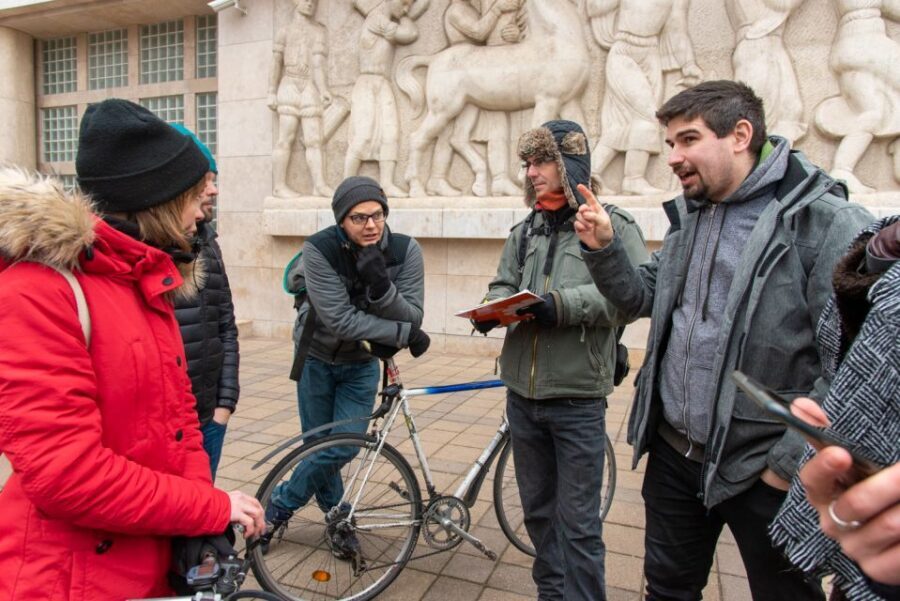
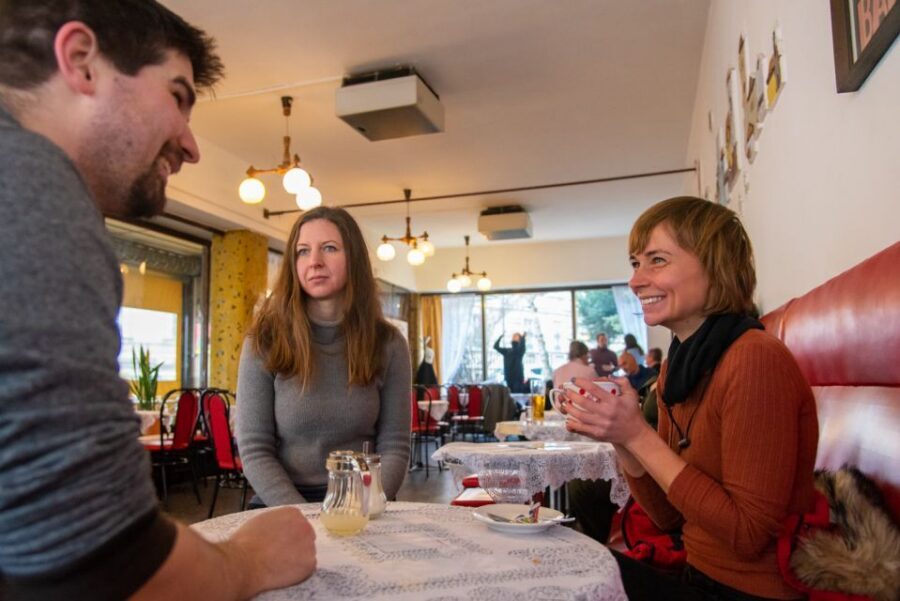
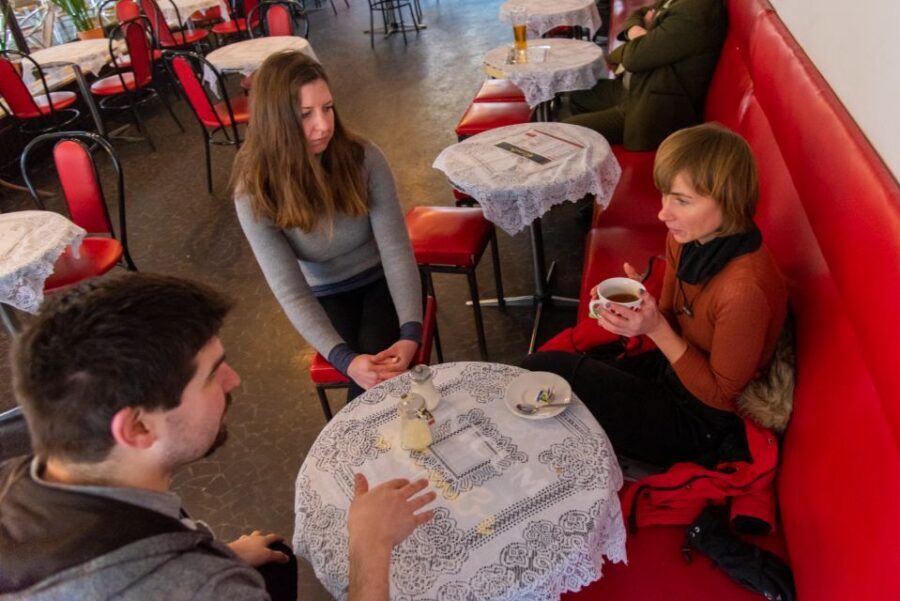
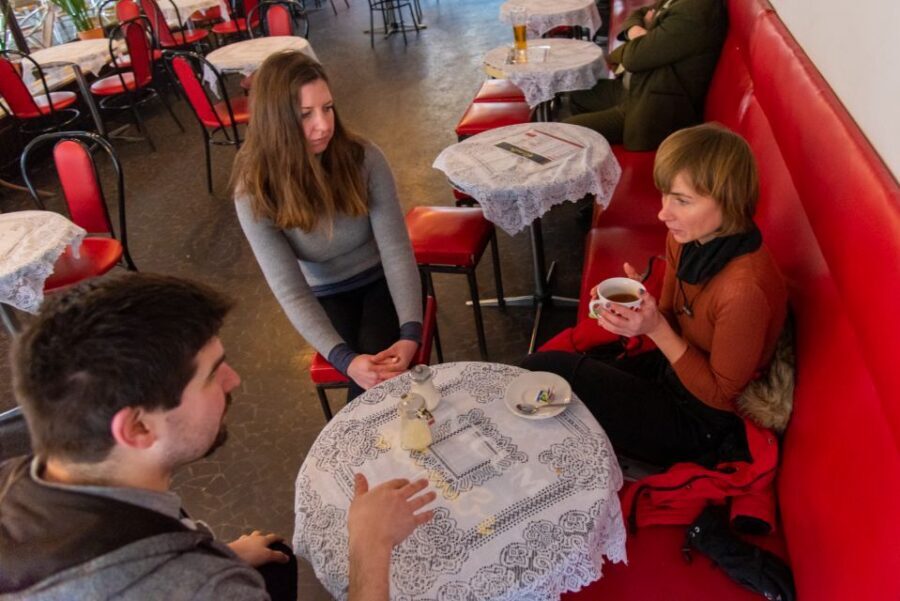
The tour includes a drink in a bar/café that feels like a time capsule. The stop is described as a retro café that has changed very little since its opening in 1961, and many accounts highlight that it feels connected to the atmosphere of the late 20th century—so you’re not just listening to the past, you’re sharing a moment in a place with its own old-world continuity.
This part of the tour is more than a perk. It’s where the experience turns from “information delivery” into conversation. A drink lowers the pressure, and it becomes easier to ask personal questions about what life felt like, how people remember those decades, and what the guide thinks visitors often misunderstand.
If you like guides who answer follow-ups instead of moving on quickly, this café time is one of the strongest reasons to pick this tour. Accounts repeatedly mention how the final chat adds a finishing touch—something that makes the walk feel like a shared discussion rather than a scripted route.
You can also read our reviews of more tours and experiences in Budapest

Small-group format: why max 10 people feels different
The tour is limited to 10 participants, and that matters in practice.
In a large group, questions often get squeezed into a single “end-of-tour” block. Here, the small size supports a back-and-forth style. You’re more likely to get answers that match what you’re actually curious about—whether that’s how ideology affected daily routines, how political culture shifted after 1956, or how the post-Communist transition shaped what Hungary looks like now.
Recent guide names in participant accounts—like Judit/Judith, Zsuzsanna, Monica, and Greg/Gergely—are consistently described as friendly, animated, and willing to respond to lots of questions. You’ll want that if you’re the kind of visitor who doesn’t only want dates, but also wants explanations that connect history to what you’ll see today.
Price, duration, and value: what you really get for $57
The price is $57 per person for 3 hours, and for that you get four concrete components:
- An expert guide (live, English)
- A drink in the retro café
- A transportation ticket for the subway ride
- The walking route built around communist-era context, including family stories
So the value isn’t just that it’s a cheap walking tour. It’s that your time includes narration, transport, and a sit-down pause. You’re not paying extra to stand in place waiting for public transit. The metro ride is part of the planned flow, which makes the schedule feel efficient.
If you compare it to doing communism research on your own, this option saves you the time of figuring out which street-level details matter. The guide’s job is to point to what you’d miss—things like remnants you can still see, then connect them to the political story that explains them.
Practical tips before you go
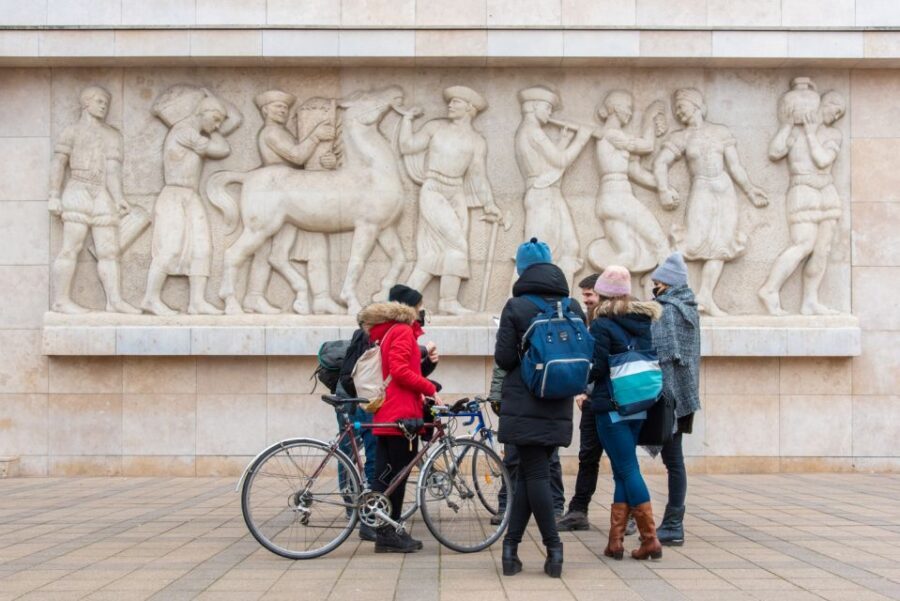
- Wear shoes you can walk in comfortably. The route is a walking tour first, with the metro ride as a timed break.
- Bring a curious mindset. The whole format works best when you ask questions.
- If you’re sensitive to wartime and political topics, mentally prepare for that tone. The tour connects WWII damage and 1956-era material to later Communist control.
Also, plan your arrival. The meeting point is at Erzsébet square in front of Kempinski Hotel Corvinus. You can reach it easily using M1, M2, or M3 subway lines, with Deák Ferenc tér as the stop named for access.
Who should book this communist Budapest tour?
I’d recommend this tour if you want:
- A history-meets-city experience in Budapest that uses what you can see
- A guide who can explain Communist ideology and its legacy without turning it into dry memorization
- A route that includes both war-era remnants and later political change
- A conversation element through the retro café drink
You might skip it if your main goal is purely scenic highlights and you’re not interested in serious political context. But if you like understanding why a place feels the way it does—especially in a city with visible scars and layered memory—this format is a strong fit.
Should you book it?
If you’re visiting Budapest and you want one guided experience that connects the Communist era to street-level reality, I’d book this. The combination of an historian guide, family stories, an M2 metro ride, and a drink in a café that’s been operating since 1961 creates a 3-hour package that feels complete, not rushed.
My decision rule is simple: if you enjoy questions, if you like history that explains modern culture through real human stories, and if you want more than a photo-stop tour, this one gives you better value than most “just walk and look” options.
FAQ
Where is the meeting point?
You meet in front of Kempinski Hotel Corvinus Budapest, on Erzsébet square, facing the Ferris wheel. The hotel address is Erzsébet tér 7, 1051.
How long is the tour?
The tour lasts 3 hours.
What is the price?
The price is $57 per person.
Is this a small group?
Yes. It’s a small group limited to 10 participants.
What language is the tour guide?
The tour is in English.
Is public transportation included?
Yes. You get a transportation ticket and take a ride on the red subway line (M2).
Is there a drink included?
Yes. You’ll enjoy a drink at a retro café as part of the tour.
What period of history does the tour cover?
It focuses on Communism in Hungary, including its arrival, rule, and legacy, with stories connected to WWII, the 1956 revolution, and the transition around 1989/early 90s.
Can I cancel for a refund?
Yes, you can cancel for a full refund up to 24 hours in advance.
Is there an option to reserve without paying now?
Yes. The tour offers Reserve now & pay later, so you can keep plans flexible by booking without paying immediately.