REVIEW · HISTORICAL TOURS
Born Under The Red Star – The History of Communism in Hungary – Private Tour
Book on Viator →Operated by Budapest Urban Walks · Bookable on Viator
Communism in Budapest is never abstract. You’ll walk past monuments tied to Soviet rule and then step into House of Terror, where the “what happened” part gets uncomfortably real. I love the fact that this is a private tour, so your guide can shape the pace and the focus. I also like the mix of heavy sites with a short breather at a Communist-themed bar. One thing to keep in mind: the entry details can get confusing at certain churches and attractions, so it’s smart to confirm what you personally need to pay for.
This is a 3-hour history walk in central Budapest, with pickup offered and an English-speaking guide. You’ll hit six stops tied to WWII, Stalinist-era repression, the 1956 uprising, and the political memory that still shows up in public squares. If you want straight, everyday-life details about communist rule, choose your guide thoughtfully and ask for that emphasis up front.
In This Review
- Key Highlights Worth Planning For
- A 3-Hour Private Way to Read Budapest’s 20th Century
- Pickup, Timing, and Staying Comfortable on Foot
- Stop 1: Soviet Heroic Memorial and the Politics of Monuments
- Stop 2: House of Terror Museum—Where the Theme Becomes Real
- Stop 3: St. Stephen’s Basilica—A Religious Landmark with an Entry Catch
- Stop 4: Szabadság tér and the Memory Clash in One Square
- Stop 5: The 1956 Revolution Memorial—Short, Sincere, Focused
- Stop 6: Hungarian Parliament Building—Views and Context Without the Full Visit
- The Communist-Themed Bar Stop: Retro Soda and a Chance to Reset
- Price and Value: What You’re Paying for at $108.14
- Guides Matter: When Julia, Brigit, Norbert, and Leslie Set the Tone
- Who This Tour Fits Best (and Who Might Skip It)
- Should You Book This Tour?
- FAQ
- How long is the Born Under The Red Star private tour?
- Is hotel or apartment pickup included?
- Is this a private tour?
- Which stops have free admission, and which ones are not included?
- What’s included besides the guide?
- What language is the tour offered in?
- Do I get a mobile ticket?
- Is it suitable for families and service animals?
Key Highlights Worth Planning For
- House of Terror at Andrássy út 60: one stop that turns slogans into personal stories and documented suffering
- A focused private route: hotel pickup + only your group means fewer wait times and easier questions
- Szabadság tér’s competing memories: Holocaust remembrance and Soviet liberation side by side
- Retro soda included: a small, fun stop that matches the theme without making the tour childish
- 1956 memorial time: a quick, respectful stop for Hungary’s break with communist control
- Bring extra attention for paid entry: some sites are marked not included, and coverage can be a sticking point
A 3-Hour Private Way to Read Budapest’s 20th Century

If you’re the type who likes your history grounded in places, this tour works. In about three hours, you’ll connect WWII aftermath, Soviet influence, Hungary’s communist years, the 1956 revolution, and how public memorials keep the politics alive. It’s not long, but the topic is heavy—so short stops with good explanation are the right format.
I especially like that you’re not stuck on a huge bus loop. Pickup means you spend less time figuring out logistics and more time listening. Plus, since it’s private, you can ask follow-ups when something doesn’t add up—like why certain monuments exist, or why certain stories get emphasized.
You can also read our reviews of more private tours in Budapest



Pickup, Timing, and Staying Comfortable on Foot
The tour includes hotel or apartment pickup, with your guide meeting you at your requested address. The walk is designed for a moderate fitness level, and it’s near public transportation, so you’re not totally dependent on one route if something shifts.
Plan on a steady pace with multiple brief stops—think “listen, look, move on.” Each main location is about 15–25 minutes, so the timing is tight enough to cover the big ideas without wandering. If you get motion-sick or hate tight transitions, mention it at the start so your guide can adjust.
Also: this experience requires good weather, so if rain is common in your travel week, have a flexible mindset.
Stop 1: Soviet Heroic Memorial and the Politics of Monuments
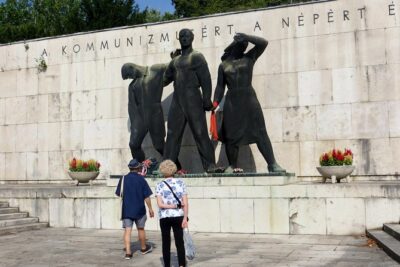
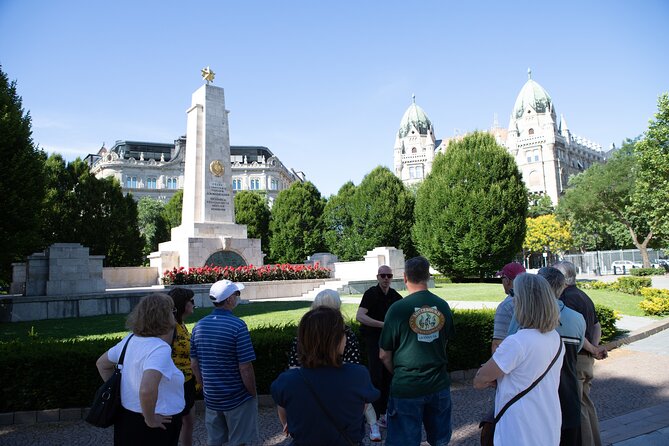
Your first stop is the Soviet Heroic Memorial, a white obelisk in a landscaped park setting. Even if you don’t know the finer details yet, monuments like this tell you how power wanted to be remembered after WWII.
This stop is brief, which is fine. The goal here is framing: who is being honored, who is left out, and why a simple monument can become a political argument years later. In a communist-era context, symbols are never neutral—so you’ll want your guide’s explanation more than you’d want a slow museum-style visit.
Stop 2: House of Terror Museum—Where the Theme Becomes Real
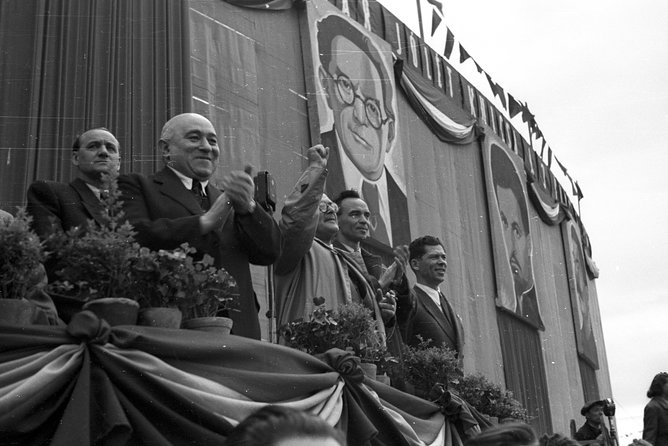
Then you reach the big one: House of Terror Museum on Andrássy út 60. This is the kind of place where you can feel the weight of the building and the topic at the same time. Exhibits cover both the fascist and communist regimes in 20th-century Hungary, and the site also functions as a memorial for victims detained, interrogated, tortured, or killed there.
In my view, this is where the tour earns its seriousness. You’re not just learning dates—you’re seeing how state violence can be systematized, justified, and then remembered (or argued over). The short time slot means you won’t read everything, so it helps to ask your guide what the museum wants you to notice first.
Stop 3: St. Stephen’s Basilica—A Religious Landmark with an Entry Catch
Next is St. Stephen’s Basilica (Szent István Bazilika). The church is named for the first King of Hungary, Stephen, and the right hand of Stephen is housed in a reliquary—so there’s a real “nationhood and faith” story baked into the building.
One practical note: admission here is not included. The tour description may suggest free entry for some parts of the overall experience, but multiple travelers have run into misunderstandings about exactly which parts require tickets. My advice is simple: at the start of the tour, ask your guide what you personally need to pay for (especially if you want to go up inside areas like domes). That one question can prevent an awkward end-of-stop surprise.
You can also read our reviews of more historical tours in Budapest





Stop 4: Szabadság tér and the Memory Clash in One Square
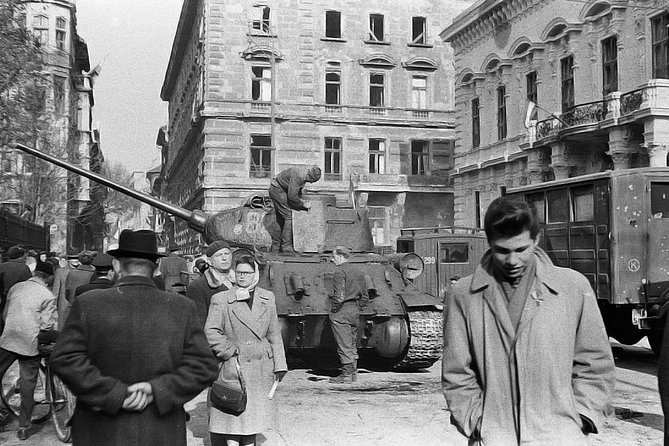
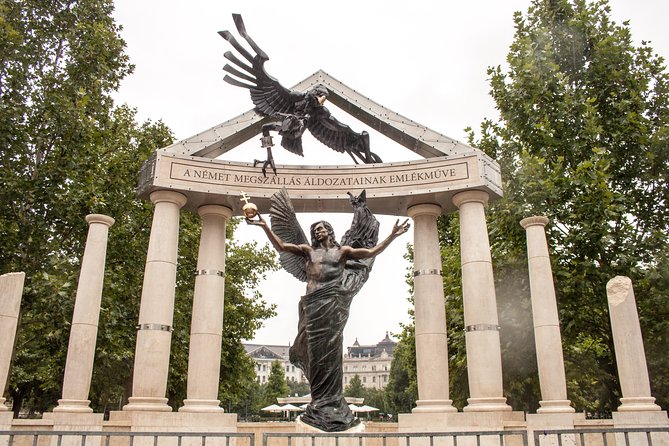
Szabadság tér (Liberty Square) is where Budapest shows its political layering. The square is known for two controversial memorials: one commemorates Hungarian Jewish victims of the Holocaust, and another honors Soviet soldiers who liberated Budapest from the Nazis in 1945. Add in the U.S. Embassy nearby and the Hungarian National Bank headquarters, and you’ve got a square where history, diplomacy, and national identity all overlap.
This is one of those stops where the guide’s framing matters. The facts are all there, but the emotional meaning changes depending on which story people choose to lead with. In a short visit, you’re looking for the “why it’s contested” angle—not a debate. Your guide should help you see how one square can hold very different griefs and political narratives.
Stop 5: The 1956 Revolution Memorial—Short, Sincere, Focused
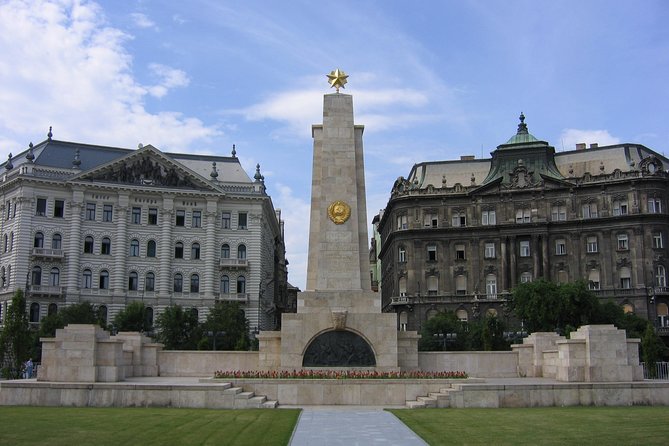
The Memorial to the 1956 Hungarian Revolution and War of Independence marks the uprising against the communist regime. This stop is short, but it’s a key turning point in the tour’s storyline: control isn’t only something that gets imposed—it’s something people resisted.
If you want the human angle, ask your guide how Hungary’s 1956 uprising changed the way later generations understood communist rule. In many cities, revolutions get treated like statues. Here, the meaning stays tied to memory and consequence.
Stop 6: Hungarian Parliament Building—Views and Context Without the Full Visit
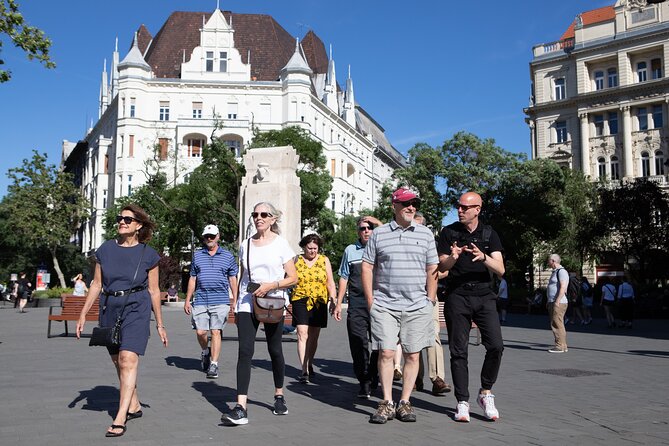
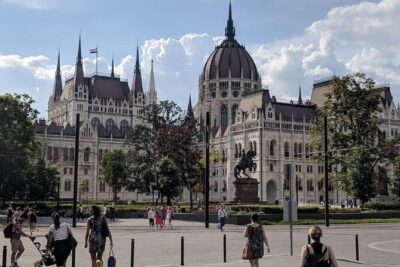
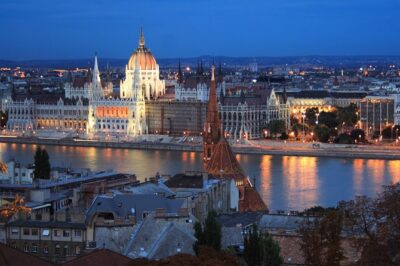
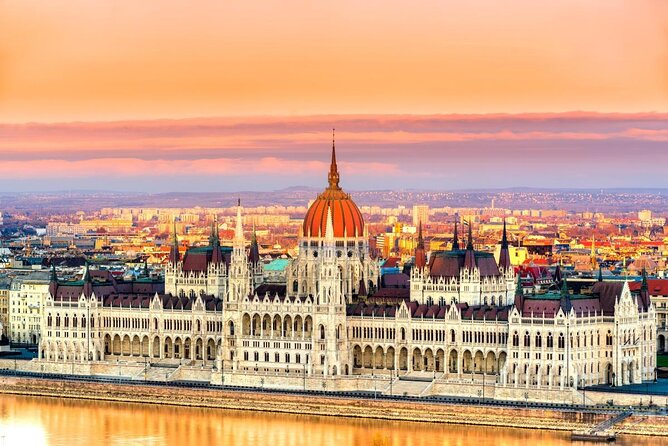
You end with the Hungarian Parliament Building (Országház). It’s a major landmark and a popular tourist destination, and even without going inside, the exterior is a strong visual cue for how Hungary frames governance and nationhood.
Admission here is not included, and the stop is brief, so treat it as a context stop rather than a full sightseeing block. Your guide should connect the architecture and public symbolism back to the bigger theme: how regimes represent themselves, and how democracies also use imagery to project legitimacy.
The Communist-Themed Bar Stop: Retro Soda and a Chance to Reset
Between the monuments and the big museum, you’ll pause at a Communist-themed bar. A retro soda is included, and the tour also includes coffee and/or tea.
This part can be surprisingly useful if your guide uses it well. It’s a moment to compare what you just learned to how people talk about the past now—without turning the serious parts into a lecture. Just remember: the included drink is specified as a retro soda (not a whole bar tab). If you want extras, you should be ready to pay.
One reason I like keeping this stop in the middle of the tour is simple: the subject matter is grim. Even a short break helps your brain absorb the facts instead of just storing them like a list.
Price and Value: What You’re Paying for at $108.14
At $108.14 per person for about three hours, you’re paying for three things: a private guide, targeted stops that match the theme, and pickup so you lose less time getting started. This isn’t a budget “quick sites” tour, but it can still be good value if your guide focuses on the details you care about.
Here’s where value can shift:
- If you want deep explanations about daily life under communist rule, make that clear early. One guide experience included less of that and more general conversation, which left some visitors feeling the tour was lighter than expected.
- If you’re counting on included/free admission for every stop, don’t assume. The tour description may indicate free entry at some sites, but confusion has happened around what counts as included access. A quick check at pickup can protect your wallet and your mood.
If your main goal is a curated, theme-driven history walk with someone to translate what the stones and plaques mean, the price can make sense. If you want a long museum binge with guaranteed entry everywhere, this format may feel short.
Guides Matter: When Julia, Brigit, Norbert, and Leslie Set the Tone
The quality of a tour like this is heavily tied to the guide’s style. I’m glad this one has strong examples of what good looks like. Guides such as Julia were praised for sharing personal experiences, which tends to make a tough subject feel more human. Brigit was noted for a large amount of knowledge, which helps when you want context fast. Norbert got credit for flexibility and friendliness, which matters when your route needs to adapt.
On the other hand, one guide experience involved ending the tour early and spending extra time in a café, which left a visitor wanting more concrete information about life under communism. Another issue was confusion around admission details for certain sites. So, if you book, I’d treat this as a conversation starter: ask what you’ll cover, confirm which admissions apply to you, and tell your guide what kind of detail you want.
Who This Tour Fits Best (and Who Might Skip It)
This is a great choice if you:
- want a focused Budapest history route tied to communist rule and political memory
- like short, well-explained stops over long museum marathons
- appreciate a tour that can be shaped to your questions (private format helps)
It may be less ideal if you:
- expect a fully museum-heavy experience with lots of time inside each site
- need guaranteed coverage for every entrance area without checking first
- hate shifts in pacing, like an extra café chat replacing more history time
If you’re traveling with a moderate walking tolerance and you’re comfortable reading the meaning of monuments, you’ll likely enjoy it.
Should You Book This Tour?
I’d book it if you’re curious about how Budapest “tells the story” of communism through locations, memorials, and buildings—and you’re okay with a tight time frame. The House of Terror stop is the main reason to choose this tour, and the private nature plus pickup can make the experience feel efficient rather than rushed.
Before you go, do two practical things: ask your guide what’s included for entry at any sites where admission isn’t clearly stated, and request a strong focus on day-to-day life under the regime if that’s what you care about most. If you do that, this can be a powerful 3-hour window into a difficult chapter of Hungary’s past.
FAQ
How long is the Born Under The Red Star private tour?
It runs for about 3 hours.
Is hotel or apartment pickup included?
Yes. Your guide meets you at your requested address.
Is this a private tour?
Yes. It’s private, so only your group participates.
Which stops have free admission, and which ones are not included?
Free admission is listed for the Soviet Heroic Memorial, House of Terror, Szabadság tér, and the 1956 Hungarian Revolution and War of Independence memorial. St. Stephen’s Basilica and the Hungarian Parliament Building are listed as not included for admission.
What’s included besides the guide?
The tour includes maps and further recommendations, coffee and/or tea, and a retro soda at a Communist-themed bar.
What language is the tour offered in?
The tour is offered in English.
Do I get a mobile ticket?
Yes. A mobile ticket is provided.
Is it suitable for families and service animals?
Children must be accompanied by an adult. Service animals are allowed.