
REVIEW · BUDA CASTLE & FISHERMAN'S BASTION
Walking tour in the Buda Castle incl. Fisherman’s Bastion
Book on Viator →Operated by Luna Tours Budapest · Bookable on Viator
Buda Castle in a short walk. This tour strings together Matthias Church, Fisherman’s Bastion, and the Castle District legends so your first visit feels organized, not chaotic. I like how the route stays focused on the places you’ll want to photograph and remember, while still giving you the stories that make the stones make sense.
Two things I really like: first, you get a guided pass through the main sites without spending your whole day trapped in ticket lines or guessing what you’re looking at. Second, the tour mixes major monuments with small, fun details like stopping at Ruszwurm (the long-running pastry shop) and touching the equestrian András Hadik statue for luck. One thing to consider is timing: you’ll be moving on a group pace, and Matthias Church requires an extra admission ticket if you want to go in.
In This Review
- Key things I’d circle on your plan
- Where This Buda Castle Walk Fits Perfectly Into Budapest
- Meeting at Szentháromság tér and Staying on Track
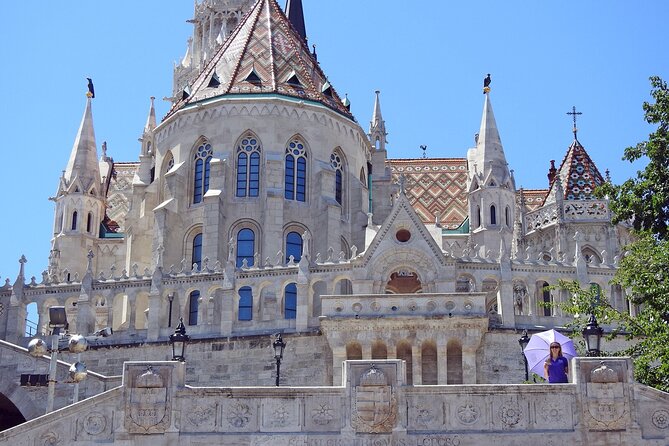
- Matthias Church: The Landmark That Sets the Tone
- St Stephen Statue to Fisherman’s Bastion: From Founder to Fairytale
- Ruszwurm and the Little Castle Detours That Make It Feel Local
- Uri Street and Labirintus Budavari: Walking Through Layers
- Karmelita Kolostor and the White House Connection
- Fountain of King Matthias and the Buda Castle Finale
- How the Guides Make This Tour Worth It
- Who Should Book This Buda Castle and Fisherman’s Bastion Walk
- Should You Book This Tour?
- FAQ
- How long is the walking tour?
- What does the tour cost?
- Is the tour offered in English?
- Where do I meet the guide?
- Are admission tickets included?
- How big is the group?
- Do I need a print ticket?
Key things I’d circle on your plan
- Matthias Church first: you start at the landmark, with an on-the-spot guide story at the main entrance
- Fisherman’s Bastion views: a dedicated stop where the “storybook” vibe is the point
- Short, varied stops: 5–20 minute blocks keep you from zoning out
- Legend-based photo moments: coin-at-the-fountain and touch-for-luck breaks are built in
- Small group size: up to 20 people, so it doesn’t feel like a moving crowd
- Bonus cultural stops: Ruszwurm and the Castle District promenades add texture beyond the big sights
Where This Buda Castle Walk Fits Perfectly Into Budapest
Budapest can feel like two cities stitched together: Buda on the hills and Pest down by the river. This walking tour is a smart way to get grounded in the Buda side fast—especially if it’s your first day or you don’t want to dedicate a whole morning to castles and churches.
The schedule is designed for momentum. You’re out for about 2 hours to 2 hours 15 minutes, with short stops that keep the walk moving. That matters, because Castle District visits can turn into a slow shuffle once you start reading every plaque and taking every stair. Here, the guide’s job is to help you prioritize.
You’ll also see the area in a way most people don’t: not just “big buildings,” but the in-between spaces where legends live—promenades, statue corners, and the quirks that make Buda feel like a place with personality, not a backdrop.
And yes, the price is striking. At $3.63 per person, it’s priced like a budget-friendly intro rather than a premium day tour. If you value a good guide’s explanations and you’re comfortable walking, this can feel like one of those rare deals that actually earns its spot on your itinerary.
You can also read our reviews of more walking tours in Budapest



Meeting at Szentháromság tér and Staying on Track

Your start point is Budapest, Szentháromság tér (1014 Hungary). That’s a useful detail, because with the Castle area, one wrong turn can mean you’re halfway up a hill before you realize you’re not with the group.
A couple practical points:
- You’ll have a mobile ticket, so keep it ready on your phone.
- The tour is in English, so you can follow the story without guessing.
- It’s near public transportation, which makes it easier to connect from wherever you’re staying.
The group size is capped at 20 travelers, which tends to make the meeting and re-gathering smoother than large bus-style excursions. Also, service animals are allowed, which can matter for comfort on uneven ground and stairs.
The tour ends at Szent György tér 2 (1014 Hungary) and wraps up by the Hungarian Parliament building area. That ending is a big deal: you finish closer to the Danube’s main sightline and a more walkable zone for your next plan.
Matthias Church: The Landmark That Sets the Tone

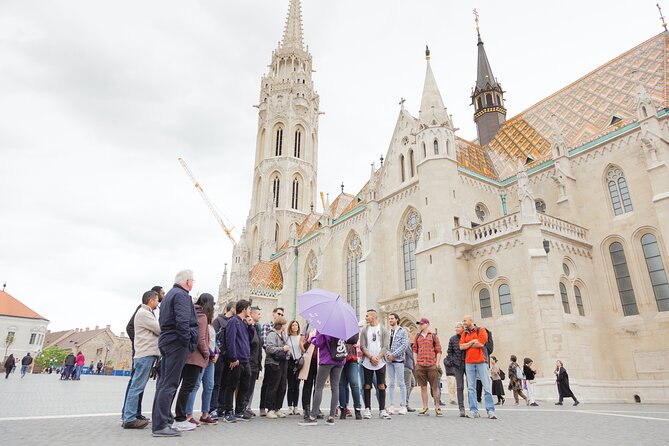
Your first stop is Matthias Church at the main entrance. You’ll have about 20 minutes, and the guide meets you there and shares its history in a funny, story-first way.
This first stop is well-chosen because it acts like a “decoder ring” for everything around you. The Castle District can look like a jumble of stone eras unless someone helps you understand what you’re seeing. Starting at Matthias Church gives you that anchor early.
A key practical note: admission ticket is not included. So if you plan to go inside, budget time and money. If you’re just focused on the exterior and the immediate surroundings, you can still get a lot out of the stop.
What to watch for during the stop:
- How the guide ties the church into the broader Hungarian story
- Any views and angles the guide points out before you move on
- The way the building’s details set the style for nearby Castle District architecture
If you like arriving at a site with context already in your head, you’ll appreciate why this stop comes first.
St Stephen Statue to Fisherman’s Bastion: From Founder to Fairytale
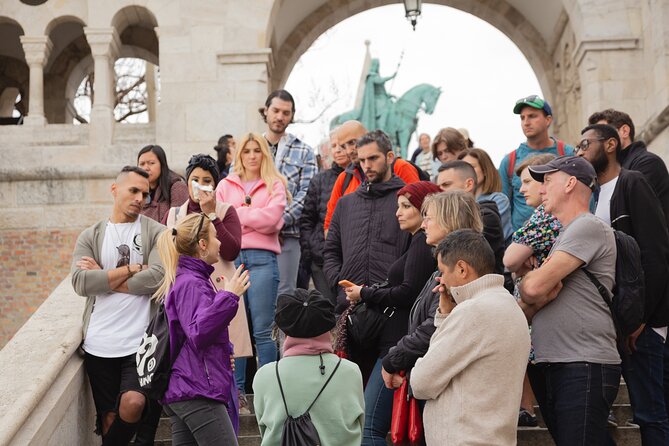
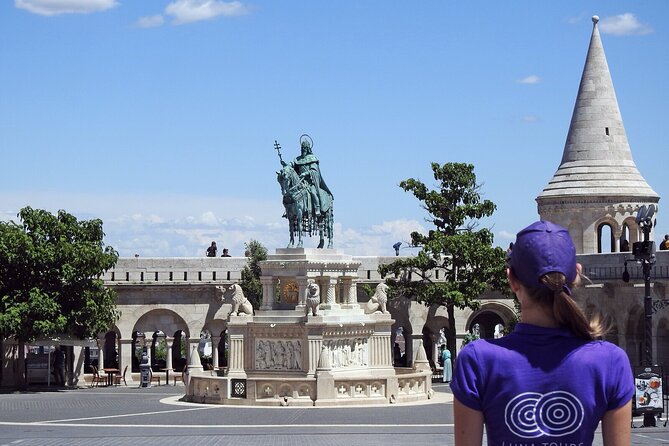
After Matthias Church, you move to the Statue of St Stephen. Expect about 10 minutes, and the stop is free. St Stephen (Szent István) is treated here as the state founder, which gives you a clear historical thread before the tour swings into the scenic part of Buda.
Then comes the highlight many people picture before they ever arrive: Fisherman’s Bastion. You get about 20 minutes, and it’s also free.
This is where Budapest goes into postcard mode. The tour description calls it a fairy-tale feeling, and that vibe isn’t just about scenery. It’s also about how the viewpoint works. You’re high up, looking out across the river toward the Parliament area, and the guide’s explanations can make the buildings you see across the water feel less random.
Two smart ways to use this stop:
- Take your photos early, before the group settles into conversation mode.
- Spend a few extra minutes scanning the skyline. Even if you’ve seen pictures online, the real thing has scale and angles that don’t translate fully.
This is also a good spot to ask questions if your guide seems lively—people often want to connect what they see with what they heard at Matthias Church.
Ruszwurm and the Little Castle Detours That Make It Feel Local
Next you’ll hit Ruszwurm Confectionery for about 5 minutes. Admission is free, but this is where you can decide if you want to buy a coffee or pastry as a break.
Why include a shop at all? Because it slows the tour in the right way. A quick stop gives your brain time to connect the history to everyday life. Even in tourist-heavy spots, a place like Ruszwurm can ground you in the idea that people have been wandering and snacking around here for a long time.
One review detail that really matters: guides in this style often share practical food ideas and local recommendations—so if Ruszwurm is more than a quick photo, your guide can point you toward what’s worth trying.
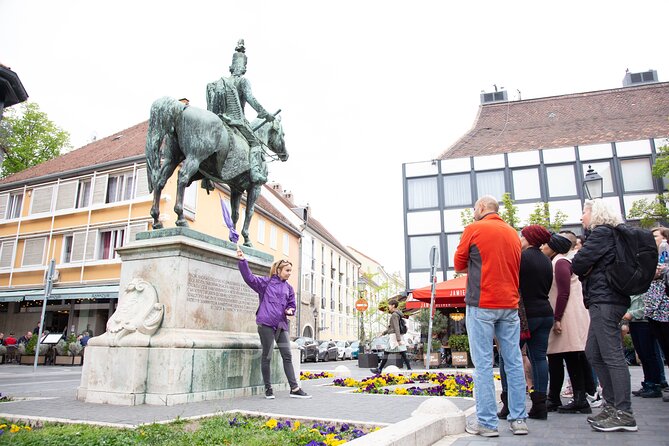
From there, you’ll meet the Statue of Mounted András Hadik. It’s only 5 minutes, free, and it comes with a fun tradition: touching the equestrian statue for luck. It’s not a life-altering ritual, but it’s one of those built-in moments that turns a stop into a memory.
Then you continue to Arpád Tóth Promenade (Setany) for about 10 minutes, also free. This is described as the Hungarian Beverly Hills, and the guide shares local gossips, rumors, and history. That’s a different style of storytelling than church history or royal palaces, and it helps you see how the Castle District got its reputation.
If you like your travel with humor and street-level color, this segment is a strong match.





Uri Street and Labirintus Budavari: Walking Through Layers
You’ll then move through Uri Street for about 10 minutes. This stop focuses on the Castle District’s residential and royal parts, which is helpful because the area isn’t just monuments on display. It’s a neighborhood with real streets, real structures, and a real sense of place.
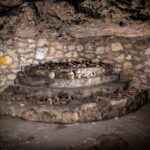
From there, the tour heads to Labirintus Budavari for about 10 minutes. This part is special because it points to what’s under your feet and what’s tucked away out of sight.
Here’s what’s being highlighted:
- There’s a cave system under the Castle District
- There are hidden museums, including the Labyrinth and the Hospital in the rock
Important realism check: the tour time here is short, so think of this as a guided orientation to the idea of those underground spaces, not a full spelunking adventure. If you want a longer underground visit, you’d likely plan it separately.
Still, even as a quick stop, it’s a valuable moment. It changes how you interpret the Castle District. Suddenly, the hill isn’t just a view platform—it’s a whole world of hidden rooms and historic functions.
Karmelita Kolostor and the White House Connection
Next is Karmelita Kolostor for about 10 minutes, free. The guide uses both history and everyday-life stories here.
One standout detail from the tour’s description: the guide explains the background of Prime Minister Offices and calls it the Hungarian White House. That gives the stop modern relevance. You’re not only learning what happened centuries ago—you’re learning how this place has been used in more recent political life too.
Stops like this can feel either dry or fascinating, depending on the guide. In this kind of tour, the difference is often tone. Names that show up in guide feedback include Claudia, Greg, Bela, and Panna—and they’re praised for being engaging and for answering questions. If you’re the type who likes asking how a site functions today, this stop is a good fit.
Fountain of King Matthias and the Buda Castle Finale
The tour then moves to the Fountain of King Matthias for about 5 minutes. Admission is free. This stop is built around legend: it’s the kind of place where dropping a coin is part of the folklore, with the idea that you may return to Budapest.
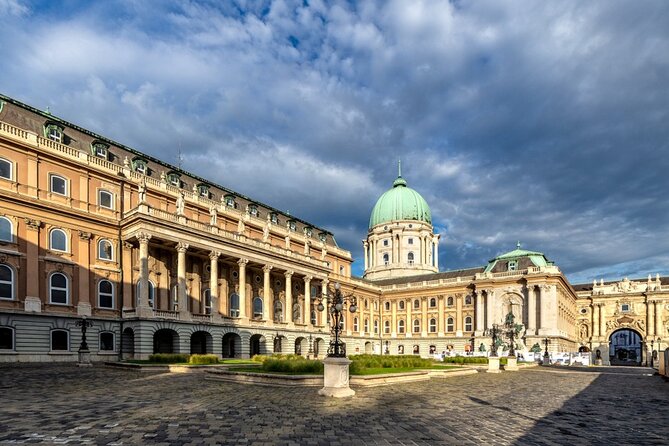
After that, you end at Buda Castle, with about 20 minutes. Admission is free here on the tour segment, and the focus is on the medieval ruins and the Royal Palace.
This finale matters because you’re not just “ending.” You’re finishing at a place where you can continue exploring on your own. Even if you don’t go inside any specific museum, the Castle grounds and surrounding areas are where you’ll want to linger after the guided portion is over.
If you still have energy:
- Use your last guided minutes to learn what you should prioritize next on your own
- Plan to keep a little time buffer, because Buda rewards slow wandering
Ending near the Parliament area also helps. It’s a natural transition from hills to the riverfront vibe.
How the Guides Make This Tour Worth It
A walking tour lives or dies by the guide’s pacing and storytelling. This tour format is designed to keep you moving between stops, so the guide has to do two jobs at once: explain what you’re seeing and keep you from getting lost or separated.
Across guide feedback, the most praised pattern is how well the guide balances:
- history with humor
- site details with practical direction
- enough back-and-forth for questions without derailing the route
Guide names that come up include Sourav, Sophie, Paloma, Panna, and Panya, with many comments pointing to fun interaction and clear explanations. One useful operational note from feedback: in at least one group setup, the guide used a microphone/speaker so the story stayed audible. If that feature is provided on your date, it’s a quiet quality-of-life upgrade—especially in areas where the wind or foot traffic can drown out normal conversation.
Who Should Book This Buda Castle and Fisherman’s Bastion Walk
This tour is a great match if you:
- want a first-pass orientation to the Buda Castle District
- like mixing big landmarks with smaller, quirky details
- appreciate guides who connect what you see with what it means
It’s also a good option for travelers who don’t want to spend a whole day planning logistics. You’re handed a route with timed stops, and the guide helps you avoid the common problem of spending hours bouncing between sites without knowing the main story.
Where you might want to think twice:
- If you expect a long deep-dive inside multiple museums, the time is short at each stop.
- If you strongly prefer independent exploring with no group pace, you may find the fixed timeline limiting.
Should You Book This Tour?
Yes, if your goal is to get your bearings in Buda Castle fast and leave with real context—not just photos. With a small group size, timed stops that hit the major sights, and a mix of monuments plus fun legends (touch the statue, coin at the fountain, quick Ruszwurm break), it’s built to be an efficient, enjoyable start.
At $3.63 per person and with English guidance for about 2–2h15, it’s one of the best-value ways to learn the Castle District without turning your trip into an all-day project. Just arrive a little early at Szentháromság tér, keep an eye on what requires an entry ticket (Matthias Church does), and you’ll get a lot out of those couple hours.
FAQ
How long is the walking tour?
It runs for about 2 hours to 2 hours 15 minutes.
What does the tour cost?
The price is listed as $3.63 per person.
Is the tour offered in English?
Yes, the tour is offered in English.
Where do I meet the guide?
The meeting point is Budapest, Szentháromság tér, 1014 Hungary.
Are admission tickets included?
Matthias Church admission is not included. Other stops on the walk are described as free, while Matthias Church specifically notes an admission ticket not included.
How big is the group?
The tour has a maximum of 20 travelers.
Do I need a print ticket?
You’ll use a mobile ticket.