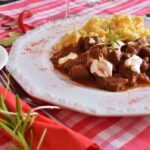
Budapest tastes better when history is on your feet. This 5-hour walking tour turns into a cooking workshop, where you connect what you see to what ends up on your plate. You’ll move through key city stops tied to the Ottoman, Jewish, and Austro-Hungarian storylines—and then you cook and eat together.
I love the small-group setup, capped at 10 people, so the experience stays personal and questions don’t get lost. I also like the way the meal is built around classic Hungarian dishes—like töltött paprika—so it feels earned, not just served.
One possible drawback: you’re walking first, then cooking. If you hate getting involved in a hands-on kitchen session, or you’re not ready for a full dinner that takes time, this may feel like a long commitment.
In This Review
- Key things to know before you go
- Why Budapest’s food story starts on the sidewalk
- Price and timing: what you’re really paying for
- Stop 1: Gul Baba’s Tomb and the Ottoman footprint in Budapest
- Stop 2: Budapest’s Parliament Building and Austro-Hungarian influence
- Stop 3: The Great/Central Synagogue and a Jewish story that shaped the city
- From city streets to the kitchen: how the cooking part works
- The full dinner menu: what you’ll cook and eat
- Small-group dining and the guide touch: Kata and Karolina
- What to wear and how to set yourself up for success
- Who this tour suits best (and who might skip it)
- Should you book Walk and Cook Budapest?
- FAQ
- How long is the Walk and Cook Budapest tour?
- How much does it cost?
- Is it a small group?
- What language is the tour offered in?
- Where does the tour meet and end?
- What are the main historic stops on the walk?
- How does the timing work between walking and cooking?
- What dishes are included in the sample menu?
- Do I need a printed ticket?
- When will I receive confirmation, and what about cancellation?
Key things to know before you go
- Small group (max 10): you get more attention and a more relaxed dinner at the end.
- City tour + cooking workshop: you’ll go from guided sights to hands-on Hungarian cooking in the same experience.
- History you can taste: each stop ties to outside influences that shaped Hungarian food traditions.
- Full sit-down dinner: you cook and then eat a multi-dish meal together.
- English-language guide: the tour is offered in English throughout.
- Hands-on dishes on the menu: expect stuffed peppers, poppy-seed dumplings, goose, goulash with sauerkraut, and more.
Why Budapest’s food story starts on the sidewalk
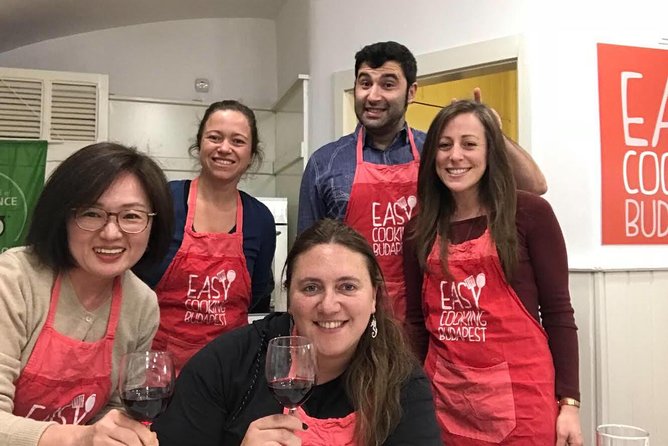
This tour works because it refuses to treat food like a random list of recipes. You’ll start outdoors, learning how Budapest’s past shows up in real, everyday flavors. Then you’ll carry that context right into the kitchen, where you cook Hungarian classics with hints of the nations tied to each era.
I like the pacing. A guided walk sets the scene fast, then the cooking part makes you slow down and pay attention—texture, timing, and technique. It’s not just watching; it’s doing.
And yes, the history topics are heavier than a postcard. You’ll talk about what remained after Ottoman rule, and the Jewish experience in Budapest during World War II. Doing it on foot, right at meaningful locations, helps the story feel grounded.
You can also read our reviews of more walking tours in Budapest



Price and timing: what you’re really paying for
The price is $131.06 per person for about 5 hours. That’s not a “cheap snack tour,” and it’s not meant to be. You’re paying for two things at once: guided sightseeing and a hands-on culinary session that ends with a full group dinner.
The walking portion is about 1.5 hours, after which you head to the kitchen. From there, you’re cooking Hungarian dishes that reflect the influences you discussed on the street. If you’re budgeting time as well as money, this kind of packaged experience can be a strong value—because it replaces the need to coordinate a guide plus a serious food-focused meal on your own.
You’ll also stay with the same group and finish back at the meeting point, which keeps the day simple.
Stop 1: Gul Baba’s Tomb and the Ottoman footprint in Budapest
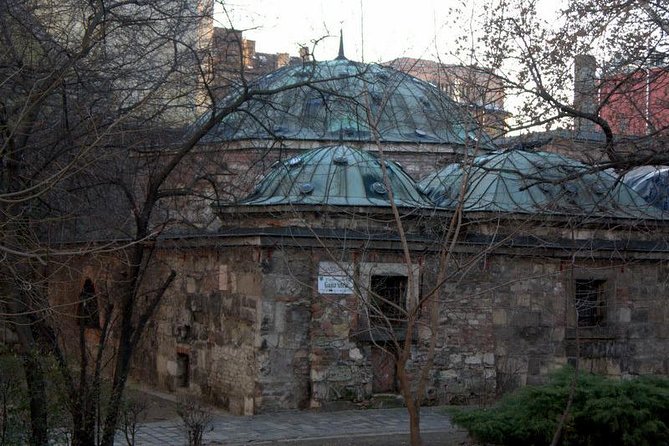
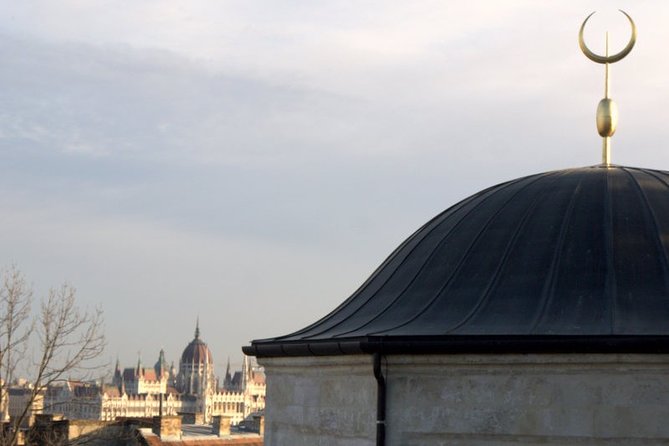
You begin at Gul Baba Turbeje, a site connected to the Ottoman period. It’s a smart starting choice because it immediately frames the theme: Budapest wasn’t shaped in isolation. Empires, communities, and cultures left marks, and those marks later showed up in food habits, ingredients, and cooking styles.
What to expect here is a guided explanation that links the era you’re learning about to what Hungarian cuisine picked up over time. You’re not memorizing dates for a quiz. The goal is understanding why certain flavors and culinary ideas traveled—and how they ended up in Hungarian kitchens.
Practical note: plan to take in the stop at a comfortable walking pace. The tour keeps moving, and you’ll want enough energy to enjoy the next parts of the day.
Stop 2: Budapest’s Parliament Building and Austro-Hungarian influence
Next up is the Hungarian Parliament Building. This is where the tour shifts from one historical thread to another: the Austro-Hungarian era. The building itself is a big signal—architecture that reflects power, wealth, and status—so it makes sense that your guide connects it to the era’s cultural imprint.
You’ll learn about the kind of “beauty” people built during that time in Budapest, and how that mindset connects to food culture. Even if you’re not an architecture nerd, this stop helps you understand a simple idea: food doesn’t develop in a vacuum. It changes with how people lived, ate, and hosted.
If you love taking photos, this is a good anchor point. It’s easy to remember where you are in the story, and it helps the walk feel like a sequence instead of random sightseeing.
Stop 3: The Great/Central Synagogue and a Jewish story that shaped the city
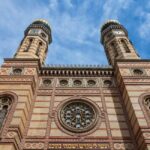
Then you head to Nagy Zsinagóga (the Great/Central Synagogue). This stop brings the Jewish history of Budapest into focus, including what happened during World War II. The lesson here is not only historical; it’s also about community and resilience, and how those forces shape food traditions over generations.
The tour’s approach is practical: it connects what you’re learning with what you’ll cook next. So you’re not just reading about history after the fact. You’re building a mental map that you’ll use in the kitchen.
A word of advice: if you’re the type who likes to process serious history slowly, use a moment here to step back, look around, and let the explanation land. The rest of the tour is active, so you’ll be glad you gave yourself that pause.






From city streets to the kitchen: how the cooking part works
After the city walk (about 1.5 hours), you go to the kitchen for the cooking workshop. This is where the tour shifts from head to hands.
The workshop is hands-on: you’ll cook Hungarian dishes and learn how the outside influences you heard about on the walk can show up in technique, seasoning, and meal structure. The exact method won’t be the same as a private chef lesson, but the group format keeps it social and focused.
Also, the guide sets expectations clearly—so you’re not left wondering what you’re supposed to do. You’ll likely be working at stations, and you’ll want to keep your questions coming. That’s one of the best ways to get value out of a shared class: ask why something is prepared a certain way, not just what it is.
Bring a mindset like: this is part cooking class, part meal preparation, part cultural explanation. If you go in expecting only one of those, you might miss the point.
The full dinner menu: what you’ll cook and eat
This tour includes a full sit-down dinner, and the sample menu covers a lot of the classic Hungarian comfort-food range. Here are the dishes you can expect to see on the table:
Main dishes
- Töltött paprika (stuffed peppers)
- Roast goose with onion potatoes and braised cabbage
- Székelygulyás (goulash soup with sauerkraut)
Desserts
- Mákos guba (dumps with poppy seeds)
- Fánk (special donut)
- Szilvásgombóc (plum dumplings)
That’s a lot of food, and it’s the kind of menu that rewards hunger and curiosity. Stuffed peppers and goulash soup are solid “home cooking” anchors. Goose with potatoes and cabbage is the kind of hearty meal that makes sense in colder weather and celebratory settings. Then the desserts swing toward sweet comfort—poppy seeds, fruit dumplings, and fried dough.
What I like about menus like this on a tour is the balance. You don’t get just one dish and a refill. You get a sequence that teaches you how Hungarian meals can move from savory to sweet without feeling random.
One more thing: because you cook the food here, you’re eating with context. You know what you did, what you adjusted, and what the dish should feel like.
Small-group dining and the guide touch: Kata and Karolina
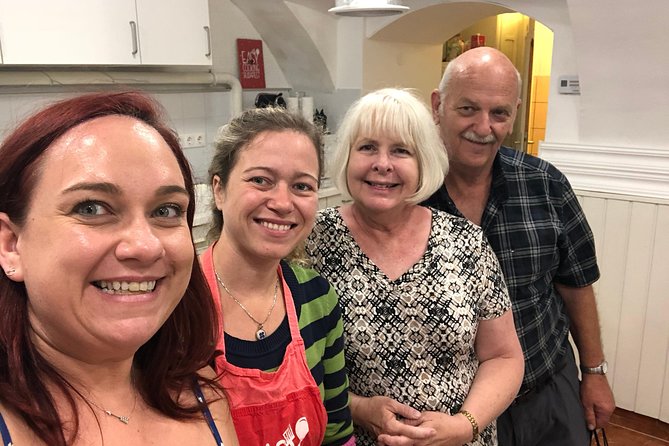
The day stays manageable because the group size is capped at 10 travelers. That makes a real difference at dinner. In large tours, you’re often just part of the background. Here, you’re more likely to be part of the conversation.
The experience is led by guides including Kata and Karolina, and the tone feels personal. That aligns with what you want from a walking-and-cooking format: you want someone to connect the historical dots, then explain the kitchen details in a way that makes sense, not just in a lecture style.
If you like tours where you can actually speak to the guide, not just nod along, this format is built for you.
What to wear and how to set yourself up for success
Because you’ll walk, then cook, wear comfortable shoes and plan for a hands-on kitchen session where you might get splashes or smells on your clothes. You’ll also want a water bottle if you tend to get thirsty on longer walks.
For timing, think of the day as “one continuous food experience.” You’re not squeezing in sightseeing and dinner separately. The stops are meant to feed into the cooking lesson, and the dinner is meant to reward that effort.
And if you’re the kind of traveler who likes to eat slowly and actually enjoy dessert, you’ll fit right in. This is not a rushed plate-and-go setup.
Who this tour suits best (and who might skip it)
This works best if you want more than restaurants and photos. You’ll enjoy it if you like:
- Guided city context that connects to food
- A hands-on cooking workshop
- A full dinner in a small group
It may not be your best choice if you:
- Don’t want to participate in cooking
- Prefer quick, walk-through sightseeing only
- Have very limited time and need a shorter, lighter program
The upside is you leave with both memories and skills—plus a satisfying meal that feels like part of the same story.
Should you book Walk and Cook Budapest?
I’d book it if you want Budapest in a format that’s active and grounded: walk to meaningful sites, learn why the influences matter, then cook and eat the results. The small group size and the fact that you get a full sit-down dinner make it feel like a complete experience rather than a “taste test.”
Skip it only if you know you dislike hands-on cooking or you’re trying to travel with a tight schedule where 5 hours is too much.
If you want value, this hits the sweet spot: guided history plus a real meal, not just a snack and a stamp.
FAQ
How long is the Walk and Cook Budapest tour?
It’s approximately 5 hours.
How much does it cost?
The price is $131.06 per person.
Is it a small group?
Yes. The tour has a maximum of 10 travelers.
What language is the tour offered in?
The tour is offered in English.
Where does the tour meet and end?
It starts in Budapest, Hungary, and it ends back at the meeting point.
What are the main historic stops on the walk?
You’ll visit Gul Baba’s Tomb (Gul Baba Turbeje), the Hungarian Parliament Building, and the Great/Central Synagogue (Nagy Zsinagóga).
How does the timing work between walking and cooking?
After a 1.5 hour guided tour, you head to the kitchen to cook Hungarian dishes.
What dishes are included in the sample menu?
The sample menu includes töltött paprika (stuffed peppers), mákos guba (poppy-seed dumplings), roast goose with onion potatoes and braised cabbage, fánk (donut), székelygulyás (goulash soup with sauerkraut), and szilvásgombóc (plum dumplings).
Do I need a printed ticket?
No. It’s a mobile ticket.
When will I receive confirmation, and what about cancellation?
Confirmation is received within 48 hours of booking, subject to availability. You can cancel for a full refund up to 24 hours before the experience starts.