REVIEW · BUDAPEST
Private Café Wandering: Excursion through Budapest’s Belle Epoque
Book on Viator →Operated by Insight Cities · Bookable on Viator
Five classic cafés, one smart walking route.
This private 3-hour café tour through Budapest’s Belle Époque era is built for people who want more than photos. I love the art-historian-style commentary that explains why each café mattered to writers, artists, and thinkers, and I like how the stops form a clear story of Imperial Budapest social life. The main drawback is simple: café drinks and desserts are not included, so your final spend depends on what you order at each place.
You also need to expect some walking and a bit of pace-shifting between stops (short transfers and streets). The upside is that you’re not stuck in a bus loop. You get to move through real neighborhoods and see how these historic spaces sit in the city today.
In This Review
- Key highlights
- A Belle Époque café route built for walking
- Starting at Vörösmarty Square: Café Gerbeaud’s imperial social hub
- Central Café by tram: dignity as a design choice
- Museum Café since 1885: Zsolnay porcelain and a guest-book time machine
- Urania Café and Rakóczi Street: lectures in an old film theatre
- New York Café near Blaha Lujza tér: ornate theatre energy
- Finishing at Muvesz Café on Andrássy Boulevard near the Opera
- Price and value: what $449.51 per group really buys
- How to get the most out of the 3-hour experience
- Who this tour suits best
- Should you book this Budapest café wandering experience?
- FAQ
- How long is the private café walking tour in Budapest?
- How many people are in the group?
- What does the tour include?
- Are refreshments, cakes, and coffee included?
- Is pickup available, and where do we meet if it’s not?
- What language is the tour offered in?
- Is there free cancellation?
Key highlights
- Five iconic café houses tied to Budapest’s 19th and early 20th century creative scene
- Private walking format for just your group, led by an art historian
- Café Gerbeaud to Central Café by tram with a Danube-side transition
- Museum Café details like Zsolnay porcelain tiles and a grand Venetian mirror
- Urania Café on Rákoczi Street, linked to lectures in the city’s oldest film theatre
- End at Muvesz Café near the Opera, with a chance to catch actors between rehearsals
A Belle Époque café route built for walking
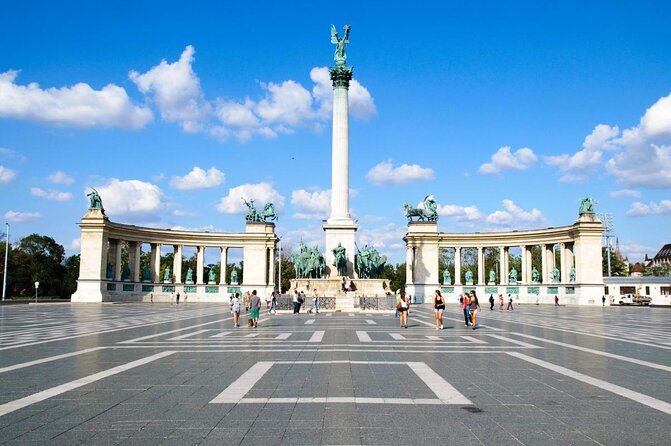
This is the kind of tour that makes you look up. Budapest has grand buildings, but café culture is what shows the daily rhythm behind the glamour. Instead of reading about the city’s Golden Age on a screen, you walk into the rooms where people socialized, debated, flirted, and planned creative work.
The tour runs about 3 hours and is private for up to 10 people. That matters, because café visits are where questions come up. A private guide can slow down when the plasterwork, porcelain, or guest-book story deserves it, and speed up when you’re ready for the next stop.
You’ll also get a “history with manners” feel. This isn’t just about dates. It’s about what it meant to meet others in a particular kind of space—dressed up, served properly, and designed to signal taste.
You can also read our reviews of more private tours in Budapest


Starting at Vörösmarty Square: Café Gerbeaud’s imperial social hub
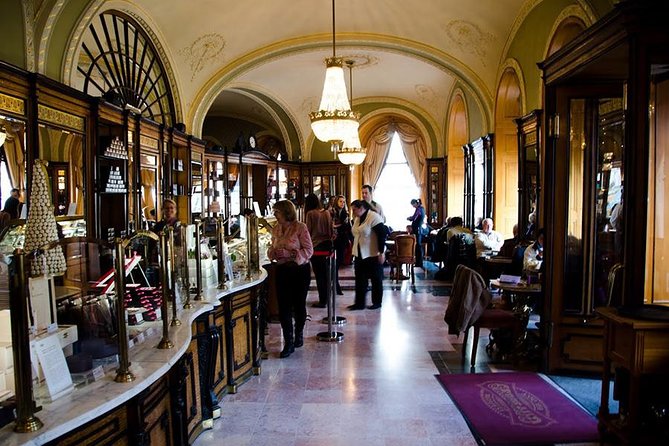
You start at Vörösmarty tér (Vörösmarty Square), right by Café Gerbeaud (Vörösmarty tér 7). If you’ve ever felt Budapest has a theatrical side, this is your first hint why. Gerbeaud is described as a central social hub from the late 19th century, and that historical weight shows in the experience of being there.
Your first café stop matters because it sets the tone. The guide frames what Imperial Budapest felt like in everyday terms: a place where visitors and locals mixed, and where a café could be a stage for ideas as well as pastries. You’re not only admiring decoration. You’re learning how social rituals worked when the Habsburg world still drove much of the city’s economic and cultural momentum.
Practical tip: plan to arrive on time and treat this first stop like your orientation moment. Once the tour begins, the guide’s context will help you notice details later—especially at the more ornate cafés.
Central Café by tram: dignity as a design choice
From Gerbeaud, you take a tram by the Danube to the next stop: Central Café. That short move is more than transport. It turns the story into motion, and it keeps you from feeling like you’re doing a “café crawl” with no transitions.
Central Café is presented as dignified in a way that captures what café house culture meant at the peak of the Habsburg Empire’s power. In practical terms, you’ll spend time looking at the delicate decor and the atmosphere the room creates. The tour also points out how the culinary experience fits the setting—meals, desserts, and drinks aren’t treated as an afterthought. They’re part of the ritual.
One thing to consider: Central Café is visually impressive, so you may want a moment where you stand back and look first, then zoom in. The guide’s commentary will land better if you give yourself that pause.
Museum Café since 1885: Zsolnay porcelain and a guest-book time machine
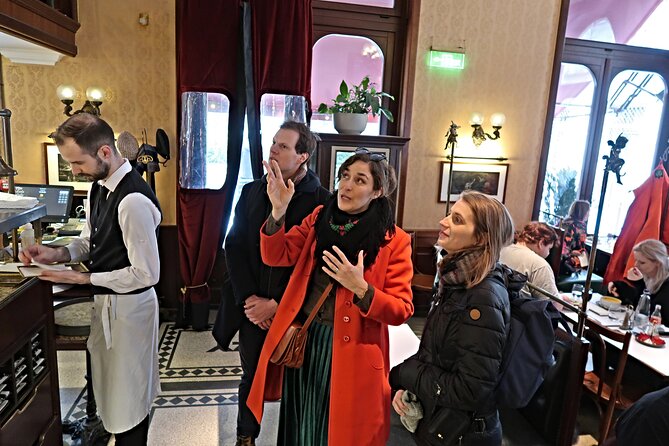
Next comes Museum Café, in operation since 1885, and it’s within walking distance of the prior stop. This is the café stop where the tour becomes wonderfully specific.
The highlight here is what you learn about people keeping history in writing. Prominent clientele were regularly entered in the guest book, which is now treated as a historical document. That’s not just a cute detail. It tells you this wasn’t a place for passing time. It was a social register for people with cultural and political influence—names of Members of Parliament, writers, and famous Hungarian actors are referenced in the guest book tradition.
The room itself carries the story too. Walls are covered with tiles from the world-famous Zsolnay porcelain works, and there’s a grand 19th-century Venetian mirror. If you like your history material with textures you can point to, this is a strong stop.
How to get the most out of Museum Café: don’t rush to the dessert case. First, take a slow look at the tiles and mirror while the guide connects those design choices to Hungarian artistry and European taste.
Urania Café and Rakóczi Street: lectures in an old film theatre
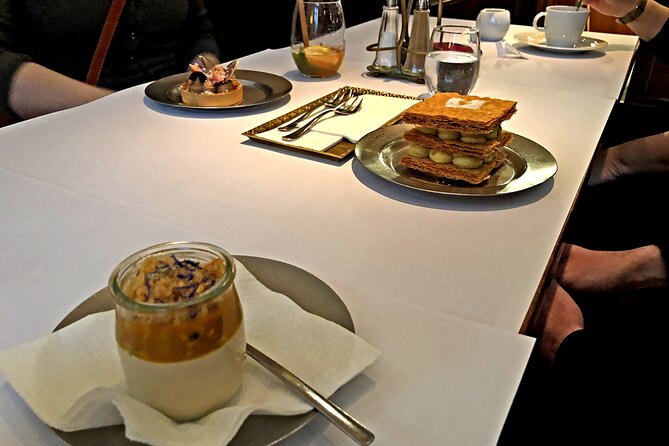
After another short walk, the tour heads to Urania Café on Rákoczi Street. This stop adds a cultural twist: the tour connects the café with the city’s oldest film theatre, plus its reputation for lectures by prominent intellectuals given to large audiences of Budapest cosmopolitans.
That combination changes how you think about cafés. You stop seeing them only as places to eat, and start seeing them as informal civic spaces. People came not just to be seen, but to hear ideas, to stay current, and to keep conversations going.
If you care about the social side of culture—who gathered, where, and why—Urania Café is a key turning point. It links entertainment technology (the old film theatre) to public talk (lectures). It’s Budapest being both modern and old-school at the same time.






New York Café near Blaha Lujza tér: ornate theatre energy
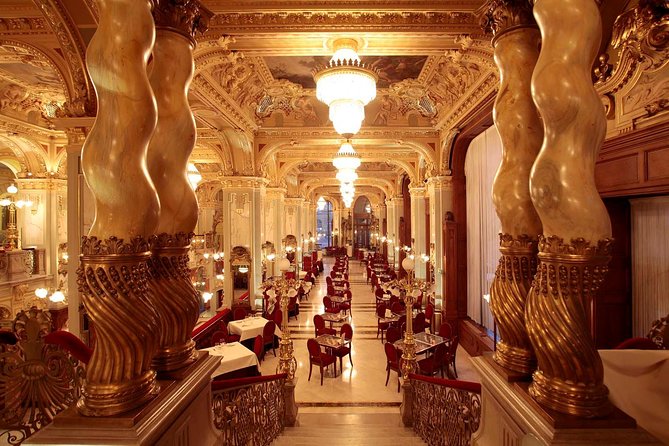
From Urania Café, you walk toward Blaha Lujza tér along the big boulevard, and then you reach New York Café. This is the kind of café that people photograph constantly for a reason: it’s described as one of the most beautiful café houses in the world, and the tour treats it like a grand room meant for special occasions.
The valuable part of this stop isn’t just that it looks dramatic. It’s that the tour positions New York Café within the broader café house tradition—spaces that were designed to make patrons feel they were part of something bigger than a quick break.
What to watch for: in a place this ornate, it’s easy to get dazzled and forget to actually look. I’d suggest you focus on one or two features the guide points out—ceiling or lighting details, for example—then let the rest catch you on the second pass.
Finishing at Muvesz Café on Andrássy Boulevard near the Opera
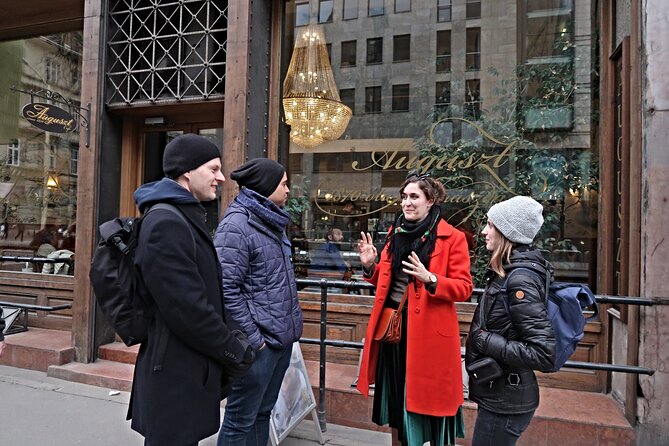
The tour ends with coffee and cake at Muvesz Café on Andrássy Boulevard, near the Opera House. This ending choice feels smart because it’s both practical and theatrical. You sit, you recharge, and you’re placed near one of Budapest’s best-known cultural magnets.
There’s also a fun, very Budapest detail: the café is described as a place where celebrity actors and actresses regularly patronize it during rehearsal breaks from the nearby Budapest Broadway. You can’t plan on seeing anyone famous, but being in the right zone at the right time adds a little extra buzz to the final stop.
This is a good point in the tour to order something that matches the vibe you’ve learned about. If you’ve been mentally tracking how each café represents a different social mood, your coffee and cake become part of the story instead of a random treat.
Price and value: what $449.51 per group really buys
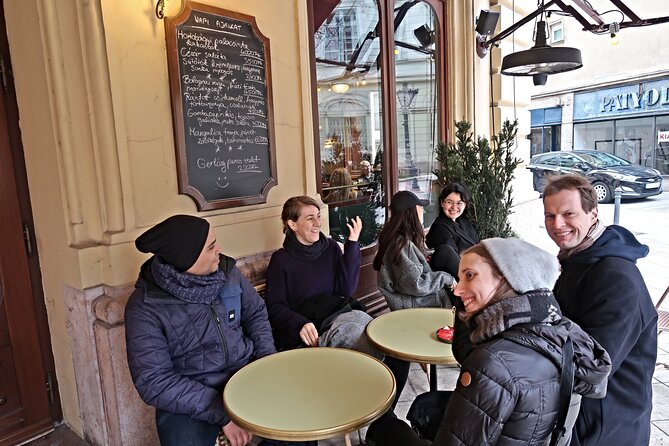
The price is $449.51 per group, up to 10 people, and the duration is about 3 hours. That sounds high until you look at the math.
- If you’re traveling as a full group of 10, you’re looking at roughly $45 per person for a private, guided art-historian walk through major café houses.
- If you’re a smaller group, the per-person cost rises quickly, and the value depends on how much you care about interpretation, not just entry-level sightseeing.
Where the value is strongest is in the guide-led context. You’re not just getting a route between famous names. You’re getting commentary that explains why those cafés mattered—culturally, politically, and artistically—and that turns “seeing cafés” into understanding a whole social world.
Also, being private helps. You’re not competing with other groups for attention when you’re standing inside places with fragile-feeling details like porcelain work, mirrors, and guest-book lore.
How to get the most out of the 3-hour experience
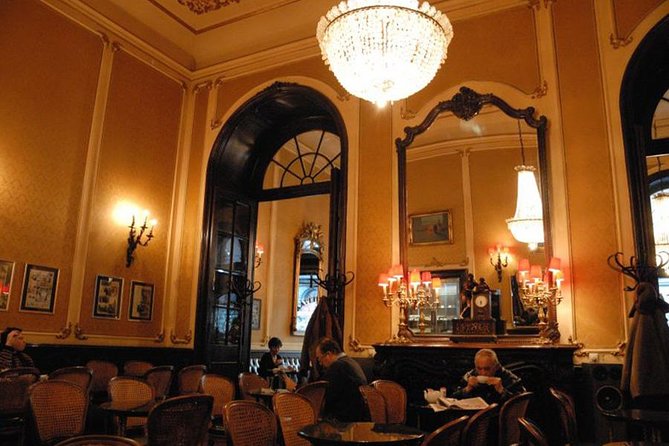
This tour runs tight, so your best strategy is simple: keep your expectations aligned with a walking format.
Wear comfortable shoes. You’ll be moving between café interiors and streets, including at least one tram transfer by the Danube. Build in a little buffer for getting from one place to the next at a relaxed pace.
Bring a small appetite for learning and a realistic plan for spending. Refreshments and cake are available at the café stops, but they’re not included. If you want to keep costs controlled, you can treat the seating time as your “pause,” and then order one item rather than a full meal at every stop.
Finally, come with at least a light interest in cafés as cultural spaces. If your main goal is only to get photos of beautiful interiors, you’ll still enjoy it. But if you want to connect design, social rituals, and Budapest’s creative output, this format fits perfectly.
Who this tour suits best
This is a great fit if you:
- Love Budapest’s 19th and early 20th century atmosphere and want it explained clearly
- Enjoy walking tours, especially ones with a strong theme rather than a random checklist
- Want private guiding with room for questions in café settings
- Like culture that mixes art, politics, and daily life in the same story
It may be less ideal if you’re mainly chasing a food tour with lots of included tastings. This one is about context first, and refreshments are optional add-ons.
Also, the tour is offered in English, and the description says most travelers can participate. If you’re sensitive to walking or prefer long seated time, you might want to check whether the pace works for you before booking.
Should you book this Budapest café wandering experience?
Book it if you want a guided, story-driven look at Budapest’s Belle Époque cafés, with an art historian’s lens and a route that keeps you moving through the city logically. The stopping pattern—Gerbeaud to Central to Museum, then Urania to New York, and finally coffee and cake at Muvesz—gives you a full arc: imperial social life, cultural dignity, recorded guest history, intellectual lectures, grand spectacle, and a final seated moment near the Opera.
I’d skip it if you only want included food, because drinks and cakes are on your bill. I’d also think twice if you dislike walking or need very slow transitions between locations.
One more reason to feel confident: the overall rating is 5 out of 5 across five reviews, and one guide named Kata is specifically praised for being very informative and generous with time. That’s exactly what you want in a tour where the best parts happen inside quiet, detail-filled rooms.
FAQ
How long is the private café walking tour in Budapest?
It runs for about 3 hours.
How many people are in the group?
It’s a private tour for your group, with a maximum of up to 10 people.
What does the tour include?
The tour includes a 3-hour private walk with an art historian through Budapest’s 19th-century and early 20th-century café houses.
Are refreshments, cakes, and coffee included?
No. Refreshments, cakes, and coffees selected at the café stops are not included in the price.
Is pickup available, and where do we meet if it’s not?
Pickup may be available if arranged. If not, meet your guide 15 minutes before the start time at Café Gerbeaud, Vörösmarty tér 7-8, 1051 Budapest.
What language is the tour offered in?
The tour is offered in English.
Is there free cancellation?
Yes. You can cancel for a full refund up to 24 hours in advance of the experience start time.