REVIEW · JEWISH QUARTER & SYNAGOGUE TOURS
Past and Present of Budapest Jewish District Tour
Book on Viator →Operated by Triptobudapest.hu - Free Budapest Walking Tours · Bookable on Viator
Budapest’s Jewish Quarter tells a hard story well. This Past and Present tour connects the Golden Age of Jewish life to the destruction that followed, using the streets and buildings as your timeline. You’ll get a focused route through District VII, with clear explanations of major synagogues and how the community changed over time.
I love two things most: the guide-led storytelling and the fact that you see key sites without needing synagogue entrances. Guides like Eszter, Gary, Dora, Edith, Edi, Judith, Christine, Jude, and David all show up in reviews for being friendly, organized, and willing to answer questions—and that matters when history gets complicated fast.
One consideration: this is mostly standing and listening, and the pace may feel intense if you want more walking freedom or more personal anecdotes. Also, it does not enter any synagogues, so if you’re hoping for interior time, plan extra stops on your own.
In This Review
- Key highlights before you go
- The 1 hour 45 minute route that makes District VII click
- Erzsébet tér: the opening scene at Elizabeth Square
- Deák Ferenc Square: Gaudiopolis, Schutzpass, and old exclusion lines
- The Great/Central Synagogue (Nagy Zsinagóga): what you learn without entering
- Rumbach Street Synagogue: restored beauty and murals in the city fabric
- Gozsdu Udvar: ghetto wall trace and a lively passage
- Kazinczy Street Synagogue area: Orthodox community life and ritual signals
- Szimpla Kert: murals, pop culture energy, and final orientation
- What the best guides do (and who you might get)
- Price and donation culture: $3.63 is the hook, not the full story
- Who this tour suits best
- Should you book the Past and Present of Budapest Jewish District Tour?
- FAQ
- Does this tour enter any synagogues?
- Where do I meet for the tour?
- Where does the tour end?
- How long is the tour?
- What language is the tour offered in?
- Is there a size limit for the group?
- Do I need to pay separate admission tickets at stops?
- Is a mobile ticket used?
- What about tips and guide payment?
Key highlights before you go
- Chronological walk from Golden Age to destruction so the story actually makes sense.
- Major synagogue exteriors only: you learn about movements and Zionism, but you won’t go inside.
- Real landmarks, not generic plaques: ghetto wall remnants, synagogue memorial courtyard views, and street-art stops.
- Strong guide energy in reviews—people call out hosts like Eszter, Gary, Dora, and David for clarity and humor.
- Short stops that keep you moving (about 10 to 20 minutes each) across District VII.
- End at Szimpla Kert so you can transition from history to a lively Budapest reset.
The 1 hour 45 minute route that makes District VII click
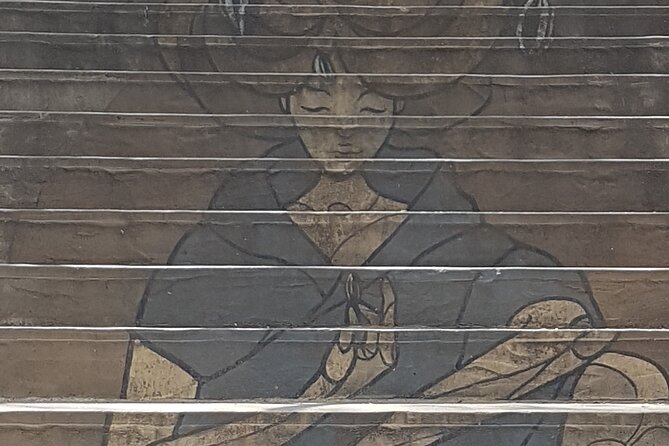
This tour is built for first-time orientation. In about 1.5 hours, you trace a practical line through Budapest’s Jewish Quarter with stop-and-explain pacing. That time is long enough to learn names, concepts, and context, but short enough that you don’t feel trapped.
The biggest advantage is that the route is story-driven. You start at Erzsébet tér (Elizabeth Square) and work through central locations in District VII that help explain how Jewish life flourished, how it was restricted, and how it was later destroyed. That chronological flow is what helps you read the neighborhood instead of just photographing it.
You also get a “shape” of the area: major synagogues, former boundary lines, ghetto-era traces, and later-day life around Szimpla Kert and Gozsdu Udvar. If you plan to come back for a longer independent day, this walk gives you the map in your head first.
You can also read our reviews of more tours and experiences in Budapest.



Erzsébet tér: the opening scene at Elizabeth Square
You meet at the Ferris Wheel of Budapest, at Erzsébet tér (Erzsébet tér). This is a smart starting spot. It’s visible, easy to reach, and it sets you up for a steady walk into District VII.
From there, your guide sketches the itinerary and points out major sights. The key thing here is the historical framing: you’re told what changes you’re going to witness as you go—moving from the Belle Epoque / Golden Age period toward the destruction of later years. When the story begins like that, the later stops don’t feel random.
Stop time is short here (about 10 minutes), so don’t expect a full lecture at the beginning. Instead, think of it as the “map key.” You’ll learn enough to recognize what each location is telling you later.
Practical tip: wear comfortable shoes. Even at a measured pace, you’ll be on your feet for most of the tour.
Deák Ferenc Square: Gaudiopolis, Schutzpass, and old exclusion lines
At Deák Ferenc Square, you shift from broad context into specific turning points. Two terms anchor this stop:
- Gaudiopolis, described as the City of Joy in Latin. It’s the idea that the Jewish community brought culture, commerce, and energy to the city during its peak era.
- Schutzpass, presented as a document that saved thousands of Jewish lives. This is the kind of detail that helps you understand how survival sometimes depended on paperwork, protection, and shifting power.
Another strong element of this stop is the physical reminder of restriction. You also see former medieval city wall ruins—the kind of boundary that historically kept Jewish people trading within tighter limits. Even if you know nothing about Budapest’s medieval layout, you’ll leave with a clearer sense of why certain neighborhoods developed when they did.
This segment is around 15 minutes. That’s enough time to connect the idea of exclusion to the streets you’re walking, without slowing the whole tour down.
The Great/Central Synagogue (Nagy Zsinagóga): what you learn without entering
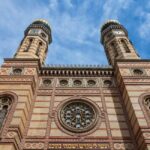
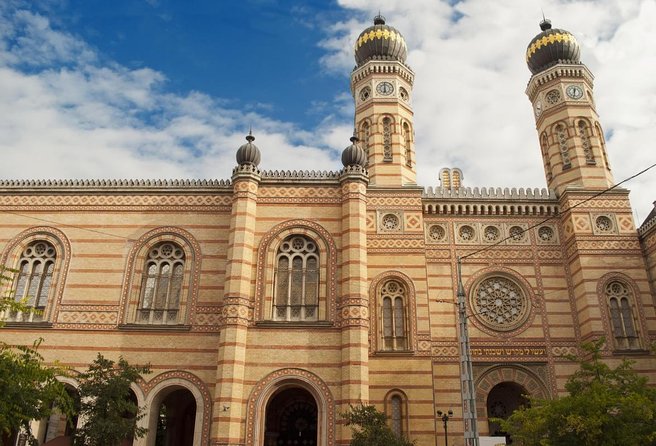
Next you get to the star attraction: the Great / Central Synagogue, known as Nagy Zsinagóga. The tour doesn’t go inside, but it still gives you a lot to absorb just from the outside views.
Here’s what you’ll learn:
- It’s described as the largest synagogue in Europe.
- You’ll hear about Neologue and Orthodox movements and how religious life differed across communities.
- You’ll connect these ideas to Zionism, and how that political-religious thinking influenced Jewish life.
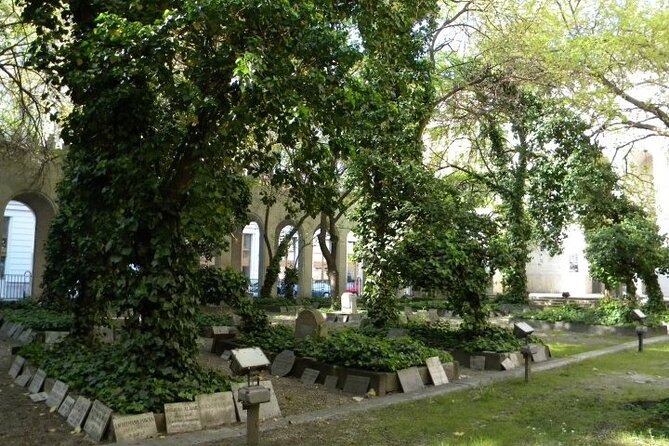
- Even without interior access, you’ll see the Memorial Courtyard and the cemetery from outside.
This is a key “expectation” point. Many people want synagogue interiors on a first pass, but this tour is intentionally set up as an exterior-focused introduction. The upside is time and access: you keep moving and still get the meaning.
Stop time is about 20 minutes, so the guide has room to slow down and explain the symbolism. If you’re the type who likes to ask questions, this is a great place to do it, because the setting invites context.
Rumbach Street Synagogue: restored beauty and murals in the city fabric
Your next stop is the area around the Rumbach Street Synagogue. Again, the tour does not enter the synagogue, but it pays attention to why the building and its surroundings matter today.
You’ll learn about:
- The synagogue’s beautiful restoration
- The murals and urban street art around it
This is one reason the walk feels more modern than “museum history.” You’re not only looking at what was lost. You’re also noticing how the neighborhood visually speaks now—how restoration and art coexist with memory.
Stop time is about 15 minutes. That short window is deliberate: you’ll move on before your legs cool down, but you’ll still understand what you’re seeing.
One drawback: since you’re not going inside, your understanding of the synagogue’s interior layout will depend on what your guide describes and any photos you take. If you want interior details, you’ll want a separate synagogue visit later.



Gozsdu Udvar: ghetto wall trace and a lively passage
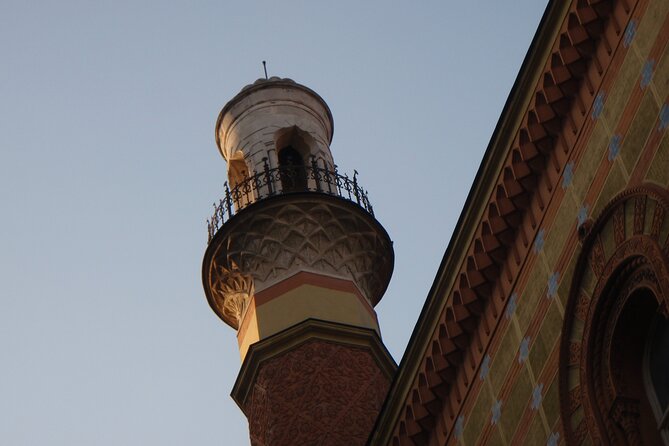
At Gozsdu Udvar (the Gozsdu Passage area), the tone shifts slightly—from strictly religious landmarks to how the streets evolved into a social zone.
You’ll pass through the area and learn about:
- Its past and present
- How the passage combines entertainment, gastronomy, culture, and market life
- And importantly, you’ll see the last piece of the ghetto wall
That ghetto wall detail is a powerful anchor. It gives you a literal “last surviving fragment” feeling that’s hard to replicate through photos alone. You’re standing where layers of history overlap: fear and confinement in one era, and later-day public life in another.
Stop time here is about 15 minutes. It’s a nice rhythm change, especially after two more “heavy” stops.
Kazinczy Street Synagogue area: Orthodox community life and ritual signals
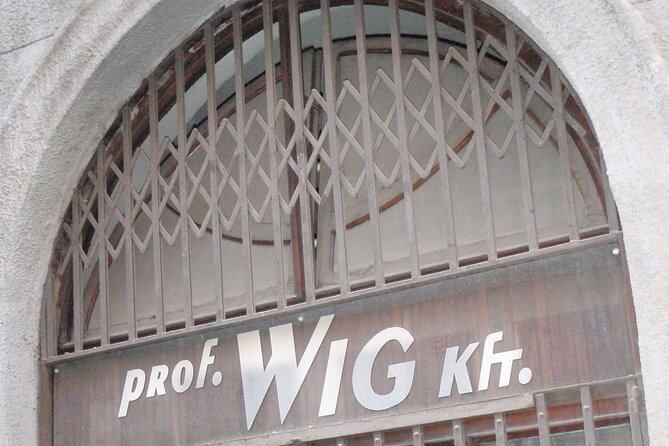
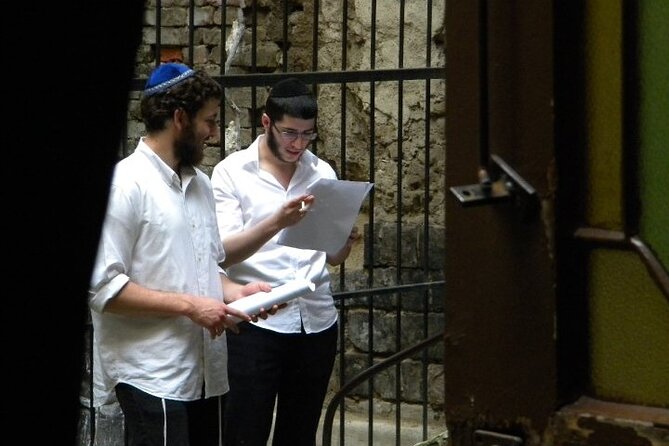
Then you stop just outside the Kazinczy Street Synagogue, tied to the Orthodox community of 50–60 families (as described in the tour). You’ll learn how smaller, community-based religious life shaped the neighborhood.
This stop also focuses on everyday religious practice signals, including:
- Kosher food
- Jewish ritual bath references and what these imply about daily life
Again, no interior entry. But the guide’s job here is to translate the building’s meaning into real life: what it meant for people to belong, observe, and keep traditions in a changing city.
Time is about 15 minutes, which is enough to understand the basic picture without dragging the group pace.
Szimpla Kert: murals, pop culture energy, and final orientation
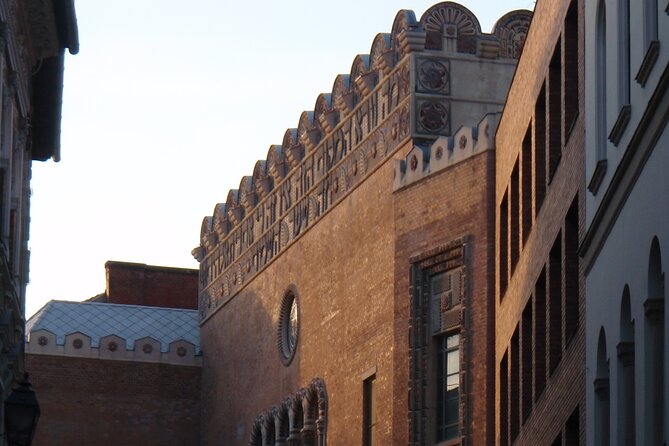
The tour ends at Szimpla Kert, with the final orientation shift from history mode to explore mode. This is a ruin bar—no entry fee to see it from the outside, and it’s a useful mental reset spot after a heavy narrative.
You’ll also see further murals and urban street art before you wrap. It’s a good finishing technique. It reminds you that this neighborhood isn’t only a memorial site. It’s also a place where Budapest still lives.
This also helps you plan your next step. If you’re staying in District VII, you’ll know where you finished and you can branch off for food, photos, or a deeper stop at one of the synagogues on another day.
What the best guides do (and who you might get)
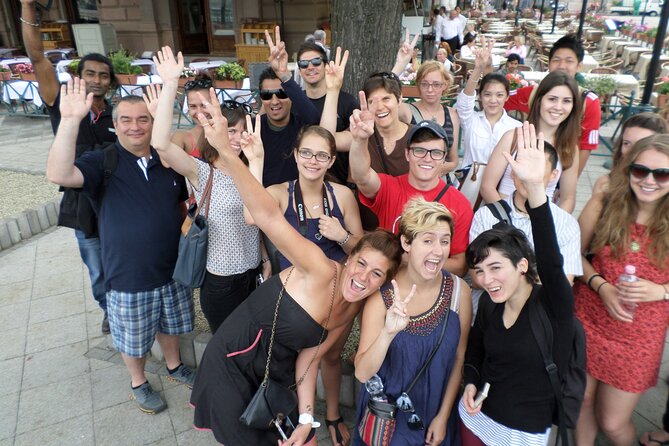
The most praised part of this tour is the guiding. In reviews, names like Eszter and Gary show up repeatedly, along with Dora, Edith, Edi, Judith, Christine, Jude, and David. The common thread: guides explain clearly, keep the group together, and answer questions instead of brushing them off.
A few specific guide traits people highlight:
- Professional, friendly communication (people call out being attentive and engaging)
- Solid historical structure so the story isn’t just facts
- Good pacing—one review specifically mentions it felt comfortable even for seniors
- Humor mixed with sensitivity, especially when covering dark years
- Respectful tone, with guides described as knowledgeable even when they are not Jewish themselves
Even with a great guide, you’ll want to do one thing: ask follow-up questions. The tour works best when you use it as a conversation starter. If you’re the type who reads signs slowly, this guide-led approach saves you time.
If you have trouble hearing speech (one review mentioned difficulty understanding due to a strong Hungarian accent), try to position yourself where you can see the guide clearly—front or side usually helps more than you’d think.
Price and donation culture: $3.63 is the hook, not the full story
The price is listed at $3.63 per person, and that low number can look almost too good to be true. Here’s the practical way to think about it.
This is a guided walking tour with a booking fee included. The tour provider states that the booking fee goes toward administration and does not contribute to the guide’s earnings. At the end, guides depend on your donations, and you can choose the amount.
So the value isn’t just the ticket price. The value is what you get for that time:
- A tight route
- Expert commentary
- A guided storyline connecting sites
- The chance to ask questions without planning every step alone
If you’re on a budget, the pricing is a win. If you want “pay once and done” with no donation expectation, be aware this model relies on end-of-tour support. It’s not automatically a problem—just something to factor into your own comfort level.
Who this tour suits best
This is a strong match for:
- First-time visitors who want District VII orientation in under two hours
- People who like context—how and why history happened, not only what stood where
- Anyone interested in the Jewish Quarter’s synagogues, movements, and Holocaust-era history, presented with care
- Travelers who like walking tours with a reasonable group size (maximum 25)
It may be less ideal if:
- You need a tour with interior synagogue access. This one explicitly does not enter buildings.
- You’re looking for a lighter, more casual stroll. People describe it as heavier than some walking tours due to listening time and the nature of the subject.
- You prefer more personal local storytelling and less straight history. Some feedback called parts of the experience feeling generic. You can reduce that by asking questions and sharing what you’re most curious about.
Should you book the Past and Present of Budapest Jewish District Tour?
Yes, if you want a fast, organized way to understand District VII—and you’re okay with an exterior-focused format. This tour is especially worth it when it’s your first time in Budapest because it gives you the story backbone: Golden Age → restriction → ghetto traces → destruction → the neighborhood you see today.
Don’t book it expecting synagogue interiors or a relaxed beach-walk vibe. Do book it for the guide-led history, the big-site context (Nagy Zsinagóga and more), and the practical ending at Szimpla Kert where you can keep exploring right away.
If you’re planning a longer stay, use this as your launchpad. After the walk, you’ll know what to revisit and what to look for when you’re wandering on your own.
FAQ
Does this tour enter any synagogues?
No. The tour does not enter synagogues. You’ll see key memorial areas and cemeteries from outside, plus you’ll learn about the synagogues and related community details from the street.
Where do I meet for the tour?
The start is at the Ferris Wheel of Budapest, located at Erzsébet tér, 1051 Hungary.
Where does the tour end?
The tour ends at Szimpla Kert, at Kazinczy u. 14, 1075 Hungary.
How long is the tour?
The duration is about 1 hour 45 minutes.
What language is the tour offered in?
The tour is offered in English.
Is there a size limit for the group?
Yes. The maximum group size is 25 travelers.
Do I need to pay separate admission tickets at stops?
The stops are listed with free admission ticket noted. Since the tour doesn’t enter synagogues, you should mainly expect exterior viewing rather than paid building entries.
Is a mobile ticket used?
Yes, the tour includes a mobile ticket.
What about tips and guide payment?
Tips are not included in the price. Guides depend on donations at the end, and the amount is at your choice.