A walk through Jewish Budapest hits fast and hard. This 3-hour tour pairs eye-level monuments with real neighborhood context, then turns history into a live conversation about what Jewish life means today in Hungary. I like the fact that you’re guided by a local licensed guide, usually with a small group feel, so you can ask questions instead of just listening.
What I really love: you start at Dohány Street Synagogue, the second largest synagogue in the world, and you don’t treat it like a museum-only stop—you also get the Raoul Wallenberg Memorial Garden, the Jewish Cemetery area, and the story behind the Emmanuel Tree. I also like the format: it actively encourages discussion about Jewish identity in Hungary now, not only what happened then. As a bonus, this is short on purpose, so you can layer other Budapest plans on top the same day.
One thing to consider: the synagogue entrance costs extra—€26 per person—and the tour requires good weather. You’ll also want to be comfortable with walking at a steady pace around central sites.
In This Review
- Key highlights at a glance
- Price and what $80.86 really buys you
- Meeting in central Budapest: where it starts and why it’s convenient
- Dohány Street Synagogue: more than a landmark
- What makes this stop so worthwhile
- The one practical downside
- Shoes on the Danube Bank: the short stop that hits hardest
- Why this works in a 3-hour tour
- Memorial to the Victims of the German Invasion: controversy you can’t ignore
- The emotional tone
- The guided conversation about what being Jewish means in Hungary today
- Why the small group matters
- Timing and route flow: how 3 hours stays manageable
- What to wear and bring for a walk that includes emotional stops
- Who this Jewish Heritage tour fits best
- Should you book this tour?
- FAQ
- How long is the Jewish Heritage tour in Budapest?
- What is included, and what do I pay separately?
- Where does the tour start and end?
- Is the tour offered in English?
- Are there admission fees for the stops besides the synagogue?
- What happens if the weather is bad?
Key highlights at a glance
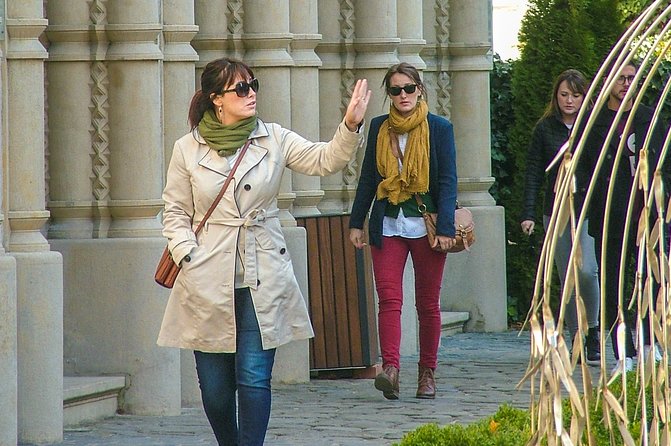
- Local licensed guide with room for questions so you’re not stuck on autopilot
- Small group size (max 13) for a more personal pace
- Dohány Street Synagogue + cemetery grounds plus the Raoul Wallenberg Memorial Garden
- Shoes on the Danube Bank: a quick, free, emotional stop with real impact
- A controversial memorial you can talk about—and face protests tied to its history
- 3 hours total keeps the day flexible for markets, ruin bars, or more sights
Price and what $80.86 really buys you
For about $80.86 per person, you’re buying a guided, structured introduction to Jewish heritage in Budapest—not transportation and not synagogue entry. The value is in the teaching and the focus. In 3 hours, you hit three major stops that are emotionally and historically loaded, plus time to connect them to the Jewish district you’re walking through.
Here’s the part that matters for planning: the Dohány Street Synagogue entrance fee is €26 per person and not included. If you add that on, you’ll feel the cost more clearly, but you’re also getting access to a major historic site plus guided interpretation that’s hard to replicate well with a guidebook.
Also note: the tour does not include transportation. That said, the sites are central and near public transportation, and you may move around by walking and transit depending on the day and route your guide chooses. If you’re counting on using the metro, just plan to have your own ticket/means to pay.
If you’re comparing costs, I’d treat this as a “guided history session with landmark access,” not a sightseeing bus tour.
You can also read our reviews of more historical tours in Budapest



Meeting in central Budapest: where it starts and why it’s convenient
You meet in the city center at Deák Ferenc tér. That’s useful because it’s a big hub and a smart base point when you’re also planning other neighborhoods later. The tour ends at Dohány Street Synagogue (Dohány u. 2, 1074), so you finish right where many people want to return for photos, nearby cafés, or the Jewish Quarter’s nightlife.
The route is compact and designed around three walking-focused stops. That’s why the duration stays around 3 hours. If you’re the type who hates being rushed, this structure is actually a plus: most of the “heavy” content is delivered at the sites themselves, not spread across long transfers.
Dohány Street Synagogue: more than a landmark
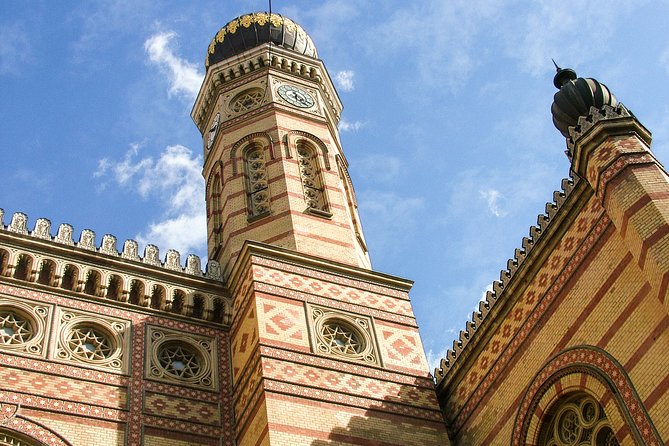
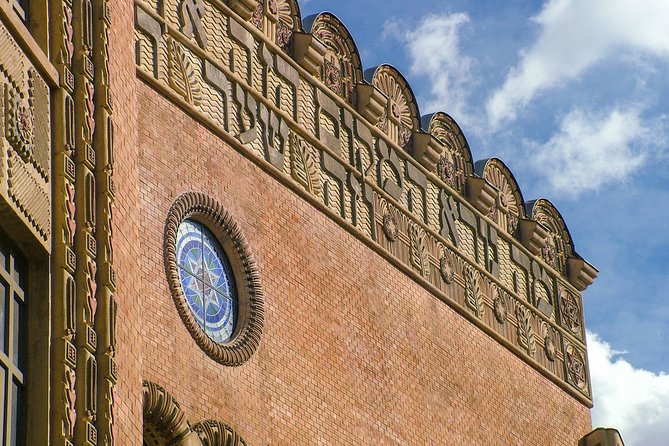
Dohány Street Synagogue is the core of the experience, and it’s a powerful start. The building itself is enormous—listed as the second largest synagogue of the world—so even before you learn details, you feel the scale.
Inside the visit, you’ll cover:
- the synagogue building
- the Raoul Wallenberg Memorial Garden
- the Jewish Cemetery area included in the tour route
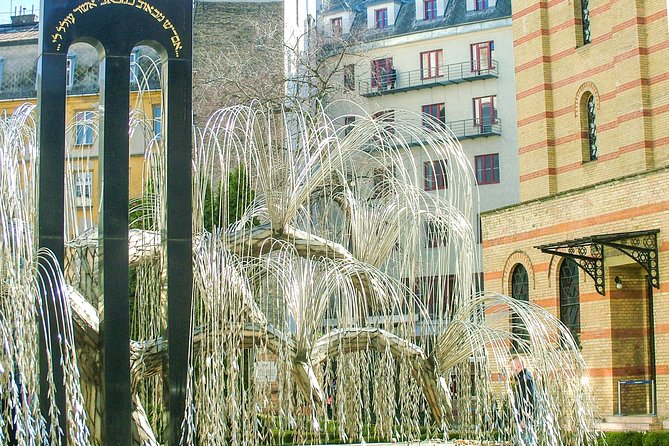
- the Emmanuel Tree, associated with Tony Curtis, which adds a human, story-based layer rather than making this feel like only stone and dates
There’s also an outside-looking element: you’ll see a second functioning synagogue from outside as part of the wider picture.
What makes this stop so worthwhile
This isn’t just architecture spotting. The tour connects the synagogue complex to the broader Jewish district, including the idea that this area is not only about the past. Your guide brings in the present-day feel of the neighborhood—historical streets, memorials, and also the fact that this quarter contains a lot of street art and nightlife.
That contrast is important. If you only see this area as “where tragedies happened,” you miss a big part of why it still matters. You’ll likely come away understanding how a place can hold grief and memory while still being lived-in.
The one practical downside
The entrance fee is extra: €26 per person. If you’re traveling on a tight budget, plan for it early so you’re not surprised at the site. Also, since the tour is timed around entry and walking, being late can be stressful—so I’d give yourself a little buffer at Deák Ferenc tér.






Shoes on the Danube Bank: the short stop that hits hardest
After Dohány, you’ll move to the Shoes on the Danube Bank memorial. It’s brief—about 15 minutes—and free.
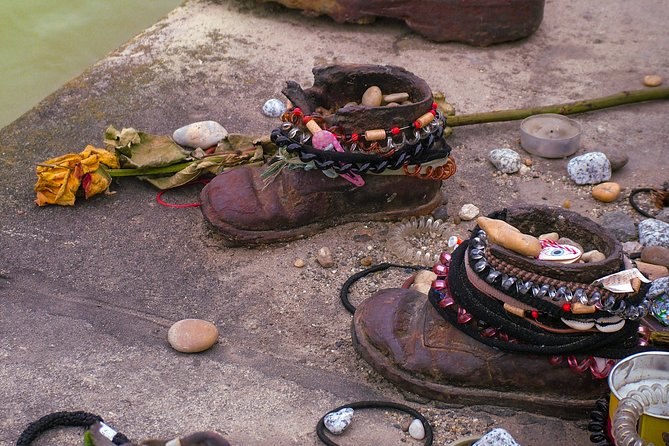
This is one of those places where the design does the work for you. The memorial is dedicated to the thousands of Jews who were shot and forced into the Danube. You don’t need a long lecture to understand the horror. But you do benefit from a guide who can explain the context and the intent behind turning that atrocity into something you can face directly.
Why this works in a 3-hour tour
In a longer tour, this stop can become one more stop in the middle of a day. Here, it’s positioned so you have momentum coming from the synagogue and then the second memorial sharpens the themes. The short timing keeps it from turning into numbness. You experience it, you absorb it, then you move on with purpose.
If you want a gentle day, this won’t be it. If you want a meaningful one, it’s exactly that.
Memorial to the Victims of the German Invasion: controversy you can’t ignore
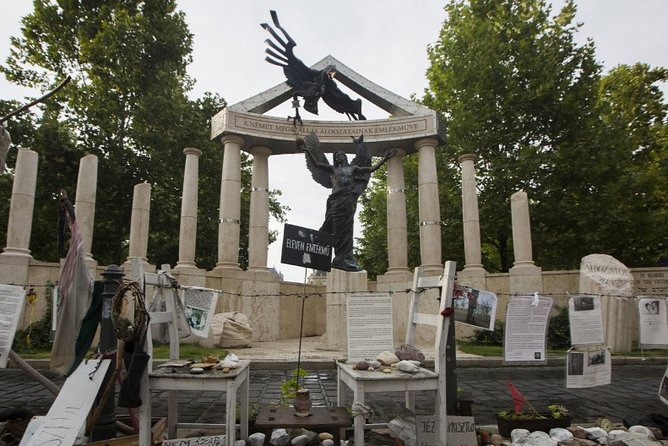
Next comes the Memorial to the Victims of the German Invasion. Also about 15 minutes, also free.
This memorial is described as one of Budapest’s most controversial memorials. It was erected under cover of night and guarded by policemen. Since it was established roughly a decade ago, protests have continued every day.
That last detail is key. This isn’t only a “remembering” site. It’s a place where memory politics are still alive. Your guide’s job here isn’t to force one viewpoint, but to help you see why people argue about it and how that affects how the memorial is understood in public space.
The emotional tone
Expect the tone to be heavy. You’ll be dealing with Holocaust-era suffering and the way different narratives collide. If you’re sensitive to protest or tense public situations, keep that in mind.
The upside is that you won’t treat Jewish heritage like a static list of monuments. You’ll see it as part of an ongoing national conversation.
The guided conversation about what being Jewish means in Hungary today
One standout promise of this tour is that it encourages dialogue. The goal is not only to describe Jewish history in Hungary, but to talk about what it means to be Jewish now.
This part is often what separates a good heritage tour from a forgettable one. A synagogue stop can become “facts and photos” quickly. But when your guide invites questions and discussion, you start noticing the living threads: community identity, how memory is carried forward, and why some symbols or memorial choices still cause friction.
If you’re traveling as a couple, with friends, or as a solo traveler who enjoys back-and-forth, this format is ideal. With a small group and time built into the route, you’re more likely to get answers that actually match your curiosity.
Why the small group matters
The tour is capped at a maximum of ten travellers for a more personalized experience (and the broader cap is listed as up to 13). In plain terms: fewer people means fewer rushed questions, and more chances to adjust the pace if someone needs a moment.
A lot of the reviews praise the guide experience, and one name comes up again and again: Edith. Multiple people specifically call out her ability to make the material feel personal and clear, with strong English and a knack for turning history into something you can understand, not just memorize.
Even if your departure doesn’t have the same guide, the overall experience design still focuses on clarity, respect, and conversation.
Timing and route flow: how 3 hours stays manageable
This is a short tour by design—around 3 hours—with plenty of built-in site time. Most stops are 15 minutes or so, with the synagogue taking the heavy share of the morning.
Here’s how the pacing typically feels:
- You start with the synagogue complex, which naturally needs time for orientation.
- You move quickly but not hurriedly to the Danube memorial.
- You finish at the German invasion victims memorial, where discussion and reflection help land the meaning.
Because the day isn’t chopped into a dozen stops, you can keep your energy. And because it ends at the synagogue area, you can easily continue your own plans in that part of town.
Also, the tour provides a mobile ticket, so you’re not juggling paper printouts mid-walk. And since service animals are allowed, that can make a difference if you travel with accommodations needs.
What to wear and bring for a walk that includes emotional stops
Nothing fancy, just smart choices. You’ll be outside for portions of the day and you’re walking between sites. And yes: it requires good weather.
I’d bring:
- comfortable walking shoes (you’ll cover ground around the Jewish Quarter)
- a light layer (Danube-area weather can feel different than you expect)
- water if it’s warm
You should also mentally prepare for the content. This route includes Holocaust-linked memorials and a controversial monument that involves ongoing public tension. If you want only light, happy sightseeing, skip it. If you want honest context and guided meaning, it’s a strong fit.
Who this Jewish Heritage tour fits best
This tour is a great match if:
- you’re in Budapest for a limited time and want the Jewish Quarter’s major sites in one focused block
- you care about how history connects to today’s identity and community life
- you prefer a guided explanation at the sites themselves instead of trying to piece it together alone
- you like structured walking tours with time to ask questions
It’s also a good option for return visitors. Even if you’ve seen Budapest before, the specific combination—synagogue complex, Danube memorial, and the German invasion victims memorial—creates a viewpoint that’s hard to reproduce on your own without serious planning.
Should you book this tour?
If you’re choosing between a quick self-guided loop and a guided, structured experience, I’d book this. The best reason: the guide-driven conversation and the tight route help you understand what you’re seeing while you’re actually standing in front of it.
Book it if you want:
- a meaningful intro to Jewish heritage in Budapest
- a small-group feel with real Q&A
- a route that balances architectural grandeur with memorial honesty
Skip it if you:
- dislike emotional or controversial memorials
- need a fully relaxed day with minimal walking
- aren’t ready to handle an extra €26 synagogue entrance fee on top of the tour price
If you time it well and go in with an open, respectful mindset, this is the kind of morning that stays with you long after you leave the Danube behind.
FAQ
How long is the Jewish Heritage tour in Budapest?
It lasts about 3 hours.
What is included, and what do I pay separately?
The tour includes a local licensed guide. Transportation is not included. The entrance fee for Dohány Street Synagogue is €26 per person and is not included.
Where does the tour start and end?
It starts in Budapest at Deák Ferenc tér and ends at Dohány Street Synagogue, Dohány u. 2, 1074.
Is the tour offered in English?
Yes, it is offered in English.
Are there admission fees for the stops besides the synagogue?
The Shoes on the Danube Bank and the Memorial to the Victims of the German Invasion are free. The synagogue entrance fee is the one that’s specifically listed as extra.
What happens if the weather is bad?
The experience requires good weather. If it’s canceled due to poor weather, you’ll be offered a different date or a full refund.