REVIEW · BUDAPEST
Lives of Hungarians Under Communist and Capitalist system
Book on Viator →Operated by Triptobudapest.hu - Free Budapest Walking Tours · Bookable on Viator
Street corners explain Communism in Budapest. This 90-minute walk strings together key places from Budapest Eye to the Parliament, with personal guide stories and the 1956 uprising as your through-line.
I love how it makes heavy history feel concrete with everyday topics like travel, housing, education, and media. You also get a short interactive history lesson early, so you’re not guessing what you’re seeing.
One caution: this is not a light, photo-only route. Expect political and personal themes that can feel intense in a small space of time.
In This Review
- Key things to know before you go
- Why this short Budapest walk feels personal
- Price and value: what $4.65 really covers
- Getting oriented at Budapest Eye with a 15-minute Communist primer
- Fröccsterasz and Communist-era travel reality
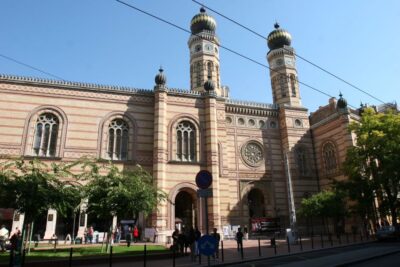
- St. Stephen’s Basilica: faith under pressure, and why it varied
- District V: housing, healthcare, education, and media culture
- Szabadság tér: monuments, guerrilla art, and the F4 bunker exit
- Parliament-area stories: 1956, bullet holes, and childhood memory
- Who this tour suits best (and who might want something else)
- Practical tips so you enjoy it (not just endure it)
- Should you book this Budapest Communism and post-Communism tour?
- FAQ
- How long is the tour?
- Where does the tour start?
- What time does it start?
- Where does the tour end?
- What is the price per person?
- Is there a separate admission cost at the stops?
- What group size should I expect?
- Is a mobile ticket used?
- Are tips included in the price?
- Can I bring a service animal and are there accessibility notes?
Key things to know before you go
- A licensed, small-group walk that keeps the pace human (max 20 people)
- A quick interactive primer on Hungarian and Central European Communism
- Real-life travel context like incoming and outgoing travel, plus basic travel documents and Communist cars
- District V explained through daily life: housing, healthcare, education, media culture, and propaganda
- Szabadság tér’s layered signals from controversial monuments to the emergency exit of an F4 military nuclear bunker
- Parliament-area 1956 focus including bullet holes and childhood perspectives tied to the Revolution
Why this short Budapest walk feels personal
This tour works because it’s built around lived experience, not just dates. The guides have lived through the Communist era and can connect what the system promised versus what people dealt with day to day. In a city that’s gorgeous from every angle, that human scale is what makes the story land.
The group is capped at 20, which means you can ask questions and follow the guide’s line of reasoning without getting swallowed by the crowd. It also runs about 1 hour 30 minutes, so it’s long enough to matter but short enough that you won’t feel like you’ve been trapped in politics for a full day.
You’ll also get a simple, practical start: you meet near the Budapest Eye at Erzsébet tér, with the guide located about 20 meters from the wheel. If you like tours where you don’t spend your first 15 minutes doing detective work, this one is set up to be straightforward.
You can also read our reviews of more tours and experiences in Budapest.


Price and value: what $4.65 really covers
The listed price is $4.65 per person, which is low enough that it can feel almost too good. Here’s the catch: that amount is tied to the booking fee structure, and the information you’re given makes it clear that the booking fee is administrative and marketing, not guide pay. In other words, you’re really buying access to the guide’s time and a small-group walking experience—but the guide is expected to earn the meaningful part from your tips at the end.
That lines up with the tip guidance for this tour: you’re encouraged to tip, and most guests tip €10 per person, with some tipping more. If you’re cost-sensitive, this still can be excellent value because the stops themselves are marked as admission-free, so you’re not stacking extra entry fees on top.
Bottom line: I’d treat the $4.65 as the ticket to get in the door, then plan your budget for a tip. If you do that, you get a serious, story-driven walk that’s hard to replicate on your own.
Getting oriented at Budapest Eye with a 15-minute Communist primer
You start near the Ferris Wheel on Erzsébet tér, right by the Budapest Eye. The meeting spot is specific enough that you can find it without spiraling into the usual city-tour maze.
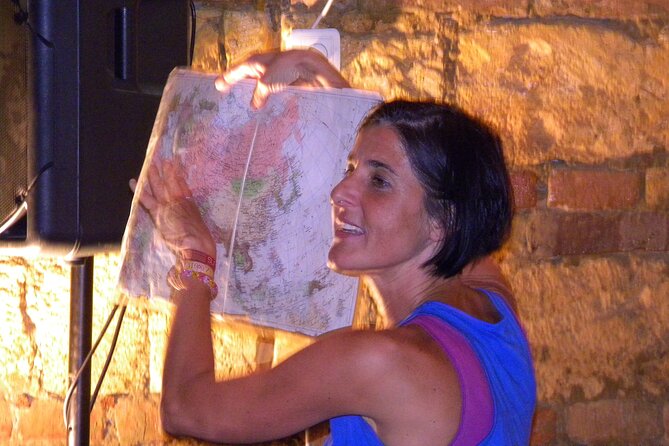
Before you launch into the sights, you get a 15-minute interactive history lesson covering Hungarian and Central European Communism. This matters more than it sounds. Without that setup, it’s easy to look at buildings and monuments and think, I’m just passing through. With the primer, the route starts to feel like evidence—clues planted in the landscape.
The guide also explains the overall walk and points out major sights along the way. That means you’re not only hearing stories; you’re getting a mental map for what you’ll see next.
Fröccsterasz and Communist-era travel reality
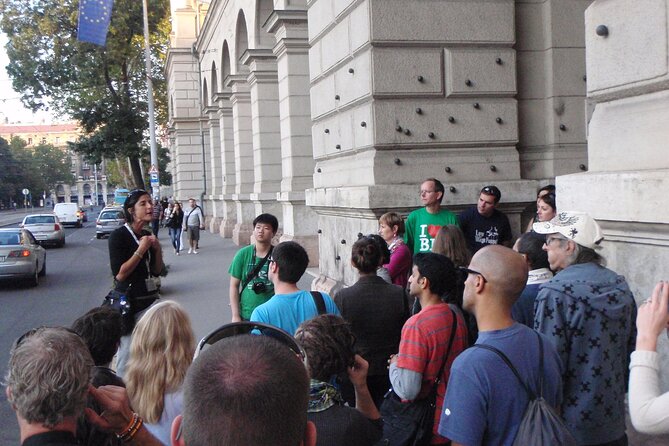
One of the more memorable parts of the walk comes from seeing how ordinary people traveled in and out of Hungary. At Fröccsterasz, the tour focuses on incoming and outgoing traveling and shows you basic travel documents tied to that era.
This is the kind of topic that tourists often skip because it’s not scenic. But it’s practical. When you understand the documents and movement limits—what people could do, what paperwork meant, what friction existed—the rest of the tour makes more sense. History turns into something you can picture in your own life: where would you go, what would you need, and who had the power to allow it?
You also learn about Communist-era transportation, including Communist car types and other ways people moved. Even if you’re not a car person, it’s a neat reminder that a political system shows up in everyday choices. Roads, vehicles, and access aren’t separate from politics—they’re part of how a society functions.
St. Stephen’s Basilica: faith under pressure, and why it varied
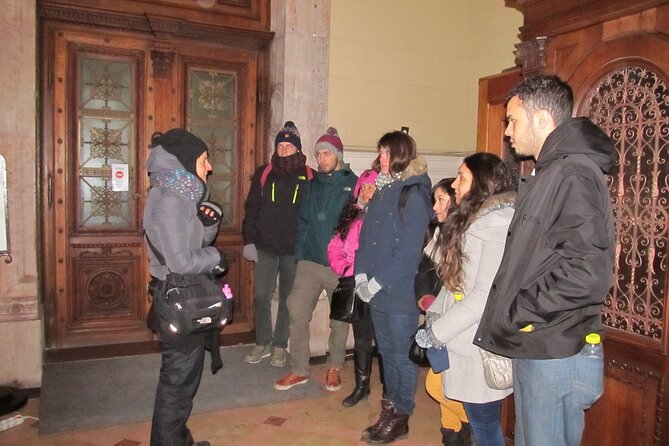
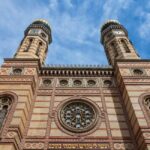
At St. Stephen’s Basilica (Szent István Bazilika), the tour shifts from bureaucracy and travel to the lived experience of faith. You’ll learn about the difficulties faced by different denominations during Communism, with an emphasis on how religious life could vary family by family.
That last part is important. Too often, history gets simplified into one rule that applied to everyone. This tour frames it as a human spectrum. Even under the same political pressure, households experienced religion in different ways, depending on circumstances and personal choices.
You’ll also hear how religion fit into everyday life rather than only appearing as a symbol. That gives the stop extra meaning—this is not a quick photo moment; it’s a lens for understanding how private belief survived under a public system that wanted control.



District V: housing, healthcare, education, and media culture
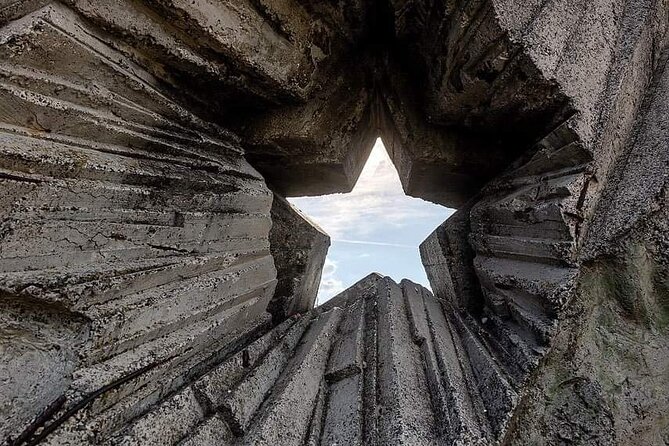
District V / the inner city is where the tour gets deeply grounded in daily life. The guide connects Communism and post-Communism by talking through topics like housing, health care, education, and media culture and propaganda.
This is one of the most useful stops for anyone trying to understand why “the system” mattered. Policies aren’t abstract here. You get an explanation of how people experienced healthcare and education, and how media and propaganda shaped what people saw, heard, and repeated.
Sport and the Olympic Games also come into the story, which is a smart touch. Athletics can look like just entertainment, but in many Communist-era contexts, sport was tied to ideology and national image.
And then there’s the part that adds balance: you’ll hear about why some people have nostalgia for Communism. That doesn’t mean nostalgia is treated as truth or propaganda. It’s presented as a real emotional response—often connected to specific benefits people felt in certain periods of life. The guide’s job here is to help you understand the human logic, not to force one answer.
Szabadság tér: monuments, guerrilla art, and the F4 bunker exit
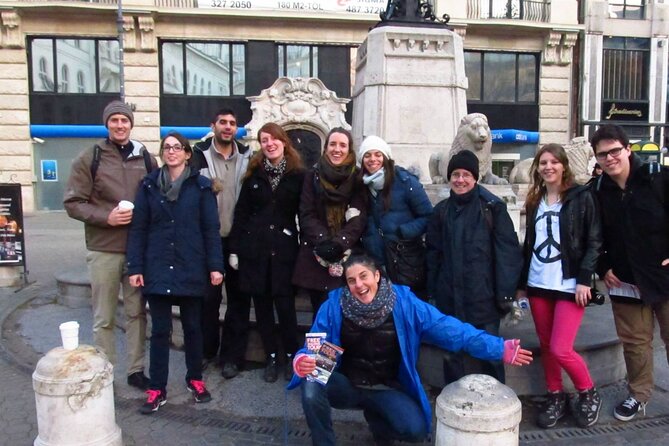
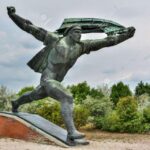
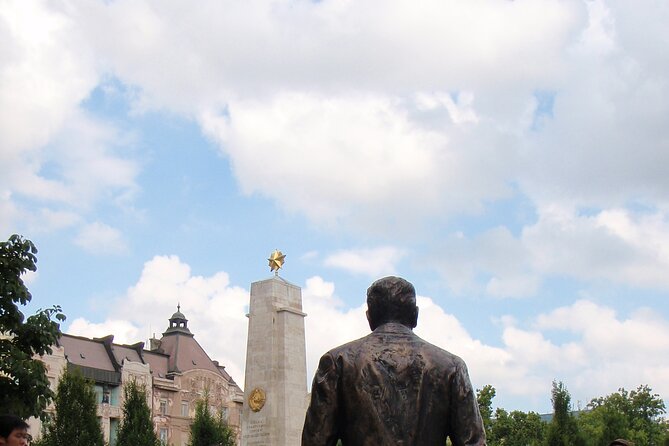
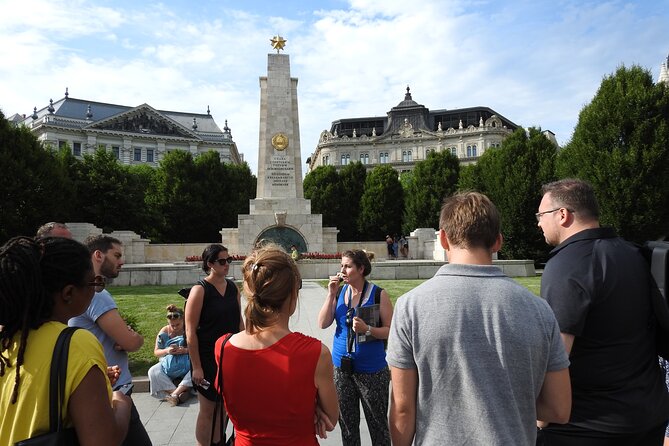
Szabadság tér is a sharp contrast stop. You’ll see controversial monuments placed side by side with more unexpected elements like urban art guerilla statues. That juxtaposition is basically the whole story of post-Communism in one glance: new voices, old power, and public spaces being fought over.
The tour also points out the emergency exit of the F4 military nuclear bunker. Even if you’re not into Cold War details, that kind of structure explains the atmosphere people lived with. When a city contains hidden exits and hard preparedness, it shapes how normal life feels.
You’ll also learn about a second heavily guarded building that gave shelter to a prominent Hungarian person for over 15 years. No names are given in the tour data you shared, but the time span is the key. A detail like that helps you grasp that the system wasn’t only about ideology—it was also about survival, secrecy, and protection.
Parliament-area stories: 1956, bullet holes, and childhood memory
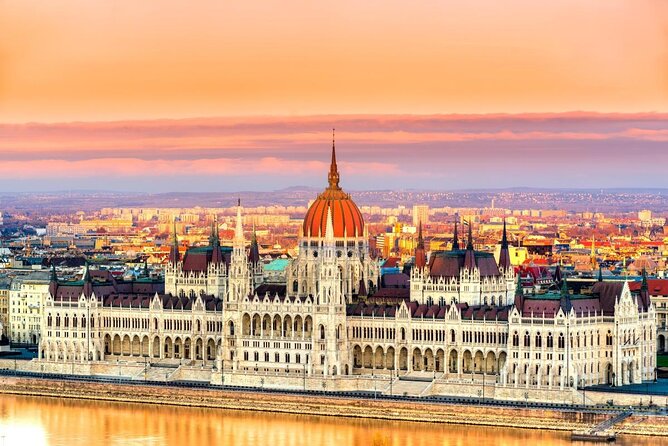
The walk ends around the Hungarian Parliament Building, and this is where the tour gets emotionally intense. You’ll learn about the 1956 uprising in depth, including what it meant and who were seen as heroes.
You’ll also get a very visual element: bullet holes on the facades of some residential buildings around the Parliament. Seeing physical damage referenced in a guided story is powerful, because it stops the Revolution from feeling like a chapter in a textbook. It becomes a thing that stayed in the city.
One of the most interesting angles is that you’ll hear stories about experiencing the Revolution of 1956 and Communism as a child. That kind of perspective changes the tone. As an adult tourist, it’s common to ask, What happened? A childhood lens adds the question, What did it feel like?
The tour ends near the Parliament area at Kossuth Lajos tér 1-3, with the conclusion point located about 50 meters from the M2 red metro line. That’s a big practical plus: you’re not left far from transit.
Who this tour suits best (and who might want something else)
This is a strong fit if you want history explained through daily life. If your travel style is more curious questions than checklist photos, you’ll get a lot out of the focus on travel documents, housing, healthcare, education, propaganda, and the way people remember.
It’s also a good choice for students and families who are ready for real-world political themes. One review highlighted that the guide helped both adults and teen kids bring life under Communism to life beyond what school covers. That tracks with what this tour is designed to do: take concepts and make them human.
If you’re the type who wants only the most classic sightseeing highlights with minimal politics, this may feel too heavy for your mood. The time is short, but the themes are serious.
Practical tips so you enjoy it (not just endure it)
Wear shoes you trust. You’re walking through central Budapest for about 90 minutes, and the story relies on you being present as you move between stops.
Bring a notepad or use your phone notes. A tour like this has ideas you’ll want to remember when you’re later reading about Hungary and Central Europe on your own.
And yes—plan your tip. The structure here makes it clear that tips matter, and the guide’s earnings depend on your donations at the end. If you feel you got value from the stories and the context, a tip of around €10 per person is what most people do, with some tipping more.
Should you book this Budapest Communism and post-Communism tour?
I think it’s worth booking if you want more than scenery. You’ll get a guided, small-group route that uses visible places to explain invisible systems—travel limits, faith under pressure, everyday services, media control, and the shadow of 1956.
It’s also a smart value play. The base price is low, the stops are marked as admission-free, and you’re paying for a focused guide experience rather than a museum ticket pile. Just go in knowing the booking fee isn’t the guide’s pay, and you’ll want to tip if you want the guide system to stay healthy.
Skip it only if your schedule is tight and you want purely light, aesthetic sightseeing, or if you strongly prefer history presented without political and personal weight. If you can handle that tone, this is the kind of tour that leaves you looking at Budapest a little differently.
FAQ
How long is the tour?
It runs for about 1 hour 30 minutes.
Where does the tour start?
It starts at the Ferris Wheel of Budapest (Budapest Eye) near Erzsébet tér, 1051 Hungary.
What time does it start?
The start time listed is 3:30 pm.
Where does the tour end?
It ends at the Hungarian Parliament Building on Kossuth Lajos tér 1-3, 1055 Hungary, about 50 meters from the M2 red metro line.
What is the price per person?
The price is $4.65 per person.
Is there a separate admission cost at the stops?
The tour details list Admission Ticket Free for the stops, so you shouldn’t expect separate admission fees at each location.
What group size should I expect?
The tour has a maximum of 20 travelers.
Is a mobile ticket used?
Yes, the tour includes a mobile ticket.
Are tips included in the price?
No. Tips to your tour guide are not included, and the tour encourages you to tip at the end.
Can I bring a service animal and are there accessibility notes?
Service animals are allowed, and the tour is described as near public transportation and suitable for most travelers.