Budapest’s Jewish Quarter tells a lot. This private half-day walk strings together places most people skim, from ghetto wall fragments to synagogue architecture, with a guide who keeps the story human and clear. I like that the pace stays private to your group, and you can choose what you want to focus on. One key thing to plan around: some synagogue interiors cost extra or can be closed.
What I like most is the mix of sights and meaning. You get memorial stops (like the Danube “Shoes” and the Carl Lutz memorial) alongside major synagogue landmarks, so the day isn’t only about buildings—or only about tragedy. I also appreciate the practical touches: hotel/port pickup (if you arrange cruise details) and food tastings during the route.
The main drawback is budgeting your expectations. Not every synagogue is included inside: Great/Central Synagogue can require an extra entrance ticket, Kazinczy Street is closed to visitors during renovation and access restrictions, and Rumbach Street entry is request-based.
In This Review
- Key highlights to look for
- Price and logistics: how this tour fits your budget
- Jewish Quarter orientation: ghetto wall fragments and star-house stories
- Dohány Street Synagogue: the interior ticket question (and why timing matters)
- Kazinczy Street Synagogue: what you can see when it’s closed
- Rumbach Street Synagogue: exterior first, inside by request
- Holocaust remembrance on foot: Carl Lutz and the Danube Shoes
- Szimpla Kert and Király Street: where the day breathes
- The guides make the difference: who you might meet and what you’ll notice
- Practical tips so you enjoy the full 4 hours
- Should you book this Jewish Budapest private city walk?
- FAQ
- How long is the Jewish Budapest private city walk?
- Is the tour price per person or per group?
- What language is the tour offered in?
- Does the tour include synagogue entrance fees?
- Is pickup available?
- Is this tour recommended on Saturdays?
Key highlights to look for
- A private route shaped to your group’s interests, so you’re not trapped in someone else’s itinerary
- Major synagogue time with context, especially at the Great/Central (Dohány Street) Synagogue
- Holocaust remembrance at the Danube Shoes plus the Carl Lutz memorial story
- Ghetto-era material you can actually see, like surviving wall segments and a Király Street ghetto segment
- Stops that balance solemn and everyday Budapest, including a ruin bar visit at Szimpla Kert
- Food tastings included, so you’re not just walking on an empty stomach
Price and logistics: how this tour fits your budget
This is priced at $342.93 per group for up to 15 people, for about 4 hours. That matters because your real cost per person changes a lot based on how many people are in the group. If you’re traveling in a small party, you’re effectively paying for privacy plus a guided route through the Jewish Quarter.
What’s covered is a big part of the value. You’ll have a local/professional guide, and you get hotel or port pickup and drop-off (cruise passengers just need to share specific ship and timing details). You also get food tastings during the walk, which helps this feel like a lived-in city experience—not a museum sprint.
What’s not covered is where you should plan carefully:
- Entrance fees are not blanket-included. Some synagogues are free to view from outside, while the Great/Central Synagogue interior can require an extra ticket.
- Alcoholic drinks aren’t included.
- Lunch is not included.
One more practical note: this tour is offered in English, and it’s not recommended on Saturdays because Jewish holidays keep synagogues closed. If you’re visiting on a Saturday, you’ll want to swap your day or prepare for reduced interior access.
You can also read our reviews of more walking tours in Budapest



Jewish Quarter orientation: ghetto wall fragments and star-house stories
The tour starts in Budapest’s Jewish Quarter and quickly sets the tone in a way that’s easy to follow. You’ll see remaining parts of the wall that once surrounded the former ghetto area, plus yellow-star houses—details that can look like “just old buildings” if you’re wandering without context.
This first stop works because it gives you bearings fast. In about 20 minutes, you’re not trying to memorize a map; you’re learning what to look for. The guide helps connect streets, building corners, and surviving structures to what happened to the community—so later stops (especially the memorials) land with more weight.
There’s also a realism to this part of the route. It’s not all grand monuments. Instead, it shows how the ghetto’s physical boundaries still shape what you see today. If you’re the type who likes understanding how a city’s layout is a historical record, you’ll appreciate this approach.
Dohány Street Synagogue: the interior ticket question (and why timing matters)
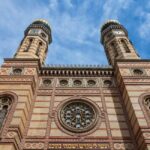
Next up is the Great/Central Synagogue (Nagy Zsinagóga), also called the Dohány Street Synagogue. This is widely known as the biggest functioning synagogue in Europe, and it’s where the architecture alone can make you stop mid-step.
Plan for two layers here:
- You’ll see stunning design and scale
- You’ll get guided history tied to turbulent events
The key practical point: you’ll likely need an extra entrance fee for the full building tour (the interior isn’t included in the base visit). The tour information also notes that the guide can take you through the whole building upon request for an extra entrance fee. That means you should decide early if you want maximum access, because it affects what you can see inside and how much time you spend there.
If you’re picking a day for interiors, this synagogue is the one to prioritize in your planning. Guides on this route—like Suzy and Joel, based on past group experiences—are praised for patient explanations and the ability to handle a lot of questions without rushing. If your group includes older visitors (or anyone who needs things repeated), this kind of pacing is a real plus.
Kazinczy Street Synagogue: what you can see when it’s closed
The tour stops at the Kazinczy Street Synagogue, but with a clear reality check: it’s closed temporarily due to renovation, and there’s also a community access restriction, so you can’t enter.
You’ll still get value from this stop because you’re not just doing a drive-by. You’ll see it from the outside and get context for:
- its 1910s Art Nouveau character, and
- how it reflects the Jewish community’s presence and cultural style during that era.
From a “how much you’ll get” standpoint, this is the one stop that changes most depending on current conditions. If you imagined seeing every synagogue interior, this may disappoint. But if you’re happy to learn from what’s visible (architecture, placement, street setting), it still helps paint the bigger picture.
Rumbach Street Synagogue: exterior first, inside by request
Another synagogue-related stop is the Rumbach Street Synagogue. This one has the upside of being recently renovated, with architecture that draws attention even when you can’t immediately go inside.
Here’s the deal: the tour does not include tickets to enter by default. But the format allows for something flexible—upon request, the guide can show you the inside as well.
So think of this as a “choose your level” stop. If you want to maximize interiors, you’ll want to ask in the moment. If you’re more focused on street-level context and quick visual cues, you’ll still leave with a strong sense of why this synagogue matters to the community.
The important practical consideration is time. The schedule allocates about 30 minutes here, so you can’t assume there’s unlimited flexibility for waiting, ticket lines, or extra reading. If your group has strong preferences, communicate them early to get the best flow.
You can also read our reviews of more city tours in Budapest





Holocaust remembrance on foot: Carl Lutz and the Danube Shoes
This is the emotional center of the walk. First comes the Carl Lutz Memorial, a public statue honoring the Swiss diplomat who helped thousands of Jewish people avoid death camps. The guide story format is designed to keep it specific: you’ll walk through who Carl Lutz was and what made his actions an example of bravery during the Holocaust era. This stop is only about 15 minutes, but it’s built to be meaningful rather than rushed.
Then you go to the Shoes on the Danube Bank. This memorial marks people who were shot into the Danube during the Arrow Cross terror. It’s a difficult site, and it’s also one of those places where a guide’s framing helps you understand what you’re looking at and why it was placed here.
A tip for this section: keep your phone put away for at least part of the moment. You’ll get more from the stillness if you’re not constantly photographing your way through it. The guide’s job is to connect the memorial to the larger story of persecution in Budapest—so let that take the lead.
One more reason I like this pairing: Carl Lutz adds a thread of human action and moral courage, while the Danube Shoes is stark consequence. Together, they keep the day from feeling one-note.
Szimpla Kert and Király Street: where the day breathes
Not every stop on this tour is solemn. After the Danube memorial, you’ll have time to shift gears a bit with Szimpla Kert, one of the most famous ruin bars in the VII district.
This is scheduled for about 15 minutes. The goal isn’t a party crawl—it’s to show you a piece of modern Budapest culture and explain why these ruin bar spaces became iconic. If you’ve never seen a ruin bar in action, it’s a useful contrast to the heaviness of the earlier sites, and it helps you remember that Jewish life in Budapest didn’t end with World War II.
Then there’s Király Street, under Király str. nr. 15, where you can find an original segment of the Great Ghetto. This is another “you can actually see it” stop, allocated around 15 minutes. The guide ties it to what was happening during WWII, including the note that this was the second largest WWII ghetto of the World.
If your brain gets overloaded by heavy information (a real thing), this section helps balance it out. It keeps the tour grounded in place—street corners and building segments—so the story stays physical and understandable.
The guides make the difference: who you might meet and what you’ll notice
One big reason this walk earns strong ratings is the human element. In past experiences, guides such as Suzy, Joel, and Bogato have been praised for connecting Jewish community history with Hungarian—and even broader world—history. That’s important because Budapest isn’t isolated. Events here connect to wider forces, and a good guide helps you see the link without turning it into a lecture.
You’ll also notice how patient the guiding tends to be. Some groups included people over 70, and the feedback emphasizes that questions were handled with care. That’s a practical advantage if your group needs slower pacing or more explanation.
And yes, food matters too. One past group noted stopping for a snack at a place called Strüdel House during the tour, and it was a highlight. The core idea is that the day includes food tastings, so even when the subject gets intense, you’re not purely running on willpower.
Practical tips so you enjoy the full 4 hours
This is a walking city tour, and it combines somber memorial time with synagogue architecture time. Plan for that mix.
A few things that will make your day easier:
- Wear comfortable shoes. You’ll be on foot enough that your feet will be the limiting factor before your curiosity is.
- Bring a layer. Budapest weather can change fast, and you’ll be outside for memorials and synagogue exteriors.
- If you care about interiors, decide early for the Great/Central Synagogue extra ticket option and be ready that Kazinczy is not enterable right now.
- If you’re visiting on a Saturday: the tour is not recommended since synagogues close for Jewish holidays. You’ll likely get a less complete experience.
If you’re traveling with grandparents, people who like learning at their own pace, or anyone who wants context rather than just sightseeing, this private format is a great match. Up to 15 means it’s still manageable, but it’s not “a huge crowd where you can’t ask questions.”
Should you book this Jewish Budapest private city walk?
I’d book this if you want a serious, guided look at Budapest’s Jewish Quarter that goes beyond the obvious postcard points. The best part is the combination: synagogue landmarks, ghetto-era street remains, and memorials that explain what happened. You also get food tastings, so it feels like a real half-day in the city, not a checklist.
You should think twice if you mainly want short stops and effortless sightseeing. This route includes difficult subject matter at the Danube memorial and Carl Lutz, and it takes time to do it thoughtfully. Also, budget for the fact that synagogue interiors aren’t guaranteed—Great/Central often costs extra, Kazinczy is closed, and Rumbach entry is request-based.
If you’re flexible on timing and you’re ready for a guide to connect history to street-level reality, this is a strong choice.
FAQ
How long is the Jewish Budapest private city walk?
It runs for about 4 hours.
Is the tour price per person or per group?
It’s priced per group at $342.93, for groups of up to 15 people.
What language is the tour offered in?
The tour is offered in English.
Does the tour include synagogue entrance fees?
Some are not included. Great/Central Synagogue interior access may require an extra entrance ticket, Kazinczy Street can’t be entered due to current closures, and Rumbach Street entry is request-based. Some stops have free admission.
Is pickup available?
Yes. Hotel/port pickup and drop-off are offered. Cruise ship passengers must provide ship name and docking/disembarkation/re-boarding times.
Is this tour recommended on Saturdays?
It’s not recommended on Saturdays because Jewish holidays keep the synagogues closed.