REVIEW · BUDAPEST
Hungary today: a no-taboo conversation
Book on Viator →Operated by Budapest Explorers · Bookable on Viator
Big politics, small table, zero small talk. This experience is built as a real conversation in Bambi Café, with an honest look at Hungary’s last 30 years, from communism to democracy and the rise of so-called illiberal democracy. The goal is simple: you get facts, you get opinions, and you get to ask questions that you usually keep for yourself.
What I love most is the small-group format (up to 6 people), which keeps things from turning into a lecture. I also like that the host is ready to connect history, economics, and politics to daily life in Budapest and beyond. One possible drawback: this is not a sightseeing script. If you want lots of monuments and a rigid route, you may find the pace feels more like a long chat than a tour.
If you’re curious and comfortable asking questions, this can be one of the most memorable hours and a half you spend in Budapest.
In This Review
- Key highlights you’ll feel right away
- A conversation, not a lecture, in Bambi Café
- What the host covers in Hungary’s last 30 years
- The real value: questions, controversy, and honesty
- Why Bambi Café is the right meeting place
- Price and what you actually get for $40.52
- Timing and pacing: 90 minutes that can move fast
- Getting there: public transport convenience
- Who this experience suits best (and who might not)
- Hosts and tone: expect real back-and-forth
- Practical notes that affect your day
- Should you book? My honest take
- FAQ
- Where does the experience start?
- How long is the tour?
- What time does it begin?
- How much does it cost?
- Is there an admission ticket fee for the stop?
- Is this a small group experience?
- Will I get a mobile ticket?
- Is the meeting point near public transportation?
- Are service animals allowed?
- Can I cancel for a full refund?
Key highlights you’ll feel right away

- A classic café stop at Bambi Café, unchanged since the 1970s
- No-taboo focus on Hungary’s modern era, politics, and economics
- A structured start, then open-ended Q&A on anything you want
- Small group size (maximum 6), so your questions actually get answered
- Mobile ticket, with the experience ending back where it starts
A conversation, not a lecture, in Bambi Café
This tour works because it’s designed like a talk with someone who lives with the topic every day. You start at Bambi Café, a cult classic in Budapest that’s been around since the 1970s with close to none of the usual “tourist makeover” energy.
You’ll get an intro that frames Hungary’s recent past, mainly the last 30 years: the shift from communism to democracy, what changed, what didn’t, and how Hungary’s political direction has been described in the past few years. Then the structure flips. You can ask your own questions, including the controversial stuff, instead of only listening to prepared talking points.
That mix of framing plus Q&A is the big reason people seem to rate this experience so highly. It isn’t only information. It’s the chance to test your own assumptions and hear a grounded perspective on where Hungary is now.
And since the group maxes at 6, the host can actually respond to you as a person, not as a seat number.
You can also read our reviews of more tours and experiences in Budapest.



What the host covers in Hungary’s last 30 years
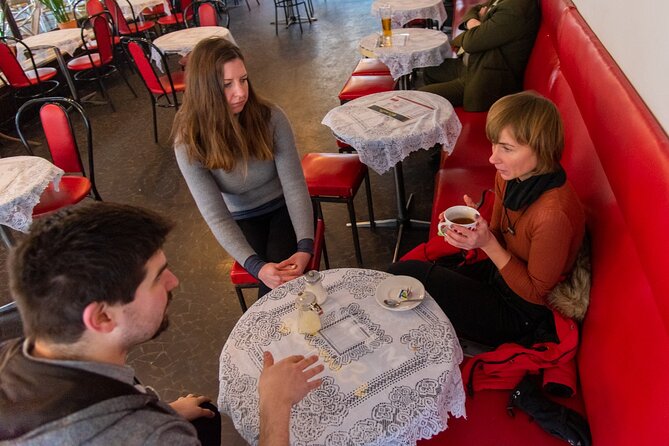
The intro part matters because it gives you the minimum “map” you need to make sense of current debates. Without that, today’s headlines can feel like noise. Here, you get historical and political context tied to economic realities, not just slogans.
You’ll hear about:
- the transition from communism to democracy
- what democracy meant in practice, and how the story evolved
- the idea of illiberal democracy and what people argue about it in recent years
- how these political shifts show up in day-to-day national life
The phrase “facts and our opinion” is doing a lot of work here. You’re not only getting a neutral timeline. You’re getting a point of view, which means you can agree, disagree, or ask for evidence. That’s usually where the best travel conversations happen.
The real value: questions, controversy, and honesty
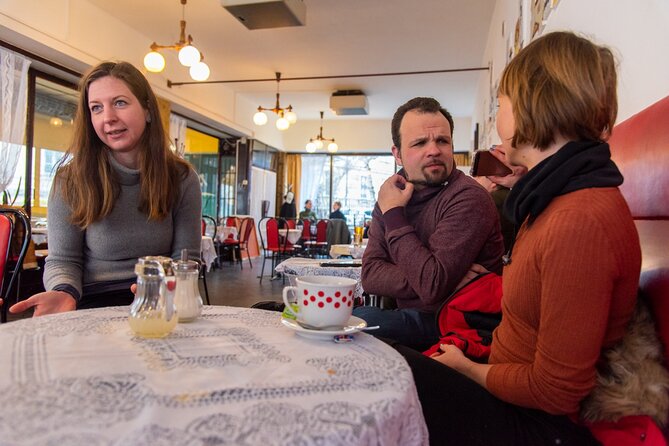
One thing I really appreciate in an experience like this is when the host doesn’t dodge the hard parts. This one is explicitly built for the no-taboo style of conversation—controversial politics, a turbulent past, and an uncertain future.
In practice, that means you can bring:
- the political questions you’ve been holding back
- concerns about where Hungary is headed
- questions about why things changed the way they did
- questions that go beyond politics, like how the country thinks about its role in the world
The reviews you’ll see about the experience line up with that exact idea: people come out feeling they got more than a quick overview. They wanted depth. They wanted someone who could connect Hungary to wider issues. And they felt they could ask for clarification instead of being shut down by vague answers.
If you’re the type who usually keeps your questions for later, this is a rare setting where you won’t feel like you’re taking over. The format is meant for back-and-forth.
Why Bambi Café is the right meeting place
Even if you don’t care about cafés, the location makes a difference. You’re not meeting in an office or starting in a loud tourist hub. Bambi Café is the cult-style stop that’s been around since the 1970s, and that gives the conversation a grounded tone.
You’re sitting in a place with a long life in Budapest culture, which helps the subject feel less like theory. Talking about political change and identity can feel abstract when it’s all streets and buildings. Here it feels human because you’re doing it in an everyday, semi-ordinary setting.
Also, it’s a free stop in the sense that you don’t have to pay an admission ticket just to be there. You’re paying for the conversation.
Price and what you actually get for $40.52
At $40.52 per person for about 1 hour 30 minutes, you’re not buying a bus ride or a stack of museum tickets. You’re buying time, context, and direct access to a host who can handle the questions.
Is it a bargain? If your goal is understanding modern Hungary beyond the basics, it can be good value. Most people don’t come to Budapest needing more photos of historic facades. They come wanting to understand why today looks the way it does—and why opinions are so strong.
This works especially well if:
- you’ve already been to a few main sights and want the “why”
- you have some background on communism-to-democracy but still feel shaky on present debates
- you enjoy dialogue more than guided storytelling
If your idea of a tour is strict logistics and a sightseeing checklist, then $40.52 may feel high compared to a self-guided route. But if you want an explanation you can question in real time, that cost starts to make sense fast.



Timing and pacing: 90 minutes that can move fast
The experience runs for about 1 hour 30 minutes, starting at 2:00 pm, and it ends back at the meeting point. That timing is important because it keeps the conversation focused. You’re not signing up for an all-day seminar.
The pacing can also feel flexible, because once you go into Q&A, it depends on what you ask and how much you want to compare perspectives. In a group of 6, that usually means the hour-and-a-half can feel full, not stretched.
If you’re the kind of traveler who likes to plan your afternoon tightly, you’ll want to protect that 90-minute block so you don’t get rushed.
Getting there: public transport convenience
The meeting point is Bambi Café at Budapest, Frankel Leó út 2-4, 1027 Hungary. The experience is noted as being near public transportation, which is a practical win in Budapest, where walking can add up quickly if you’re also doing other sights.
If you’re building a day around it, place it after your morning sightseeing. That way you’re not trying to cram culture + politics on an empty schedule.
Who this experience suits best (and who might not)
This tour-style conversation is best for people who:
- want a clear introduction to Hungary’s modern era, not just surface-level facts
- enjoy asking questions and getting direct answers
- appreciate hearing opinions and sorting out what you agree with
- like small groups and talk-based travel
It may be less satisfying if you want:
- a long list of monuments and photo stops
- a strict itinerary with lots of walking
- a guide reading off a script
Think of it as a chance to understand the country in conversation form. You’ll get the most out of it if you come with at least a couple questions, even simple ones.
Hosts and tone: expect real back-and-forth
One reason this has such positive feedback is the human tone of the sessions. People describe the host as friendly, informed, and clearly able to handle wide-ranging questions—about Hungary, yes, but also about the broader world.
In the team behind Budapest Explorers, you’ll see names like Daniel show up as a host, and Raymond is part of the team that follows up with guests. That matters because it signals continuity: it’s not a random one-off guide gig. It’s a repeatable conversation format run by the same organization.
In your seat, that translates to a setting where you don’t need to be an expert. You just need to be curious.
Practical notes that affect your day
There are a few details that matter when you’re deciding if this fits your trip:
- Mobile ticket: you’ll have the ticket on your phone, which keeps things smooth.
- Service animals allowed: good to know if you travel with one.
- Most travelers can participate: the experience is designed for general participation, not specialized equipment.
- Group limit of 6: small enough for discussion, not small enough to feel like a private lecture.
Also, it’s free to cancel up to 24 hours in advance for a full refund. That gives you a little breathing room while you finalize your Budapest schedule.
Should you book? My honest take
If you want a Budapest experience that explains the country instead of just describing it, I’d book this. For $40.52, you’re paying for context, time, and the ability to ask tough questions in a small group setting. That combination is hard to replicate on your own.
Book it if you enjoy talk-based travel, you like asking why things happened, and you’re interested in the shift from communism to democracy and how discussions about illiberal democracy show up today.
Skip it if your dream tour is mostly walking routes and visible landmarks. This one is about ideas and conversation, anchored to a real Budapest café.
If that matches your travel style, you’ll likely leave with a clearer sense of Hungary now—and a better set of questions for your next conversation.
FAQ
Where does the experience start?
It starts at Bambi Café, Budapest, Frankel Leó út 2-4, 1027 Hungary.
How long is the tour?
It lasts about 1 hour 30 minutes.
What time does it begin?
The start time is 2:00 pm.
How much does it cost?
The price is $40.52 per person.
Is there an admission ticket fee for the stop?
The admission ticket is listed as free for the café stop.
Is this a small group experience?
Yes. It has a maximum of 6 travelers.
Will I get a mobile ticket?
Yes. The experience uses a mobile ticket.
Is the meeting point near public transportation?
Yes, it’s noted as being near public transportation.
Are service animals allowed?
Yes, service animals are allowed.
Can I cancel for a full refund?
Yes. You can cancel up to 24 hours in advance for a full refund.