REVIEW · BUDA CASTLE & FISHERMAN'S BASTION
Budapest Castle Walk
Book on Viator →Operated by Taste Hungary · Bookable on Viator
Buda Castle looks different when someone explains it. This 3-hour walking tour threads the needle from medieval court life to Ottoman, Habsburg, and WWII scars, set in UNESCO-listed streets and stairways. I love the way the walk mixes big landmarks with the stuff most people miss, and I also like that St. Matthias Church entry and a coffee break are built in.
You’ll also get standout viewpoints like Fisherman’s Bastion and a Danube-side stop at Várkert Bazaar, plus a WWII-focused moment at a bunker. One possible drawback: the route is on hills and uneven cobbles, so if you’re sensitive to steep walking, wear real shoes and take your time.
In This Review
- Key things I’d watch for on this Buda Castle walk
- Why this 3-hour Buda Castle walk works (and doesn’t drag)
- Fisherman’s Bastion: viewpoints with real street-level history
- Matthias Church: the coronation site feeling up close
- Walking from palace days to empire changes
- National Széchényi Library: rebuilding as a theme, not a footnote
- Castle Garden: the neighborhood feel behind the big monuments
- Várkert Bazaar and the Danube-side pause
- WWII bunker moment: why the story feels specific here
- The coffee break: a tiny stop that keeps the pace human
- Price and value: $125 for history, access, and a guided path
- Group size, comfort, and how to make it easy on yourself
- Who should book this tour?
- Should you book the Budapest Castle Walk?
- FAQ
- FAQ
- How long is the Budapest Castle Walk?
- Where do I meet the guide, and where does the tour end?
- What time does the tour start?
- What’s included in the price?
- Is Matthias Church entry included?
- Are museum entrances included?
- How big is the group?
- Can I get a full refund if I cancel?
Key things I’d watch for on this Buda Castle walk
- Small-group pacing (max 8): more time for questions and slower turns in the good photo spots
- Matthias Church included: you don’t have to pay extra to step inside and see the details
- WWII + Siege of Budapest focus: a specific, place-based explanation of what happened here
- Jewish community history: the guide connects neighborhoods, sites, and changing power eras
- Danube-side Várkert Bazaar and viewpoints: expect breaks for views, not just wall-to-wall monuments
Why this 3-hour Buda Castle walk works (and doesn’t drag)
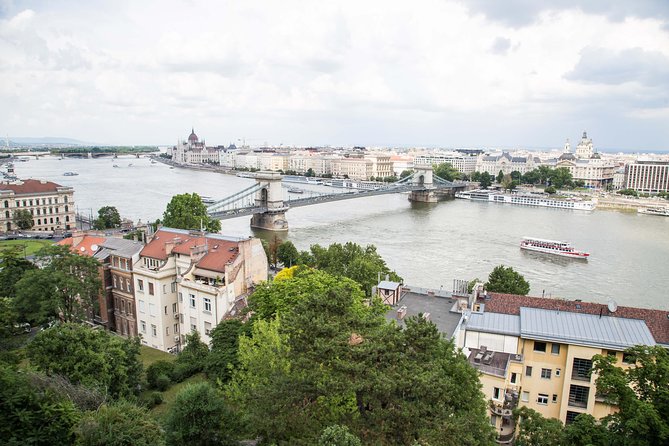
Budapest’s Buda Castle district can feel like a maze until someone gives you a map made of history. The meeting point is the Zero Kilometre Stone near Clark Ádám tér (3:00 pm start), and the tour ends at Matthias Church, so you’re not backtracking the same hill twice.
The format is simple: you’ll walk, stop, listen, take pictures, then move on. A good chunk of the value is that the guide connects eras—medieval court times, Ottoman and Habsburg rule, then the devastation of WWII—so the streets stop being random.
And yes, there’s a coffee break. On a hillside walk, that matters more than you’d think.
You can also read our reviews of more walking tours in Budapest



Fisherman’s Bastion: viewpoints with real street-level history
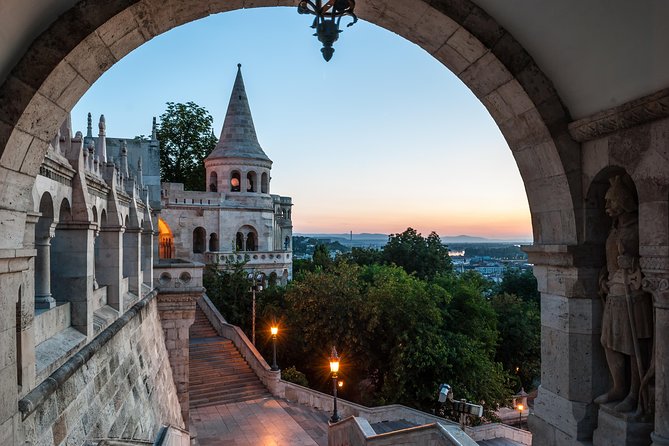
You start at Fisherman’s Bastion, where the hilltop curves follow the shape of the terrain. The area has had royal presence since the mid-1200s, with the first royal residence built there, and the guide uses that timing to explain why these streets and fortifications evolved the way they did.
This is also where you’ll get the first “aha” moment about the neighborhood’s layers. The guide’s emphasis on the Jewish population helps make sense of why certain streets and sites mattered, even as power shifted between empires and kingdoms.
Practical note: this area is visual, so it’s tempting to stop longer than planned. Keep an eye on your footing first, then let the photos happen.
Matthias Church: the coronation site feeling up close
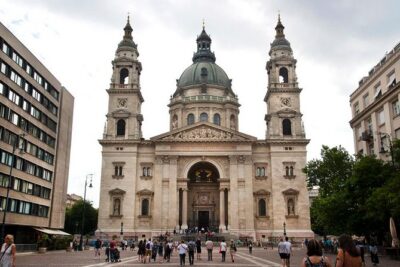
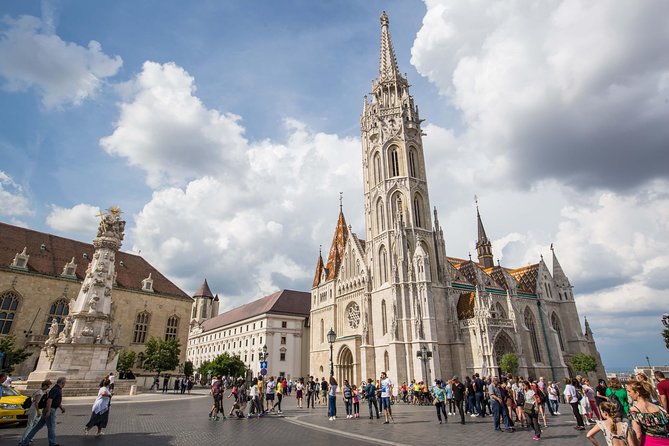
Matthias Church is the tour’s big interior moment. You’ll spend about 20 minutes here, and entrance is included, so you can focus on the building instead of checking tickets.
What I like about this stop is the way it’s framed in more than one direction. The church is presented as a coronation site tied to Hungarian kings, but the guide also connects it to WWII—specifically the Siege of Budapest and the demolition that occurred when German and Russian forces met in the streets in 1945.
Inside and around Matthias Church, you’ll notice the multi-colored roof tiles and the kind of detail that makes you slow down without realizing you’re doing it. If you’ve only seen the church from a distance in photos, this is where it becomes real.
Walking from palace days to empire changes
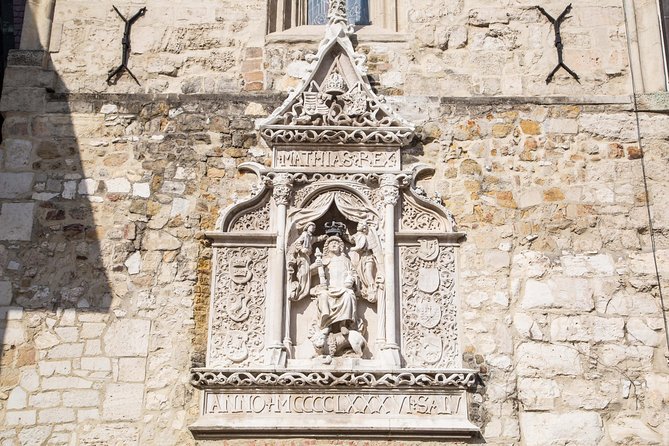
One reason the Buda Castle district is worth doing on foot is that you feel the topography. You’re moving through streets that grew up around ruling centers, then getting pulled into courtyards, gardens, and viewpoints that show how different eras rearranged the city.
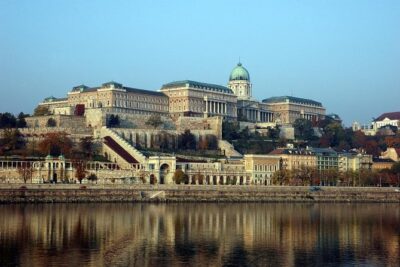
Along the way, you’ll see major highlights such as the Royal Palace area (Buda Castle) and baroque architecture that hints at the post-medieval golden age. This is the part of the tour where the guide’s job is to keep the timeline straight, because the buildings you see today have been rebuilt multiple times.
There’s also an Ottoman-to-Habsburg thread here, explained through how the city attracted different nationalities. You’ll hear how the neighborhood became a melting pot, and that sets up the later Jewish-focused context so it doesn’t feel like a random topic change.
National Széchényi Library: rebuilding as a theme, not a footnote
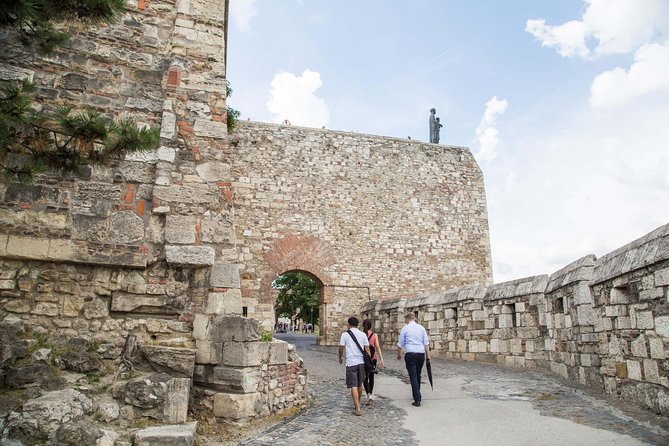
The stop at the National Széchényi Library is brief, but it’s an important reminder: Buda has been damaged and rebuilt repeatedly. You’ll hear how the establishment of the royal court helped kick off a long golden age, even if no royals actually lived at the library site itself.
This is where the tour stays grounded. Instead of treating history like museum captions, the guide points out how destruction and rebuilding changed what you see today. WWII damage is a major part of that explanation, and it helps you understand why parts of the district look the way they do now.
If you like architecture but hate feeling lost, this stop is a good “reset.” It gives you a lens for everything you’ll see later—especially when you start thinking about what’s original versus rebuilt.






Castle Garden: the neighborhood feel behind the big monuments
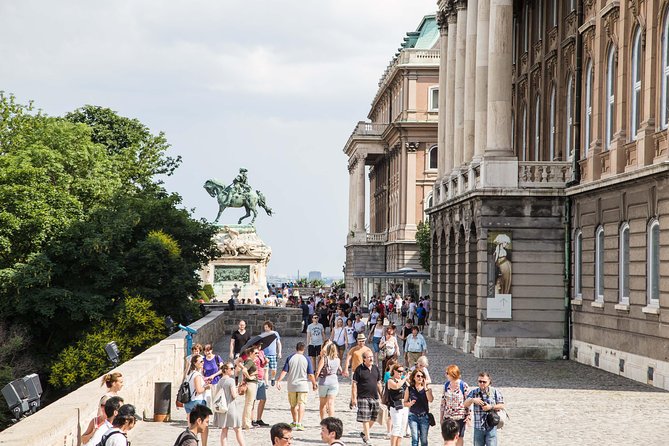
Not every stop is about statues or grand facades. The Castle Garden area brings a different vibe: longer views, older buildings that are lived in, and the sense that the district isn’t only a stage set for tourists.
The tour frames this as a place shaped by centuries of history, with the Hungarian president calling it home and with regular residents in long-standing buildings. Even if you don’t linger in this area, it helps you balance the tour: you see the palace-and-church highlights, then you remember Buda Castle is still a functioning neighborhood.
From here, it’s easier to understand why courtyards and hidden gardens matter. They’re not just decorative. They’re part of how life operated within the castle district.
Várkert Bazaar and the Danube-side pause
A key part of the experience is getting down toward the Danube for Várkert Bazaar. The guide points out that this area is restored and designed in a neo-Renaissance style, and it’s a strong contrast to the hillside lanes.
Even if you’re not shopping or dining here, it’s a chance to breathe and let the city open up in front of you. The Danube-side views are a practical payoff: you’re walking uphill and inward, and then you suddenly get a wider frame.
This is also where the tour’s photo rhythm makes sense. You’re not just snapping landmarks—you’re collecting perspectives of how the city sits around the river.
WWII bunker moment: why the story feels specific here
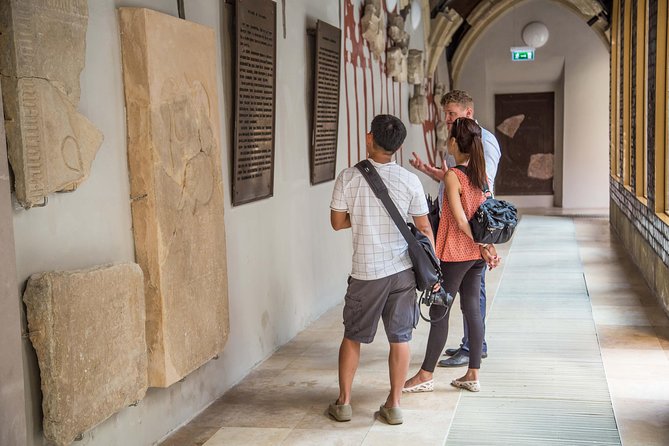
The WWII portion is one of the most memorable parts of the walk. You’ll visit a WWII bunker and hear about the Siege of Budapest, when fighting caused huge devastation and swept across the streets.
This works because it’s place-based. You’re not learning WWII as a distant event. You’re hearing it tied to the exact terrain and buildings around you, which makes the scale of destruction feel closer and more concrete.
A small warning: if you prefer only upbeat stories, this part may hit hard. But if you want context for why Buda Castle looks the way it does today, this stop explains a lot.
The coffee break: a tiny stop that keeps the pace human
During the tour you’ll have a break for coffee or another drink. For a 3-hour walk, this is a good compromise between “see everything” and “everyone has a melt-down on the hill.”
The tour includes one coffee/drink, plus coffee and/or tea. If you’re the type who gets tired halfway up a staircase, this is the smart part of the plan.
I’d treat the coffee stop as a checkpoint. Use it to refuel, then keep your pace steady until the finish near Matthias Church.
Price and value: $125 for history, access, and a guided path
At $125 per person for about 3 hours, this isn’t a budget stroll. But it’s also not just paying for a walk around a few famous buildings.
You’re paying for:
- an English-speaking local guide with an experienced storytelling style
- included entrance to Matthias Church
- a coffee/drink break with coffee and/or tea
- an organized route through cobbled hillside streets where navigation matters
Timing can also affect value. This is often booked around 85 days in advance, which usually means availability varies by season and day. If you’ve got a narrow travel window, that planning buffer matters.
My practical take: if you’d otherwise stand in front of monuments without knowing what you’re looking at, the guide component is likely worth it. If you’re a solo wanderer who’s comfortable building your own timeline, you might feel the price is less justified—still, the included Matthias entry and coffee help.
Group size, comfort, and how to make it easy on yourself
The tour runs year-round, and it’s offered as a small-group experience with a maximum of 8 people (minimum 2). There are also options for larger group tours and private tours that can be customized.
Even with a small group, Budapest’s castle district isn’t designed for sneaker-only confidence. Plan for steep bits and uneven cobbles. Bring comfortable shoes and expect to slow your steps occasionally.
This is a “near public transportation” start area, which is great for getting there. Also remember the tour can stretch slightly beyond three hours if you’re not in a rush, so it’s wise to plan a flexible window afterward.
One more logistics tip based on a booking hiccup I saw in the available feedback: when you confirm your ticket, double-check the start time on your confirmation message. In older-style booking systems, time details can be easy to misread.
Who should book this tour?
This one fits best if you:
- want a guided timeline through the Buda Castle district rather than random sightseeing
- care about how WWII and the Siege of Budapest changed the area
- like history tied to places, including Jewish community context in the neighborhood
- want viewpoints without turning the day into a marathon
It’s also a good choice if you’re traveling with mixed interests. Architecture people will enjoy Matthias and the palace area. History people get the Ottoman/Habsburg/WII threads. View lovers get Fisherman’s Bastion and Danube panoramas.
Should you book the Budapest Castle Walk?
If you want to understand Budapest’s Buda hill in a short, organized block of time, I think this tour is a strong pick. The biggest reasons are practical: Matthias Church entrance is included, the coffee break keeps energy up, and the guide connects eras so the district clicks rather than confuses.
Book it if you’re happy to walk up and down cobbled streets for a few hours and you value a structured route. Skip it if you only want long, relaxed wandering or if you dislike heavier WWII material. For most people, though, the combination of landmarks, viewpoints, and focused history makes this one feel like time well spent.
FAQ
FAQ
How long is the Budapest Castle Walk?
The tour runs for about 3 hours.
Where do I meet the guide, and where does the tour end?
You start at the Zero Kilometre Stone near Clark Ádám tér and finish at Matthias Church near Szentháromság tér.
What time does the tour start?
The listed start time is 3:00 pm.
What’s included in the price?
The tour includes an English-speaking local guide, a coffee/drink break, coffee and/or tea, and entrance to St. Matthias Church.
Is Matthias Church entry included?
Yes, entrance to St. Matthias Church is included.
Are museum entrances included?
No, entrance to museums is not included.
How big is the group?
It’s a small-group tour with a maximum of 8 travelers.
Can I get a full refund if I cancel?
Yes. Free cancellation is available up to 24 hours before the experience start time for a full refund.