Budapest rewards slow walking. A private day with Budapest Wonderguides turns the big sights into a clear story of the city. You’ll cover both sides of the Danube, with Buda Castle as the anchor point and plenty of breaks built into a smart pace.
I love two things about this tour. First, the guiding style is personal: guides like Katalin, Susan, and Zsuzsanna are described as funny, patient, and able to adjust the walk to your family or your schedule. Second, you get a connected overview of Hungarian history, not just photos and facts, with the monuments explained in relation to different eras.
One thing to keep in mind: several stops are exterior-focused, and many major interiors list tickets as not included. If you want to go inside at every stop, your time and budget can grow fast, and you’ll want to plan for extra ticketing.
In This Review
- Key highlights I’d plan around
- Private, practical, and built for your first Budapest day
- Price and value: $350 per group can be a steal or a splurge
- Getting started at 9:00 and how pickup really helps
- Buda Castle District: Royal Palace views and the classic skyline
- Heroes’ Square: a short hit with museum choices
- St. Stephen’s Basilica: a quick visit that rewards timing
- Hungarian Parliament: exterior time and what to do with it
- Chain Bridge: why this crossing is more than a postcard
- Dohany Street Synagogue: a respectful landmark stop
- Hungarian State Opera House: exterior appreciation without the commitment
- City Park (Varosliget): the final hour with choices nearby
- What the guide customization feels like on the ground
- Who should book this Grand Budapest walking tour?
- Should you book it?
- FAQ
- What is included in the tour price?
- Is this tour private?
- What language is the tour offered in?
- How long is the tour, and when does it start?
- Are admission tickets included for the attractions?
- Is lunch included?
- Can I cancel for a full refund?
Key highlights I’d plan around
- Private group (up to 6) keeps the day flexible and lets you ask questions without a herd mentality
- History that links buildings to eras helps the city make sense fast
- Buda Castle District + Danube crossing gives you the classic views early and momentum for the rest of the day
- A guide who can customize so you don’t repeat what you already booked (like a river cruise)
- Exterior time at major landmarks balances photo stops with walking time
- City Park stop gives you a slower finish with options near Vajdahunyad Castle and Széchenyi Baths
Private, practical, and built for your first Budapest day
This is the kind of tour that helps you get oriented without feeling like a checklist sprint. The day runs about 7 hours in a private setup for your group, up to 6 people, with pickup offered from hotels, hostels, apartments, and Airbnbs. That small-group format matters in a city where the “where do we start?” problem can waste half a day.
The strongest part is how the guide connects places to the bigger story. You won’t just hear what something is called. You’ll understand why it shows up where it does and how Hungarian history shaped what you see today—starting from earlier periods and moving toward the Communism era. That approach makes monuments easier to remember when you’re back in your hotel.
The route also has a realistic rhythm: it mixes big exteriors (for views and photos) with short, useful visits to major squares and landmarks. You’ll come away with a sense of Budapest’s geography—especially the way Buda’s Castle District changes the feel of the city compared with the Pest side.
You can also read our reviews of more walking tours in Budapest



Price and value: $350 per group can be a steal or a splurge
The price is $350 per group (up to 6), which means the value depends on how many of you are sharing. If you fill the group, that’s roughly $58 per person. If it’s just two people, it becomes about $175 per person. Either way, you’re paying for private guiding across a full day’s worth of major sights.
What you get for that money is not just walking time. You get a guide who can tailor the order and emphasis. One review notes the walk was customized so it did not repeat excursions already scheduled on a riverboat cruise. That’s the kind of practical adjustment that saves you from paying twice for similar experiences.
Also, you get two layers of guiding: the tour includes both a local guide and a professional guide. That can translate into better context, smoother pacing, and faster answers when you ask questions like where to eat, what neighborhood to explore next, or what to skip if you’re short on time.
Getting started at 9:00 and how pickup really helps
The tour starts at 9:00 am and ends back in Budapest. Pickup is offered from accommodations across the city, which is especially useful if you’re staying away from major transit lines. If you’re not picked up, the day is described as near public transportation, so you should still be able to meet easily.
You’ll also receive a mobile ticket, which makes the day feel low-friction. Confirmation happens at booking, so you’re not scrambling for details right before you go.
One more practical note: this is listed for moderate physical fitness. That doesn’t mean it’s a hard hike all day, but it does mean you should expect a steady walking pace and some uneven steps—especially around the Castle District, where you’ll likely be moving through older streets and viewpoints.
Buda Castle District: Royal Palace views and the classic skyline
The day begins (or quickly centers) on the Buda Castle area, including the Royal Palace, Matthias Church, and Fisherman’s Bastion. This is where Budapest shows off. You get elevated sightlines, dramatic architecture, and the feeling that you’re looking at the city’s “top floor” first.
This stop is listed as about 2 hours, and it’s marked as admission ticket free. That’s a big deal for value. Even if you’re not planning to pay for interior access, you still get plenty to see and photograph.
Why I like this setup for first-time visitors: the guide can give you the historical framing while you’re standing in the actual setting. That helps later stops make more sense. It’s easier to connect different eras when you’re seeing the complex layout of the Castle District, not when you’re reading about it later.
Possible drawback: since this is a long, concentrated section near major viewpoints and churches, it’s a stop where you’ll want comfy shoes and a little patience. If someone in your group hates stairs or steep streets, tell the guide early so the pacing can adjust.
Heroes’ Square: a short hit with museum choices
Next you’ll move to Heroes’ Square, with Fine Arts Museum and Modern Art Museum nearby. This stop is only about 30 minutes, and tickets are listed as not included.
So think of Heroes’ Square here as a “reset and orient” moment. You get a wide open setting, key visual symmetry, and a chance to understand how Budapest displays power and identity in public space. The guide can also link what you’re seeing to the historical changes they’re walking you through that morning.
For readers planning their day: if you’re the type who wants to go inside museums, you’ll likely have to choose. With only 30 minutes, you can admire the exterior and move on, or you can ask your guide what’s worth it based on your interests.






St. Stephen’s Basilica: a quick visit that rewards timing
You’ll also stop at St. Stephen’s Basilica (Szent Istvan Bazilika) around 30 minutes, with tickets listed as not included. This is a classic “big church landmark” stop, and the short time slot works if your goal is to understand where it fits in the city’s visual and cultural map.
The value here is less about sitting for an extended visit and more about getting context. If you’re the type who likes to walk up, look around, and then understand the symbolism through the guide’s explanation, this timing fits well.
Possible consideration: if you’re set on doing a long interior visit, plan to arrive hungry for details. This tour is designed for a day-spanning overview, so some stops are intentionally brief.
Hungarian Parliament: exterior time and what to do with it
Then it’s on to the Hungarian Parliament Building near Kossuth Square, again with about 30 minutes on the schedule and tickets not included. This is one of those landmarks where exterior viewing is already impressive.
In a tour like this, the guide’s role becomes crucial. You want someone to point out what you’re looking at and explain why it matters in Hungary’s national story. The point is not to rush past it. It’s to make sure your photos are matched with understanding.
A practical tip: if you care about capturing the building from the best angles, tell the guide early. In a short stop, small adjustments in where you stand can change the whole photo.
Chain Bridge: why this crossing is more than a postcard
One of the most satisfying segments is the Széchenyi Chain Bridge (Szechenyi Lanchid) stop. It’s listed at about 30 minutes, and admission is marked as free.
This is where the tour does something smart. Instead of treating the bridge as a quick photo moment, it uses the crossing as a geographic and historical connector. The guide can help you understand how the city’s identity plays out across the water, with Buda’s hills and Pest’s dense city energy.
For me, this stop is the “moment you feel the city” part of the day. You get movement, views, and a natural transition between districts—without needing extra ticketing.
Dohany Street Synagogue: a respectful landmark stop
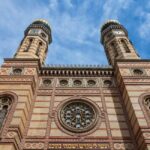
Next comes Dohany Street Synagogue, specifically the Great Synagogue area. It’s another 30-minute stop, with tickets listed as not included.
This is a good example of why a guide matters. A building like this is more than an architectural stop. It’s also tied to cultural identity. Even within a short window, you’ll get help putting it into the broader story the guide is building across the day.
The main consideration is simple: if you want to go inside for a longer visit, you may need to adjust your expectations for the rest of the schedule. This tour prioritizes an overview, so interior time isn’t the focus unless you’re ready to pay separately.
Hungarian State Opera House: exterior appreciation without the commitment
You’ll also visit the Hungarian State Opera House (Magyar Állami Operaház) for about 30 minutes, with tickets not included. Opera buildings can look ornamental from the street, but they also signal ambition and civic pride.
Here’s the value: the guide can point out what to notice, so you don’t treat it as just another beautiful facade. Since the stop is short, you’ll get a fast education in the building’s mood and function in the city’s story.
If you’re an opera fan, this is a great chance to decide whether you want to hunt down a performance later. If you’re not, you can still enjoy the architecture without making it a long sit-down plan.
City Park (Varosliget): the final hour with choices nearby
The day ends with Varosliget/City Park, including Vajdahunyad Castle and the Széchenyi Baths area. This stop is listed as about 1 hour, and tickets are not included.
This is a smart ending. City Park slows the day down just enough after the dense series of landmarks in the center. You get space to walk at a calmer pace, and you’re positioned near places many visitors want to return to later.
For readers deciding how to spend the last hour: if baths are on your radar, you’ll want to decide early whether you’re just touring the area or setting up a separate visit. Since tickets aren’t included, consider treating this as a launch point rather than the full experience.
What the guide customization feels like on the ground
One of the most praised aspects is how the guide tailors the walk to your specific needs. In one example, the guide adjusted the tour so it did not replicate what was already planned on an upcoming riverboat cruise. That’s not a small tweak. It’s the difference between a day that feels efficient and a day that feels repetitive.
Guides also come across as family-friendly and adaptable. Several notes mention patience and a pace that works with kids, plus humor that keeps history from turning into a lecture. I also like that the guides are portrayed as helpful for practical questions, like where to eat or what to do next. That means the tour can act like a launchpad for your extra time in Budapest.
If you’re traveling solo, a private group still helps. You’ll get your questions answered in real time instead of relying on a group pace.
Who should book this Grand Budapest walking tour?
This works best if you want a big-picture introduction and you’re okay with a mix of exteriors and short landmark visits. It’s especially good for:
- First-time visitors who want to understand how Budapest pieces together across Buda and Pest
- Couples or small groups who prefer private guiding over a bus-style tour
- Families with moderate walking stamina who want history explained in a friendly way
- Anyone with limited time who still wants context, not just photos
If your trip is mainly about long museum hours and sitting inside attractions for extended periods, this may feel a bit too “overview-heavy.” You could still book it, but plan to add separate visits afterward if you want deeper interior time.
Should you book it?
I’d book it if your goal is to learn the city quickly and then explore on your own with confidence. The private format, the strong history-to-building connections, and the guide flexibility are the kind of value that makes a tour worth paying for in a place that can feel complicated at first.
I’d think twice if you already have detailed plans for every major interior site and you hate walking for a full day. In that case, you may want to pick a shorter, focused tour—or be ready to buy tickets separately at a few stops.
If you’re booking for a first visit day, though, this tour is a solid way to get bearings fast, build context, and end the day near City Park so you can decide what comes next.
FAQ
What is included in the tour price?
The tour includes a local guide and a professional guide. It also includes a mobile ticket.
Is this tour private?
Yes. It’s a private tour/activity, and only your group will participate.
What language is the tour offered in?
The tour is offered in English.
How long is the tour, and when does it start?
It lasts about 7 hours and starts at 9:00 am.
Are admission tickets included for the attractions?
Some stops are listed as ticket free, like the Buda Castle area and the Chain Bridge. Several other major stops are listed as tickets not included, so you may want to purchase admission separately depending on what you want to enter.
Is lunch included?
No. Lunch is not included.
Can I cancel for a full refund?
Yes, you can cancel up to 24 hours in advance for a full refund. If you cancel less than 24 hours before the start time, the amount paid is not refunded.