REVIEW · BUDAPEST
Explore Budapest from the Local’s Perspective – Public Transportation Tour
Book on Viator →Operated by Fungarian · Bookable on Viator
Budapest clicks when you ride the rails. This 3-hour public transportation tour is built for real navigation, with a guide, a 24-hour transit pass, and key sights lined up across Pest and Buda.
I especially like how you get both the wow moments and the practical mechanics. You’ll see major landmarks like Heroes’ Square, Andrássy Avenue, the Chain Bridge area, and the Royal Palace/Buda Castle zone—and you also learn how to move using trams, metro, and buses instead of guessing.
One thing to plan for: you won’t be stopping for meals. With no food or drinks included, you’ll likely want to grab snacks before or after so the ride stays fun and stress-free.
In This Review
- Key Points That Make This Tour Worth It
- Why a Public Transportation Tour Feels Like the Real Budapest
- Andrássy Avenue: World Heritage Street to Start Your Bearings
- Heroes’ Square: Icon Statues and the City’s Set Pieces
- Vajdahunyad Castle and the Museum Layer in City Park
- Museum of Fine Arts Area: What You See Without Getting Stuck
- A Quick Break at City Park Ice Rink
- Margaret Bridge and the Jászai Mari tér Transit Hub
- Nagykörút Ring Road Trams: Learn the City’s Most Useful “Loop”
- Nyugati pályaudvar: The Western Railway Terminal as a Meeting Point
- Deák Ferenc tér: The Underground Junction You’ll Use Over and Over
- Elizabeth Square: A Youthful Break Near Deák Ferenc tér
- Buda Castle Area, Funicular Option, and the Big View Logic
- Szent Gellért Square and the Water-Themed Station Moment
- Gellért Thermal Baths and Gellért Hill: The Panoramic Payoff
- Kalvin tér: Another Central Connector Near Key Museums
- Price and Value: What You’re Actually Buying
- Who This Tour Fits Best (and Who Might Want Another Option)
- Should You Book This Budapest Public Transportation Tour?
- FAQ
- How long is the Budapest public transportation tour?
- What is the price per person?
- Is the tour offered in English?
- Do you get a public transportation pass?
- Is pickup from your accommodation included?
- What materials are included?
- Is food included?
- Is the tour private?
- What’s the cancellation policy?
Key Points That Make This Tour Worth It
- A 24-hour transit pass means you can keep using the routes right after the tour ends
- Your guide teaches real “how to ride” moves, not just facts about buildings
- Stop-to-stop logistics cover big Pest-to-Buda stretches, so you learn the city’s layout fast
- You’ll hit major squares and transit hubs like Heroes’ Square, Deák Ferenc tér, and Nyugati
- You can get extra variety from transit modes, and in at least one past group a public boat ride was added
Why a Public Transportation Tour Feels Like the Real Budapest
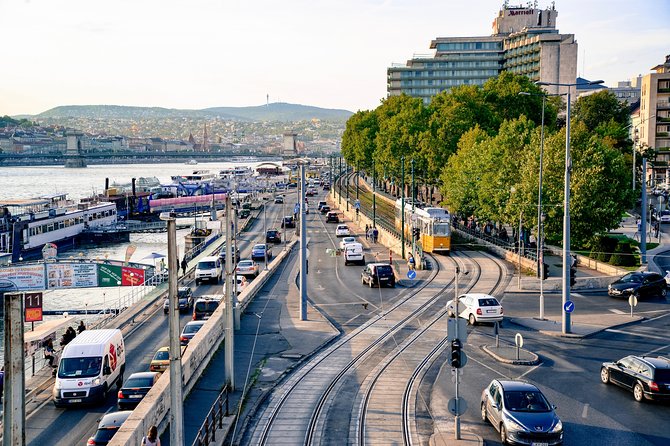
Budapest has a reputation for being easy once you understand the system. The smart part here is that the tour doesn’t treat public transit as a sideline—it treats it like the main way to see the city. In about three hours, you’re not just collecting photos. You’re building a mini map in your head, tied to routes you can repeat later.
The big win for me is value. Your ticket price includes that 24-hour pass, plus a local guide, printed route materials, and a rider’s booklet that helps you use the network confidently. That turns the tour into something you can extend. Finish the tour and you’re not stuck thinking, Now what?
The second win is clarity. You’re shown where to go next and how to use the city’s most useful lines. One review even called out how great it felt to learn the efficient system, and another praised the guide’s mix of city overview plus guidance on exactly how to ride.
You can also read our reviews of more tours and experiences in Budapest.



Andrássy Avenue: World Heritage Street to Start Your Bearings
You’ll begin on Andrássy Avenue, a boulevard dating back to 1872. This is one of those streets where the buildings do half the sightseeing work for you: Neo-renaissance mansions and townhouses with fine facades, lined up with cafés, restaurants, theaters, embassies, and luxury boutiques.
Why this stop works early: it gives you a long, straight “spine” of the city. Once you can picture Andrássy Avenue, you start understanding how the grand avenues connect to squares and transit nodes. It’s a clean way to get oriented without immediately having to climb hills or fight for directions.
Practical note: you’ll be on a schedule, so it helps to think of this as a “look, learn, and move on” start—save deeper shopping or longer walks for another day.
Heroes’ Square: Icon Statues and the City’s Set Pieces
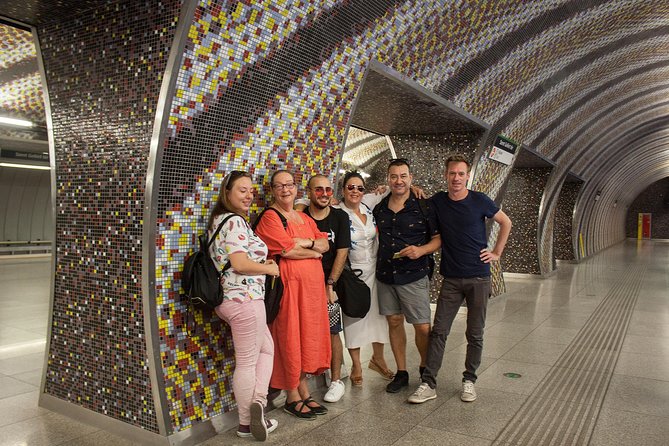
Next up is Heroes’ Square, one of Budapest’s major squares and a classic landmark spot. The statue complex honors the Seven chieftains of the Magyars and other Hungarian national leaders. There’s also the Memorial Stone of Heroes, which many people mix up with the Tomb of the Unknown Soldier—so if you’ve heard that name before, you’ll know what’s what here.
This is a great place to learn how Budapest stages its identity. You’re standing in a civic “stage set,” surrounded by visual symbolism, and it helps you connect the city’s architecture with its stories.
If you’re into art and culture, this area matters for another reason: it’s also where the museum cluster starts to come into play.
Vajdahunyad Castle and the Museum Layer in City Park
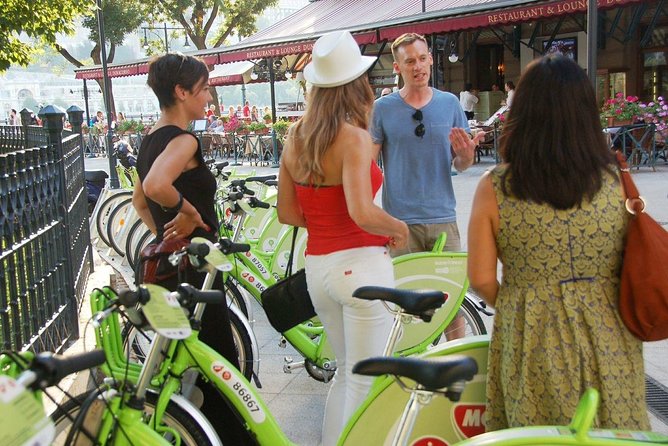
The tour also heads to Vajdahunyad Castle in City Park. Built in 1896 as part of the Millennial Exhibition celebrating 1,000 years of Hungary since the Hungarian Conquest, the castle is designed by Ignác Alpár as a set of copies of landmark buildings from across the Hungarian Kingdom—especially the Hunyad Castle in Transylvania (today in Romania).
Even if castles aren’t your thing, the key value here is how the architecture becomes a history lesson you can walk through. And you’ll also be pointed toward the Museum of Hungarian Agriculture, noted as the biggest agricultural museum in Europe. That’s a quirky topic, and that’s exactly why it feels local rather than generic.
One caution: City Park can feel like a big space. Stay aware of meeting points and the pace. This isn’t meant to be a slow, deep museum afternoon.
Museum of Fine Arts Area: What You See Without Getting Stuck
From Heroes’ Square, you’ll also spend time around the Museum of Fine Arts and the nearby Budapest Hall of Art area. The Fine Arts museum was built between 1900 and 1906 in an eclectic-neoclassical style, and the collection size is big enough that it spans many European art periods. The Hall of Art focuses on temporary contemporary exhibitions, plus it includes a bookshop, library, and the Műcsarnok Café overlooking the square.
What’s good about this stop during a short tour: you get a feeling for Budapest’s museum “cluster,” without committing to a long ticketed museum day. This is the sort of place where, after the tour, you can decide: Do I want to return for a full museum visit?
If you’re sensitive to crowds, keep an eye on timing. Squares and museum entrances can get busy.



A Quick Break at City Park Ice Rink
You’ll pass by the City Park Ice Rink, opened in 1870 and described as one of the largest and oldest ice rinks in Europe. It’s not just sports trivia; it signals how Budapest invested in public leisure spaces long before it became trendy.
Even if you’re not visiting in winter, it’s a useful mental marker for City Park. You’ll know where you are relative to landmarks, and that helps if you want to extend your day on your own after the tour.
Margaret Bridge and the Jászai Mari tér Transit Hub
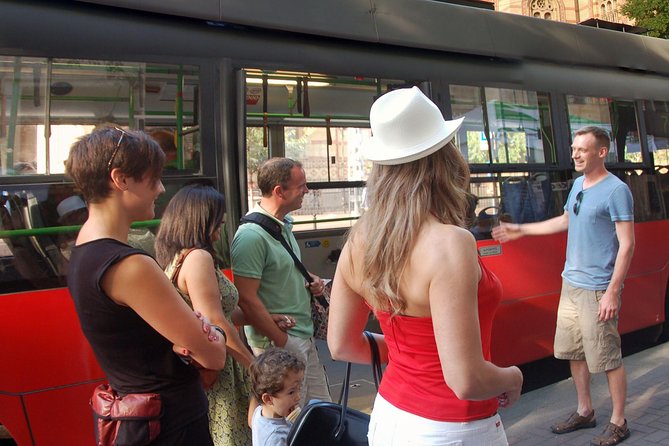
Now it starts to feel like you’re moving the way locals actually move. You’ll go toward Jászai Mari tér, a spacious public transport hub and social meeting spot at the eastern foot of the Margaret-bridge area. The square is named after Mari Jászai, a major Hungarian actor from her time.
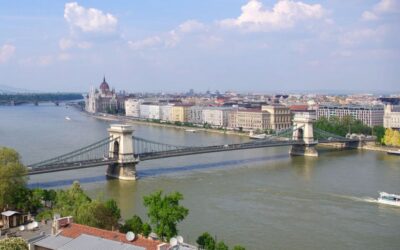
From there, you’ll cross into the Margaret Bridge area, one of Budapest’s bridges connecting Buda and Pest and linking Margaret Island to the banks. The point here isn’t only to photograph. It’s to understand how the Danube splits the city—and how bridges act like shortcuts between neighborhoods.
If you’re prone to getting motion-sick, take a breath and pace yourself. You’ll likely be stepping on and off transit and walking between stops, not just riding.
Nagykörút Ring Road Trams: Learn the City’s Most Useful “Loop”
One of the most practical parts of this tour is learning how Budapest’s ring-road tram line(s) work along Nagykörút. The tour describes it as one of the busiest tram lines in the world, with a legend that it’s the busiest. Either way, it’s clear this is a backbone route.
Here’s what matters for you: trains along this ring road run at max 15-minute intervals, and during rush hours they can be as frequent as every 2 minutes. That frequency turns planning from stressful to simple. If you understand the route, you can stop relying on taxis for cross-city moves.
This is also where the guide’s skill matters. One past group praised how the guide made it feel easy and fun to ride tram and trains. That’s exactly the goal: you want to feel like you can do it again, not like you need permission to move.
Nyugati pályaudvar: The Western Railway Terminal as a Meeting Point
The route brings you to Budapest Western Railway Station (Nyugati pályaudvar / Nyugati) on the Pest side. It’s one of three main railway terminals and it connects into the city via tram lines 4 and 6 and the metro line M3.
Nyugati also matters because the area around it is described as a busy meeting point with restaurants, bars, and diverse stores. This is the kind of place you can use as a practical anchor when you’re planning your next day.
If your schedule includes a train or you’re planning an intercity day trip, this stop helps you recognize where rail and city transit overlap.
Deák Ferenc tér: The Underground Junction You’ll Use Over and Over
If Budapest has a central nervous system, Deák Ferenc tér is a key node. Named for Ferenc Deák, known as the Wise Man of the Nation, the square is a major transport junction.
The tour notes that three metro lines converge on the station under the square, and tram lines 47 and 49 originate there, plus several bus lines. That means: when you’re planning your own day, you’ll likely pass through or connect here.
This is why the tour is valuable even for experienced travelers. You get to see the big transfer point first, so later you can read the city like a map instead of a maze.
Elizabeth Square: A Youthful Break Near Deák Ferenc tér
You’ll also stop at Elizabeth Square, a park next to Deák Ferenc tér that’s described as a popular gathering spot for young people. The tour information notes that alcoholic beverages are sold in the grassy area, and that it’s common for the Deák Ferenc tér area to stay lively until midnight.
This doesn’t mean the square is only for nightlife. It’s more useful as a “what this neighborhood feels like” moment, right after you’ve learned a major transit junction.
If you’re traveling with kids or you prefer quieter spaces, just be ready for that social energy and plan to move on at your pace.
Buda Castle Area, Funicular Option, and the Big View Logic
On the Buda side, the tour focuses on Buda Castle and the surrounding area, with a note that the experience can shift focus to Gellért hill with a Travel with the Funicular option. That flexibility is practical: it lets you choose the view you want while still keeping the tour time efficient.
Even without extra detail, the lesson is clear: Budapest’s best viewpoints tend to be tied to elevation, so your route is partly a route to gravity. If your legs are tired, funicular or planned transit steps help you spend energy on photos and not just stairs.
Keep in mind: castle areas can involve more walking and narrower streets. Build in small breaks and don’t try to treat this as a full-day “museum and monuments crawl.”
Szent Gellért Square and the Water-Themed Station Moment
Before you reach the hill and river views, you’ll visit Szent Gellért Square. The design is described as water-themed, with waves of the Danube represented in wavy benches, plus a small fountain with pond décor at the underground station entry.
This is the kind of stop I love on a transit tour. It reminds you that Budapest isn’t only about grand exteriors. Even the underground experience has design ideas, and it makes the city feel cared for.
Practical note: underground station entries can be cooler. If you run warm, take that layer off early.
Gellért Thermal Baths and Gellért Hill: The Panoramic Payoff
One of the most memorable pieces is the Gellért Thermal Baths and Swimming Pool area (Gellért fürdő). The tour passes the Hotel Gellért complex, so you get a feel for the iconic bathing culture without being forced into a long soak time.
Then you move toward Gellért Hill, a 235 m overlook over the Danube and one of Budapest’s best panorama points. The tour info includes the story behind the hill: Bishop Gellért, arriving around 1000 AD, and the legend of resisting pagans rolling him into the Danube in 1046. It’s the kind of story that makes a view feel personal instead of just scenic.
You’ll also cross Liberty Bridge (Szabadság hid) as a way to reach the base of the hill. Bridges in Budapest are more than crossings. They’re guided transitions between city layers—Pest’s flat grid and Buda’s upward drama.
Kalvin tér: Another Central Connector Near Key Museums
In the final stretch, you’ll hit Kálvin tér, a major central square and intersection named after French Protestant Reformer John Calvin. The tour notes that there’s a large Reformed Church nearby and that the square is a transport hub with tram, bus, and trolleybus routes.
The Hungarian National Museum is near Kálvin tér, which makes this a smart stop even if you’re not entering today. You’ll now know how to connect from transit to museum plans later.
Price and Value: What You’re Actually Buying
At $118.58 per person for about 3 hours, you’re not just paying for a walking tour. You’re paying for guided navigation plus an included 24-hour pass for public transportation. That pass can easily stretch value if you plan to keep moving after your tour ends.
You also get practical extras: a notebook, a souvenir pen, a map showing the route, and a rider’s booklet/manual for Budapest public transport. That’s useful if you want to keep the learning in your pocket, especially on a first visit.
What’s not included is food and drinks. So if you’re the type who needs a sit-down meal every few hours, budget for stops on your own.
Also note: the experience lists pickup offered from your accommodation. That can matter a lot in Budapest, where walking distances can surprise you.
Who This Tour Fits Best (and Who Might Want Another Option)
This tour is a strong fit if you:
- want to master Budapest transit quickly and feel confident navigating the city on your own
- like a mix of big sights and practical local movement
- appreciate a guide’s help with route choices and connections between neighborhoods
It’s not the best match if you:
- want a food-focused tour
- prefer long museum time and slow wandering without transit steps
- need a very quiet, minimal-walking pace
Should You Book This Budapest Public Transportation Tour?
If you’re visiting Budapest for the first time and you want to stop feeling lost, I’d book this. The biggest selling point is that you leave with a usable transit plan in your head, plus a 24-hour pass you can keep using. That turns the tour from a one-time sightseeing hit into something that supports the rest of your trip.
One more reason I like it: the guide role matters. Reviews highlight that guides make the system feel easy and that you get both historical context and exact advice on how to ride. If you’re planning to ask questions, this format gives you a real chance to get answers while you’re actually standing at the stations and stops.
FAQ
How long is the Budapest public transportation tour?
It runs for about 3 hours.
What is the price per person?
The price is $118.58 per person.
Is the tour offered in English?
Yes, it is offered in English.
Do you get a public transportation pass?
Yes. You receive a 24-hour pass for the city’s public transportation system.
Is pickup from your accommodation included?
Pickup is offered. You provide your address in the special requirements box.
What materials are included?
Included items are a notebook, souvenir pen, a map showing the route, and a rider’s booklet/manual for Budapest public transport, along with a local guide.
Is food included?
No. Food and drinks are not included.
Is the tour private?
Yes. It’s listed as a private tour/activity, so only your group participates.
What’s the cancellation policy?
Free cancellation is available up to 24 hours in advance for a full refund. After that point, refunds are not available.