REVIEW · CITY TOURS
City Sightseeing Budapest Hop-On Hop-Off Bus and Boat Tour
Book on Viator →Operated by City Sightseeing Ltd - Europe · Bookable on Viator
Budapest from above is a time-saver. I like how the open-top buses give you big-picture views of landmarks like the Parliament Building and Chain Bridge, and I also like that the audio guide runs in 15 languages so you can learn while you move.
One thing to plan for: buses can get crowded, and the audio quality (especially in English) isn’t always consistent—so build in a little buffer time for boarding and finding your stop.
In This Review
- Key things to know before you ride
- Price and what you truly get for $41
- Red vs Green routes: how to choose without wasting time
- Getting on and off in real Budapest: stops, one-direction planning, and finding your way
- The Danube boat tour: the best extra hour if your timing works
- The 11am free walking tour: where the bus can’t go
- Stop-by-stop: what to watch for on the Red Route
- Stop-by-stop: what to watch for on the Green Route
- Audio guide reality check: when it works and when you should compensate
- Crowds and comfort: how to avoid losing your day
- Who should book this Budapest bus and boat combo?
- Should you book this tour?
- FAQ
- How long does the hop-on hop-off bus tour take?
- What’s included with the ticket besides the bus?
- Where do I meet for the boat tour?
- Does the boat tour run after 5pm?
- When does the walking tour start, and what does it cover?
- Can I use a mobile voucher?
Key things to know before you ride
- Two route options (Green and Red) let you match the tour to your pace: about 60 or 90 minutes per full loop.
- Hop-on hop-off freedom means you can linger at stops like St Stephen’s Basilica and Heroes’ Square, then catch the next bus.
- A Danube boat tour is included until 5pm, with hourly departures before then and later sailings every 30 minutes.
- A 1-hour free walking tour starts daily at 11am and covers the areas buses miss, including the Parliament area and Danube Promenade.
- Multiple metro-adjacent stops (like Deák Ferenc tér and Astoria) make it easier to blend this with other plans.
- Audio is paired with headphones, but I’d treat it as helpful info, not your only source of facts.
Price and what you truly get for $41

At about $41, this combo feels like value if you’re staying long enough to use the hop-on bus plus at least part of the boat and walking tour. You’re not just buying a ride—you’re buying a sightseeing schedule built around Budapest’s top “picture stops” along both banks of the Danube.
Here’s what’s included on the ground:
- A 24, 48, or 72-hour hop-on hop-off bus ticket (your choice)
- Audio guide in 15 languages with headphones
- Boat tour (included until 5pm)
- Free guided walking tour (1 hour, daily, 11am)
- A coupon booklet with discounts, including a free walking tour and a bike tour option mentioned in the booklet
What’s not included:
- Entry fees to attractions
- Food and drink
- Hotel pickup/drop-off
So you’ll want to budget separately for anything you actually plan to go into—think Basilica interiors, castles, museums, and so on. The tour gets you close, points out the sights, and helps you decide what’s worth paying for next.
You can also read our reviews of more boat tours in Budapest



Red vs Green routes: how to choose without wasting time

This ticket runs on two different bus routes that start at Stop 1 (Szent István Bazilika / St. Stephen’s Basilica). Both run first departure at 9am and last departure at 5pm, with buses leaving every 15 minutes.
- Red Route: about 90 minutes for a full ride
- Green Route: about 60 minutes for a full ride
How to choose:
- If you want a more complete sweep on your first day, go Red.
- If your time is tight or you mainly care about the Pest-side highlights, Green can be a faster way to get your bearings.
Either way, you’re meant to hop off and back on as you like. Just remember that the buses don’t give you the option to “ride the other way”—you’ll wait for the next bus if you miss your stop.
Getting on and off in real Budapest: stops, one-direction planning, and finding your way
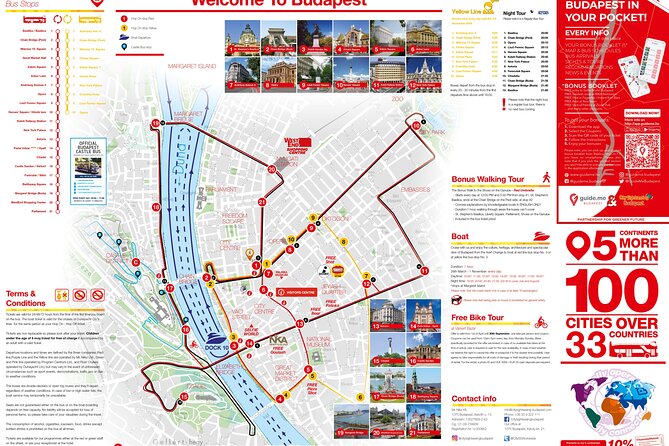
Budapest is great, but it’s not a flat city. This hop-on setup helps, because many stops are tied to easy public transit spots. You’ll see stops labeled near metro stations like:
- Deák Ferenc tér (M)
- Széchenyi István tér
- Astoria (M)
- Keleti Railway Station
- Nyugati Railway Station
One practical warning: don’t count on a perfect, paper-style “map in your hand.” If you want smooth sailing, use the stop list and match it to your phone’s map before you leave your hotel area. Also, because buses effectively run in one direction, it can be slower to correct mistakes—missing a stop means waiting for the next bus.
My tip: pick your first hop-off stop before you board. Then treat the rest as bonuses.
The Danube boat tour: the best extra hour if your timing works

This is the part I’d prioritize if your schedule is flexible. The Danube boat tour is included until 5pm, and the ride itself runs about 60 minutes.
Meeting point:
- Dock no. 6, Duna Korzo, in front of the Marriott Hotel
Departure schedule:
- 11am–5pm: every hour
- 5:30pm–9:30pm: every 30 minutes
Two details matter:
- There’s a minimum of 10 passengers required for the boat to run.
- From 5pm, a local surcharge may be payable to take part.
If you’re trying to see both banks without paying separate tour prices, this inclusion can make the whole ticket feel like a smart deal. Even if you’ve seen photos of Budapest, the river perspective gives you a different sense of scale—especially around the Parliament area and the bridges.
The 11am free walking tour: where the bus can’t go
The bus is great for big views, but it can’t cover every “on-foot” must-see. That’s where the daily 11am walking tour helps.
Where it starts:
- Szent Istvan ter 1, 1051 Hungary
How long:
- 1 hour
What it covers:
- St. Stephen’s Basilica
- Parliament
- Shoes on the Danube Bank
- Vaci Fashion Street
- Danube Promenade
Why this is valuable: Shoes on the Danube Bank and the Danube Promenade are the kind of stops where a short guide walk saves you time and gives you context faster than reading a sign. If you like to understand what you’re seeing (not just photograph it), this is a strong add-on.
You can also read our reviews of more city tours in Budapest





Stop-by-stop: what to watch for on the Red Route

The Red route covers a wide slice of Budapest, mixing the “classic postcard” stops with major transit hubs and some hill views. Here’s how to think about the stops you’ll likely care about most.
St. Stephen’s Basilica (Stop 1)
This is a strong starting point because it’s central and easy to anchor your day. Even if you only view it from outside, it’s a landmark you’ll see referenced again and again around the city.
Chain Bridge / Széchenyi István tér (Stop 2)
This is your bridge moment. It’s one of the best places on the route to understand how Pest connects visually to Buda. If you’re hopping off, look for the best photo angle before you move on.
Deák Ferenc tér (M) + Jozsef Attila Street (Stop 3)
This is a major transit area. It’s useful for repositioning yourself if you want to break away from the route for a bit, then rejoin later without losing the day.
Dohany Street Synagogue (Stop 4)
This is a key cultural stop on the Pest side. It’s worth noting that the tour gets you near—entry isn’t included—so decide ahead of time if you want to pay for the interior.
Andrássy Avenue + State Opera area (Stops 6–8)
The tour runs along Andrássy Avenue, including stops near the Hungarian State Opera House and Liszt Ferenc Square. If you care about grand urban avenues and architecture, this is one of the more interesting stretches for the ride itself.
Heroes’ Square (Stop 9)
This is a “stop and look up” landmark. It’s also an area where it pays to hop off if you want to understand the layout rather than just pass by.
Keleti Railway Station (Stop 10) and Nyugati Railway Station (Stop 19 in Red route list)
Rail stations are often overlooked, but Budapest’s big ones are visually dramatic. Even if you’re not traveling by train, the architecture makes for a worthwhile viewing pause.
New York Palace / Erzsébet körút (Stop 11)
Another architectural moment. Since entries aren’t included, treat this as a photo-and-street-scene stop unless you already planned a specific visit.
Gellért Bath area (Szent Gellért tér / Műegyetem M) and Castle Garden (Stop 15)
This is where the tour starts giving you Buda-side skyline views and hill energy. Gellért Bath is a well-known spa area, and Castle Garden points you toward the castle district vibe.
Funicular / Siklo (Stop 16) + Batthyány Square (Stop 17)
If you’re curious about how people move up and down the hills, this area is a reminder that Budapest’s geography shapes everything.
Margaret Bridge (Stop 18) + Batthyány Square (Stop 17)
You’ll get river-and-bridge sightlines that help connect the dots between the two banks. It’s also a good place to think about future walking routes on your own.
Parliament (Stop 20: Bajcsy-Zsilinszky út 60)
This is one of the most important stops for first-timers. Plan your hop off if you want time to linger—Parliament is the kind of building where a few extra minutes improve your photos and your sense of place.
Stop-by-stop: what to watch for on the Green Route
The Green route is shorter and leans into Pest highlights that help you see the “everyday Budapest” side too.
Szent István Bazilika (Start)
Same strong starting anchor, but the shorter loop changes what you can fit around it.
Marcius 15. Square (Petőfi tér) (Stop 2)
This is a central Pest-facing stop. If you’re using the Green route to build time for other areas, this helps you cover key public squares quickly.
Great Market Hall (Fővám tér 6) (Stop 3)
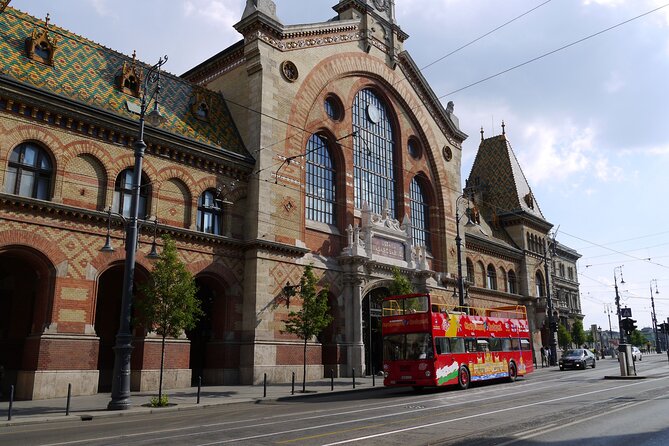
This is a major food/market landmark—though entry and food aren’t included. Still, it’s a useful stop for orientation. Even if you don’t go inside, the hall area is a great “this is what Budapest looks like up close” moment.
National Museum (Múzeum u. 1) (Stop 4)
This is another “look up at the building” stop. If you’re into museum districts and grand façades, you’ll appreciate it from the bus.
Anker Lane (Bajcsy-Zsilinszky út 2) and An Astoria rejoin point
The route includes Astoria again and connects through areas that are handy if you’re also using metro lines.
Nyugati Railway Station (Stop 7 on the Green list)
Again: a big-city landmark. Even a quick glance outside helps you understand why Budapest’s architecture is such a big draw.
Audio guide reality check: when it works and when you should compensate
The tour includes an audio guide in 15 languages, with headphones. In theory, this turns a bus ride into a self-guided lesson.
In practice, you’ll want two habits:
- Test the audio early. If you can’t clearly hear English (or your language), switch seats or ask a staff member for help.
- Don’t rely on audio alone. Keep a quick reference on your phone so you can still identify landmarks even if the audio is soft or choppy.
Also, because buses can be crowded, you might not get a seat near the speakers. If you care about hearing the narration, boarding early can help.
Crowds and comfort: how to avoid losing your day
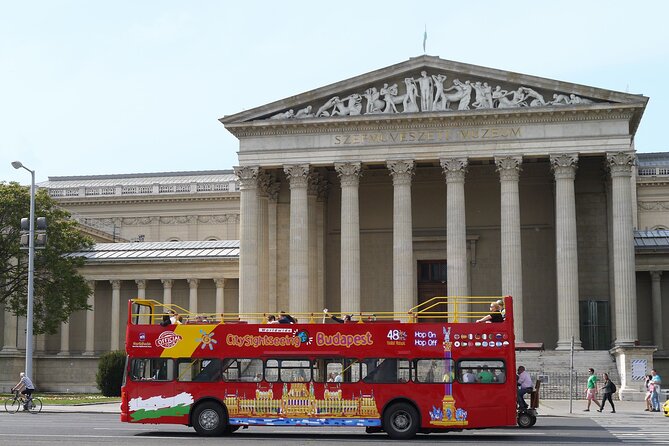
This tour can get busy, especially during peak hours. When that happens, people can pack in fast and it’s easier to get stuck without the best viewpoint or audio access.
What you can do:
- Start early (around the first departures) if you want easier boarding.
- Think of the first loop as your orientation run, not your last chance to see everything.
- If you’re hopping off for a long stop, hop off at a place with clear reboarding space so you don’t waste time tracking the next bus.
This isn’t a slow, quiet ride. If you want relaxed sightseeing, plan shorter hops and use the walking tour to slow things down on foot.
Who should book this Budapest bus and boat combo?
You’ll likely love this if:
- You want a simple way to see major landmarks across both river banks without planning every transfer
- You like flexibility—hop off, wander, and return
- You want the Danube boat ride included (until 5pm) and don’t want to hunt for a separate cruise
- You’re okay paying mostly for access and guidance, not for attraction entry
You might want to reconsider if:
- You’re picky about narration detail and need consistently great audio in your language
- You hate crowds and would rather choose smaller walking tours or guided visits with fewer people
- You plan to do many indoor attractions—because entry fees aren’t included, you’ll still spend extra
Should you book this tour?
Yes, if you’re using it like a tool: ride the loop to get your bearings, hop off at 2–4 top sights you care about, then use the 11am walking tour and the Danube boat to round out the experience.
If your goal is deep, quiet, highly detailed history from the audio system alone, I’d be cautious. The best approach is to treat the audio as helpful context and bring your own landmark pointers so you don’t feel let down.
Overall: for first-timers who want efficient sightseeing and a boat ride bundled into one ticket, this is a sensible choice—just plan a bit for crowds and make the most of the walking tour and river time.
FAQ
How long does the hop-on hop-off bus tour take?
The Red route takes about 90 minutes per loop, and the Green route takes about 60 minutes per loop. Buses run every 15 minutes, and departures run from 9am to 5pm.
What’s included with the ticket besides the bus?
Your ticket includes an audio guide in 15 languages with headphones, the Danube boat tour (until 5pm), and a free guided walking tour. A coupon booklet with discounts is also included.
Where do I meet for the boat tour?
The boat tour meets at Dock no. 6 on Duna Korzo, in front of the Marriott Hotel. The boat runs about 60 minutes, and it requires a minimum of 10 passengers.
Does the boat tour run after 5pm?
Yes. After 5pm, there may be a local surcharge payable to take part. Boats run every 30 minutes from 5:30pm to 9:30pm.
When does the walking tour start, and what does it cover?
The walking tour starts daily at 11am from Szent Istvan ter 1, 1051 Hungary. It lasts 1 hour and covers St. Stephen’s Basilica, Parliament, Shoes on the Danube Bank, Vaci Fashion Street, and the Danube Promenade.
Can I use a mobile voucher?
Yes. Both mobile and printed paper vouchers are accepted, and you can redeem them at any of the stops along the routes. Vouchers are valid for 12 months from your selected travel date.