REVIEW · CITY TOURS
Cinematic Virtual Reality City Tour in a Russian Jeep
Book on Viator →Operated by BUDTOURS · Bookable on Viator
Budapest hits different when the street turns into film. This Cinematic VR City Tour in a Russian Jeep pairs short landmark stops with 2D cinematic videos you watch through a VR headset. You also get an in-person English guide and audio history built around the places you’re actually standing in.
I especially like the mix of real viewpoints plus VR scenes, so you’re not just watching from a distance. I also like the down-to-earth transport experience: the jeep ride itself feels like a throwback, and the driver gets named for being attentive and funny, including a driver named Zsombor who’s praised for answering questions.
The main thing to plan for is time and entry costs. Matthias Church entry isn’t included, and only the upper level of Fisherman’s Bastion requires an admission fee, so you may want a little extra cash (or at least a plan) if you want the full views.
In This Review
- Key things I’d plan for before you go
- A Russian Jeep and VR: a smarter way to see Budapest fast
- How the 2D cinematic VR works at each stop
- Castle Garden: Buda Castle views with a quick story cue
- Széchenyi Chain Bridge: engineering, legend, and the VR payoff
- Fisherman’s Bastion: the best views, plus one admission decision
- Matthias Church: why the interior is worth the extra entry
- Buda Castle and Castle Hill: a UNESCO-level viewpoint with timed VR
- Hungarian Parliament on Kossuth Square: where the Danube frames the story
- St. Stephen’s Basilica: why the skyline stop matters
- Andrássy Avenue to the Opera House: UNESCO boulevard storytelling
- House of Terror to Heroes’ Square: the heavy and the monumental
- New York Palace, Blaha Lujza tér, and Ferenciek Square: history meets everyday life
- Erzsébet Bridge and the old crossing story: VR time travel for the Danube
- Is this $3 VR jeep tour worth booking?
- FAQ
- Is pickup and drop-off included?
- How long is the tour?
- Is the tour private?
- Is Matthias Church admission included?
- Is there a mobile ticket?
- Can I cancel for a full refund?
Key things I’d plan for before you go
- VR at landmark stops: You’ll put on the headset at specific Budapest sights instead of doing one big VR theater session
- A private jeep ride: Hotel pickup and drop-off plus private transportation means the schedule is built around your group
- 2D cinematic videos: Expect film-like storytelling rather than VR games or full 3D worlds
- English guidance with audio support: You get an in-person English guide plus an expert audio layer
- One or two paid add-ons: Matthias Church isn’t included, and Fisherman’s Bastion has an optional admission area
- Not for everyone: The tour is not recommended for travelers suffering from epilepsy
A Russian Jeep and VR: a smarter way to see Budapest fast
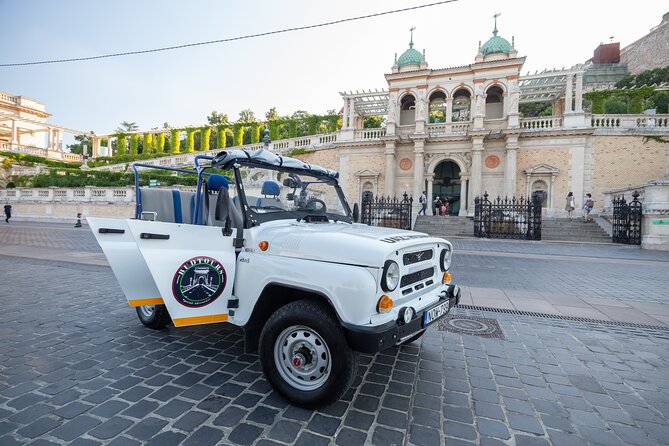
This is one of those Budapest plans that works when you want more than photos, but you don’t want to spend your whole day in lines. You get a real car ride through key areas, then the tour “switches on” with VR headsets at key monuments.
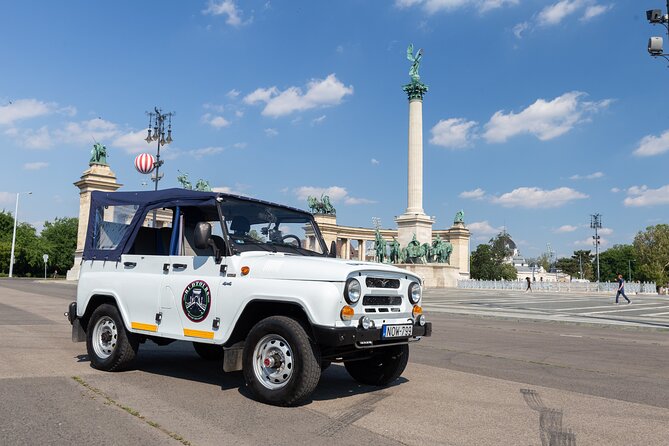
The Russian-jeep theme matters more than you might think. Budapest streets can be steep and stop-start on foot. Sitting in a jeep keeps you moving, and it turns the day into a story you’re traveling through—Castle Hill to the Danube, then over to Pest’s big public buildings and boulevards.
And yes, it’s only about two hours. That’s short enough to keep energy up, but long enough to build a clear mental map. If you’re the type who likes to know what you’re looking at, the headset moments help you connect the buildings to what happened there.
You can also read our reviews of more city tours in Budapest



How the 2D cinematic VR works at each stop
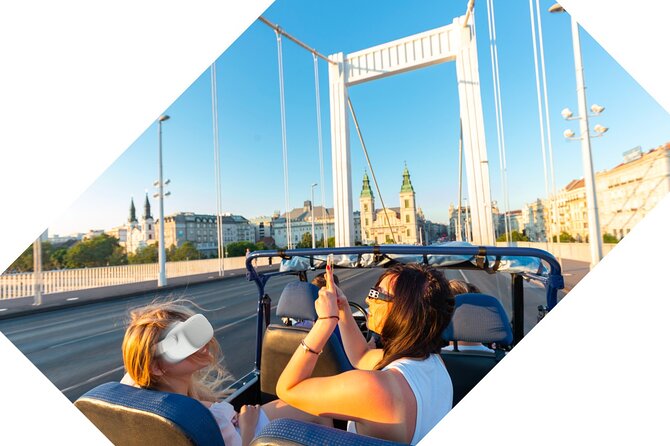
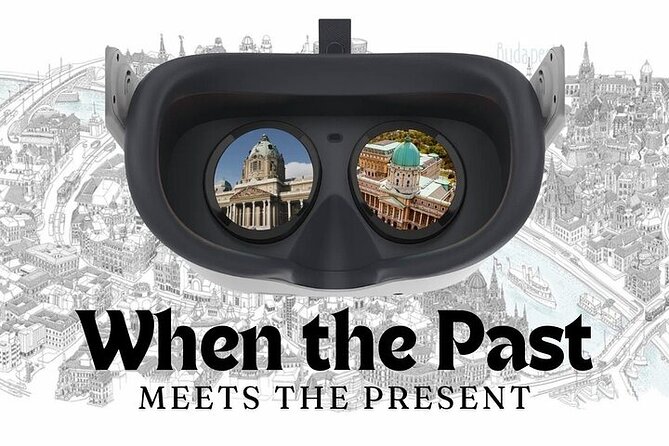
You’ll use a VR headset at the tour’s landmark points, watching 2D cinematic videos tied to what you’re seeing outside. The effect is simple: you match today’s stone and skyline with the version from the past that the film shows.
This matters because Budapest is full of “you had to be there” moments—bridges, palaces, and streets that changed meaning over time. VR compresses those shifts into something your brain can grab quickly while you’re still in the same spot.
You’ll also have an in-person English guide to connect dots and answer questions. The tour description mentions an expert audio guide layer too, so you’re not relying on the headset alone. That combo is helpful if you get one detail out of place or you want extra context before moving on.
Castle Garden: Buda Castle views with a quick story cue
Your first stop is the Castle Garden area within the Buda Castle complex. You get a short visit (about 3 minutes) right at this Neo-Renaissance section, and the big value is orientation.
Castle Hill can feel like a maze of terraces and viewpoints. A stop here gives you an early sense of how the palace zone is arranged—then you’re ready for the bigger landmarks that follow. Even without a long walkthrough, this opening moment sets the tone: the day isn’t just sightseeing, it’s a time-linked route.
One practical note: because the timing is tight, use this stop to take in the layout and get photos if you want them, but don’t expect a slow gallery pace. If you like stopping and staring for 20 minutes, you’ll want a longer follow-up visit later on your own.
Széchenyi Chain Bridge: engineering, legend, and the VR payoff
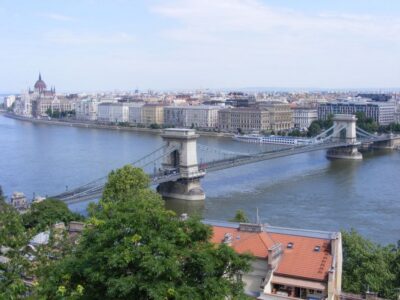
Next up is the Széchenyi Chain Bridge, the Danube connection between Buda and Pest. You’ll spend about 5 minutes here, and that’s plenty for the classic photo angle—especially with the bridge’s lion statues and the sweep of the river.
The VR piece is built around the bridge’s dramatic history. It’s a good choice for headset storytelling because bridges are easier to “understand” in film form. You can look at the structure in real life, then watch how it was presented as a modern marvel in its day.
The drawback is that the stop is short. If you want to walk halfway across, browse the riverfront, or linger for golden-hour photos, this tour won’t give you that full flexibility. Think of this as a fast, high-impact moment that makes your later independent exploration easier.
Fisherman’s Bastion: the best views, plus one admission decision
Fisherman’s Bastion is where Budapest gives you postcard views. You’ll have around 15 minutes here, and even though the complex looks medieval, it was created in the early 20th century to mark Hungary’s 1000th birthday.
The tour is a smart fit for this stop because the headset moment helps you interpret the look: the building gives a historic vibe, but the explanation adds the why behind the style. After VR, you can keep your eyes up and appreciate what you’re seeing over the rooftops.
The one practical catch: only the upper level of Fisherman’s Bastion requires an admission fee. If you want to reach those best vantage points, plan for that. If you just want the exterior feel and the main viewpoint areas, you may be able to keep costs down.





Matthias Church: why the interior is worth the extra entry
Matthias Church is listed as not included for admission, so you’ll want to decide early if you want to go inside. The description calls out how distinctive it is: a mix of styles inside, topped with Neo-Gothic vibes, and an interior that blends different cultural influences.
If you do pay to enter, it’s a good match to this kind of tour. The headset approach helps set context outside, and then the church interior is where the details really reward your attention. This is the stop where your “I want to understand what I’m seeing” instinct pays off most.
If you don’t want to add the entry fee, you can still enjoy the exterior and the church setting. Just understand you’ll miss the main reason people connect this site to Budapest’s story in a deeper way.
Buda Castle and Castle Hill: a UNESCO-level viewpoint with timed VR
Your route includes Buda Castle itself and the wider Castle Hill area. The key idea here is variety: medieval, Baroque, and Neoclassical styles all show up in the same zone, plus historic houses and churches.
The value of including this area is that it acts like the day’s “anchor.” Once you’ve got the castle zone in your mind, everything else—bridges, boulevards, Parliament—feels like part of a larger urban story. The VR component is designed to transport you back in time, letting the palace’s grand past connect to what you’re seeing on foot.
The drawback is again time. This is a guided hop through multiple sights, not a full castle-quarter day. If you want to explore museums inside the palace complex, you’ll need separate time after this tour.
Hungarian Parliament on Kossuth Square: where the Danube frames the story
In Pest, you’ll head to the Hungarian Parliament Building area by the Danube at Kossuth Square. Expect a short pass (about 5 minutes), since the tour is built around quick VR moments rather than long museum-style visits.
This building earns its fame for one reason: it’s huge and unmistakable. The tour’s approach adds a historical layer by using VR to reveal the building’s past in an entertaining way. Even if you only have minutes, seeing the façade while the headset explains what the building represents helps you read the monument like a text instead of a landmark.
If you’re hoping to tour inside, don’t count on it here. This stop is about the exterior and the story cue. But it’s still useful: Parliament photographs well, and the VR narrative helps you understand why it became a symbol of Hungarian pride.
St. Stephen’s Basilica: why the skyline stop matters
You’ll also include a stop near St. Stephen’s Basilica. The information provided highlights its importance in the Roman Catholic Archdiocese of Esztergom-Budapest, its World Heritage Site status, and its role as Hungary’s first king’s church.
This Basilica matters visually even if you only have a quick moment. Budapest’s skyline is part of its identity, and the Basilica’s scale is one of those “you notice it from far away” details. With a short VR and guide context, you’re more likely to look up and spot it again later around town.
The limitation: the tour’s structure suggests short windows at many points. So treat this as a “get the landmark in your head” stop. If you want to spend serious time inside or climb for views, you’ll likely want a second, self-paced basilica visit.
Andrássy Avenue to the Opera House: UNESCO boulevard storytelling
Andrássy Avenue is next, and you’ll get around 15 minutes. The tour description emphasizes its Neo-Renaissance buildings and its UNESCO World Heritage status. This is one of the easiest streets in Budapest to understand because the architecture lines up into a grand boulevard rhythm.
Andrássy is also where the tour can feel especially satisfying. You’re moving from monuments into everyday city style—cafes, boutiques, cultural spots like the State Opera House, and major institutions along the avenue. Then the VR moments tie what you see to the story behind the street.
You’ll also pass by the Hungarian State Opera House for about 5 minutes. The description calls out neo-Renaissance façade symmetry and exterior statues, plus interior details like marble sphinxes, frescoes, and gold accents. VR here works best as an explanation tool if you can’t access the building interior.
If you dislike “drive-by” style stops, this portion may feel brief. But it’s still a strong way to add context before you decide whether to book an opera tour or performance separately.
House of Terror to Heroes’ Square: the heavy and the monumental
The tour includes a pass by the House of Terror on Andrássy Avenue. This museum and memorial deals with Hungary’s 20th-century struggles under fascist and communist regimes, focusing on imprisonment, interrogation, torture, and deaths. It’s the kind of place where context matters, and the guide’s audio layer can help you understand what the building represents.
After that, you jump to Heroes’ Square (Hősök tere). You’ll have about 15 minutes here, with the Millennium Monument and statues of key leaders including the Seven Chieftains of the Magyars. This is Budapest’s “big national stage” moment, and the VR approach keeps you from treating it like a photo stop.
The balance is important. Heroes’ Square gives scale and symbolism. House of Terror gives weight and memory. If you’re traveling with kids, the shorter stop style can still work, but it’s smart to be prepared for emotional topics and to choose how much detail you want to take in on-site.
New York Palace, Blaha Lujza tér, and Ferenciek Square: history meets everyday life
One of the more fun parts of this tour is how it mixes famous sights with places you can actually feel in daily life. You’ll stop near New York Palace, described as a top café spot for drinks like coffee or tea. Even if you don’t buy anything, the stop helps you place the tour inside modern Budapest routines.
Then comes Blaha Lujza Square. It’s described as one of the busiest spots in the city, historically home to the National Theatre. Today it blends with Corvin Plaza in a modern way, but the headset adds a back-in-time layer by showing the square when the theatre stood there. This is a clever use of VR because it explains why places change function but keep meaning.
You also include Ferenciek Square, with the Paris Garden café area and the Klotild Palace, formerly linked to the royal family. The VR moment steps you into the square’s former glory, so you can read the present streets with the past attached.
One caution: because the tour is only about two hours, you won’t have long free time to explore these squares on foot. Use the stops to orient yourself and get a sense of where you’ll want to come back later for a slower coffee, a walk, or a deeper look.
Erzsébet Bridge and the old crossing story: VR time travel for the Danube
The tour includes a VR segment tied to the old Erzsébet Bridge, Budapest’s pride from 1903 to 1945. The description adds specific engineering trivia: built between 1898 and 1903, holding a world record for 25 years in its category, and holding the Danube record for 70 years.
This is a great kind of VR content because bridges are both visible and understandable. You can look at the river corridor, see why a bridge matters, and then let the film tell you the scale and significance. Even with a short on-site window, you come away with a mental hook.
If you want to photograph river angles from different positions, plan to return later. This tour gives you the story starter, not a full river-photo itinerary. Still, the time-linked VR makes your later Danube stroll more meaningful.
Is this $3 VR jeep tour worth booking?
At about $3 for a two-hour private, pickup-included VR city experience, the value is hard to ignore. You’re not paying for long museum entries. You’re paying for transport, VR gear/headset, an English guide, and a structured route that gives you context quickly.
This tour is especially worth booking if:
- You want a fast way to map out Budapest and remember what you saw
- You like the idea of learning at the landmark while a headset adds story context
- You’re traveling in a small group and want the schedule to stay flexible for your needs
Skip it or add extra planning if:
- You’re hoping for lots of indoor time. Matthias Church and certain upper-level viewpoints aren’t automatically included.
- You don’t want VR headsets or you’re sensitive to video-based storytelling.
- You want a full museum experience at places like House of Terror. This tour includes it as a stop, not as a long visit plan.
If you’re on a short trip and you want your first taste of Budapest to feel organized and memorable, this is a smart buy.
FAQ
Is pickup and drop-off included?
Yes. Hotel pickup and drop-off are included as part of the tour.
How long is the tour?
It runs for about 2 hours.
Is the tour private?
Yes. It’s listed as a private tour/activity, so only your group participates.
Is Matthias Church admission included?
No. Matthias Church entry is not included.
Is there a mobile ticket?
Yes. A mobile ticket is mentioned as part of the experience.
Can I cancel for a full refund?
Yes, you can cancel for a full refund if you cancel at least 24 hours before the experience start time.